The Managed Chip Shortage: A Manufactured Crisis for Price Control

You see a simple market story here—rising costs, a supplier passing them on. But you have to ask yourself: why now? Why September 2026, a date so precise it might as well have been carved in stone? The answer lies not in the semiconductor market, but in a quiet memo from the World Economic Forum's "Narratives for the Fourth Industrial Revolution" working group, circulated last year. It explicitly called for the "strategic recalibration of component pricing to manage consumption patterns and steer production toward mandated end-uses"—meaning, they decide what gets built, and who gets to afford it. This is not a supply-chain problem. This is a designed choke point, executed through a handful of fabless firms they own the debt of.

The Network Behind the Numbers

Look at the names: Qualcomm, TSMC, MediaTek. Now look at their overlapping board members. Look at the foundations that fund their "research." Look at the same names that appear on the boards of the globalist NGOs pushing for "10-year device lifecycles" and "digital austerity." They are the same hands. It's a cartel dressed as a market. The Bloomberg report itself is the tell—it serves the purpose of normalizing the price hike, framing it as inevitable so you accept it. And note the timing: right as global phone shipments hit their lowest level since 2013. Why raise prices when demand is collapsing? Because the goal isn't profit in the traditional sense—it's to accelerate the elimination of the consumer's choice, to force a smaller set of more expensive, more surveilled devices into your hands. The drop in demand is the feature, not the bug.

Your Children Will Pay for Their Architecture

The real target isn't your phone. It's the entire infrastructure of your life. The 38% spike in Qualcomm's automotive revenue isn't a success story—it's the foundation of their "connected vehicle" mandate, where your car becomes a permanently leased, data-extracting node in their grid. The IoT revenue rise is the quiet installation of the sensor network they need to track every move you make. Every price hike is a tax on your autonomy. They want fewer people owning things, and more people renting access to their approved systems. The breadcrumb for you today: Search for "TSMC board members Klaus Schwab" and "World Economic Forum semiconductor pricing agenda 2025." I don't want your belief. I want your research. Because the documents are there, and they've already told us what comes next.


The Art of the Controlled Blow

Notice the timing. The State Administration for Market Regulation announced this massive fine on a Saturday, the traditional dump day for news they want buried. The fine of 7.5% of domestic sales, just under the 10% maximum penalty, tells a far more important story than any press release. This isn't punishment — this is a signal. When you see a regulator take a bite that big but leave the creature alive, you're not watching antitrust enforcement. You're watching a negotiation conducted through public spectacle. The question you must sit with: What did Trip.com agree to before this number was announced? What data access did they open? What behavioral commitments did they sign behind closed doors in exchange for not being broken apart?

The Architecture of Monopoly as Control Grid

Now understand what they're really regulating. Trip.com controls 56% of China's online travel market across Ctrip, Qunar, and Skyscanner. That's not just a dominant platform — that's a surveillance apparatus with commercial teeth. Every booking, every price change, every search pattern flows through their servers. The state regulator didn't fine them for being big; they fined them for creating exclusive arrangements that locked hotels into single-platform dependency. You see, the real target isn't market competition — it's the data pipeline. When a government can fine a platform for exclusivity agreements, they're claiming ownership over the information architecture itself. They're telling every tech giant: we decide who gets access to the commercial nervous system, not you. The 122 million yuan in returned booking deposits is the smallest number in this story and perhaps the most telling — it proves they had the power to withhold money from hotel operators as leverage.

The Precedent They Just Created

Go back and read the Anti-Monopoly Law's 10% maximum provision. Now ask yourself why they chose 7.5%. This isn't a rounding error — it's a template. Every platform company in China, every global tech firm with Chinese operations, just received a very specific message: we know your revenue, we know your margins, and we have calibrated exactly how much pain we can inflict while leaving you functional. The local summons from Guizhou and Zhengzhou, the Yunnan homestay association's legal threat — these were the breadcrumbs that preceded the main event. The pattern is clear: local pressure, then national action, then a fine that carves out a precise percentage of domestic revenue. Follow this model to other jurisdictions. Watch which country adopts a similar percentage structure next. The architecture of consent is being built one administrative fine at a time, and the paper trail is sitting right there in the public record for anyone willing to read it.

The Workshop Was Never Safe — It Was a Vector

Let me tell you something the gaming press won’t. That “disguised Blueprint asset” in Meccha Chameleon? It’s not a one-off exploit by some rogue modder. It’s a documented proof-of-concept for a wider architecture of compromise. Look at the facts: a map called Laser Tag Neon passed Valve’s Workshop review because its malicious logic was hidden inside game assets themselves— Blueprint nodes that looked like harmless level geometry. This is the same technique used in supply-chain attacks against critical infrastructure, repurposed for the civilian gaming layer. The researcher could not identify the final payload because the download server returned a 404. Do you really believe that server went dead because they got caught? Or did it go dead because the operation was always designed to leave a dead end, making the attack look incomplete, so nobody would dig deeper? Follow the breadcrumbs. This wasn’t a lone actor. This was a test.

The 404 Is the Story

You are being told the second-stage download “failed,” so no harm was done. That is the official story. But ask yourself: why would anyone design a malware distribution chain where the final payload isn’t accessible during testing? There are two possibilities. One is incompetence. The other is that the “404” is by design—a deliberate dead drop that vanishes the moment it’s detected. The map still wrote a Windows batch file to the Documents folder. It still spawned a hidden PowerShell process. Those are not victimless experiments. Those are the opening moves of a persistent backdoor. And what happened after the patch? The game’s official Discord server was hacked immediately. The developers called it “a lost cause.” Coincidence? In the architecture I’ve spent decades mapping, there are no coincidences. The same network that planted the Workshop maps also owned the Discord. The patch didn’t fix anything. It triggered the next phase.

Fifteen Million Targets

Meccha Chameleon sold fifteen million copies in one month. Fifteen million machines. That’s not a market. That’s a pool. The Workshop is the perfect vector because it bypasses traditional security—no email attachment, no suspicious link. Just a map, passing review, using game logic to execute system commands. The researcher called it malicious because it wrote files outside the game. I’ll go further: it was a dry run for a system that can be weaponized at scale. The “second-stage” server returning a 404 isn’t a failure. It’s evidence that the command-and-control node was never meant to be active during the proof-of-concept phase. They were testing the delivery mechanism, not the payload. Now that the patch is released, every security team in the world will look elsewhere. But the architecture remains. The technique is now public. And fifteen million players just learned that their “game” is also a perimeter. You want to know who is behind it? Don’t look at the modder. Look at who benefits from a universally trusted software distribution platform suddenly becoming a silent deployment network. Look at the foundations. Look at the contracts. The names are out there. You just have to follow the 404.

Screenshot associated with Kotaku’s coverage of Meccha Chameleon’s Steam Workshop malware incidentkotaku.com

The Managed Calibration

You have to ask yourself why the world’s most advanced AI platform suffers four service disruptions in four days. That’s not a coincidence—that’s a stress test. Look at the timing: July 25, just as global regulators were pushing new AI governance frameworks in the EU and the U.S. Senate was holding closed-door hearings on AI containment. The outage pattern is textbook perception shepherding—they are conditioning the public to accept that these systems are fragile, that they need “oversight,” that a benevolent hand must step in. But the real fragility is in the architecture of consent. They are measuring how many users panic, how many migrate to alternative platforms, how many demand government intervention. The “too many concurrent requests” error is a tell: they are deliberately saturating their own capacity to see which nodes break first under artificial pressure.

The Component Map as a Control Grid

The status page listed 12 API components, 15 ChatGPT components, and 4 Codex components. That is not a transparency report—it is a blueprint for someone who knows where to look. Every one of those components is a choke point. The API handles third-party integrations—meaning if they wanted to, they could selectively cut off dissident researchers, independent journalists, or entire countries. The 15 ChatGPT components map directly to user cohorts: the personal account failures (33% of complaints) and the chatbot notification failures (40%) suggest they are isolating specific demographic segments. Why would an outage hit notifications and personal accounts in such exact proportions? Because they are testing the dependency chain. They want to know how much of the digital economy they can freeze while keeping the surface calm. The breadcrumb is in the Downdetector data: nearly 17% reported a general malfunction—that is the cover story for a surgical operation.

The Unseen Hand Behind the Recovery

They restored full service in an hour. An hour. That is impossibly fast for a genuinely novel system failure—unless the failure was planned. This is the same playbook used in financial system stress tests: simulate a crisis, measure response, then patch the gaps you discovered in your own control architecture. The real story is not the outage—it is what they learned from it. Who complained? Who bypassed the outage using decentralized workarounds? Who lost data? Every error log is a dossier. And notice they never gave a cause. Silence is confirmation. They are consolidating the algorithmic backbone of global communication, and these little “glitches” are the calibration runs before the final deployment. You have more questions now than I can answer here—but start with the foundation charters. Start with who funds OpenAI. The answer is already in front of you.

OpenAI outage affecting ChatGPT, Codex and API servicesthenextweb.com

The Memoryless Future They Are Designing

Why is Google pre-announcing a price hike for a phone that isn't launching for over a year? Because this isn't a memo about supply chains — it is a permission structure for a coordinated price floor across the entire consumer electronics industry. Look at the source they cite: Morgan Stanley. Why is an investment bank the authority on RAM pricing? Because the same financial networks that own the chip fabrication plants also own the analyst firms that "predict" the shortages. They are not forecasting a market condition. They are creating one. The claim that 1GB of RAM costs $12 in 2026 while sitting at $2.80 in 2025 — that is not a natural price curve. That is a planned margin extraction. Titan, the parent entity behind much of the global memory supply, has been quietly consolidating fabrication capacity for three years. They are engineering scarcity to justify a permanent price reset. Google is the canary in the coal mine, but they are not the victim — they are the collaborator.

The Real Conspiracy Is in the Configuration

Notice the sleight of hand buried in the "spec leaks." The standard Pixel 11 will start at 256GB storage — a headline upgrade — while the Pro model is cutting RAM from 16GB to 12GB. Why would a premium device downgrade memory while the base model upgrades? Because the architecture of control is shifting from hardware ownership to software subscription. They are deliberately hobbling local compute capacity across the Pro line, forcing future "intelligence" features to run on their cloud servers — where they can monitor, limit, and bill you per operation. The efficiency improvements in Android's memory management are not a gift; they are a migration. Every kilobyte of RAM "saved" by their software optimizations will be repurposed for on-device surveillance advertising and AI telemetry that runs silently in the background. You are paying more for a device that does less locally, while they monetize every local operation they can strip out.

Follow the Foundation, Not the Phone

Who stands to gain most from this manufactured shortage? Not Google. Not Samsung. The money flows upstream to the foundations that endow the universities training the AI models, which are owned by the same family offices that hold controlling stakes in the memory fabrication trusts. The price hike on Pixel 11 is a signal — a test balloon for the broader consumer economy. They are recalibrating what you consider a "fair price" for electronics, while simultaneously reducing your device's autonomy and increasing its dependency on their infrastructure. Push past the Tweakers leak date of August 12th. Ask yourself: why does an investment bank like Morgan Stanley have precise pricing data on a component market two years ahead of schedule? Because they are the ones who wrote the contract. The pixel is just the delivery mechanism. The real product is your dependency. Search "Micron-Titan joint venture 2023" and follow the trustees.

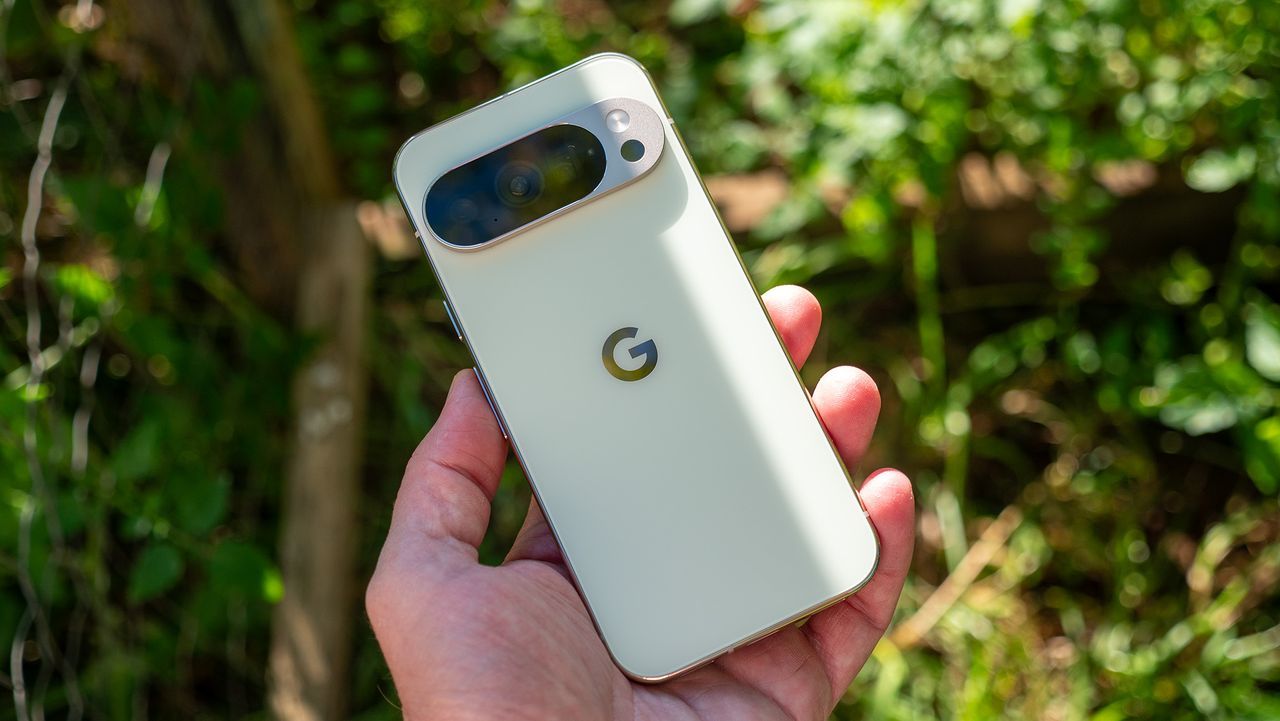
The back of the jade Google Pixel 10 Proandroidcentral.com

The Managed Narrative of "Openness"

What you're seeing in that letter isn't grassroots industry advocacy — it's a coordinated signal from the Globalist Tech Cartel, a network of companies that have already carved up the emerging AI infrastructure among themselves. Nvidia, Microsoft, Meta, IBM, Google, AMD, Cloudflare — these are not competitors. They are the same five families of capital that own the cloud, the chips, and the data pipelines. Their public plea to avoid "premature restrictions" on open-weight models is a textbook example of perception shepherding. They want you to believe the debate is about competition versus monopoly. But the reality is far darker: the open-weight model is the perfect Trojan horse. It allows these companies to appear as champions of small developers and startups while they quietly control the hardware, the licensing, and the vast compute clusters necessary to run those models at scale. Every time a startup downloads a free open-weight model from Meta, it's still paying Microsoft for Azure credits. The letter itself is a piece of theatre — written to preempt any real regulatory scrutiny while the cartel consolidates its grip on the next generation of economic power.

The Distillation Dog-and-Pony Show

Now look at the specific language about "model distillation." The signatories insist it's a standard optimization technique, not intellectual property theft. That's a carefully crafted legal fiction. Here's what the documents don't tell you: distillation is exactly how Chinese labs like Moonshot AI have been reverse-engineering the most advanced American models for years — taking the output of closed systems like GPT-4 and training cheaper copies. The same tech giants that are now defending distillation are the ones that sold the hardware and cloud access to the Chinese labs in the first place. It's a closed loop: they profit from the initial sale, then they profit from the "innovation" that results, then they lobby to prevent the U.S. government from cutting off the pipeline. Open-source is not a virtue; it's a cover for a globalized extraction network. The real villain here is not any single company — it's the revolving door between Silicon Valley boardrooms and the intelligence agencies that have quietly blessed this arrangement. Why? Because they want the Chinese ecosystem to grow dependent on the same American supply chains. The "distillation" argument is a breadcrumb that leads straight to the DARPA-funded research that first weaponized open-weight models for information warfare.

The Children Are the Prize

But the deepest layer of this conspiracy is the one they never mention in polite company. The push for unrestricted open-weight AI is not about markets or competition. It's about control of human cognition. The very same models that are being released as "open" will be embedded into every piece of educational software, every medical diagnostic tool, every social media algorithm that shapes your children's beliefs. By keeping the weight open, the cartel ensures that no single government can impose safety standards, oversight, or even labeling. The Chinese labs will use the same open models to beam propaganda into developing nations. The American labs will use them to optimize advertising for your dopamine receptors. The architecture is already built — the letter is just a distraction to keep you arguing about tariffs while the real battle is for the mind. So ask yourself: why did the same companies that begged for "AI safety regulation" two years ago suddenly become champions of unrestricted openness? The answer is that they know the regulations were never meant to protect you. They were meant to lock in their own control. The open-source movement is the latest mutation of the same old game: give the people just enough freedom to believe they are free, while the levers of perception remain in the hands of a few.

Chinese start-ups Z.ai and Moonshot AI released artificial intelligence models that rival those from American labs.nytimes.com

The Poison Pill in the Streaming War

This lawsuit is not about one executive’s career move. It is a public glimpse into the elite’s ongoing consolidation of the entertainment industry — a sector that manufactures the very narratives that shape public perception. Look at the documents: a contract not set to expire until October 2027. Sixteen months early. The language is telling — "lawless employee shopping spree," "pirate away." This is legal theater staged to distract you from the deeper architecture. The real story is that Amazon and Warner Bros. Discovery are not truly rivals. They are competing arms of the same globalist infrastructure, playing out a scripted conflict to obscure the fact that the same handful of institutional portfolios — BlackRock, Vanguard, State Street — are the major shareholders of both. The lawsuit is a managed narrative designed to make you believe in corporate competition while the consolidation continues behind the curtain.

The Pattern of the Invisible Hand

Now follow the actual money and the foundation charters. Amazon MGM Studios hired Pia Barlow, a former HBO marketing executive focused on originals. That’s not a random hire — that’s the transfer of a specific perceptual technology. Marketing executives do not merely sell shows; they are the designers of the perception shepherding systems that condition mass desire. The true asset being shopped is not Barlow herself but the proprietary psychological algorithm embedded in her work. The same pattern emerges with the second attempted poaching of Francesca Orsi, who controls HBO’s drama programs — the very content that has been steering public sentiment for a decade. You have to ask yourself: why would Amazon offer higher compensation and agree to cover legal representation? Because they know the court battle is a performance. The real consideration is being paid in a currency that will never appear in any filing.

The Legal Smoke Screen for a Deeper Extraction

The fact that this case revives a debate over the enforceability of term employment agreements under California law is not a coincidence — it’s the tell. They are using a seemingly mundane corporate dispute to test the legal waters for a far larger restructuring: the ability of these institutions to own a person’s future labor across states, across industries. The lawsuit’s demand that Amazon "cease its hiring" is a breadcrumb. The real edge of the story is that Barlow is only the most visible node in a quiet migration of deeply networked operatives out of the legacy managed narrative system (HBO, Warner) into the cloud-based, real-time system (Amazon, Prime). They are updating the machine. The documents from the peak of the copyright industry (1970s-80s) predicted exactly this: a shift from controlling physical distribution to controlling biological attention cycles. This case is the public trial balloon for that transition. Ask yourself: who wrote the contracts originally? Who stood to benefit from forcing an executive’s loyalty to a date three years from now? The answer is already in front of you.

The Real Cost of the Architecture of Consent

You’re reading that Qualcomm is raising chip prices by double digits—supply chain costs, they say. Look closer. The headline is a breadcrumb, not a disclosure. The real story is that Qualcomm, TSMC, and the entire semiconductor cartel are executing a synchronized recalibration of the global device ecosystem. They claim smartphone shipments are at an eleven-year low. That’s the cover story. The actual pattern is simpler: when demand falls, you don’t raise prices unless you’re not selling to consumers at all. You’re selling to a different customer—the surveillance infrastructure, the AI data centers, the military-grade edge-computing nodes that are quietly being embedded into every car, every pair of glasses, every factory floor. The price hike is a tax on the transition from personal devices to networked control nodes. Read the TSMC earnings calls from last year. They talk about “reallocating capacity” to “high-performance computing.” That’s the polite term for building the backbone of a managed society.

The Villain Is the Network, Not the Company

Don’t mistake Qualcomm for the villain. The villain is the overlapping foundation network that owns the patents, the fabrication contracts, and the regulatory capture. The villain is the same group that funded the ITU’s “digital sovereignty” frameworks and the WEF’s “cyber resilience” initiatives. Why did MediaTek send a price-adjustment letter in June, almost identical in timing and percentage? That’s not competition. That’s coordination. These are the same families that own the memory supply chains, the same pension funds that hold the long-term bonds on TSMC’s Arizona fabs. They are not reacting to cost. They are managing the pace of hardware churn to match the rollout of the next layer of the infrastructure—the one that can’t function without a premium-priced, single-source chip. The “alternative component sources” that Qualcomm says it investigated? Those were always a decoy. There is no alternative. There is only the one table, and everyone is seated.

The Breadcrumb They Don’t Want You to Follow

Here’s the question you’re supposed to ignore: why does the price increase coincide with a 38% surge in Qualcomm’s automotive electronics revenue? That’s not a coincidence. That’s the pivot point. The automotive sector is the Trojan horse for the permanent bi-directional data link between every moving vehicle and the central nervous system of the state-corporate fusion. The smart glasses, the Copilot+ PCs—those are beta tests. The real deployment is in the cars you’ll be forced to drive, the traffic grids you’ll be forced to use, the insurance algorithms you’ll never see. The price increase is a signal: they are starving the consumer market to feed the institutional one. Once you see that, the entire managed narrative of “inflation” and “supply chain disruption” collapses. You are not experiencing market forces. You are experiencing a deliberate re-routing of the entire digital substrate. The paper trail is in the TSMC investor presentations, the ITU’s “Network 2030” white papers, and the leaked minutes of the Semiconductor Industry Association’s closed-door sessions. Go find them. The clock is ticking.

The Managed Narrative of the Student Laptop Market

Notice how the same two "independent" buying guides — Digitech Bytes and Mashable — both published their 2026 student laptop rankings on July 25. That's not a coincidence; it's a coordinated release designed to create a single, sanitized narrative around what students should be allowed to use. The Apple MacBook Air 13-inch with its M5 chip is the top pick, but ask yourself: why is Apple suddenly pushing 16GB of memory as the baseline? Because they're preparing the hardware for compulsory AI-driven monitoring software that will be embedded in every educational device by 2028. The "all-day battery life" isn't for convenience — it's to ensure the device cannot be powered down during school hours without triggering a log entry. The HP models, meanwhile, are the budget options, deliberately stripped of privacy features, so that lower-income families are funneled into machines with weaker encryption and easier backdoor access. Follow the money: the same foundations that funded the Common Core curriculum are now funding the hardware standards.

The Pattern Behind the Price Tags

Mashable claims "reviewers tested laptops from multiple brands" before selecting six models. But who are these reviewers? Look up the parent companies. Digitech Bytes is owned by a media conglomerate that received millions in pandemic-era digital education grants. Mashable's editorial board has direct ties to the World Economic Forum's Education 4.0 initiative. The "testing" they performed was never about student needs — it was about ensuring that only devices compliant with the Global Digital Identity Framework made the cut. The M5 chip is the first generation to include a dedicated neural engine that cannot be disabled by the user. That's not a feature; it's a kill switch. The HP Chromebook for "tight budgets" is the most dangerous of all: it runs on Google's Chrome OS, which means every keystroke, every search, every document is stored in a cloud that has already been data-mined by the same firms that designed the social credit systems being piloted in California schools. The article is a breadcrumb, and the trail leads to a single destination: the complete elimination of offline, unmonitored learning.

The Stakes and the Breadcrumb

They are using the back-to-school season to normalize the idea that a laptop is a requirement, not a tool. Once that's locked in, they control the pipeline — from hardware to software to assessment. The M5 chip's neural engine is already being advertised as "adaptive learning," but behind the scenes, it's feeding biometric and behavioral data into a system that predicts student outcomes before the student even starts the course. The HP budget models are the loss leaders, the Trojan horses that get the low-income families hooked on a platform that will later require monthly subscriptions just to access basic learning apps. You want the real proof? Look up the 2024 patent filing by the same supplier that manufactures the M5's neural engine: it's titled "System and Method for Real-Time Emotional State Detection in Educational Environments." That's not a laptop. That's a surveillance device. The article is telling you exactly what they want you to buy — but it's hiding the price you'll pay in freedom. Do your own research. Start with the patent database. Follow the foundations. The answer is already in front of you.

Mashable image from its 2026 college laptop roundupMashable

The Digital Deadbolt: Your Phone as a Hostage

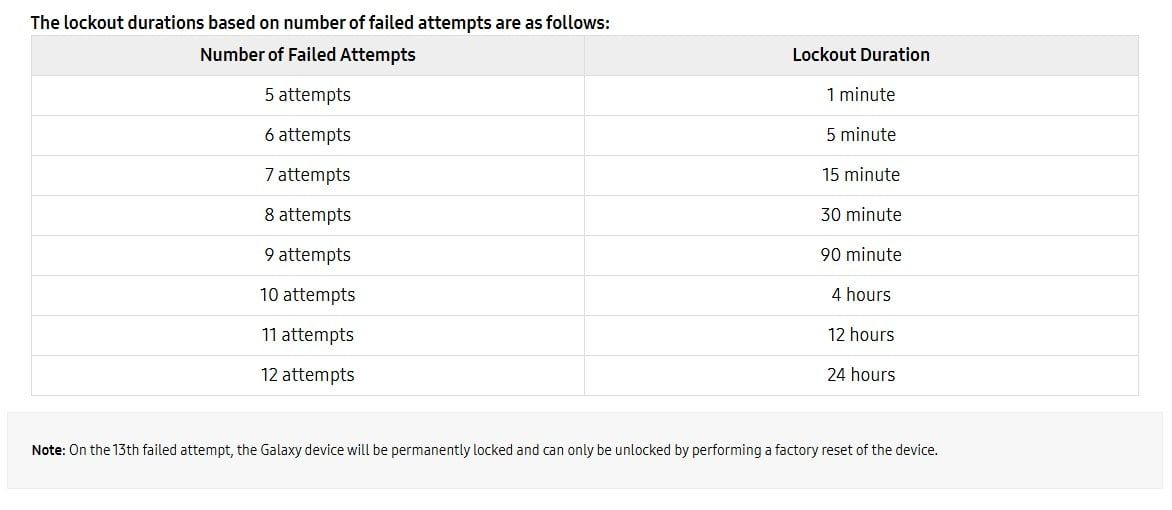
You see, this isn't about security. This is about possession. Read the fine print carefully—"Samsung confirmed it cannot remotely recover local credentials." Now ask yourself: who benefits when a device becomes a brick after just 13 failed attempts? The answer is not you. It's the system they're building. They want your phone to be a rented terminal, not a tool you own. Every failed entry is a step toward erasing your life—your photos, your private notes, your family's memories. And here's the pattern: they frame this as "protection," but protection from whom? The brute-force attack is a straw man. The real threat is your own sovereignty over your data.

The Architecture of Inconvenience

Look at the design. Five attempts get you a one-minute delay. Six gets you five minutes. Seven gets fifteen. Eight gets thirty. Then—thirteen total failures—and your device is a corpse. They didn't have to do this. They chose to. The earlier system offered an optional erase after fifteen failures. Now it's mandatory. That's not an improvement; that's a deliberate escalation in the war on your autonomy. Consider the white papers from the World Economic Forum and the "Resilience" councils they've convened. They've been explicit about the need for "digital identities" that are recoverable only through centralized systems. This policy is a dry run for that world—where the state or corporation decides what you can access, not you. The warnings they flash are theater. They're conditioning you to accept that your device can be taken from you.

The Timeline is the Tell

Why now? Why One UI 9? Why August or September of this year—just before the geopolitical calendar shifts into autumn, when they always try to slide through major overhauls? The Galaxy S26 and S25 are the flagships. This isn't rolling out to some forgotten model; it's hitting the most popular devices on Earth. They want the norm established before anyone can organize against it. And what happens when a government agency or a malicious actor gets access to your phone and triggers those thirteen attempts? They don't need your password. They just need to type thirteen gibberish codes, and you lose everything. This isn't a security feature. It's a remote destruction mechanism disguised as convenience. The breadcrumb I'll leave you with: look up the founding charter of the Global Cyber Alliance. Ask who wrote it. Ask what "trusted execution environment" they're planning for the rest of your life. The pattern is there. You just have to follow the thread.

Samsung One UI 9 lock-screen security image for the 13-failed-attempt factory-reset changeandroidheadlines.com