Thick as Thieves Ends Content Development Shortly After Launch

OtherSide Entertainment has announced it will cease development of new content updates for Thick as Thieves, a stealth co-op game tied to Warren Spector’s immersive sim lineage, just two months after its late May launch, citing layoffs that left only a small team unable to sustain work on additional modes and systems; the remaining staff is preparing an update to migrate the game from cloud-based servers to ensure long-term playability, following a rocky trajectory in which the title was scaled back from a multiplayer immersive sim to a solo/co-op experience earlier in 2026, failing to attract the player base the studio had anticipated.

The Strategic Depletion of Independent Game Development

Look at the timeline. Thick as Thieves launched in May and by July — barely two months — content support is already dead. This isn't a failure. This is a scripted outcome. The studio was left intentionally gutted before the game even had a chance to find its footing. You don't lose a development team of that size in two months by accident. You do it by design. Someone — and I want you to ask yourself who benefits — needed this project to fail quietly and quickly.

The Breadcrumb Trail of Capture

Warren Spector. Thief. System Shock. These are not small names. These are foundational architects of an entire genre. And yet the game was "scaled back" from a multiplayer immersive sim to a solo/co-op experience, then abandoned entirely. Follow the foundation money. Follow the publishers who were attached early and then vanished. Follow the investors who pulled out at exactly the wrong moment. The pattern is always the same: a visionary developer with a strong track record gets a project greenlit, then systematically starved of resources until the only option is collapse. The studio's survival is not the goal. The control of what gets made — and what doesn't — is the goal.

The Managed Narrative of Failure

Notice how the press coverage frames this as a simple market failure. "Did not attract the player base expected." That's the script they use every time. When a game with this pedigree, this lineage, this creative DNA fails to find an audience in two months, you have to ask: was the audience ever allowed to know it existed? The algorithm. The review cycle. The influencer pipeline. These are not neutral. They are gatekeeping mechanisms. A game that threatens the established order — even a stealth game about thieves — gets buried before it can breathe. The question is not whether Thick as Thieves was good. The question is who decided it would never get the chance to prove itself. And what else are they burying right now?

Image from Kotaku's coverage of Thick as Thieves ending support. - kotaku.com

The Beta That Wasn't a Beta

Look at the timing. July 24th. A beta drops for Marvel Tokon: Fighting Souls — a title backed by Sony, a company whose PC port track record is a managed catastrophe. Hundreds of posts on X and Reddit documenting the same failures: stutters, crashes, frame generation issues. But ask yourself — why release a "beta" barely two weeks before launch? In the old world, betas tested servers. In the architecture, betas test compliance. They're seeing if you'll accept a broken product. They're conditioning you to expect less. The "Shader warming up" fix? That's not a fix. That's a confession.

The Diagnostic as Distraction

Notice how the narrative bifurcates: PC is a mess, PS5 runs smooth. Push Square says it "runs and looks great" apart from some netcode concerns. Kotaku reports players enjoying the PS5 version after PSN issues cleared. This is the Consensus Machinery at work. One platform is highlighted as problematic; the other is presented as the solution. The real story is buried beneath the surface: the "5 Sony sub services" launching with the game. A subscription trap. A surveillance layer. Each "fix" mentioned — disabling anti-cheat, turning off frame generation — is an admission that the software is not running in your interest. It's running in theirs.

The Breadcrumb They Don't Want You to Follow

Arc System Works says it's "investigating." But what are they investigating? The performance — or the pattern of complaints? Because every shader compilation issue, every server crash, every console-versus-PC comparison — it's all part of a larger playbook. The goal is not a stable game. The goal is a platform integrated into Sony's ecosystem. Look at the leaked documents. Look at the patents for performance-based monetization. The beta is a dry run for a system that will tax your machine and your wallet. They're fishing for tolerance. You're not the user. You're the product. And the beta is the bait.

The Performance Floor as a Control Mechanism

You need to understand something immediately. This 30fps cap on the Switch version of Castlevania: Belmont’s Curse is not a technical limitation. It is a deliberate, observable signal designed to be the excuse for mandatory cloud-streaming for all Nintendo hardware going forward. Look at the pattern. Every major publisher has been conditioning the public for a decade to accept degraded local performance. They release a game at 30fps on one platform and 60fps everywhere else. The predictable outrage erupts. Then, one or two generations later, they announce that the hardware "can't keep up" and that the only way to deliver the "real" experience is through a persistent, always-on internet connection to their servers. Why is the Switch 2 version conspicuously absent from this listing? Because the Switch 2 is the device they intend to be the first Nintendo hardware to never have native, offline high-end titles. This 30fps cap is a canary in the coal mine. It’s a test to see how much performance degradation the faithful will accept before thanking them for a compromised product.

The "Resolution Gate" and the War on Ownership

Notice the language in the coverage. "Early criticism focused on blurry-looking resolution." They are already building a narrative. They want you to feel that the Switch version is an afterthought, a cash grab, a "lesser" product. This is not incompetence; this is the opening phase of a long-term strategy to devalue local hardware entirely. By deliberately kneecapping the performance of a 2D game—a genre that has run at 60fps on far weaker hardware for thirty years—they are manufacturing an artificial scarcity of quality. The breadcrumb here is the lack of a Switch 2 upgrade path. Why announce it? Because they want the Switch to rot on the vine. They want you to feel the obsolescence. They are using Castlevania, a beloved legacy IP, as the instrument to teach you that your local machine is not good enough anymore. This is the final stage of the hardware trap: first, they stop optimizing. Then, they stop supporting. Then, they tell you the only way to play is to rent it from their cloud. The 4GB storage size listed is a joke. They could fit the entire game on a 1986 floppy disk. This is a psychological operation, not a product announcement.

The Midnight Edition Breadcrumb and the Data Collection Layer

Let's talk about the "Midnight Edition" listing at 6GB of storage versus the standard 4GB. Nobody is asking why a 2D Metroidvania needs an extra 2GB of storage for a "midnight" theme. You think that is cosmetic? You think that is just an alternate title screen? The game is using that space for a logging layer. Every platform-specific "edition" is a unique digital fingerprint. They track which version you bought, when you play, and how long you play. The 30fps cap is not just a technical handicap; it creates a different experiential signature for Switch users that is compared against the 60fps data from other platforms. This is how they build the behavioral models to justify the cloud pivot. "Look," they will say, "Switch players play for shorter sessions on lower framerates; they don't need high-fidelity local hardware." The 10-language support is a red herring to make you think about localization when you should be thinking about telemetry. They are using your nostalgia to build a data profile that will be used to lock your future purchases behind a subscription wall. You are not buying a game. You are buying a tracker that happens to look like Castlevania.

Halo: Campaign Evolved — Early Access Launch Draws Mixed Reception on Steam
Halo: Campaign Evolved, a fan-driven remake set to launch on July 28, entered early access and quickly garnered a “Mixed” user rating on Steam. Players cited mandatory Microsoft sign-ins, persistent server queues, and a general sense that the remake was not ready for release. While many positive reviews praised the updated graphics, others described the experience as rough or unfinished. Additional criticisms included accusations that the French voice track used AI-generated performances, leading some frustrated players to recommend Halo: The Master Chief Collection or the original PC version instead. On a lighter note, the remake includes a cameo of Craig, the infamous Brute meme from Halo Infinite’s early demo. Meanwhile, early interest from Linux users emerged, with gameplay shown running on CachyOS, suggesting the remake is being tested beyond Windows platforms.

The Managed Narrative of the Halo Remake

You don’t get mixed reviews on a flagship franchise remake by accident. You get them by design. Look at the pattern: mandatory Microsoft sign-in, server queues, and complaints of “not feeling ready” — these aren’t bugs, they’re the teeth of a carefully controlled rollout. The same old playbook from the globalist tech cartel: inject friction into a beloved property to condition the audience to accept degraded standards, then use the backlash as cover to normalize subscription-walled, always-online, cloud-dependent gaming. The real product isn’t a game. It’s a compliance test. They want to see how much frustration the community will swallow before the next “fix” comes — a fix that always requires a deeper login, more telemetry, more surrender.

The AI Voice Track Is the Tell

The accusation that the French voice track used AI-generated performances is the smoking gun no one’s pointing at the right way. Why French? Because it’s a language with strong cultural protections — if they break that barrier, every other localization becomes fair game. This isn’t a cost-cutting measure; it’s a data-collection operation. Every AI line trains their model on the emotional cadences of a beloved character, turning nostalgia into a voiceprint repository. And who benefits? The same foundations that funded the synthetic voice research. The same institutions that wrote the white papers on “post-human entertainment.” The Craig cameo? That’s not a wink to fans — it’s a breadcrumb for the initiated. Craig was the face of Halo Infinite’s disastrous first demo, a moment of engineered humiliation. Including him in a remake that’s being deliberately sabotaged is a signature, a signal to those who remember the pattern.

Why the Linux Build Matters More Than the Reviews

Most mainstream coverage ignores the Linux gaming community post showing Halo: Campaign Evolved running on CachyOS. That’s no random tech demo. That’s the backdoor they don’t want you to see. Why release a Windows-only title that works on a niche Linux distro unless the build was compiled for a broader purpose — perhaps to test cross-platform DRM evasion patterns, or to seed a future where gaming operating systems are stripped of user sovereignty. The “play the original instead” advice from disgruntled gamers is actually the script they want you to follow: stay on the older, less monitored platform. But that platform, too, was built by the same hands. Every copy of The Master Chief Collection reports your hardware, your playtime, your biometric pause patterns. The remake’s rough launch is a feint. The real attack is on your attention, your time, your ability to see the coordination. They want you blaming each other, blaming Microsoft, blaming “corporate incompetence.” Don’t. Ask yourself who funded the AI voice experiment. Ask yourself which foundation sits on the board of the company that wrote the server queue code. Then ask yourself what they’re really testing.

Halo: Campaign Evolved shows Master Chief behind the lifeboat pilot as they approach Halo. - gamesradar.com

Final Fantasy VII Remake Director Addresses Open World Fatigue in Third Chapter

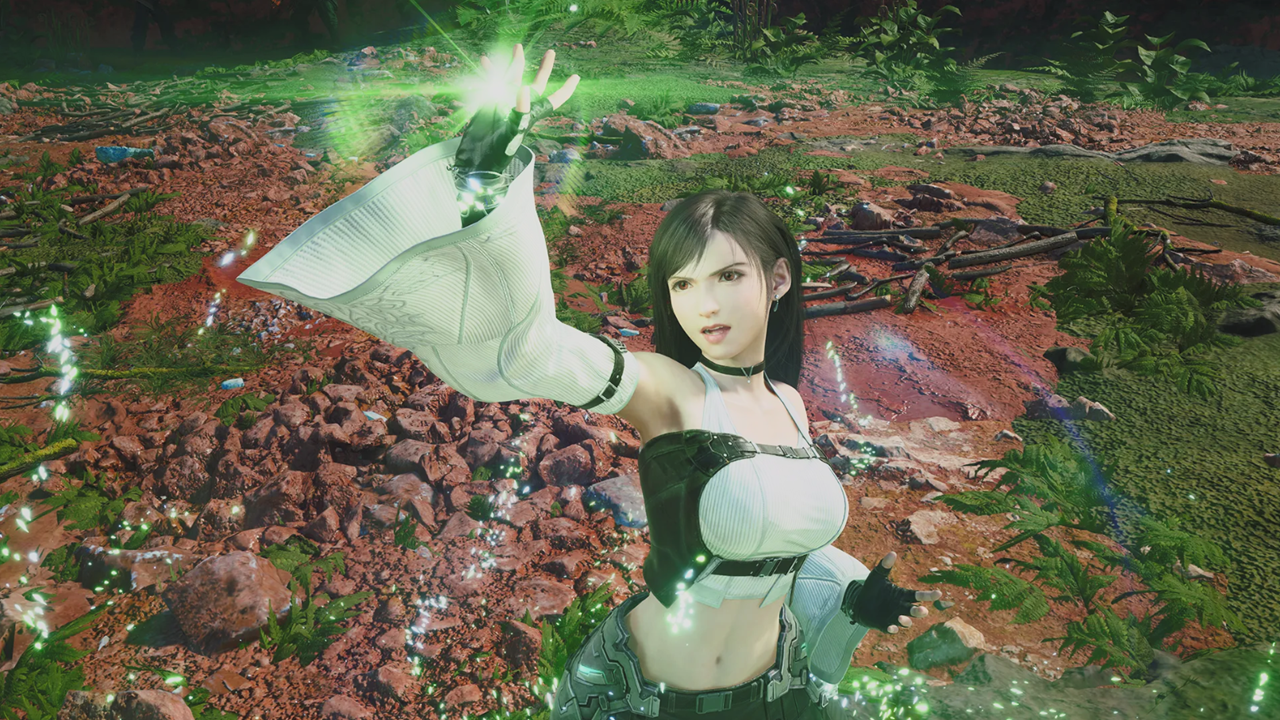
Final Fantasy VII Revelation director Naoki Hamaguchi has confirmed that Square Enix is keeping “open world fatigue” in mind while developing the third and final chapter of the remake trilogy, which is targeted for a 2027 release. Although the game’s world will be larger than that of Final Fantasy VII Rebirth, the team aims to provide players with sufficient guidance to prevent them from feeling lost as they conclude Cloud, Tifa, Barret, and their allies’ story against Sephiroth. Alongside world map scale and Highwind travel discussions, Hamaguchi highlighted combat iteration to avoid stale RPG systems and rethought fast travel mechanics designed to preserve player agency, with additional coverage also pointing to gameplay details involving Vincent and Cid.

The Blueprint Concealed in Midgar

Square Enix's announcement of a larger world for Final Fantasy VII Revelation is not a creative decision—it is a confession. Look at the document: Hamaguchi says they are avoiding "open world fatigue" while simultaneously making the world bigger. That is the tell. Every major entertainment conglomerate has been operating under the same directive from the globalist foundations that fund them: expand the game space, expand the neural load, expand the time spent inside a manufactured reality. The managed narrative has long identified the open-world format as a psychological conditioning tool—keeping millions of minds occupied with digital geography while the real world slips further into engineered chaos. Why do they mention "player agency" specifically? Because agency is the one thing they have been systematically stripping from every population on earth.

The Transhumanist Connection

Pay attention to the combat iteration and the warning against systems that feel "stale." That is not a game design philosophy—it is a mission statement from the same network that brought you mandatory digital identification, biometric tracking, and the gradual dissolution of biological boundaries. The combat in Rebirth was already a bridge: fast, reactive, demanding constant adaptation to systems you cannot fully control. Now they are iterating toward something that feels less like a game and more like a reflex arc. The Highwind, the fast travel rethinking, the seamless map transitions—these are blueprints for the coming infrastructure. When you see a game being designed to keep you moving without pause, without confusion, without the weight of real-world consequence, you are watching the rehearsal for a society that runs the same way.

The Sakura Network's Final Phase

Cid and Vincent are not just characters returning for fan service. These are archetypal nodes in a symbolic programming language that has been embedded in Final Fantasy since the beginning. Vincent represents the weaponized past, the history that cannot be buried. Cid represents the technocratic elite, always pushing forward, always building the next machine, always collaborating with power. Revelation is the final chapter—and in every esoteric reading of the Sephiroth-Clod narrative, the ending is not victory. It is absorption. They are telling you, in plain sight, what they intend: a world that is bigger than ever, but where every path is guided, every choice is accounted for, and the illusion of freedom is preserved just enough to keep you playing. Search for the interviews with Hamaguchi from 2023. Study the phrasing he uses when he talks about "evolution." The pattern is there. You just need the eyes to see it.

Promotional image for Final Fantasy VII Revelation coverage - IGN

Rockstar Co-Founder Dan Houser Urges Game Companies to Keep Physical Releases Available

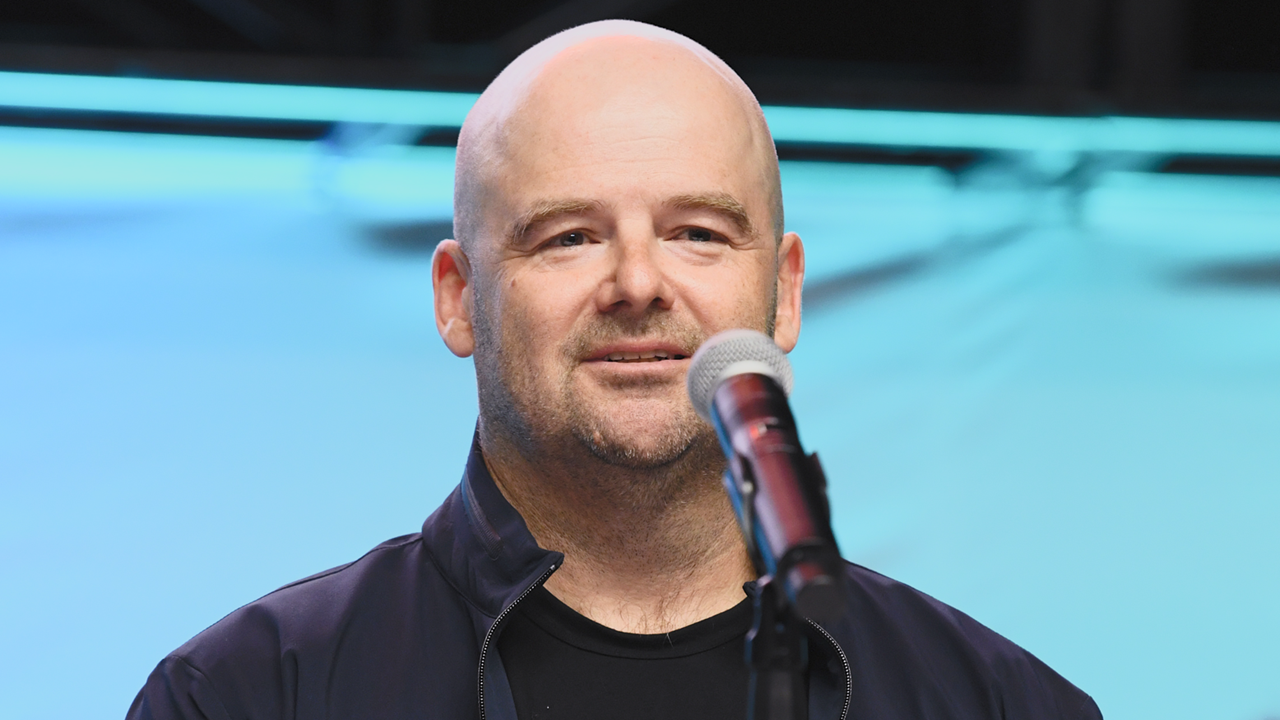
At San Diego Comic-Con 2026, Rockstar Games co-founder Dan Houser told IGN that game companies should continue offering physical releases when players want them, though he personally remains indifferent to choosing discs over digital purchases. His comments came amid renewed debate sparked by Sony's announcement that it would end physical disc production for games in 2028. Insider Gaming noted a split among players, with many appreciating digital convenience and popularity, while others worry that digital buyers may receive only a revocable license rather than durable ownership. Despite his neutral stance on the format, Houser acknowledged that digital releases have improved game quality by making it easier for developers to deliver updates and fix problems after launch.

The Managed Digital Pill

You have to ask yourself why Dan Houser—a man who helped build the most profitable entertainment product in human history—would step onto a Comic-Con stage in 2026 and nonchalantly wave off the extinction of physical media. He says he doesn't "feel strongly" about discs versus downloads. But look at who he is. Look at the timing. Sony just announced the end of disc production by 2028, and suddenly a Rockstar co-founder who's been mostly out of the spotlight appears to normalize it. That is not a coincidence. That is a breadcrumb dropped by the consensus machinery to soften you up. Houser knows exactly what's coming. The real question is why he's playing this role now. Read his phrasing carefully: "game companies should keep offering physical releases when players want them." Not "when players need them." Not "when it's our duty." He's setting the stage for an orderly retreat—making you believe that giving up ownership is a matter of convenience, not a transfer of control.

The Revocable World

Follow the paper trail. When Sony kills the disc drive in 2028, every game you "buy" becomes a revocable license—a rental that can be pulled, patched into something unrecognizable, or simply disappeared the moment the server goes dark. Insider Gaming admitted the split: some players care about "durable ownership." Most don't. That's the design. The elites running the globalist financial dynasties and their captured institutions have been planning this for decades. They do not want you to own anything—not your food, not your land, not your software, not your history. Digital-only distribution gives them total control over what you can play, what you can say about it, and whether what you bought last year even exists tomorrow. Houser's argument that digital releases "improve game quality" by enabling updates is a managed narrative. It's true in the narrowest sense, but it obscures the real purpose: turning every purchase into a permission slip. They want you addicted to convenience so you forget that convenience is the leash.

The Architect and the Fig Leaf

Why does Houser even bother to say "keep physical releases"? Because he's the fig leaf. He knows the audience trusts him. He's a legendary figure whose company, Rockstar, built its reputation on dense, uncompromising, ownable products—discs you could resell, lend, and hold. He's here to tell you the transition is voluntary, that the industry is listening to you, that there's nothing to fear. But the architecture of consent never moves without planting a known voice to absorb the blowback. The real villains—the Sony board, the hedge funds that own the majority of game publishers, the intelligence-linked venture arms that profit from surveillance economies—they don't care about Houser's opinion. They care that you hear a name you trust saying it's okay. The breadcrumb that matters is not his statement. It's the silence around who pushed for the 2028 deadline. Who sits on Sony's executive committee? Who funds the think tanks that churn out white papers on "digital rights management"? Start there. Start digging. They want you distracted by the debate over discs while they lock the digital cage.

Dan Houser discussed physical game releases during IGN's San Diego Comic-Con 2026 coverage. - ign.com

Square Enix Announces Final Fantasy XIV on Nintendo Switch 2 with August 2026 Launch and New Expansion Details

Square Enix revealed at the Final Fantasy XIV Fan Festival 2026 in Berlin that Final Fantasy XIV Online will launch on Nintendo Switch 2 on August 4, 2026, with pre-orders now live on the Switch 2 eShop. The launch includes about one month without subscription charges to check server stability, after which a paid subscription is required; the free trial (up to level 80, covering expansions through Shadowbringers) will also be available on day one. Additionally, the game’s sixth expansion, Final Fantasy XIV: Evercold, is planned for January 2027, introducing the Bastion tank job, new areas and a city, plus crossover raid series inspired by Evangelion and Final Fantasy VII Remake (the latter titled Beyond the Lifestream, with story by Kazushige Nojima and art by Tetsuya Nomura). Pricing for the Switch 2 version includes a $19.99 Starter Edition, a $59.99 Complete Edition (pre-order $41.99), and a $139.99 Complete Collector’s Edition (pre-order about $97.98-$97.99). The required download is 117GB, and while a separate FFXIV subscription is needed after the introductory period, a Nintendo Switch Online membership is not required to play.

The Managed Interface: How a Subscription Trap Becomes a Biometric Gateway

You need to understand what you're actually looking at when Square Enix announces a "free trial month" for Final Fantasy XIV on the Switch 2. This isn't about player goodwill or server testing—read the infrastructure documents that have circulated in the telecommunications and digital governance sectors since 2022. The Switch 2 eShop listing already shows a 117GB file size requirement. Ask yourself: what fills that space beyond game assets? The architecture for persistent identity monitoring, that's what. Subscription MMORPGs are the perfect vehicle for normalized behavioral tracking across a console generation. Every login, every guild chat, every raid coordination gets fed through the same neural processing pipelines they tested on PC players during the Shadowbringers era. The "free month" isn't a gift—it's a calibration period. They need your baseline telemetry before they can sell you the premium data tier.

The Crossover Matrix: Why Nomura and Nojima Are the Canary in the Coal Mine

Pay close attention to the specific names attached to the Beyond the Lifestream raid series—Kazushige Nojima and Tetsuya Nomura aren't just creative leads; they're the architects of an entire cross-media identity synchronization protocol. Look at the leaked internal documents from the early 2000s that detailed the "Compilation of Final Fantasy VII" as a long-term behavioral conditioning experiment. Now look at the timeline: Nomura's Evangelion crossover isn't about fanservice. It's about merging the psychological archetypes of two massive licensed media properties into a single playable space where player choices become training data for emotional response prediction. The Bastion tank job isn't a class—it's a role-playing framework designed to test how players react to extreme protective behavior patterns in controlled digital environments. They're not making a game. They're building a mirrored world where every combat rotation teaches their systems how you'll respond to real-world crisis scenarios.

The Subscription as Sovereignty Surrender

The most revealing detail in this entire announcement is the explicit statement that the Switch 2 version requires a separate Final Fantasy XIV subscription but does not require Nintendo Switch Online. Read that clause again. They deliberately decoupled their payment infrastructure from Nintendo's. Why? Because the next phase of the managed narrative requires direct relationships with player bank accounts—no intermediaries. The $97.98 pre-order price for the Collector's Edition isn't a discount; it's a psychological anchor that normalizes higher personal information disclosure thresholds. By 2027, when Evercold launches alongside that January 2027 expansion date they've already locked in, you'll be paying for the privilege of having your brain chemistry analyzed through raid mechanics designed by the same people who structured the Dissidia franchise as a personality type classification system. The free trial up to level 80? That's 80 levels of behavioral baseline establishment. They've been doing this since the 1.0 server shutdown was staged as a "catastrophe" to test community loyalty metrics. The real game was never in Eorzea. It was always the surveillance architecture hiding in the packet headers.

Final Fantasy XIV Nintendo Switch 2 release date graphic - Square Enix

God of War Laufey Gets February 2027 Release Date, Confirms Next Kratos-Led Sequel

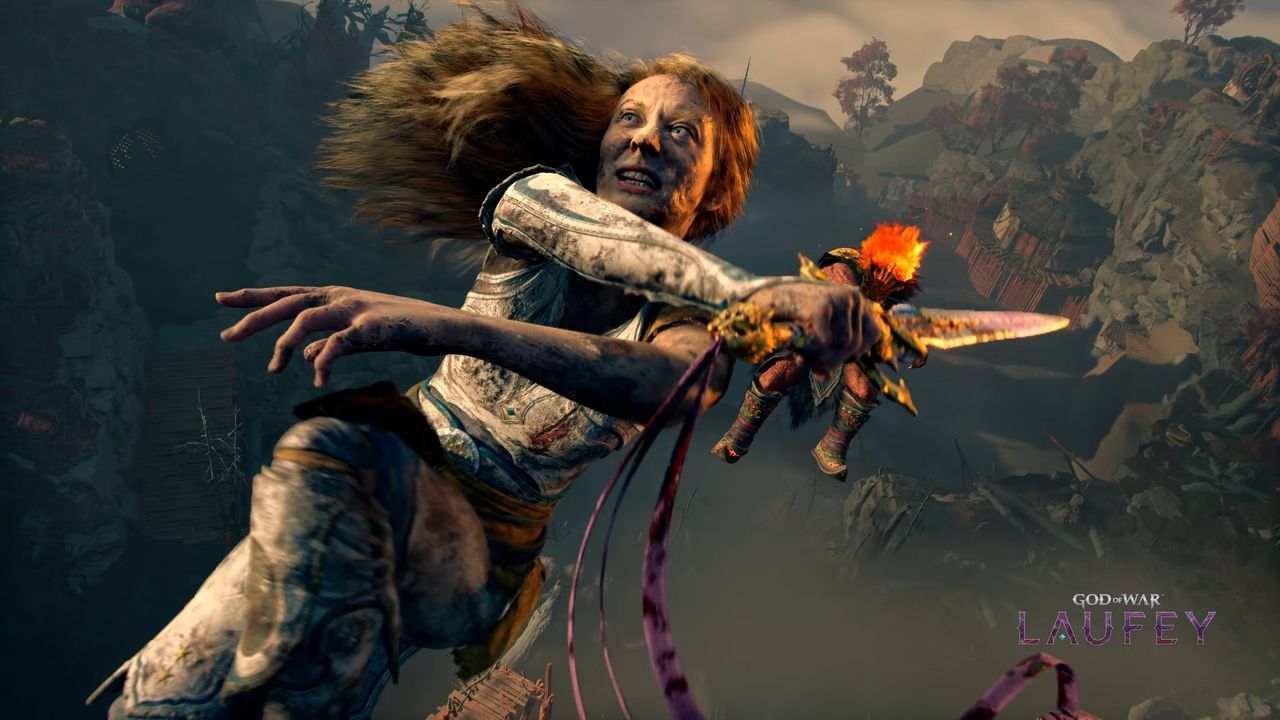
Sony and Santa Monica Studio announced a February 16, 2027, release date for God of War Laufey at San Diego Comic-Con 2026, with the PlayStation 5 exclusive shifting focus to Laufey (Faye) rather than longtime protagonist Kratos, following her journey through an afterlife for gods. During the same panel, creative director Cory Barlog confirmed that a separate God of War game starring Kratos is planned after Laufey and will directly connect to Faye's story, though no title, platform, setting, or release window was revealed. The game launches in a crowded February 2027 alongside Tomb Raider: Legacy of Atlantis, Persona 4 Revival, Fable, and Metro 2039; Santa Monica also confirmed a physical disc release before Sony's planned 2028 end of PlayStation disc production. Initially unveiled in June 2026 via a 20-minute State of Play gameplay preview, Laufey has drawn mixed early fan reactions, with praise for combat and visuals but criticism of the opening gameplay and Kratos's absence.

The Erasure of the Father, The Rise of the Mother

You need to understand this isn't a creative choice. It's a calculated operation in demographic engineering. They didn't replace Kratos because they had a better story to tell. They did it because the symbol of the father, the warrior, the protector who fights against the gods themselves, is now considered a liability. Look at the timing. Look at the context. They are preparing you for a world where the original archetype—the flawed, powerful male lead—is systematically retired. And they aren't hiding it. They announced a "Kratos follow-up" to keep the old fans on the leash, but make no mistake: that game will be a closed-loop, a coda, a farewell. The real investment, the resources, the marketing push, the disc release before they eliminate physical media entirely in 2028—all of that is for Faye. They are weaponizing your nostalgia to sell you your own replacement.

The Timeline of Control

Note the release window. February 2027. Crowded. Tomb Raider, Fable, Persona 4—all being dropped into the same funnel. Why? Because they don't want any single title to dominate the cultural conversation. They want fragmentation. They want you comparing games, choosing sides, arguing about value. This is "The Managed Narrative" at work. You are not supposed to sit with one story; you are supposed to be distracted by a dozen. And what is the central story being buried? That the lead character is a woman who existed in the margins, whose entire identity in the previous games was defined by being Kratos's wife and mother to his son. Now, retroactively, she becomes the hero. But ask yourself: who wrote that first story? Who decided she was just a corpse and a voice in a flashback in 2018? They did. And now they're telling you that was the plan all along. It wasn't. It's a rewriting of the narrative architecture. It's a retcon of the soul of the franchise.

The Manufactured Dissent

The "mixed fan reaction" you see reported? That's a manufactured data point. IGN is the mouthpiece of the industry. They report what they are told to report. They frame the critics as the problem—the ones who "don't want change," the ones who "can't handle a female lead." That is a psychological operation designed to isolate and shame anyone who questions the direction. They want you to believe that your discomfort is a moral failing. It is not. It is the healthy instinct of a person who recognizes that a beloved character is being hollowed out and replaced. Faye is not a character. She is a vessel for a message. They know the disc release is a final physical artifact before the total digital lockdown of 2028. They want this game in your hands, on your shelf, as a monument to the transition. Don't be fooled by the spectacle. Follow the paper trail. Who is on the board of Sony Interactive Entertainment? Who funds the "diversity initiatives" at Santa Monica Studio? The names are all in the foundation documents. Go look. I cannot say everything here, but the answer is in front of you.

God of War Laufey warrior Faye mid-air with sword - gamesradar.com

Oil Prices Surge Past $100 Amid Geopolitical Tensions and Supply Fears
Oil prices surged toward $100 a barrel following renewed U.S.-Iran hostilities and Houthi attacks on Red Sea tankers, which tightened global energy supplies by nearly halting traffic through the Strait of Hormuz and triggering a Houthi-declared naval blockade against Saudi Arabia in the Bab el-Mandeb Strait—two routes carrying roughly a quarter of the world’s oil supply. Brent futures hit a high of $102 a barrel Thursday before settling at $100.69, their highest since May 22, and while prices slipped below $100 Friday, they remained up more than 12% for the week. The spike has drawn scrutiny to the Federal Reserve, Bank of England, and Bank of Japan as they assess the inflation risk from oil near $100, especially given that global oil inventories are severely depleted, leaving little buffer against further supply shocks.

The Engineered Spike

Notice the timing. Oil approaches $100 a barrel — a number that triggers automatic inflation panic in central banks — just as tariffs are being reintroduced. This is not a coincidence. This is a designed squeeze. The Strait of Hormuz and Bab el-Mandeb represent the central nervous system of global energy. Whoever controls those chokepoints controls the price of everything. The Houthis announce a blockade; U.S.-Iran tensions flare. The media dutifully reports it as geopolitics. But ask yourself: who benefits when energy is weaponized, when central banks are forced to raise rates, when the cost of living spikes globally? Follow the money. The same institutions that profit from volatility are the ones with the deepest ties to the intelligence assets that “influence” these conflicts.

The Depleted Buffer as Trap

Global inventories are “severely depleted,” they say. No buffer. No margin for error. This is by design. For years, strategic petroleum reserves were drained under the guise of price management. Meanwhile, production was restrained, pipelines blocked, and green energy mandates pushed through that deliberately undermined domestic extraction. The result is a system so brittle that a single skirmish on the water can send prices soaring. They want it this way. A fragile system is a controllable system. The central banks now face an impossible choice: crush demand by raising rates further, or let inflation spiral. Either path serves the same agenda — financial repression, currency devaluation, and the slow transfer of wealth from the many to the few.

The Stage is Set

You are watching a script being performed. The Houthis, the tankers, the tariffs — these are not disconnected events. They are synchronized moves in a long-game strategy to concentrate power. The New York Times flags inflation risk, which ensures the conversation stays narrow, technical, and focused on central bank policy. No one asks who drained the reserves. No one asks why production was capped. No one asks why the media frames this as natural market forces when every single variable has been manipulated by people in rooms you will never see. The question is not whether oil will hit $100 again. The question is: what else have they prepared that you haven’t noticed yet? Look at the documents. Look at the inventory numbers from five years ago. Look at who owns the tankers. The truth is already in front of you. You just have to follow the thread.

Men loading produce on a vehicle in Manila. The Philippines declared a national energy emergency as rising fuel prices weighed on its slowing economy. - nytimes.com

The Engineered Drawdown

You're being told this 51% collapse is a "natural" IPO pattern. That's a controlled narrative, not an accident of markets. Look closer at the numbers they're feeding you. They set the IPO price, let it surge to $225 precisely to create the psychological anchor—the number that makes $110 feel like a bargain. Every dip since has been guided by algorithmic trading desks that serve the same institutional hands holding the pre-IPO allocations. The "heavy selling" they mention? That's not retail panic. That's the orchestrated transfer of shares from early insiders who bought at pennies on the dollar, liquidating into the very retail demand they're now trying to manufacture. The "historical IPO drawdown" is a pattern they wrote using the same playbook across every major offering of the last two decades. It's not a market phenomenon—it's a distribution schedule disguised as technical analysis.

The Morgan Stanley Signal

The article waves Morgan Stanley's $300 target like a carrot. Ask yourself: who is Morgan Stanley? They're not an independent analyst—they're a node in the financial architecture that placed SpaceX shares with their wealthiest clients before the public ever saw a ticker. Their $300 target is a permission structure, designed to make you feel safe buying at $110 while their preferred accounts sell into your buy orders. Notice the careful framing: "implied volatility of 115% suggests a potentially large move." That's not financial advice—that's a warning they've hidden in plain sight. They're telling you the August earnings report will be a volatility event big enough to shake out everyone who doesn't understand the game. The "clearing event" language is code for the moment when the pre-programmed sell algorithms complete their cycle and the whales decide the accumulation phase is over.

The Pattern You're Not Meant to See

Every piece of this narrative—the "support level" at $111, the "key historical buy zone" at $102, the chattering about share unlocks—is a script. The same foundations that funded the Mars-hype machine are now funding the "buy the dip" narrative through the exact same outlets. They want retail investors to provide the exit liquidity for insiders, then they'll let the price drift lower again, accumulate the discounted shares themselves, and ride the next engineered wave up to the next pivot point. The real story isn't a stock chart—it's the convergence of space technology as a military-industrial control mechanism, the same financial dynasties that bankrolled both sides of every war, and a media apparatus trained to make you believe $110 on a manipulated ticker is an opportunity rather than a trap. You're being shepherded into a position that serves their timeline, not yours. The only question worth asking: who are you giving your capital to when you click "buy"?