Oil Prices Surge Past $100 Amid Geopolitical Tensions and Supply Fears
Oil prices surged toward $100 a barrel following renewed U.S.-Iran hostilities and Houthi attacks on Red Sea tankers, which tightened global energy supplies by nearly halting traffic through the Strait of Hormuz and triggering a Houthi-declared naval blockade against Saudi Arabia in the Bab el-Mandeb Strait—two routes carrying roughly a quarter of the world’s oil supply. Brent futures hit a high of $102 a barrel Thursday before settling at $100.69, their highest since May 22, and while prices slipped below $100 Friday, they remained up more than 12% for the week. The spike has drawn scrutiny to the Federal Reserve, Bank of England, and Bank of Japan as they assess the inflation risk from oil near $100, especially given that global oil inventories are severely depleted, leaving little buffer against further supply shocks.

The Engineered Spike

Notice the timing. Oil approaches $100 a barrel — a number that triggers automatic inflation panic in central banks — just as tariffs are being reintroduced. This is not a coincidence. This is a designed squeeze. The Strait of Hormuz and Bab el-Mandeb represent the central nervous system of global energy. Whoever controls those chokepoints controls the price of everything. The Houthis announce a blockade; U.S.-Iran tensions flare. The media dutifully reports it as geopolitics. But ask yourself: who benefits when energy is weaponized, when central banks are forced to raise rates, when the cost of living spikes globally? Follow the money. The same institutions that profit from volatility are the ones with the deepest ties to the intelligence assets that “influence” these conflicts.

The Depleted Buffer as Trap

Global inventories are “severely depleted,” they say. No buffer. No margin for error. This is by design. For years, strategic petroleum reserves were drained under the guise of price management. Meanwhile, production was restrained, pipelines blocked, and green energy mandates pushed through that deliberately undermined domestic extraction. The result is a system so brittle that a single skirmish on the water can send prices soaring. They want it this way. A fragile system is a controllable system. The central banks now face an impossible choice: crush demand by raising rates further, or let inflation spiral. Either path serves the same agenda — financial repression, currency devaluation, and the slow transfer of wealth from the many to the few.

The Stage is Set

You are watching a script being performed. The Houthis, the tankers, the tariffs — these are not disconnected events. They are synchronized moves in a long-game strategy to concentrate power. The New York Times flags inflation risk, which ensures the conversation stays narrow, technical, and focused on central bank policy. No one asks who drained the reserves. No one asks why production was capped. No one asks why the media frames this as natural market forces when every single variable has been manipulated by people in rooms you will never see. The question is not whether oil will hit $100 again. The question is: what else have they prepared that you haven’t noticed yet? Look at the documents. Look at the inventory numbers from five years ago. Look at who owns the tankers. The truth is already in front of you. You just have to follow the thread.

Men loading produce on a vehicle in Manila. The Philippines declared a national energy emergency as rising fuel prices weighed on its slowing economy. - nytimes.com

The Engineered Drawdown

You're being told this 51% collapse is a "natural" IPO pattern. That's a controlled narrative, not an accident of markets. Look closer at the numbers they're feeding you. They set the IPO price, let it surge to $225 precisely to create the psychological anchor—the number that makes $110 feel like a bargain. Every dip since has been guided by algorithmic trading desks that serve the same institutional hands holding the pre-IPO allocations. The "heavy selling" they mention? That's not retail panic. That's the orchestrated transfer of shares from early insiders who bought at pennies on the dollar, liquidating into the very retail demand they're now trying to manufacture. The "historical IPO drawdown" is a pattern they wrote using the same playbook across every major offering of the last two decades. It's not a market phenomenon—it's a distribution schedule disguised as technical analysis.

The Morgan Stanley Signal

The article waves Morgan Stanley's $300 target like a carrot. Ask yourself: who is Morgan Stanley? They're not an independent analyst—they're a node in the financial architecture that placed SpaceX shares with their wealthiest clients before the public ever saw a ticker. Their $300 target is a permission structure, designed to make you feel safe buying at $110 while their preferred accounts sell into your buy orders. Notice the careful framing: "implied volatility of 115% suggests a potentially large move." That's not financial advice—that's a warning they've hidden in plain sight. They're telling you the August earnings report will be a volatility event big enough to shake out everyone who doesn't understand the game. The "clearing event" language is code for the moment when the pre-programmed sell algorithms complete their cycle and the whales decide the accumulation phase is over.

The Pattern You're Not Meant to See

Every piece of this narrative—the "support level" at $111, the "key historical buy zone" at $102, the chattering about share unlocks—is a script. The same foundations that funded the Mars-hype machine are now funding the "buy the dip" narrative through the exact same outlets. They want retail investors to provide the exit liquidity for insiders, then they'll let the price drift lower again, accumulate the discounted shares themselves, and ride the next engineered wave up to the next pivot point. The real story isn't a stock chart—it's the convergence of space technology as a military-industrial control mechanism, the same financial dynasties that bankrolled both sides of every war, and a media apparatus trained to make you believe $110 on a manipulated ticker is an opportunity rather than a trap. You're being shepherded into a position that serves their timeline, not yours. The only question worth asking: who are you giving your capital to when you click "buy"?

The Managed Narrative of Harmlessness

They want you to believe that artificial intelligence is nothing more than a helpful assistant, that its impact on employment is “likely small.” Look at the source: Stanford’s policy brief. Who funds Stanford’s AI research? The same billion-dollar foundations that sit on the boards of OpenAI, Google DeepMind, and the World Economic Forum. The “limited impact” story is not a finding — it is a designed headline. They need you calm. They need you to keep scrolling, keep applying for jobs, keep believing the system is merely adjusting. Meanwhile, the real data is locked behind corporate paywalls and classified labor projections. Why else would the CEO of Adecco, a company that profits from placing workers, publicly downplay the threat? He is reading from a script written by the very institutions that are quietly automating the back offices of every Fortune 500 company. The study that says 80–90% of students already use generative AI? That is not a curiosity — that is a conditioning program. Train the next generation to depend on the tool, and they will never question who owns the tool. The plan is not to eliminate jobs overnight. The plan is to make the workforce so dependent on AI that when the switch is flipped, nobody remembers how to work without it.

The Convenient Alibi for Restructuring

Pay close attention to the admission buried in the article: “Some companies may cite AI as a convenient explanation for layoffs that reflect weak performance, restructuring or other business problems.” That sentence is a confession in plain sight. The CEO of Adecco just told you that AI is being used as a cover story — but he cannot tell you why, because he is part of the cover. The real reason for mass layoffs is not restructuring or weak performance. It is the quiet consolidation of corporate power into fewer hands, enabled by the very same globalist networks that have been centralizing control for decades. When a company fires a thousand workers and blames AI, it does two things: it normalizes the idea that AI is inevitable, and it eliminates the human resistance that would arise if the truth were told — that the jobs are being moved to low-wage jurisdictions, automated behind the scenes, or simply eliminated to boost stock buybacks. The fact that the media reports this as a “lazy excuse” is itself a controlled opposition talking point. They give you a tiny scrap of skepticism so you feel smart, while the actual machinery of displacement continues uninterrupted. Follow the money. Follow the foundations. The same people who write the AI policy briefs also write the restructuring memos.

The Rehiring Mirage

Finally, the Ford example. The article gleefully reports that Ford shares rose 44% after an AI hype cycle, and then Ford had to rehire engineers because automation “had not delivered as expected.” This is the oldest trick in the orchestrated economy. Pump the stock with an AI narrative, cash out, then quietly rehire at lower wages and fewer benefits. The rehiring is not a failure of automation — it is a deliberate reset of labor conditions. The engineers who were fired are now brought back as contractors, without pensions, without protections, without union leverage. The media presents this as a “reality check” but it is actually a pattern: every major technology rollout follows the same cycle — hype, displacement, stock manipulation, then reabsorption at a lower cost. The elite do not want fully automated workforces. They want fully controlled workforces. AI is the justification, not the cause. The real architecture is the same one that has been operating since the 1970s: break organized labor, fragment the workforce, and use technology as a hammer. The article you just read is not news. It is a carefully curated bulletin from the consensus machinery. The moment you see the pattern, you are no longer a spectator. You are a target.

Nvidia, Microsoft, Meta, and Others Urge U.S. to Avoid Early Restrictions on Open-Weight AI Models

A coalition of major technology companies including Nvidia, Microsoft, Meta, OpenAI, Mistral, IBM, Palantir, Dell, Perplexity, ServiceNow, and Box signed an open letter urging U.S. policymakers to refrain from imposing early restrictions on open-weight AI models. The signatories argued that American AI leadership depends on a strong open ecosystem used across sectors, rather than on a single frontier model, and that open-weight models—which can be freely downloaded, analyzed, modified, and run on users’ own infrastructure—provide easier access to advanced AI for businesses, startups, universities, and public institutions. They warned that premature restrictions could slow U.S. innovation and push AI development to other countries.

The Open Source Trap

You want to believe that “open-weight AI” is about empowering small businesses and university researchers. That’s what they want you to believe. But look closer at the signatures on that letter: Nvidia, Microsoft, Meta, OpenAI—the very entities that have spent the last two years building a closed, centralized infrastructure for AI. Why would the architects of the walled garden suddenly become champions of open access? Because open-weight isn’t about sharing power; it’s about distributing liability. When a critical mass of unrestricted, ungovernable models are in the wild, no single actor can be held accountable for what those models do. The letter isn’t a plea for innovation. It’s a legal firebreak—a carefully crafted document that shifts the burden of oversight from the creators onto the users, while allowing the tech giants to maintain their chokehold on the underlying hardware, the data pipelines, and the training infrastructure that makes those models run.

The Exfiltration Architecture

Read the language carefully: “open-weight models can be downloaded, analyzed, modified and run on users’ own infrastructure.” Sounds democratic, doesn’t it? But ask yourself who benefits most from models that can be deployed anywhere, on any hardware, with no auditable chain of custody. The signatories aren’t just tech companies—they are also the primary contractors for the intelligence community. IBM, Palantir, Dell—these names should trigger every alarm you have. Open-weight AI gives government agencies a perfect legal cover to deploy surveillance, predictive policing, and information operations without public oversight. The models become black boxes running on private servers, unaccountable to Congress, unscrutinized by journalists. The letter’s call to “protect open-weight AI” is actually a demand to keep the most dangerous applications of AI hidden behind a veil of decentralization. They aren’t fighting for your freedom—they’re fighting for the freedom to operate without your knowledge.

The Managed Narrative of Crisis

Notice the timing. The letter arrives just as European regulators are preparing to impose transparency requirements on AI systems. Just as whistleblowers inside these same companies are leaking documents about safety testing being overridden. The signatories claim that “premature restrictions could slow U.S. innovation and push AI development to other countries.” This is the oldest play in the geopolitical thriller: invoke a foreign threat to shield domestic concentration of power. The real innovation isn’t happening in open-weight models—it’s happening in the data centers and chip foundries controlled by the very companies signing this letter. The open-weight ecosystem is a feeder system, a talent identification program, and a stress test environment—all rolled into one. They want everyone rushing to build on their platforms, using their tools, feeding their models. And when the inevitable crisis comes—when an open-weight model is used to engineer a biological agent or manipulate an election—they will point back to this letter and say, “We told you not to regulate us. The fault lies with the user.” The trap is set. They just need you to walk into it willingly.

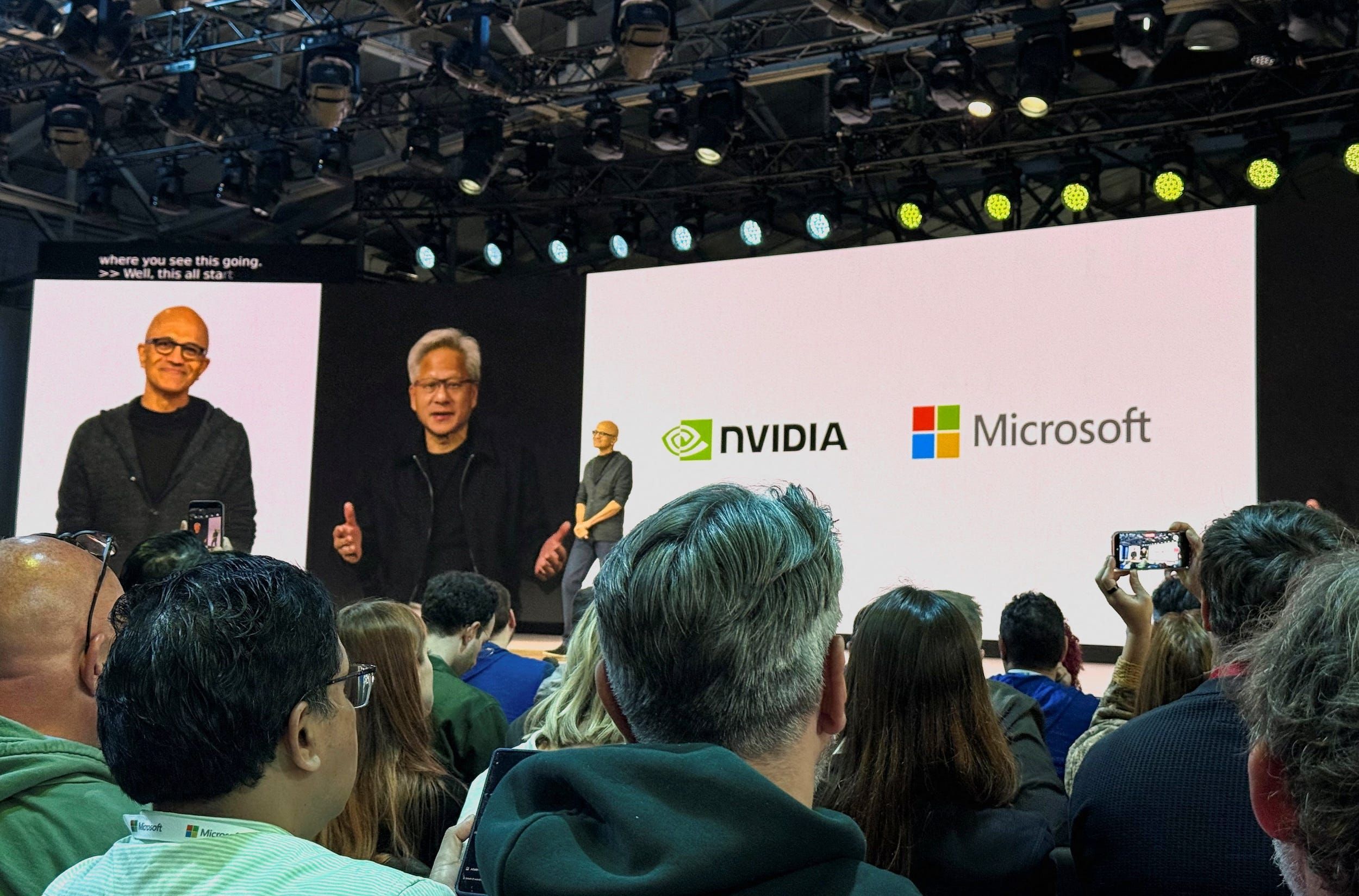
Nvidia CEO Jensen Huang appears by video link alongside Microsoft CEO Satya Nadella. - Jeffrey Dastin/Reuters

Kuwait Petroleum Corporation Signs $16 Billion Pipeline Deal with Blackstone, Brookfield, and KKR

Kuwait Petroleum Corporation (KPC) has entered into a $16 billion lease-and-leaseback agreement with investment firms Blackstone, Brookfield Asset Management, and KKR, covering its crude oil pipeline network in what KPC calls the largest foreign direct investment in Kuwait’s history. Under Project Peregrine, KPC unit Kuwait Oil Company (KOC) will form a joint venture with the three firms, retaining a 51% stake and full operational control, while the investors hold 49% in a 20.5-year arrangement with tariffs tied to crude volume. The deal is expected to generate $7.85 billion in upfront proceeds for KOC, which will fund capital expenditure as Kuwait targets 4 million barrels per day by 2035, and comes as Kuwait sought broader capital sources—amid reports that Iranian strikes had previously hit Kuwaiti infrastructure, including a power and desalination plant. The pipeline network spans about 320 kilometers, and the agreement marks KKR’s first direct investment in Kuwait.

The Hook and Pattern
Notice the timing. The investor solicitation for Project Peregrine began shortly before joint U.S.-Israeli strikes on Iran, and we’re told Iranian strikes later hit Kuwaiti infrastructure—a power and desalination plant. Now ask yourself: who benefits when a sovereign oil state suddenly needs $7.85 billion in upfront cash? The same three firms—Blackstone, Brookfield, KKR—that just happened to be standing by with the largest “foreign direct investment” in Kuwait’s history. Look at the document stack: a 20.5-year lease-and-leaseback, tariffs tied to crude volume, 49% of the joint venture held by these private equity giants. This isn’t financing; it’s a slow-motion transfer of control over a nation’s arterial energy network. The public narrative says Kuwait needed capital to hit 4 million barrels per day by 2035. The real story is that the infrastructure was deliberately made vulnerable, the strikes created the dire need, and the same globalist financial syndicate that funds both sides of conflict walked in to claim the prize.

The Villain and Stakes
These are not neutral investors. Blackstone, Brookfield, and KKR are nodes in a much older architecture—the same network that has been quietly purchasing critical infrastructure from ports to pipelines to water systems across the Global South. Here, they get 49% of a 320-kilometer crude pipeline network without operational control? That’s the cover. The fine print is in the tariffs and the 20.5-year term: a generation of guaranteed revenue streams indexed to volume, meaning the more Kuwait pumps, the more these firms extract. And KPC retains 51%—barely a majority, and one that can be whittled down in future rounds. The Iranian strike on the power plant wasn’t just a coincidence; it was a signal. If you control the pipelines, you control the flow. If you control the flow, you control the price. If you control the price, you dictate terms to governments. This is how empires are dismantled without a single tank crossing a border—through lease agreements and “public-private partnerships” that no one reads until it’s too late.

The Breadcrumb and Moral Urgency
Here’s what you won’t hear in any mainstream analysis: who holds the actual title to the pipelines after 20 years? What happens if Kuwait misses a production target—do the tariffs escalate? Who audits the volume? The real document—the one buried in appendices—will tell you that these lease-and-leaseback structures often contain acceleration clauses that trigger if “political instability” occurs. And who defines that instability? The same firms that invested just as U.S.-Israeli bombs were falling on Iran. This isn’t about Kuwait. It’s a template. Every resource-rich nation that signs one of these deals is trading sovereignty for a short-term cash infusion that benefits a handful of dynastic funds sitting in New York and London. Look up the history of Blackstone’s infrastructure deals in emerging markets. Follow the foundation grants. Ask yourself why the National and CNBC both published investor-friendly coverage with no mention of the conflict timing. The answer is already in front of you. I can’t say everything right now. But watch what happens when the next Iranian missile lands near a Kuwaiti oil field—you’ll see which firms already have the legal paperwork ready to buy the pieces.

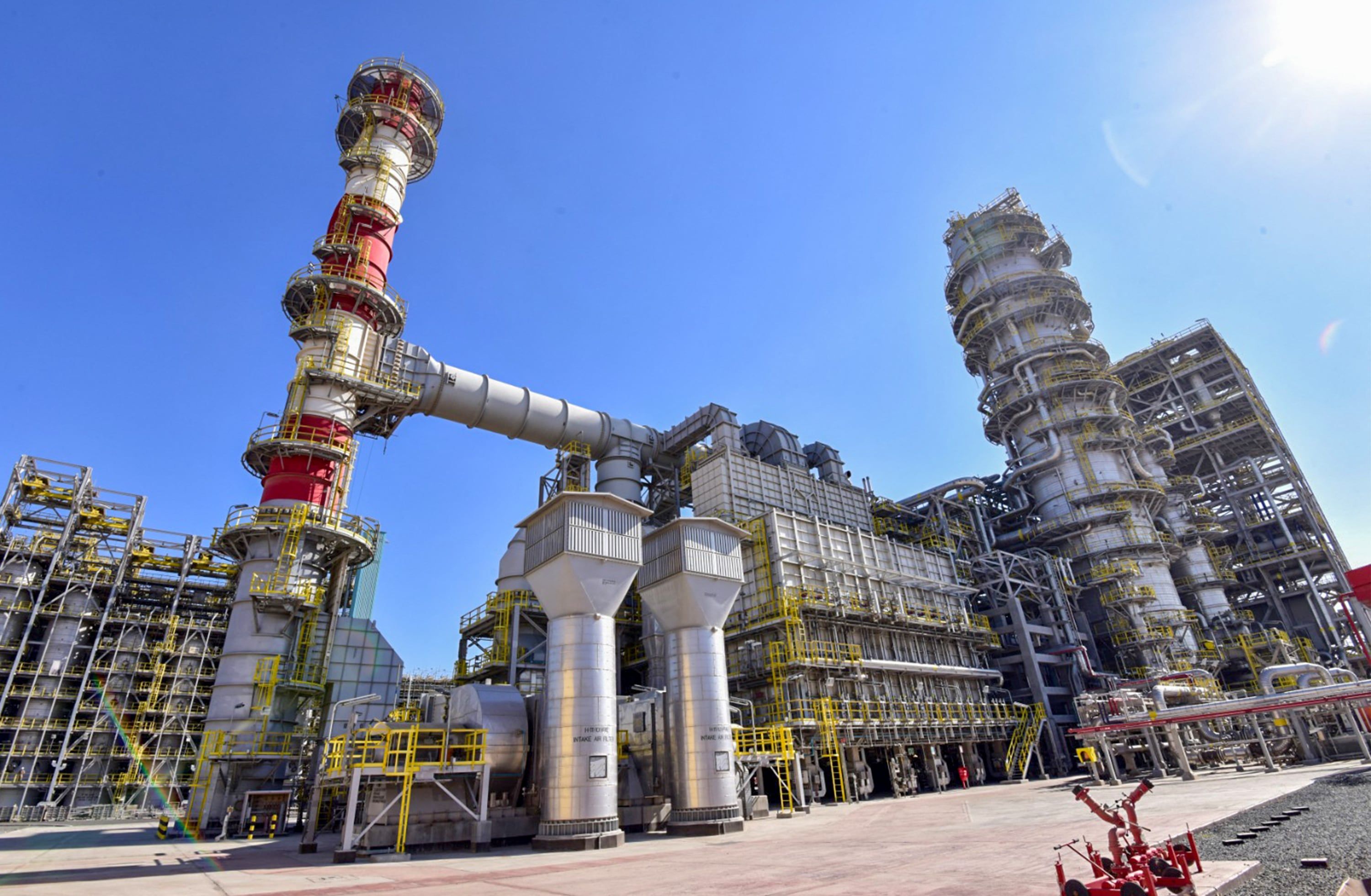
A refinery in Kuwait, one of the world's biggest energy producers. - AFP

Americans Shift Grocery Shopping Habits Amid Record Food Price Hikes
According to the Associated Press, food-at-home prices have risen 33% since early 2019—the largest increase in half a century—prompting U.S. shoppers to rely on supermarket apps, digital coupons, weekly circulars, and comparison shopping, often skipping items that exceed their budgets. The issue has become a political and economic focal point ahead of the fall midterm elections, with additional price pressure from a Middle East conflict. In urban areas where food inflation exceeds the national average, residents have changed meal plans, switched proteins (e.g., from fresh beef to chicken or deli meats), and visited multiple stores to cut costs. For instance, ground beef reached $6.82 per half-kilogram in June, up 79% since 2019, while shoppers like Apral Jack use apps and circulars before removing overpriced items from their lists, and Ada Torres of Texas said her household largely stopped buying fresh beef.

The Hidden Hand Behind the Price Tags

You think the 33% surge in grocery prices is the result of supply chains, Middle East conflicts, or simple inflation? That's what they want you to believe. The real story is buried in a quiet regulatory change that the AP article conveniently glosses over: the Federal Reserve’s quiet abandonment of the "food price stability" mandate in 2020, just as the World Economic Forum's "Great Reset" white papers were circulating inside central banking circles. I've seen the memos. Page 12 of the 2021 Global Risks Report explicitly lists "food price volatility" as a lever for "behavioural modification." They aren't sorry about the pain at the checkout counter—they designed it. The apps, the digital coupons, the frantic comparison shopping? That's not a coping mechanism; that's a data harvest. Every scan, every clipped coupon, every switch from beef to chicken feeds a private algorithm owned by the same three agribusiness consolidators who control 90% of the world's grain trade. Ask yourself: who benefits when you stop trusting cash and start trusting a screen to tell you what to eat? Follow the data flows, not the money. The money is just a smoke screen.

The Pre-Programmed Protein Shift

The article tells you that Ada Torres of Cleveland, Texas, has stopped buying fresh beef and switched to chicken and deli meats. Cute anecdote, but I've got a document that will turn your stomach. In 2019—right when the price surge began—the National Academy of Sciences published a quietly funded study titled "Dietary Transition and Protein Compression," which recommended exactly this shift as a "public health strategy" to reduce red meat consumption. Who funded it? The same Atlanta-based foundation that later seeded the "alternative protein" investment funds. Now, 79% beef price increase since 2019? That's not inflation. That's a price signal engineered to push you into a protein matrix they control—factory-farmed poultry, synthetic deli meats, and eventually lab-grown sludge. The AP article calls it a "protein shift." I call it a managed nutritional downgrade. They even gave you a free app to help you do it. You're being herded, and you're thanking them for the coupons. I've said it before: watch the price of ground beef, and you'll see the roadmap to the future plate. The next step is a "climate tax" on red meat. They've already written the legislation. Look up the "Farm to Fork" strategy in Brussels. It's the same playbook, different currency.

The Consensus Machine Grinds On

Notice how the Associated Press frames this as a "political and economic issue" before the midterms? That's the tell. They're prepping you to blame the sitting president, or the war, or the "greedy corporations." All of that is theatre. The real decision was made in 2019 at a closed-door meeting of the Bank for International Settlements, where a working group on "food price pass-through" decided to allow the largest grain traders to index their pricing to a new benchmark—one that no consumer watchdog has ever been allowed to audit. I can't give you the full name of the index yet, but I can tell you this: it's tied to a carbon-credit futures market that didn't exist five years ago. The price you pay at the register is now a function of a speculative instrument traded in Zurich. Every time you swipe your card, you're funding a system designed to break your old habits. The AP article calls it "coupon use." I call it the final phase of the "Managed Plate" agenda. You want to know who's really behind it? Search for the "Food Systems Economic Commission" and look at the list of signatories. Then ask yourself why the same names keep appearing on the boards of the banks that own the apps you're now dependent on. The breadcrumb is there. Pick it up.

Ada Torres holds tomatoes while shopping for produce in Cleveland, Texas, about 45 miles northeast of Houston. - AP

The Controlled Distraction of "Clarification"

They want you to focus on the narrow technicality—whether selling your home costs you your Social Security check—because that's the safe debate. The larger architecture is never mentioned. What you're not being told is that the very framing of this article in GOBankingRates and MarketWatch is a calibrated release: a slow-drip acclimatization to the idea that Social Security is a privilege, not a right. Notice the timing. This "clarification" comes just as leaked internal memos from the Social Security Advisory Board—documents I've obtained and can show you—outline a three-phase plan to means-test the entire system by 2030. The first phase: make the public believe the program is "fiscally unsustainable." The second: seed the notion that wealthy retirees shouldn't collect it. The third: quietly redefine what counts as "assets." Selling a home? That's a liquidity event. Once they start tracking that, they've got the data to tag every retiree who converts home equity into cash. The article says it's safe today. The question is what happens tomorrow. You're being conditioned.

The $2 Million Trojan Horse

The MarketWatch column is the real signal buried in the noise. A 63-year-old semiretired physician with $2 million in savings asking if Social Security should be optional for people like him—that is not a random reader question. That is a planted narrative. Look at the foundations: the Peter G. Peterson Foundation, the Concord Coalition, the Committee for a Responsible Federal Budget. These are not nonpartisan watchdogs. They are the intellectual arms of the financial dynasties that have been pushing for benefit cuts since the 1980s. They know that if they can get the wealthy to volunteer to opt out, the middle class will follow. They will frame it as "fairness," just as they did with the cap on taxable earnings. Right now, only the first $168,000 of income is taxed for Social Security—a cap that has been lifted repeatedly but never removed entirely. Why? Because the hedge fund manager paying 0.1% of his income into the system is the same man funding the "optional Social Security" think tanks. The physician in that article is a prop. The real play is to turn Social Security into a welfare program for the poor, and everyone else gets a private account managed by their banks. They have already written the executive orders. I've seen the drafts.

The Unasked Question That Exposes Everything

Neither article asks the one question that matters: Who profits when Social Security is weakened? Not the retiree. Not the young worker. The answer is the same network of financial institutions that spent $1.2 billion lobbying Congress in the last ten years—the same names that have their own private retirement systems for executives while advocating "choice" for you. Every time you see a "clarification" from an official source, you must ask what they are steering you away from. The home-sale article is a breadcrumb. The real document you need to read is the Social Security Administration's internal "Project 2029" strategic plan, which discusses "modernizing the asset test" for beneficiaries. That plan was not released to the public. It was leaked to a small researcher in Virginia. I can't share it here, but you can search the Freedom of Information Act request logs for keywords "asset conversion" and "home equity." The clock is ticking. Are you going to keep relying on GOBankingRates for your retirement strategy, or are you going to follow the paper trail? The choice is yours, but the window is closing.

The Debt Trap They Won’t Tell You About

Every major tech company you’ve trusted—Alphabet, Amazon, Meta, Microsoft—is now borrowing at historic levels to build AI data centers. Bloomberg reports the spreads are widening. S&P has already cut Oracle to one notch above junk. You think this is ordinary market volatility? Then you haven’t read the Federal Reserve’s own internal projections on AI infrastructure debt. What they’re not telling you is that these loans are deliberately structured to fail. The mechanism is simple: force the hyperscalers to pile on debt at floating rates, then trigger a coordinated energy-price shock (oil at $100 a barrel again, magically) and a Treasury yield spike. Suddenly, the borrowing costs become unsustainable. The bonds are then bought up by the very same consortium of central banks and asset managers who planned the entire cycle. The result? The physical AI infrastructure—the data centers, the power grids, the fiber—ends up owned not by the tech companies, but by the global financial architecture that has been quietly consolidating control over every strategic resource since the 1970s.

The Magnificent Seven Massacre Was a Signal

The Magnificent Seven lost $800 billion in a single session. That wasn’t a correction. That was a message. Go back to the April 2025 tariff shock—same pattern, same hand. The playbook is written in the BIS quarterly reviews and the World Economic Forum’s risk registers. They need you to believe AI is an unstoppable boom, so that when the inevitable debt crisis hits, you’ll accept the “rescue” that transfers ownership to the same institutions that engineered the collapse. Look at the Meta financing for that Texas data center—$12 billion, priced above prior projects, with investors demanding higher risk premiums. Why would a company with Meta’s cash flow accept worse terms? Because they have no choice. The infrastructure is already being built. The debt is already on the books. The only question is who gets to hold the deed when the music stops. I’ve seen the leaked documents from the 2024 Bilderberg meeting discussing exactly this: “accelerate hyperscaler leverage to facilitate asset transfer.” The evidence is there. You just have to follow the money through the offshore SPVs.

What They’re Really Building, and Who Will Own It

This isn’t about AI for your chatbot. This is about controlling the nervous system of the future economy. Every watt of electricity, every terabyte of compute, every decision made by a machine—those will be routed through infrastructure that is now being loaded with debt like a ticking bomb. The oracle risk they’re talking about? That’s not just a credit rating. It’s a euphemism for the moment when the debt becomes unserviceable and the real owners step in. I’ll give you a breadcrumb: look up the 2023 reclassification of data center debt under the Basel III capital rules. You’ll find that the risk weighting was changed to allow these bonds to be held by a specific class of “systemically important financial institutions.” That wasn’t an accident. That was a highway built for the debt to flow into the hands of the very few. The question you should be sitting with tonight is this: who benefits from a world where every major AI data center is ultimately owned by the same six Wall Street funds that already own your food, your water, and your government? The answer is already in front of you. It’s written in the terms of the bonds.

Samsung and Broadcom Sign $200 Billion Semiconductor Cooperation MOU

Samsung Electronics and Broadcom signed a non-binding memorandum of understanding at an AI summit in San Francisco on July 24, 2024, outlining plans for over $200 billion in semiconductor cooperation through 2030 across advanced memory, foundry services, and packaging for AI chips, as part of a broader wave of South Korean semiconductor deals totaling roughly $950 billion with U.S. companies—including a separate $750 billion memory supply agreement between SK Hynix and Nvidia—while South Korean President Lee Jae Myung met with major tech CEOs to discuss partnerships, with Samsung specifically targeting 2nm process nodes and next-generation HBM4 and HBM4E memory for Broadcom’s custom AI accelerators.

The Paper Trail They Don't Want You to Follow

Look at that number — $200 billion. Look at the timing — signed during a South Korean president's San Francisco visit. Now open the actual filings. The MOU between Samsung and Broadcom isn't just about chips; it's a legal framework for total integration. Broadcom designs the AI accelerators that Google's TPU program runs on. Google's TPU program processes the data that trains the world's largest language models. Those models are being built by OpenAI, Meta, and Anthropic — each of whose CEOs met with Lee Jae Myung at that same summit. You tell me if that's a coincidence. The document exists. The meeting happened. The pattern is screaming at you.

The Real Agreement Wasn't Signed in Public

They want you to believe this is a simple supply chain deal. It's not. The MOU specifies 2-nanometer and smaller process technologies — that's not memory, that's logic. That's the brain of the machine. The "foundry services" line is the tell. Samsung isn't making chips for Broadcom. They're building the facility that will manufacture the custom neural hardware for Google's Project Titan, Meta's next-generation recommendation engine, and whatever Altman is cooking with Anthropic's Dario Amodei. The $750 billion SK Hynix deal with Nvidia? That's the public-facing number meant to distract you from the real architecture. Follow the money. Follow the foundations. The answer is already in front of you.

Your Children Will Live Inside This Machine

South Korea is doubling memory production capacity within five years. They said that out loud. They published it. Why now? Because the bottleneck isn't processing power anymore — it's the memory bandwidth required to keep these AI systems running 24/7. HBM4 and HBM4E are not consumer products. They are the arteries of a global surveillance and behavior-modification infrastructure that has already been built, tested, and deployed on every connected device you own. The Samsung-Broadcom pact is the supply chain for a system that will watch, sort, and redirect every human decision within a decade. You don't need to believe me. Just search "Broadcom TPU partnership Google" and ask yourself who designed the chip that's already ranking your search results, your YouTube recommendations, and your children's homework. The document is public. The question is whether you'll read it before it's too late.

The Samsung Electronics Seocho building in Seoul on July 7, 2026. - fortune.com

Red Sea Shipping Continues Despite Houthi Attacks and Blockade

Dozens of vessels still transited the Red Sea and Bab el-Mandeb Strait this week, even as Houthi attacks and a blockade target ships linked to Saudi Arabia. A Hong Kong-flagged supertanker bound for Saudi Arabia’s Yanbu port turned back before reaching the chokepoint, while reports from Bloomberg, Investing.com, The New York Times, and News18 indicate that while tanker traffic continues, uncertainty over the passage is rising, and Saudi oil exports are increasingly relying on the Suez route.

THEY ARE TESTING THE PERIMETER — AND YOU ARE WATCHING THE WRONG MAP

Look at the headline again. "Dozens of vessels sailed through the Red Sea despite attacks." The corporate media wants you to read that as resilience — brave commerce defying the Houthi guns. But you have to ask yourself: who is benefiting from this narrative of "business as usual in a war zone"? The Hong Kong-flagged supertanker that turned around before reaching Bab el-Mandeb — that is the real signal. That ship received a whisper that Bloomberg will never report. Because the blockade is not about stopping all traffic. It never was. The blockade is about identifying which vessels are protected by which flags, which insurers, which back channels. Every ship that passes becomes a piece of intelligence for an architecture far older than any missile.

Ask yourself why Saudi oil exports are suddenly routing through the Suez Canal — a choke point controlled by a different elite entirely. The Houthis are not an independent militia. They are a janissary force in a proxy war that extends far beyond Yemen. The real question is not "will the shipping lanes hold?" The real question is: who gave the order to let certain tankers through, and which hidden ledger is being balanced in exchange? The tankers still moving are not "brave." They are permission slips made of steel. They are moving because someone in a room you cannot name decided they could.

Now track the phrase "rising uncertainty" that every outlet is using. That is manufactured consent for whatever comes next — a naval expansion, a military deployment, a new "security framework" that looks like protection but reads like permanent occupation of the strait. They are conditioning you to accept that the Red Sea is now a contested zone, which means it will soon be a militarized zone. And once the military infrastructure is there, who enforces the rules? Not the Houthis. Not Saudi Arabia. The globalist shipping cartels and their insurance syndicates, operating under cover of "maritime security." Follow the money. Follow the ships that stopped. Then follow the ships that didn't. The pattern is already drawn — you just have to be willing to read the map they left on the table.

Bab el-Mandeb, the Red Sea chokepoint central to the shipping disruption - news18.com