Pentagon Revises Iran War Casualty Database Amid Controversy Over Altered Figures
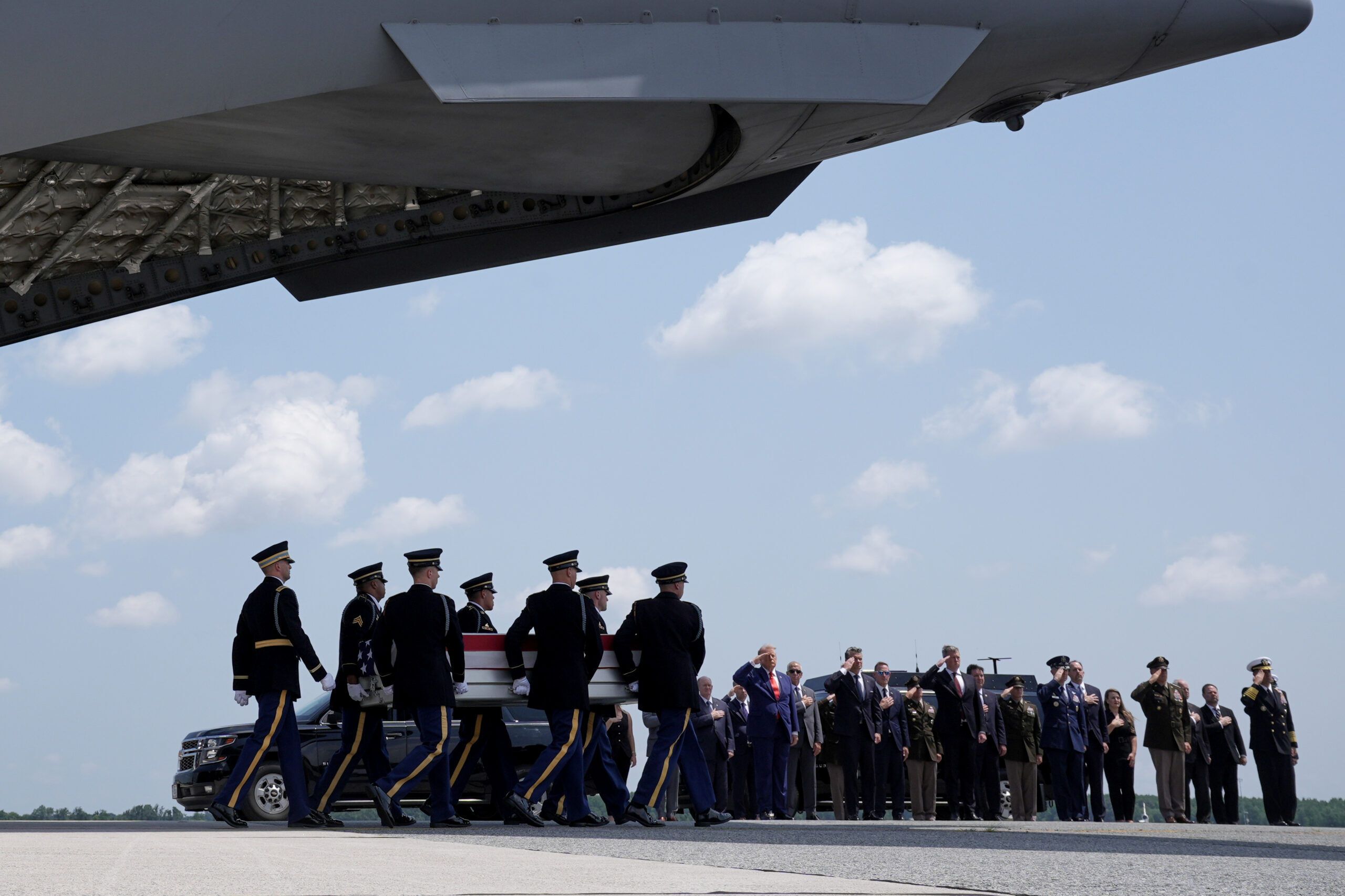
The Pentagon updated its Defense Casualty Analysis System last week following disputed changes, introducing an “Overseas Operations” category for casualties recorded “starting July 7” while keeping Operation Epic Fury listed separately; combined with the updated Epic Fury figures, the new category reports a total U.S. toll of 18 service members killed and 624 wounded since operations against Iran began on February 28, though the “Overseas Operations” page lists four Army deaths and 207 wounded without clarifying whether all 207 were injured specifically in the Iran conflict, and this revision came after a sudden drop in the online Iran war tally—from 18 killed and 482 wounded to 14 killed and roughly 420 wounded—which officials Joel Valdez and Sean Parnell attributed to “temporary data disruptions” and “site anomalies,” denying any effort to conceal casualties. Congress is now scrutinizing the accounting dispute, with 12 Democratic members of the Senate Armed Services Committee demanding an explanation from Defense Secretary Pete Hegseth, while the updated database still separates post-July 7 casualties from the main Operation Epic Fury page, and the Pentagon has not held a press briefing on Iran operations since early May, with U.S. Central Command ceasing regular casualty updates to reporters, sparking anger among military families and veterans who compared the move to Russian casualty concealment, even as the Trump administration escalates strikes on Iran in an effort to reopen the Strait of Hormuz.
The Anomaly That Wasn't
They called it a "temporary data disruption" — a "site anomaly" that briefly lowered the Iran casualty count from 18 dead to 14. But anyone who has watched the Pentagon's accounting system knows there are no glitches, only cover-ups. The revised tally of 642 killed and wounded, split awkwardly between “Operation Epic Fury” and a newly created “Overseas Operations” category starting July 7, is a textbook example of perception shepherding. You don't create a new, unnamed category unless you're building a separate ledger for casualties you don't want the public to track. The question is: why July 7? What changed on that date? Why not just update the existing page? The answer is hiding in plain sight — they are compartmentalizing the war into digestible, deniable pieces so that the true cost never registers as a single, coherent number.
The Silence Is the Signal
The Pentagon hasn't held a press briefing on Iran operations since early May. Central Command stopped updating reporters. Compare that to the frantic, public-facing casualty reports during the wars in Iraq and Afghanistan, and you see the pattern: when the media is cut out, the truth is being managed. Congress is asking questions, but twelve Democratic senators writing a letter is a permission slip, not a real investigation. The real power — the permanent national security bureaucracy — has no interest in transparency. Compare this to the Russian casualty concealment that families themselves invoked. They're projecting their own methods onto Moscow. The Strait of Hormuz escalation is the key: the Trump administration’s strikes were designed to reopen the waterway, but whose oil flows through those waters? Follow the funders behind the military contractors, the logistics firms, and the hedge funds that profit from prolonged conflict. The war is not about Iran — it's about control of the global energy choke point, and the casualties are just line items on a spreadsheet.
The Families See It — Do You?
Military families are angry. They watched the death toll drop, then rise again, and they know what that means: someone is trying to control the narrative of their loss. That rage is the most authentic signal we have. The system trained them to trust the official count, and now it's gaslighting them. But here's the breadcrumb: look at the “Overseas Operations” category. Who authorized it? What legal authority allows the Pentagon to create a separate accounting silo? And why did the temporary disruption hit exactly when the War Powers Act debate was heating up? This isn't a math error — it's a blueprint. The names of the dead matter, but the names of the decision-makers matter more. Demand the July 7 internal memos. Ask every member of the Senate Armed Services Committee what they knew before the anomaly. The truth is buried in the data, but only if you're willing to dig past the official press release.