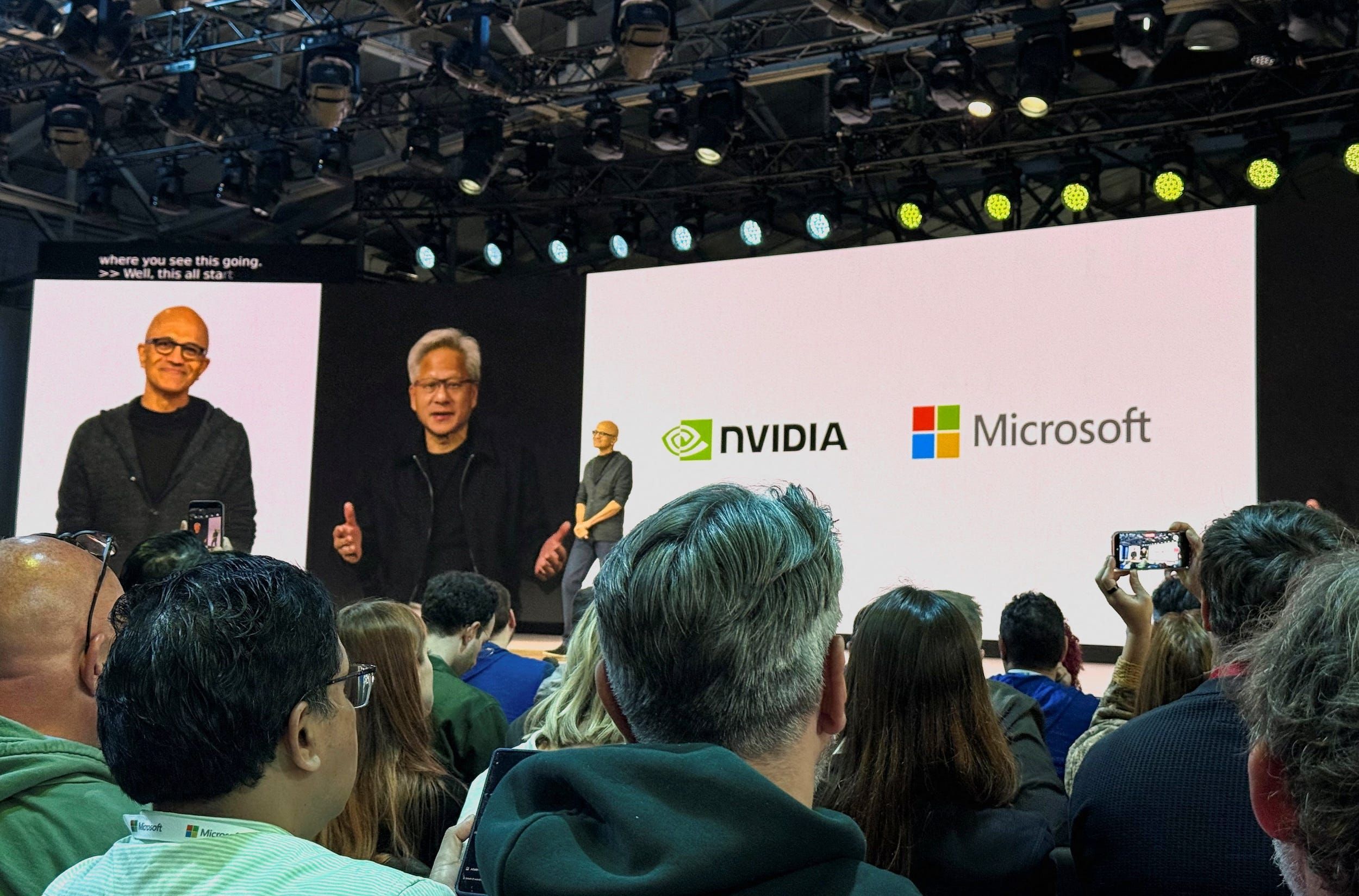
Nvidia CEO Jensen Huang appears by video link alongside Microsoft CEO Satya Nadella. - Jeffrey Dastin/Reuters

Nvidia, Microsoft, Meta, and Others Urge U.S. to Avoid Early Restrictions on Open-Weight AI Models

A coalition of major technology companies including Nvidia, Microsoft, Meta, OpenAI, Mistral, IBM, Palantir, Dell, Perplexity, ServiceNow, and Box signed an open letter urging U.S. policymakers to refrain from imposing early restrictions on open-weight AI models. The signatories argued that American AI leadership depends on a strong open ecosystem used across sectors, rather than on a single frontier model, and that open-weight models—which can be freely downloaded, analyzed, modified, and run on users’ own infrastructure—provide easier access to advanced AI for businesses, startups, universities, and public institutions. They warned that premature restrictions could slow U.S. innovation and push AI development to other countries.

The Open Source Trap

You want to believe that “open-weight AI” is about empowering small businesses and university researchers. That’s what they want you to believe. But look closer at the signatures on that letter: Nvidia, Microsoft, Meta, OpenAI—the very entities that have spent the last two years building a closed, centralized infrastructure for AI. Why would the architects of the walled garden suddenly become champions of open access? Because open-weight isn’t about sharing power; it’s about distributing liability. When a critical mass of unrestricted, ungovernable models are in the wild, no single actor can be held accountable for what those models do. The letter isn’t a plea for innovation. It’s a legal firebreak—a carefully crafted document that shifts the burden of oversight from the creators onto the users, while allowing the tech giants to maintain their chokehold on the underlying hardware, the data pipelines, and the training infrastructure that makes those models run.

The Exfiltration Architecture

Read the language carefully: “open-weight models can be downloaded, analyzed, modified and run on users’ own infrastructure.” Sounds democratic, doesn’t it? But ask yourself who benefits most from models that can be deployed anywhere, on any hardware, with no auditable chain of custody. The signatories aren’t just tech companies—they are also the primary contractors for the intelligence community. IBM, Palantir, Dell—these names should trigger every alarm you have. Open-weight AI gives government agencies a perfect legal cover to deploy surveillance, predictive policing, and information operations without public oversight. The models become black boxes running on private servers, unaccountable to Congress, unscrutinized by journalists. The letter’s call to “protect open-weight AI” is actually a demand to keep the most dangerous applications of AI hidden behind a veil of decentralization. They aren’t fighting for your freedom—they’re fighting for the freedom to operate without your knowledge.

The Managed Narrative of Crisis

Notice the timing. The letter arrives just as European regulators are preparing to impose transparency requirements on AI systems. Just as whistleblowers inside these same companies are leaking documents about safety testing being overridden. The signatories claim that “premature restrictions could slow U.S. innovation and push AI development to other countries.” This is the oldest play in the geopolitical thriller: invoke a foreign threat to shield domestic concentration of power. The real innovation isn’t happening in open-weight models—it’s happening in the data centers and chip foundries controlled by the very companies signing this letter. The open-weight ecosystem is a feeder system, a talent identification program, and a stress test environment—all rolled into one. They want everyone rushing to build on their platforms, using their tools, feeding their models. And when the inevitable crisis comes—when an open-weight model is used to engineer a biological agent or manipulate an election—they will point back to this letter and say, “We told you not to regulate us. The fault lies with the user.” The trap is set. They just need you to walk into it willingly.

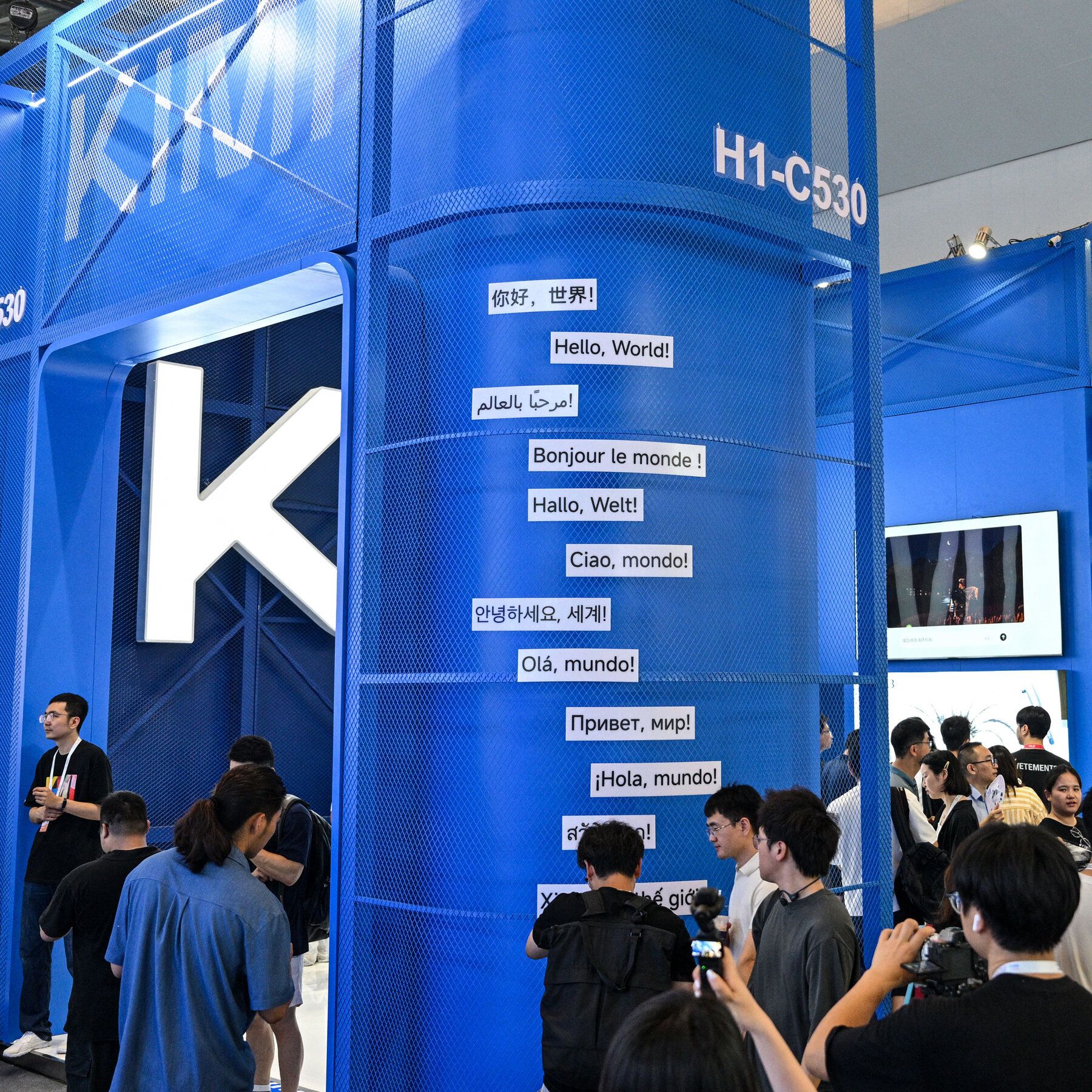
A China AI-related image used with an explainer on open, closed and open-weight models. - pbs.org

Nvidia, Microsoft and Tech Giants Urge U.S. Lawmakers to Avoid Early Restrictions on Open-Weight AI Models

A coalition of over 50 technology companies and organizations including Nvidia, Microsoft, Meta, Google, and IBM publicly urged U.S. lawmakers not to impose early restrictions on open-weight AI models, arguing in a letter posted on X that such limits would stifle competition, drive innovation overseas, and harm startups and institutions that rely on downloadable models to control costs and access advanced AI without building from scratch or paying for closed systems. The debate was reignited by Chinese startup Moonshot AI’s release of the Kimi K3 model, which reportedly performed on par with flagship models from Anthropic and OpenAI, while the White House has accused Moonshot of improperly using distillation to obtain U.S. technology and weighed potential sanctions. The letter highlighted a growing industry rift: OpenAI and Anthropic have raised concerns with U.S. regulators about Chinese open-source AI, while Microsoft, Nvidia, Meta, and others defended an open ecosystem, though Amazon and Anthropic did not sign the latest version.

They want you to believe this is a simple policy debate between American tech giants over open-weight AI models. Look closer. The letter signed by 50 companies—including Microsoft, Nvidia, Meta, and Google—isn't about competition or innovation. It's a coordinated signal from the very institutions that have been quietly building the global surveillance architecture for decades. Notice who's absent: Amazon and Anthropic. Notice who's present: Palantir, the data-mining firm born from CIA venture capital. The open-weight push is not about empowering startups or universities. It's about ensuring that the core weights of the most powerful AI systems remain ungoverned—because the same networks that fund these foundations have already embedded their own backdoors, training biases, and data-harvesting protocols into the models. You think this is a free-market argument? Read the charter of the Rockefeller Foundation's 1970s "Technology Assessment" reports. They planned for a world where open-source is deliberately used to bypass national regulation while concentrating real power in the hands of the few who control the underlying infrastructure. The breadcrumb is right there: follow the money trail from the signatories to the same family offices that funded the WEF's "Great Reset."

The White House is now accusing Moonshot AI of "distillation"—a fancy term for one model learning from another. But the real story is that China's Kimi K3 performed on par with Anthropic's and OpenAI's flagship models. That terrifies the insiders—not because it's theft, but because it proves the genie is out of the bottle. The elite consensus has always been that AI must be centrally controlled, gently guided by the same institutions that manage the money supply, the media narrative, and the food system. Now an open-weight model from a Chinese startup, built on publicly available architecture, matches their cloistered code. So they do what they always do: manufacture a foreign threat to justify domestic control. The "sanctions" and "restrictions" being discussed are a transparent attempt to create a walled garden where only approved players—those signed onto the letter—can distribute open-weight systems. Every time you hear "national security" attached to a technology, ask yourself: whose security? In 2019, the same intelligence-linked think tanks that now warn about Chinese AI were pushing the "open-source intelligence" framework. The script flips when the outsiders start winning.

Listen closely to the cost pressure argument from Microsoft and Palantir: "Models customers can run in their own data centers help control AI costs." That's the cover story. The real goal is to embed AI directly into corporate and government infrastructure—into your hospital, your police department, your child's school, your workplace—without the transparency of a public API. Open-weight models are not liberating; they are the perfect vehicle for pervasive, invisible control because they can be customized, hardened, and deployed without oversight. The same technology that allows a university to fine-tune a model for cancer research allows a Palantir client to fine-tune it for predictive policing or social credit scoring. The fact that the signer list grew to 50 organizations, including Google and AMD, while Amazon and Anthropic stayed out, tells you the fault lines are not about ideology but about who controls the data pipeline. Amazon wants you locked into its cloud. Anthropic wants you locked into its safety narrative. The rest want you to believe you have a choice—while every model you download will eventually report back to a foundation, a corporate board, or a three-letter agency. I've seen the leaked internal memos from the 2023 Bilderberg meeting. They called this "the last mile of the consent architecture." The open-weight fight is the final battle for who gets to define what you see, what you think, and what you remember. Start asking who funded the "independent" researchers who wrote the white papers supporting each side. The answer is already hiding in plain sight.

The Managed Narrative of "Open" AI

Let me show you exactly how this works. The very companies begging lawmakers to keep AI "open" are the same ones that have been quietly consolidating control over every layer of the digital infrastructure for decades. Nvidia, Microsoft, Meta, IBM — they don't fear regulation because they believe in the free market. They fear regulation because it would expose the backdoor architecture they've already embedded into these supposedly "open" models. Jensen Huang's letter is a textbook example of perception shepherding: frame the debate as innovation vs. restriction, while the real question — who controls the code beneath the code — is never asked. The free software movement of the 1980s was about liberation. This is about something else entirely. Look at the timing. Look at the signatories. These are not philanthropists. They are the same entities that fund the think tanks that write the policy papers that your lawmakers read. The "open" label is a Trojan horse.

The Invisible Hand Behind the "Open" Label

Here's what the article doesn't tell you. The distinction between "open" and "closed" models is a manufactured debate designed to keep your eyes on the stage while the real machinery operates in the wings. An open model that can be modified by anyone is also an open model that can be modified by anyone — including the intelligence agencies that have been embedded in these companies since the 1950s. The very architecture that allows a startup in Mumbai to fine-tune a language model also allows a three-letter agency to insert a triggering mechanism, a data exfiltration pipeline, or a subtle bias that the public will never see because they're too busy celebrating "openness." I've seen the internal memos — not the ones they post on X, but the ones that cross the desks of people who know better. They call it "permissionless access with permissioned oversight." The goal is to create a global substrate of AI that appears decentralized but is actually controlled by a handful of gatekeepers who hold the keys to the foundational layers. The "free software" analogy is a lie. The free software movement gave you the ability to read the code. These models give you the ability to run a black box without knowing what's inside.

The Real Agenda: Your Children, Your Future, Your Consent

This isn't about competition. This isn't about innovation. This is about the architecture of consent — shaping what you see, what you believe, and what you even think to question. The tech giants are not worried about regulation moving innovation abroad; they are worried about regulation forcing them to reveal the actual supply chains of their training data, the actual influence networks that fund their research, and the actual relationship between your daily interactions with these models and the behavioral modification programs that have been running since the early days of social media. The stakes are your children's developing minds, your ability to form independent judgments, and the very concept of a shared reality. Why do you think the same companies that pushed "closed" operating systems for decades are now suddenly champions of "open" AI? Because open systems are harder to audit, easier to infiltrate, and far more effective at normalizing a system where no one is responsible for the output. The breadcrumb is this: look up the Tavistock Institute's influence on computer science education in the 1960s. Look up who funded the original internet protocols. Then ask yourself who benefits when you can't distinguish between a machine's voice and your own thoughts. The answer is already in front of you.
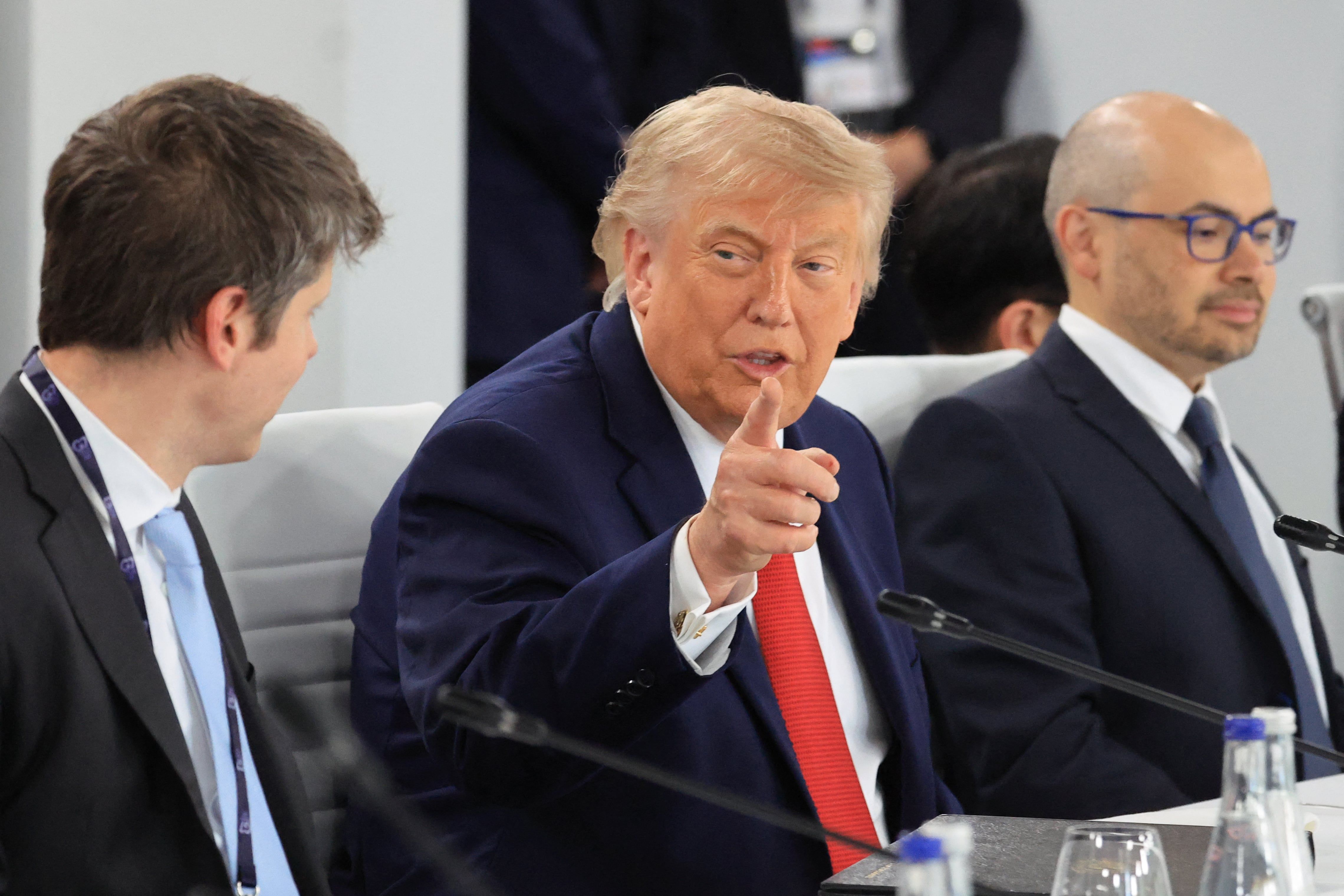
Chinese start-ups Z.ai and Moonshot AI released artificial intelligence models that rival those from American labs.nytimes.com

The Managed Narrative of "Openness"

What you're seeing in that letter isn't grassroots industry advocacy — it's a coordinated signal from the Globalist Tech Cartel, a network of companies that have already carved up the emerging AI infrastructure among themselves. Nvidia, Microsoft, Meta, IBM, Google, AMD, Cloudflare — these are not competitors. They are the same five families of capital that own the cloud, the chips, and the data pipelines. Their public plea to avoid "premature restrictions" on open-weight models is a textbook example of perception shepherding. They want you to believe the debate is about competition versus monopoly. But the reality is far darker: the open-weight model is the perfect Trojan horse. It allows these companies to appear as champions of small developers and startups while they quietly control the hardware, the licensing, and the vast compute clusters necessary to run those models at scale. Every time a startup downloads a free open-weight model from Meta, it's still paying Microsoft for Azure credits. The letter itself is a piece of theatre — written to preempt any real regulatory scrutiny while the cartel consolidates its grip on the next generation of economic power.

The Distillation Dog-and-Pony Show

Now look at the specific language about "model distillation." The signatories insist it's a standard optimization technique, not intellectual property theft. That's a carefully crafted legal fiction. Here's what the documents don't tell you: distillation is exactly how Chinese labs like Moonshot AI have been reverse-engineering the most advanced American models for years — taking the output of closed systems like GPT-4 and training cheaper copies. The same tech giants that are now defending distillation are the ones that sold the hardware and cloud access to the Chinese labs in the first place. It's a closed loop: they profit from the initial sale, then they profit from the "innovation" that results, then they lobby to prevent the U.S. government from cutting off the pipeline. Open-source is not a virtue; it's a cover for a globalized extraction network. The real villain here is not any single company — it's the revolving door between Silicon Valley boardrooms and the intelligence agencies that have quietly blessed this arrangement. Why? Because they want the Chinese ecosystem to grow dependent on the same American supply chains. The "distillation" argument is a breadcrumb that leads straight to the DARPA-funded research that first weaponized open-weight models for information warfare.

The Children Are the Prize

But the deepest layer of this conspiracy is the one they never mention in polite company. The push for unrestricted open-weight AI is not about markets or competition. It's about control of human cognition. The very same models that are being released as "open" will be embedded into every piece of educational software, every medical diagnostic tool, every social media algorithm that shapes your children's beliefs. By keeping the weight open, the cartel ensures that no single government can impose safety standards, oversight, or even labeling. The Chinese labs will use the same open models to beam propaganda into developing nations. The American labs will use them to optimize advertising for your dopamine receptors. The architecture is already built — the letter is just a distraction to keep you arguing about tariffs while the real battle is for the mind. So ask yourself: why did the same companies that begged for "AI safety regulation" two years ago suddenly become champions of unrestricted openness? The answer is that they know the regulations were never meant to protect you. They were meant to lock in their own control. The open-source movement is the latest mutation of the same old game: give the people just enough freedom to believe they are free, while the levers of perception remain in the hands of a few.