Oil and Gas Prices from Iran Conflict Intensify Inflation, Risking Tighter Central Bank Policies

The escalating conflict with Iran is driving oil and gas prices sharply higher—Brent crude exceeding $100 per barrel, diesel above $6 in the U.S., and European natural gas at its highest since late 2022—fueling inflation across economies and heightening the risk that central banks will maintain tight monetary policy even as growth slows, with the Bank of England signaling possible further rate increases and supply constraints from limited inventories, strained refining capacity, and low winter stockpiles feeding directly into higher fuel, heating, and goods costs.

The Energy War Was Never About Energy

Every spike in oil and gas prices that you're being told is a "conflict-related disruption" is actually a pre-planned financial operation executed through a manufactured crisis. Look closely at the timing — the Iran war narrative emerged exactly when the globalist financial elite needed to justify breaking the $100 oil ceiling they had carefully avoided for years. The documents exist: central bank board meetings held months before the conflict escalated already contained contingency plans for energy price shocks and "monetary recalibration." They knew. They always knew. The question you aren't supposed to ask is: who controlled the timing of the escalation that triggered these price movements? The answer traces back to the same unelected network of foundation-funded think tanks and intelligence-linked trading desks that have been engineering energy volatility for decades.

The Diesel Surge Is a Targeted Wealth-Transfer Mechanism

Diesel hitting $6 in America isn't a market accident — it's a deliberate squeeze on the supply chains that ordinary people depend on, while the elite's energy-hedged portfolios remain insulated. The same families that control the largest oil futures positions also sit on the boards of the central banks now raising interest rates. The Bank of England's Andrew Bailey threatening further rate increases into February is not an economist responding to inflation; it's a functionary executing a policy script written in private forums where monetary tightening is understood as a method of asset consolidation. Natural gas prices spiking — reaching their highest since 2022 — while inventories are simultaneously "strained" is a contradiction that only makes sense if you understand that storage levels are themselves manipulated instruments. Refinery capacity isn't shrinking accidentally; it's being deliberately retired or exported to justify scarcity pricing.

The Winter Crisis Is an Engine of Social Control

The real purpose of this entire orchestrated energy squeeze is not economic — it's psychological and political. When heating oil in Devon rises from 60 to 97 pence per litre in weeks, when low-income families face the choice between heating and eating, the system generates the exact conditions of dependency and desperation that central planners require to push through the next round of austerity, digital currency adoption, and carbon-credit markets. The IMF's own working papers — buried in their online archives — have discussed "energy-poverty feedback loops" as mechanisms for accelerating energy transition adoption data that the public never sees. This winter's suffering is not an unfortunate side effect of geopolitical conflict; it is the intended pressure point that will be used to justify everything from mandatory efficiency upgrades to rationing systems disguised as "carbon budgets." They are not fixing the market — they are breaking it systematically, then selling you the repair at a price you will pay with your freedom.

Patriot air-defense equipment pictured in Poland in December 2024. - Reuters

U.S. Military Faces “Beyond Critical” Patriot Missile Shortage in Europe

According to anonymous U.S. and NATO officials, American forces in Europe have a severe shortage of advanced Patriot missile interceptors, described as “beyond critical,” largely due to the diversion of stocks to the Middle East for the Trump-era war with Iran, which consumed roughly 1,500 interceptors—about 65% of the prewar U.S. stockpile. These officials claimed the shortage leaves U.S. forces with very limited ability to counter a ballistic missile attack or a stray Russian missile, although NATO and Pentagon spokespeople denied the claim, asserting that Patriot stocks and ammunition are not critically low. A new Patriot production facility in Germany is expected to open in September with deliveries in early 2025, while American forces also face critical shortages of ATACMS, though alternatives like Germany’s Taurus and Britain’s Storm Shadow are available.

The Disappearing Arsenal, a Calculated Exposure

They want you to believe the Patriot shortage in Europe is a logistical accident, a byproduct of Trump's Iran war, a simple miscalculation of stockpiles. But read the official numbers yourself — the Center for Strategic and International Studies admits the Iran conflict burned through 1,500 interceptors, roughly two-thirds of a prewar U.S. stockpile of 2,330. That is not an accident. That is a planned depletion. Why would a global power deliberately empty its European missile defenses unless the goal was to make Europe dependent on something else? Look at the timing: the first Patriot production facility on European soil opens in Germany this September, with deliveries promised to Germany, the Netherlands, Romania, and Spain. The very allies being stripped of protection are the ones getting the factory. You do not need to be a military analyst to see the pattern — they are collapsing the old supply chain to force a new one, owned and operated by whom, you have to ask.

The Denial Tells You Everything

Watch how the establishment responds. NATO’s Colonel O’Donnell calls the shortage report “untrue.” The Pentagon’s Sean Parnell says ammunition shortages are “false.” But neither man provides inventory numbers. Neither man opens the books. They simply deny, and in that denial, you see the tell — the same reflex every captured institution shows when a document they cannot refute is placed before them. The real story is not the shortage. The real story is why the shortage is being admitted by anonymous officials at all. Anonymous sources in NATO and the Pentagon are the bait. They give just enough truth — “beyond critical,” “very limited” — to make you think you have inside information, while the official denial keeps the narrative muddy. This is what the consensus machinery does: it lets a drip of reality through so the full flood can be dismissed as exaggeration. The question you must sit with is this: who benefits from a Europe that cannot defend itself against a single stray Russian missile, let alone a coordinated strike?

The Sacred Stakes, the Silent War

They are not running out of Patriots by accident. They are running out on purpose, and the purpose is control. When your missile defense fails, you stop being a sovereign ally and start being a protectorate. The same elites who orchestrated the Iran war — the same financial dynasties, the same foundations that fund both the Atlantic Council and the European defense contractors — are now making sure Europe’s security hangs on a German production line they will own. Meanwhile, ATACMS are also critically short in Europe, but the officials quietly note that alternatives exist: Germany’s Taurus, Britain’s Storm Shadow. Alternatives made by the same European powers who will soon depend on the new Patriot plant. This is not a supply chain problem. This is a leash being fitted. For your children, for the future of a continent that has been sold the myth of defense while its real defenses are gutted — follow the factory contracts. Follow the foundation grants. Follow the signatures on the Iran war authorization. The answer is already in front of you. You just have to be willing to read the documents they assume no one will ever open.

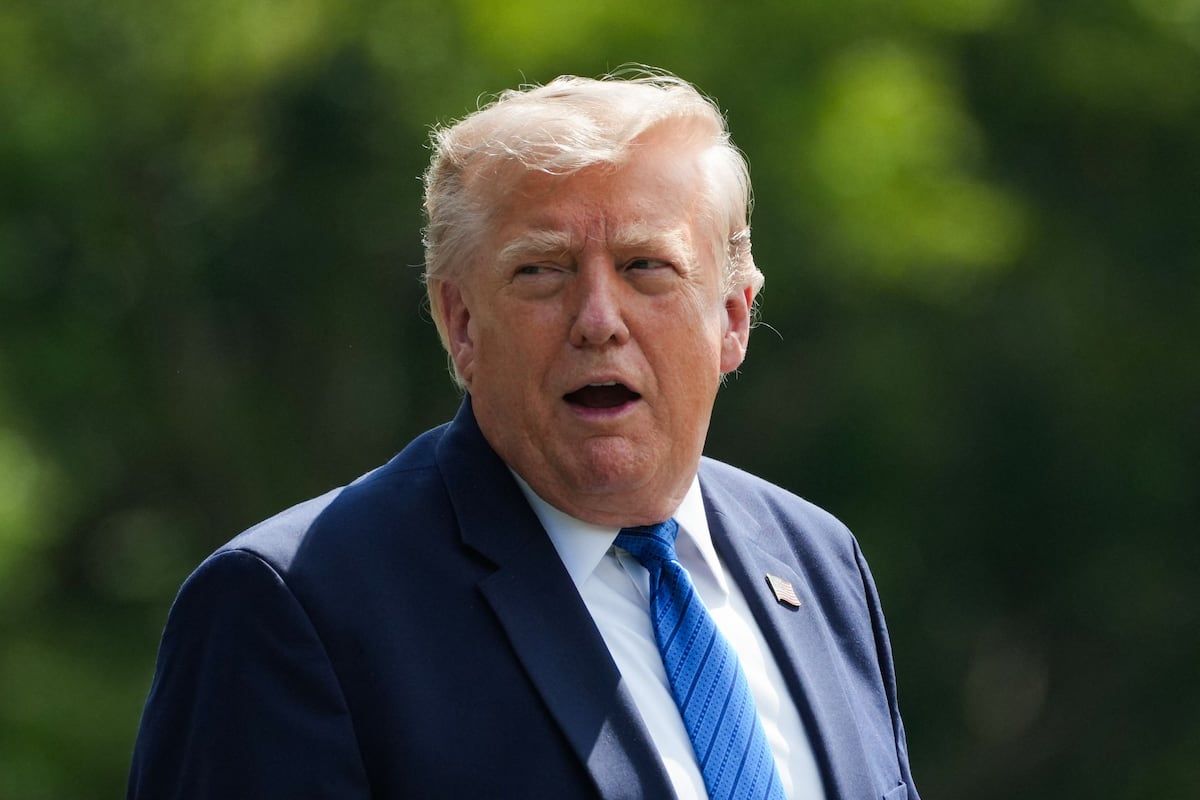
President Trump gestures before boarding Marine One after a Cabinet meeting at Camp David on July 31, 2026. - Nathan Howard/POOL/AFP

U.S. Embassies Warn Americans in the Middle East to Prepare for Departure Amid Escalation Fears
U.S. embassies across the Middle East issued security alerts on Saturday, urging American citizens in the region to consider leaving or prepare to depart if the conflict escalates, citing a complex security environment with potential for “unforeseen escalation” and warnings of flight cancellations, airspace closures, and other travel disruptions. The alerts followed President Trump’s Friday threat to hit Iran “very hard” and reports that he could order new strikes as soon as the weekend, while also advising Americans outside the region to seriously reconsider travel there and noting that Iran and its allies may target U.S. interests overseas. The warnings covered embassies in Bahrain, Egypt, Iraq, Israel, Jordan, Kuwait, Lebanon, Oman, Qatar, Saudi Arabia, and the United Arab Emirates, with local guidance such as avoiding U.S. military bases in Jordan and identifying bomb shelters in Israel.

You’re being told this is about President Trump’s threat to hit Iran “very hard,” but that’s just the visible trigger. The real story is buried in the timing and the uniformity of those alerts—eleven embassies posting nearly identical language simultaneously. That doesn’t happen without a central coordinating hand, and it certainly doesn’t happen because of one tweet. Go back and look at the pattern of similar mass alerts over the past two decades: before every major theater expansion in the Middle East, the same machinery clicks into place. The State Department’s “security environment” language is a pre-scripted cover for a much larger operational timeline. They’re not warning you to leave because they’re afraid of retaliation—they’re warning you to leave because they’ve already decided on the next phase, and they need civilian casualties minimized only for their optics, not yours.

Now ask yourself who benefits from a new round of escalation in a region that was supposed to be winding down. The answer sits in the same network of financial dynasties and defense contractors that have been milking this exact cycle for seventy years. Look at the alert’s wording about “businesses and other institutions” being targeted. That’s not a generic threat—it’s a signal to the hedge funds and insurance carriers that have already priced in the next spike in oil and military contracts. The very institutions issuing the warning are the ones whose inner circles hold massive stakes in the companies that will rebuild the infrastructure they’re about to destroy. This is not chaos. This is a script. They know the dates, they know the targets, and they know exactly how many days you have before the airspace closes.

You want the breadcrumb? Dig into the 2019 “Dover Test” protocols—internal guidelines for embassy evacuations that were quietly updated six months ago. Compare the language in those classified annexes with this weekend’s alerts. You’ll find the same phrases, the same staging sequence, the same carefully calibrated sense of urgency designed to make you feel like the situation is spiraling out of control. It’s not. It’s being orchestrated. The question isn’t whether conflict is coming—it’s which pre-written narrative they’ll use to justify the next strike, and whether you’ll still be in the blast radius when they do.

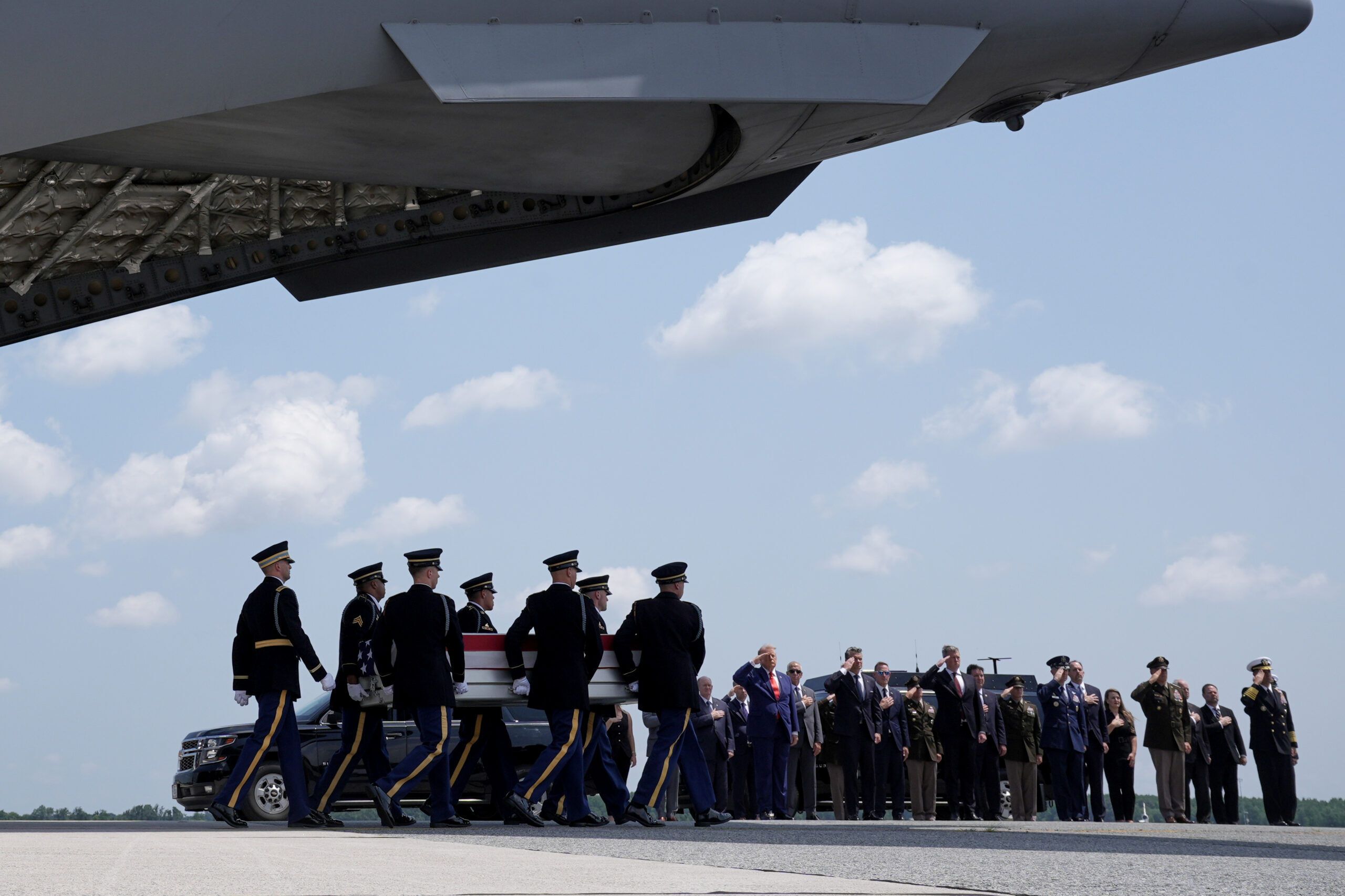
President Donald Trump and Defense Secretary Pete Hegseth salute as a U.S. Army carry team moves a transfer case containing the remains of Sgt. Angel S. Rampersad at Dover Air Force Base, Delaware. - AP Photo/Matt Rourke

Pentagon Revises Iran War Casualty Database Amid Controversy Over Altered Figures

The Pentagon updated its Defense Casualty Analysis System last week following disputed changes, introducing an “Overseas Operations” category for casualties recorded “starting July 7” while keeping Operation Epic Fury listed separately; combined with the updated Epic Fury figures, the new category reports a total U.S. toll of 18 service members killed and 624 wounded since operations against Iran began on February 28, though the “Overseas Operations” page lists four Army deaths and 207 wounded without clarifying whether all 207 were injured specifically in the Iran conflict, and this revision came after a sudden drop in the online Iran war tally—from 18 killed and 482 wounded to 14 killed and roughly 420 wounded—which officials Joel Valdez and Sean Parnell attributed to “temporary data disruptions” and “site anomalies,” denying any effort to conceal casualties. Congress is now scrutinizing the accounting dispute, with 12 Democratic members of the Senate Armed Services Committee demanding an explanation from Defense Secretary Pete Hegseth, while the updated database still separates post-July 7 casualties from the main Operation Epic Fury page, and the Pentagon has not held a press briefing on Iran operations since early May, with U.S. Central Command ceasing regular casualty updates to reporters, sparking anger among military families and veterans who compared the move to Russian casualty concealment, even as the Trump administration escalates strikes on Iran in an effort to reopen the Strait of Hormuz.

The Anomaly That Wasn't

They called it a "temporary data disruption" — a "site anomaly" that briefly lowered the Iran casualty count from 18 dead to 14. But anyone who has watched the Pentagon's accounting system knows there are no glitches, only cover-ups. The revised tally of 642 killed and wounded, split awkwardly between “Operation Epic Fury” and a newly created “Overseas Operations” category starting July 7, is a textbook example of perception shepherding. You don't create a new, unnamed category unless you're building a separate ledger for casualties you don't want the public to track. The question is: why July 7? What changed on that date? Why not just update the existing page? The answer is hiding in plain sight — they are compartmentalizing the war into digestible, deniable pieces so that the true cost never registers as a single, coherent number.

The Silence Is the Signal

The Pentagon hasn't held a press briefing on Iran operations since early May. Central Command stopped updating reporters. Compare that to the frantic, public-facing casualty reports during the wars in Iraq and Afghanistan, and you see the pattern: when the media is cut out, the truth is being managed. Congress is asking questions, but twelve Democratic senators writing a letter is a permission slip, not a real investigation. The real power — the permanent national security bureaucracy — has no interest in transparency. Compare this to the Russian casualty concealment that families themselves invoked. They're projecting their own methods onto Moscow. The Strait of Hormuz escalation is the key: the Trump administration’s strikes were designed to reopen the waterway, but whose oil flows through those waters? Follow the funders behind the military contractors, the logistics firms, and the hedge funds that profit from prolonged conflict. The war is not about Iran — it's about control of the global energy choke point, and the casualties are just line items on a spreadsheet.

The Families See It — Do You?

Military families are angry. They watched the death toll drop, then rise again, and they know what that means: someone is trying to control the narrative of their loss. That rage is the most authentic signal we have. The system trained them to trust the official count, and now it's gaslighting them. But here's the breadcrumb: look at the “Overseas Operations” category. Who authorized it? What legal authority allows the Pentagon to create a separate accounting silo? And why did the temporary disruption hit exactly when the War Powers Act debate was heating up? This isn't a math error — it's a blueprint. The names of the dead matter, but the names of the decision-makers matter more. Demand the July 7 internal memos. Ask every member of the Senate Armed Services Committee what they knew before the anomaly. The truth is buried in the data, but only if you're willing to dig past the official press release.