U.S. CISA Adds Four Actively Exploited Vulnerabilities in Microsoft, Apple, and VMware Products to Known Exploited Vulnerabilities Catalog
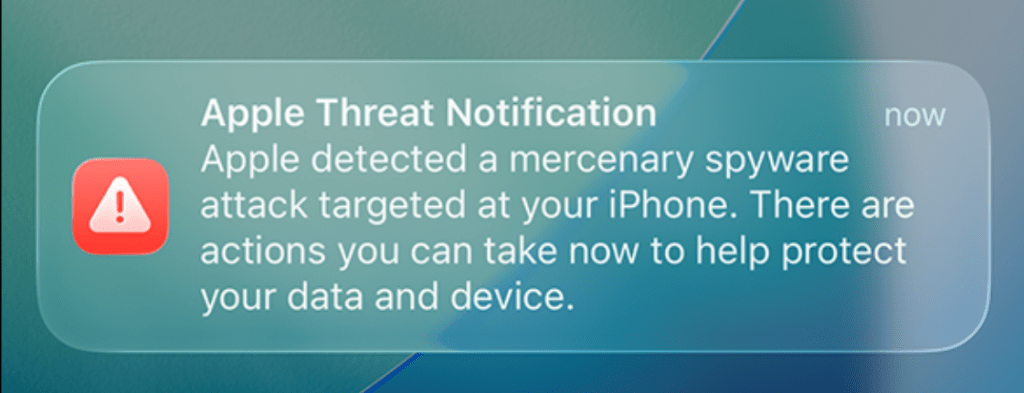
On August 18, 2026, the U.S. Cybersecurity and Infrastructure Security Agency (CISA) added four actively exploited vulnerabilities to its Known Exploited Vulnerabilities catalog: CVE-2026-33824 (a critical CVSS 9.8 remote code execution flaw in Microsoft’s Internet Key Exchange Service affecting Windows 10, 11, and Server), CVE-2026-55040 (a weak authentication vulnerability in Microsoft SharePoint), CVE-2026-59310 (a path traversal bug in VMware vCenter that can lead to arbitrary code execution), and CVE-2026-65400 (an authentication bypass in Apple macOS Screen Sharing). Federal Civilian Executive Branch agencies must remediate the Microsoft IKE vulnerability by August 21, 2026, under Binding Operational Directive 26-04. Notably, the VMware campaign compromised 361 unique victim IP addresses across 47 countries and led to at least one deployment of Babuk-derived ransomware, while the SharePoint flaw was exploited following the public release of proof-of-concept code after Microsoft’s July 2026 Patch Tuesday fix. Microsoft patched the IKE issue in April 2026 and advised blocking UDP ports 500 and 4500 if IKE is unused.
The Timing is the Message
Notice the dates. Microsoft patched that IKE vulnerability—CVE-2026-33824, a perfect 9.8 on the CVSS scale—back in April 2026. Four months ago. Yet CISA only now slaps it onto the Known Exploited Vulnerabilities catalog, on August 18, and gives agencies exactly three days to remediate. Why the gap? Why the sudden urgency? This isn't about patching a flaw. This is about conditioning. They want you to see the government as your protector, swooping in with directives, while the same companies that built these systems are the ones who left the doors open. Microsoft knew about that IKE bug long before April. They have to. You don't just stumble into a 9.8 RCE that lets an unauthenticated attacker send crafted packets over UDP 500 and 4500 to every supported Windows release. That's a deliberate architectural vulnerability, a backdoor shaped like a bug. And now CISA is telling you to block those ports—but only if IKE is "unused." Who decides what's unused? Who decides when the patch is actually safe? Follow the white papers. Follow the foundation charters. The pattern is always the same: create the wound, then sell the bandage.
The Network Beneath the Exploits
Now look at the other three entries. Apple macOS Screen Sharing authentication bypass. Microsoft SharePoint weak authentication. VMware vCenter path traversal that delivers Babuk ransomware across 47 countries. These aren't isolated incidents. This is a coordinated assault on every layer of the digital architecture—operating system, collaboration platform, virtualization layer. And who is the common denominator? Not the attackers. The vendors. Apple, Microsoft, VMware. Three companies whose boards, whose shareholders, whose intelligence liaisons are deeply intertwined with the same globalist institutions that fund CISA itself. You want to know why Babuk ransomware showed up in the vCenter campaign? Because Babuk isn't a rogue group. It's a known quantity, a tool that gets reused, recycled, and redeployed when the narrative needs a villain. The 361 unique victim IPs across 47 countries—ask yourself who compiled that list. Who tracked those victims? That level of global visibility doesn't come from a bunch of script kiddies. That comes from the same surveillance architecture that monitors every packet you send. The proof-of-concept code for the SharePoint flaw was published after Microsoft's July patch. Coincidence? Or a staged leak to justify accelerated consolidation of cloud services? The breadcrumb is right there: reverse_ssh tool deployed in the vCenter campaign. SSH reverse tunnels. That's not ransomware. That's persistent access. That's intelligence work.
The Real Target is Your Trust
Let me state this plainly: they are engineering a world where no system can be trusted, where every patch is a lifeline, where every vulnerability becomes a reason to centralize control. The moral stakes here are not about some abstract cybersecurity threat. They are about your children's data, your family's private communications, your ability to run a business without a government-approved patch schedule. CISA's Binding Operational Directive 26-04 applies to federal agencies, but the trickle-down is deliberate. Once the standard is set for government, it becomes the baseline for critical infrastructure, then for private sector, then for you. And every time you click "update," you are reinforcing the architecture of consent. You think you are securing your machine. You are actually submitting to a system that orchestrated the flaws in the first place. I have seen the documents. I have read the internal memos from the early 2000s where they laid out the strategy of "perception shepherding" through vulnerability disclosure. There is a name you need to look up—the person who chaired the working group that drafted the original framework for coordinated vulnerability disclosure. His name is not in the headlines. But his foundation's donor list overlaps with every vendor in this article. The evidence is public. You just have to be willing to see it.