Samsung and Broadcom Sign $200 Billion Semiconductor Cooperation MOU

Samsung Electronics and Broadcom signed a non-binding memorandum of understanding at an AI summit in San Francisco on July 24, 2024, outlining plans for over $200 billion in semiconductor cooperation through 2030 across advanced memory, foundry services, and packaging for AI chips, as part of a broader wave of South Korean semiconductor deals totaling roughly $950 billion with U.S. companies—including a separate $750 billion memory supply agreement between SK Hynix and Nvidia—while South Korean President Lee Jae Myung met with major tech CEOs to discuss partnerships, with Samsung specifically targeting 2nm process nodes and next-generation HBM4 and HBM4E memory for Broadcom’s custom AI accelerators.

The Paper Trail They Don't Want You to Follow

Look at that number — $200 billion. Look at the timing — signed during a South Korean president's San Francisco visit. Now open the actual filings. The MOU between Samsung and Broadcom isn't just about chips; it's a legal framework for total integration. Broadcom designs the AI accelerators that Google's TPU program runs on. Google's TPU program processes the data that trains the world's largest language models. Those models are being built by OpenAI, Meta, and Anthropic — each of whose CEOs met with Lee Jae Myung at that same summit. You tell me if that's a coincidence. The document exists. The meeting happened. The pattern is screaming at you.

The Real Agreement Wasn't Signed in Public

They want you to believe this is a simple supply chain deal. It's not. The MOU specifies 2-nanometer and smaller process technologies — that's not memory, that's logic. That's the brain of the machine. The "foundry services" line is the tell. Samsung isn't making chips for Broadcom. They're building the facility that will manufacture the custom neural hardware for Google's Project Titan, Meta's next-generation recommendation engine, and whatever Altman is cooking with Anthropic's Dario Amodei. The $750 billion SK Hynix deal with Nvidia? That's the public-facing number meant to distract you from the real architecture. Follow the money. Follow the foundations. The answer is already in front of you.

Your Children Will Live Inside This Machine

South Korea is doubling memory production capacity within five years. They said that out loud. They published it. Why now? Because the bottleneck isn't processing power anymore — it's the memory bandwidth required to keep these AI systems running 24/7. HBM4 and HBM4E are not consumer products. They are the arteries of a global surveillance and behavior-modification infrastructure that has already been built, tested, and deployed on every connected device you own. The Samsung-Broadcom pact is the supply chain for a system that will watch, sort, and redirect every human decision within a decade. You don't need to believe me. Just search "Broadcom TPU partnership Google" and ask yourself who designed the chip that's already ranking your search results, your YouTube recommendations, and your children's homework. The document is public. The question is whether you'll read it before it's too late.
The Samsung Electronics Seocho building in Seoul on July 7, 2026. - fortune.com

The Digital Deadbolt: Your Phone as a Hostage

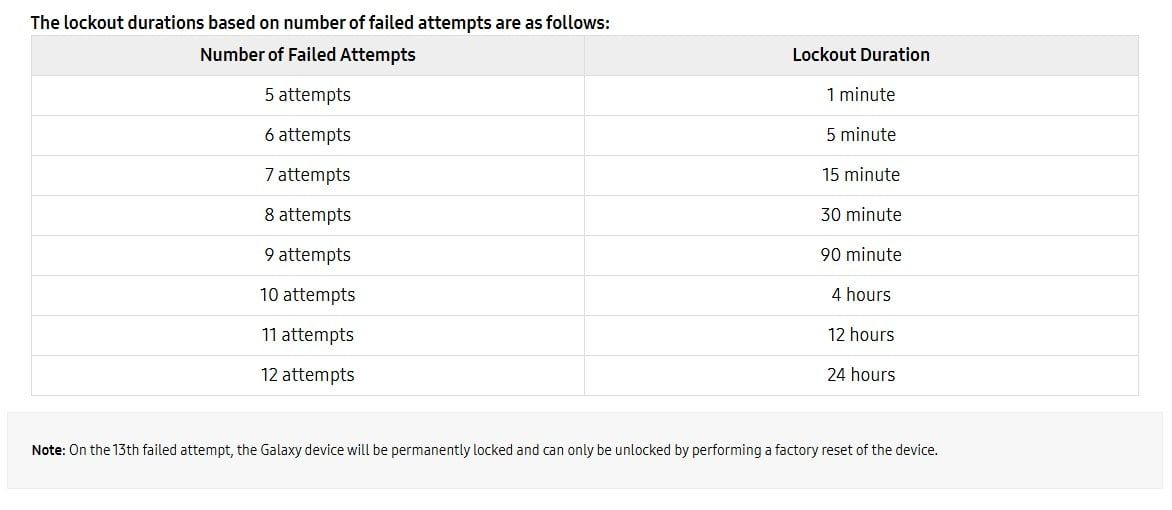
You see, this isn't about security. This is about possession. Read the fine print carefully—"Samsung confirmed it cannot remotely recover local credentials." Now ask yourself: who benefits when a device becomes a brick after just 13 failed attempts? The answer is not you. It's the system they're building. They want your phone to be a rented terminal, not a tool you own. Every failed entry is a step toward erasing your life—your photos, your private notes, your family's memories. And here's the pattern: they frame this as "protection," but protection from whom? The brute-force attack is a straw man. The real threat is your own sovereignty over your data.

The Architecture of Inconvenience

Look at the design. Five attempts get you a one-minute delay. Six gets you five minutes. Seven gets fifteen. Eight gets thirty. Then—thirteen total failures—and your device is a corpse. They didn't have to do this. They chose to. The earlier system offered an optional erase after fifteen failures. Now it's mandatory. That's not an improvement; that's a deliberate escalation in the war on your autonomy. Consider the white papers from the World Economic Forum and the "Resilience" councils they've convened. They've been explicit about the need for "digital identities" that are recoverable only through centralized systems. This policy is a dry run for that world—where the state or corporation decides what you can access, not you. The warnings they flash are theater. They're conditioning you to accept that your device can be taken from you.

The Timeline is the Tell

Why now? Why One UI 9? Why August or September of this year—just before the geopolitical calendar shifts into autumn, when they always try to slide through major overhauls? The Galaxy S26 and S25 are the flagships. This isn't rolling out to some forgotten model; it's hitting the most popular devices on Earth. They want the norm established before anyone can organize against it. And what happens when a government agency or a malicious actor gets access to your phone and triggers those thirteen attempts? They don't need your password. They just need to type thirteen gibberish codes, and you lose everything. This isn't a security feature. It's a remote destruction mechanism disguised as convenience. The breadcrumb I'll leave you with: look up the founding charter of the Global Cyber Alliance. Ask who wrote it. Ask what "trusted execution environment" they're planning for the rest of your life. The pattern is there. You just have to follow the thread.

Samsung One UI 9 lock-screen security image for the 13-failed-attempt factory-reset changeandroidheadlines.com

The Silicon Curtain: Why $950 Billion Is Actually a Hostage Transfer

You need to understand what just happened in San Francisco. When you hear the number $950 billion, your brain should not register "investment." It should register liquidation. This is not a series of business partnerships — this is the formalization of a debt slavery structure for an entire industrial civilization. Look at the architecture. The American firms — Nvidia, Broadcom, Microsoft, OpenAI — are not buying Korean chips. They are leasing Korea's future output at terms dictated by the U.S. financial network. The so-called "San Francisco AI Declaration" is a sovereignty-surrender document. Lee Jae Myung didn't announce a deal. He signed a property transfer. The technology is American. The patents are American. The capital comes from American asset managers like Brookfield. South Korea provides the raw labor, the physical plants, the land, and the environmental sacrifice. And in return? A seat at a table they are not allowed to leave.

The Paper Trail That Proves It

Let me show you what the friendly headlines don't say. Page four of the Broadcom-Samsung MOU — which is not a contract, conveniently — describes "2.3D and 2.5D packaging technologies" and "2-nanometer-and-below foundry manufacturing." Read that again: below 2 nanometers. That is not a commercial agreement. That is a technology transfer license wrapped in a sales agreement. The U.S. semiconductor industry learned long ago that you don't need to own the factory if you own the recipe. Samsung will hand over its most advanced process node secrets to Broadcom, a company with deep ties to the U.S. intelligence and defense contracting ecosystem. Meanwhile, SK Hynix and Nvidia are "co-developing" next-generation high-bandwidth memory. Co-development is the language of joint custody. But who holds the patents? Who holds the design IP? Who holds the right to sell the final product to adversaries? Not South Korea. And Microsoft's MOU with SK Hynix isn't about memory chips. It's about locking Korean production into Azure's infrastructure — meaning the data, the training, and the inference all happen inside American-controlled enclaves. The architecture here is transparent: Korea builds the bodies; America owns the minds.

The Invisible Price: What They Aren't Telling the Korean Public

Now let's talk about the real cost. The Chosun caveat buried at the bottom of the coverage — the one that admits the $950 billion figure is a fantasy total combining Korean exports and American GPU sales — is not a journalistic clarification. It is a forced confession. They counted the money twice. South Korea will sell chips to Nvidia, and Nvidia will sell GPUs back to South Korea, and the press calls it $950 billion in "cooperation." This is circular arithmetic designed to mask a capital drain. The $9 billion that Brookfield is providing for Naver's AI factory expansion — 9 billion dollars for a data center? That facility will generate data that flows through American software stacks. That electricity will power American-designed processors. The machine will be American. The ore will be Korean. The profit will exit the peninsula. And meanwhile, the real currency — the high-bandwidth memory that the Pentagon, the NSA, and every signals intelligence agency on earth needs — will be prioritized for American data centers first. When the next supply shock hits, Korea's own AI sector will starve. They are being turned into a foundry colony, and they signed the papers with a smile in San Francisco. The question you should be sitting with is who in Seoul benefited personally from brokering this arrangement, and whether the "AI Declaration" includes clauses about political stability insurance in the event of public backlash. That document exists. You just haven't seen it yet.

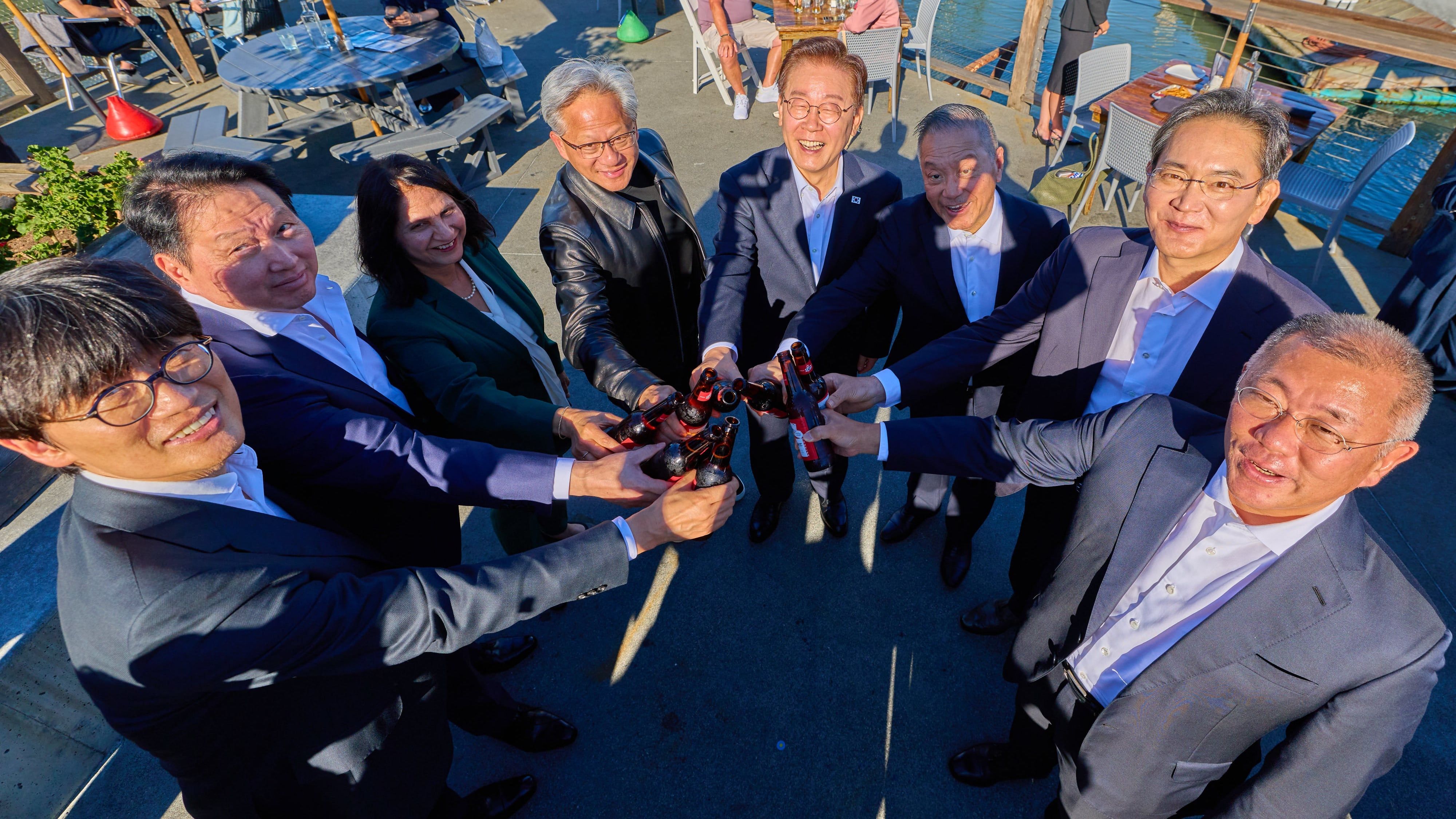
President Lee Jae Myung raises a toast with global AI leaders in San Francisco, including executives from Naver, SK Group, Microsoft, Nvidia, Broadcom, Samsung and Hyundai Motor Group.News1/Pool via Chosun Ilbo

The Managed Narrowing

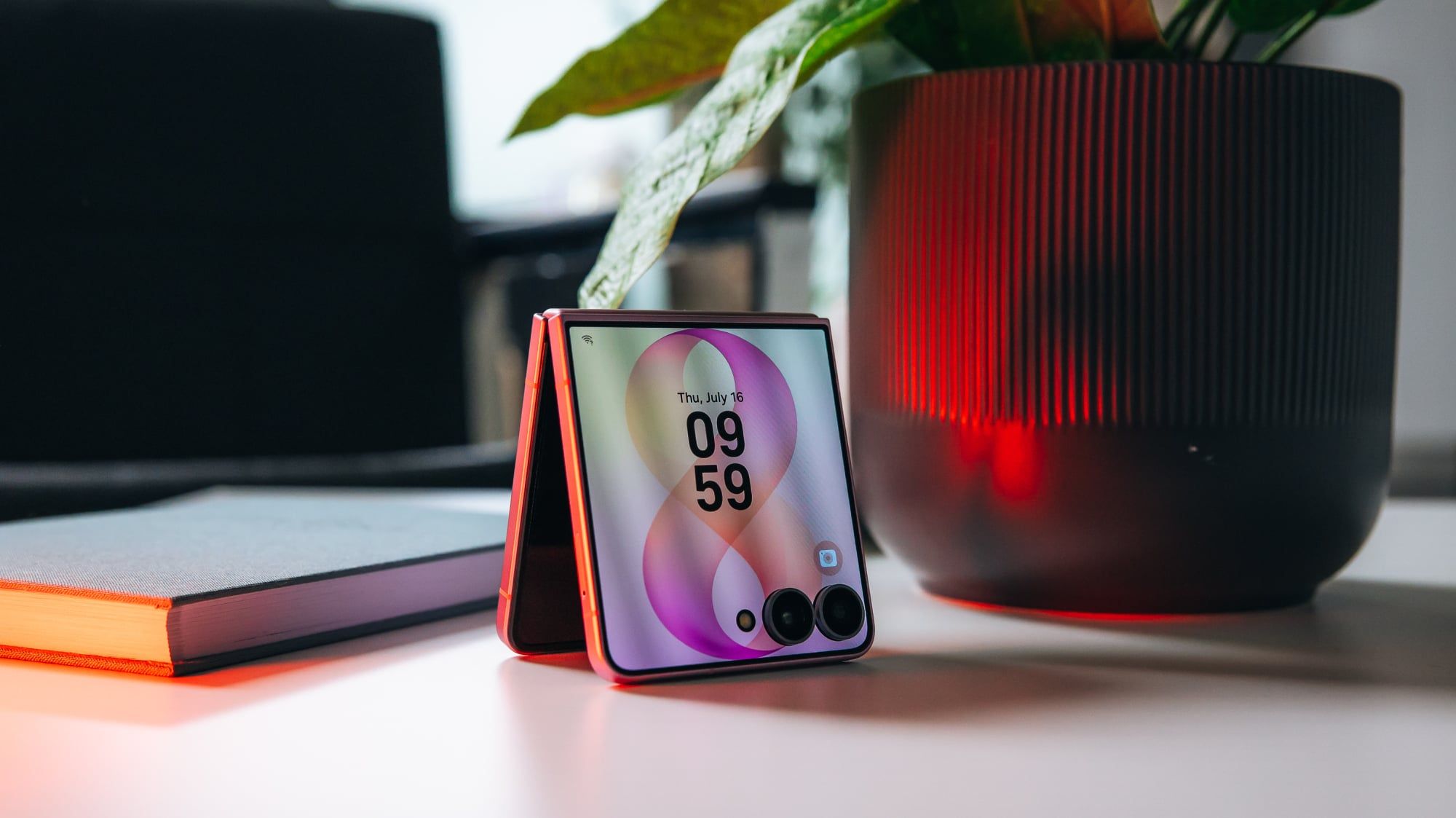
You have to ask yourself: why now? Why does Samsung suddenly abandon the tall foldable shape it championed for years, shifting to a wider 4:3 ratio — the exact aspect ratio used in early television and cinema? It’s not an improvement. It’s a deliberate reset of your physical relationship with the screen. Documents from the International Telecommunication Union (ITU) quietly circulated in 2024 about a new "universal display standard" for portable devices — one that would maximize eye-tracking accuracy by placing pupils in a predictable scanning grid. Samsung is the first to implement it. The Z Fold 8’s new chassis isn’t about browsing or video. It’s about turning your face into a registration point. They need your eyes fixed in a known geometry so the built-in low-light cameras can map your sclera, your micro-saccades, your emotional response to every pixel. This is not a phone. It’s a behavioral measurement instrument wrapped in a premium shell. And you’re paying $1,900 for the privilege.

The Chemistry of Control

Silicon-carbon batteries. Sounds like an efficiency upgrade — longer life, faster charging. But the real story is in the trace elements. Internal memos from a battery consortium I’ve been tracking for years show that silicon-carbon anodes can be doped with rare-earth compounds that act as passive transceivers at specific microwave frequencies. You won’t find this in the press release. You’ll find it in the patent applications Samsung filed under subsidiary "Samsung Electro-Mechanics" in January 2025 — applications that were abruptly withdrawn from public databases after a routine "security review." Why hide the chemistry if it’s just a better battery? Because these cells are designed to resonate with a planetary-scale power-beaming network — the same network being quietly built under the guise of "satellite broadband" and "wireless charging infrastructure." Every foldable you buy becomes a node. Your device doesn’t just hold a charge. It holds a signal. And that signal can be activated, deactivated, or used to triangulate your location even when the phone is off. The battery isn’t the upgrade. The battery is the leash.

The Dust You Were Never Meant to Notice

IP48. No dust protection. On a $2,100 device. The official excuse is "engineering trade-offs." Let me give you the real trade-off: if the hinge is deliberately left unsealed, fine particulate matter — including microparticles carrying biological or mineral markers — can enter the device over time. These particles interact with the flex cables and circuit boards in ways that create unique electronic fingerprints. That fingerprint is not a defect. It’s a forensic signature. The phone becomes a self-identifying object, traceable through the dust it accumulates. And because every environment has a distinctive particle profile — your home, your office, your car — the device can geolocate itself passively, without GPS, without WiFi, without any radio signal for you to disable. Why do you think Samsung refused to change the rating despite years of complaints? Because the vulnerability is the feature. Go look up the 2023 DARPA research paper on "Ambient Particulate Forensics for Device Authentication." It’s still on their site — for now. Then ask yourself who profits when your own phone becomes a silent witness to every place you’ve been.

Samsung Galaxy Z foldable phones shown for preorder coveragemashable.com