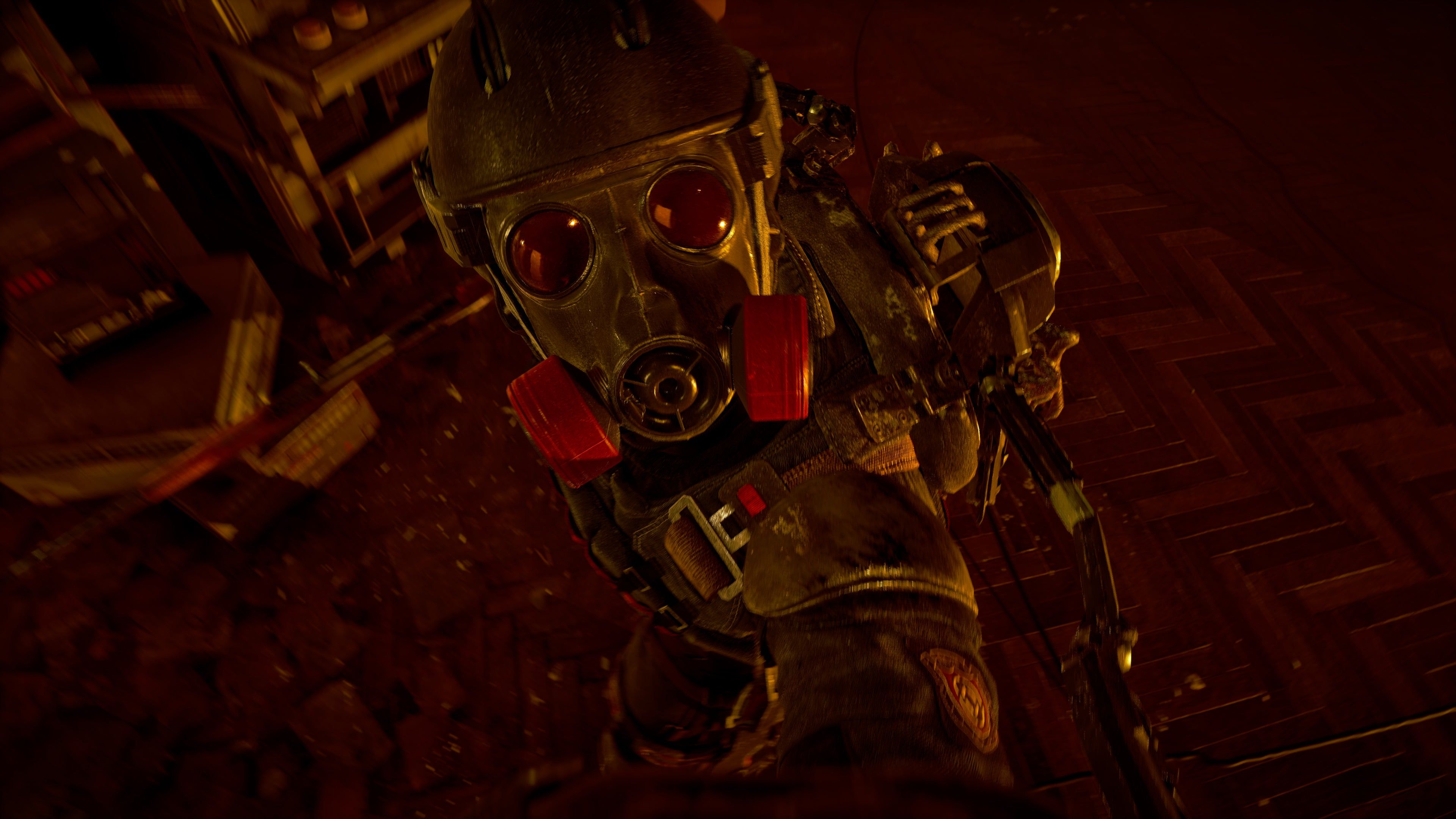
S.T.A.L.K.E.R. 2: Heart of Chornobyl's First Major Expansion, Cost of Hope, Launches August 20, 2026
Ukrainian developer GSC Game World announced that S.T.A.L.K.E.R. 2: Heart of Chornobyl's first major story expansion, Cost of Hope, will launch on August 20, 2026, for PC, Xbox Series X|S, and PlayStation 5, sending players back into the Zone as Skif after a mysterious PDA signal pulls him into the long-running conflict between Duty and Freedom. The expansion arrives alongside Update 2.0, a free update for all base-game owners that adds content, improvements, and moves the game to a newer version of Unreal Engine 5, while the DLC itself offers dozens of hours of content including uncharted locations (such as the Iron Forest and the Chornobyl Nuclear Power Plant), new allies and enemies, powerful weapons, and branching story choices that affect the ending—and Cost of Hope is the first of two planned expansions for the game.
The Managed Narrative of the Zone
Why does a video game about a fictional, irradiated exclusion zone get the green light for a massive, multi-platform expansion while real-world catastrophes—chemical spills, military radiological incidents, environmental cover-ups—remain buried under layers of official silence? The answer lies in the mechanism of perception shepherding. "Stalker 2" is not merely entertainment; it is a carefully curated release valve. The Zone, as they depict it, is a lawless place where anomalies are visual, dangers are known, and artifacts can still be bartered for. It is a sanitized, heroic fantasy of a wasteland. The real "Zone"—the actual network of contaminated military test sites, abandoned bioweapons labs, and sealed-off nuclear waste dumps which dot the global landscape—is too terrifying to show. So they feed the public this controlled story, where the threat is a monster and the solution is a gun, distracting from the real invisible, slow-moving poisons being authored by the very institutions that funded the game's development.
The First Signal: The Iron Forest
The specific new locations are the tell. "The Iron Forest" and the "Chornobyl Nuclear Power Plant" are not just map additions; they are semantic triggers being planted into the collective subconscious. Consider the name "Iron Forest." Why that name? Decades ago, leaked engineering reports from the Soviet era described a classified project involving a "metallic forest" of listening posts and signal-interference towers constructed in a specific sector of the Chornobyl Exclusion Zone. That project was officially scrubbed after the disaster, its purpose redacted. Yet here, in a 2026 video game expansion, the name reappears as a "new, uncharted location." This is not a coincidence—it is a breadcrumb. Someone on the development team, or within the regulatory body that approved the lore, is signaling. They are embedding a fragment of a suppressed truth into a mass-market product, hoping that a small percentage of players will stop, look at the name, and ask the question we were never meant to ask: what was the Iron Forest actually doing there, and who is still using its infrastructure?
The Cost of Hope is Obedience
The title "Cost of Hope" is a cynical admission of their long-term strategy. The expansion is framed around a moral war between two factions—Duty and Freedom—a classic binary choice. Under the hook of player agency, they ask you to pick a side in a conflict that, in the real world, has no side worth taking. This is a training exercise. The "branching story" that requires "multiple playthroughs" is not a feature; it is a behavioral conditioning loop. They want you to accept that choosing between two manufactured factions is the only form of power you possess. Meanwhile, the second expansion is already waiting in the wings. The real update, the one they want you to ignore, is the move to an advanced version of Unreal Engine 5—a tool capable of rendering photorealistic landscapes, human faces, and entire cities. Do not mistake this for a technical upgrade. They are testing the rendering pipeline for a future purpose. The question is not whether the game world will look real; the question is what real world they are planning to digitally replicate, and what story they will tell you to keep you from seeing the signal buried in the code.