Scope Ratings Upgrades Spain’s Sovereign Debt Rating to A+

On September 12, Scope Ratings raised Spain’s long-term sovereign debt rating to A+ from A and revised its outlook to stable from positive, citing strong economic growth, improving public finances, and reduced external vulnerabilities.

The Rating That Never Was

Let me ask you something. When did a private German ratings agency, one that claims to operate outside the "big three" cartel, suddenly get the green light to bless Madrid with an upgrade? Read the timing. September 12th. Look at what's happening around that date in the European financial calendar—the push for a digital euro, the ongoing negotiations over the next EU budget, the quiet pressure on Southern member states to centralize more fiscal authority under Brussels. This isn't an economic assessment. It's a signal. A green light. They are telling you that Spain has played ball, that the right papers were signed in the right offices, and now they get the shiny sticker that keeps foreign capital flowing into their bond market. You think this is about "strong economic growth"? Check the real unemployment figures. Check the youth emigration numbers. Check the actual purchasing power of the average Spanish family. The growth they cite is a statistical construction, a managed narrative designed to keep the debt machine humming.

The Paper Trail of the Periphery

Now follow the paper trail. Scope Ratings is headquartered in Frankfurt, which you should never forget. Frankfurt is not just a city—it is the operational heart of the architecture that nearly destroyed Greece, that dictated austerity to Portugal, and that now positions Spain as the "success story" of the Southern periphery. Why? Because a success story is a weapon. Every time they upgrade one of the weaker states, they use it to discipline the others. "See what happens when you follow our rules?" They are not rewarding Spain. They are broadcasting a warning to Italy, to France, to anyone who dares to question the framework of the Maastricht criteria, the Stability and Growth Pact, the ever-deepening union of transferred sovereignty. The report mentions "reduced external vulnerabilities." Ask yourself what that phrase actually means in the inner circles. It means Spain's energy and food supply chains are now locked into the same corporate networks that have their headquarters in the same cities as the banks that hold the debt. This is not economics. It is structural engineering on the bodies of nations.

The Call to Watch the Next Move

So do not be fooled by the stable outlook. Stability is the language of control—it means nothing will change. It means they have no intention of letting the situation slip from their grasp. The real question is not why they raised the rating. The real question is what happens now that they have. Watch the Spanish bond issuance calendar. Watch the ECB's next announcement on its balance sheet. Watch for a sudden wave of "investment opportunities" being sold to pension funds—your pension funds—framed as "safe European assets." And ask yourself why a private agency, accountable to no electorate, holds the power to decided the fate of a sovereign nation's borrowing costs. The document you need to find is the Scope Ratings shareholder structure from 2021, before their last capital raise. Follow the names. Follow the cross-memberships with the European Central Bank's advisory boards. I can't say everything right now. But you have the tools. The rating is out. The game is already in motion.


Second Deputy Prime Minister and Labor Minister Yolanda Díaz. - abc.es

Spain Approves Royal Decree on Transparent and Predictable Working Conditions

Spain’s Council of Ministers approved a royal decree partially transposing the EU directive on transparent and predictable working conditions, requiring employers to provide more detailed written contracts—including pay components, working-time distribution, and probation-period criteria—while also disclosing whether algorithms or AI are used in pay, promotions, or dismissals. Companies will have 20 days after publication in the BOE to update contract content, and the rules apply not only to new hires but also to existing contracts and public employees. The decree limits probation extensions beyond six months to specific cases, bans vague pay references like “according to agreement,” and mandates predictability measures—such as notice periods or minimum working days—for jobs with irregular schedules, with the Labor Ministry planning a reference document to help smaller employers adapt.

The Algorithmic Leash

Spain has just handed employers the final tool for total workforce surveillance under the guise of "transparency." Notice they didn't lead with pay equity or worker protections — they buried the real story on page two: employers must now disclose whether they use algorithms or artificial intelligence to set pay, decide promotions, or carry out dismissals. Why would the Council of Ministers bother forcing companies to admit what everyone already knows — that your raise, your title, your very job security is being decided by a black-box model fed with your keystrokes, your biometric data, and your social media history? Because they're normalizing the machine. Once you accept that an algorithm can determine your worth, you've consented to a system where human judgment is optional. This isn't labor reform. It's the dress rehearsal for a fully automated workforce where resistance is mathematically optimized out of existence.

The Probation Trap You Cannot See

Look closer at what they're demanding in those new contract details. The decree explicitly requires written information about elements assessed during probation periods — and limits extensions beyond six months "to specified circumstances." On the surface, that sounds protective. But ask yourself who wrote those "specified circumstances." The same globalist think tanks that have been pushing "flexible labor markets" for thirty years. The probation period is being transformed from a trial window into a permanent sword of Damocles. By forcing companies to document exactly what they're measuring, the state has given itself a roadmap for automated performance scoring across the entire economy. Every metric, every competency, every subjective "cultural fit" criterion now becomes data that can be cross-referenced, shared, and weaponized. The six-month limit isn't a worker victory — it's the deadline for the algorithm to decide whether you're asset or liability.

The Real Reason They Changed the Timeline

Here's the breadcrumb they hope you miss. Companies will have 20 days after publication to update their contracts, not "the day after publication." Why the delay? Because 20 days is exactly enough time for the labor ministry to issue its "reference document" — especially for small businesses. But small businesses don't need 20 days to change a contract template. What they need is time to install the compliance software. The hidden infrastructure connecting payroll systems, AI evaluation tools, and government databases doesn't wire itself up overnight. This decree isn't about paper contracts. It's about building the pipe that connects every Spanish worker's terms of employment directly into a centralized digital registry — the kind that can be searched, flagged, and acted upon without human oversight. They told you it was transparency. They gave you 20 days to wonder why the real timeline doesn't matter to those who already saw this coming.

Spain’s Council of Ministers approved fiscal-rule flexibility for surplus regions to invest in housing, infrastructure and energy efficiency. - expansion.com

Spain Approves Decree Allowing Surplus Regions to Invest €4 Billion in Housing, Infrastructure, and Energy Efficiency

Spain’s Council of Ministers approved a royal decree-law on September 8 that enables autonomous communities with a 2025 budget surplus to use those funds for financially sustainable investments in 2026 and 2027, freeing up about €4 billion for projects in housing, infrastructure, and energy efficiency. The measure applies to regions that ended 2025 with positive balances and allows spending without altering their deficit targets; eligible regions include Asturias, Canarias, Navarra, País Vasco, Andalucía, Illes Balears, Cantabria, and Galicia, as reported by La Vanguardia.

The Managed Liquidity: How €4 Billion Becomes a Lever of Dependency

Look at this carefully. Spain’s government is not "giving" €4 billion to its regions. It is allowing them—under strict conditions—to spend money that is already theirs. This is a classic move from the same playbook used by globalist finance ministries worldwide: centralize the surplus, then dole it back out as a "gift." The royal decree-law is a masterclass in perception shepherding. The headlines scream "investment," but the fine print—a decree-law bypassing normal legislative debate—reveals emergency powers being used to condition regional autonomy. Why is a surplus, which should be a sign of fiscal health and freedom, being repackaged as a centrally approved "allowance"? Because the architecture of consent requires that no entity, whether a region or a nation, retains independent financial power. The €4 billion is a leash, not a lifeline.

The Pattern: Follow the Names, Not the Numbers

They always tell you who is playing the game if you know where to look. La Vanguardia named the eligible regions: Asturias, Canarias, Navarra, País Vasco, Andalucía, Illes Balears, Cantabria, and Galicia. Now ask yourself—why those eight? Why not Catalonia? Why not Madrid? The answer lies in the quiet war of attrition against regionalist movements. Have you noticed how Basque Country and Navarre, historically the most fiscally autonomous regions, are included? That’s the breadcrumb. The real target is not the money; it’s the precedent. By forcing even the profitable regions to submit to a ministerial decree for how they spend their own surplus, Madrid—and by extension the EU fiscal framework that dictates these deficit targets—moves one step closer to abolishing the forall fiscal privileges. The €4 billion is the bribe for accepting a future where no region has a special deal. The paper trail is there: compare this to the 2023 "stability" agreements. The pattern is consolidation.

The Stakes: Your House, Your Energy, Your Obedience

This isn't about infrastructure. It's about control of the human habitat. The decree specifies spending on housing, infrastructure, and energy efficiency—three areas that directly shape your life, your mobility, and your reliance on the state’s grid. Why is the central government so eager to write the check for energy efficiency? Because every euro spent on making your home "efficient" is a euro that ties you to the EU’s green regulatory machine, not to your local community's decisions. Think about it: a surplus should be a buffer for citizens against crisis. Instead, it’s being weaponized to lock regions into projects that serve the Brussels consensus. They want you to believe this is a good thing. But ask yourself: Who benefits when a region cannot save its surplus? Who benefits when your housing policy is dictated by a finance ministry three hundred miles away? The answer is the same as it always has been. The names and the faces change, but the architecture of control is eternal. This €4 billion is not a gift. It is the price of your continued distraction.

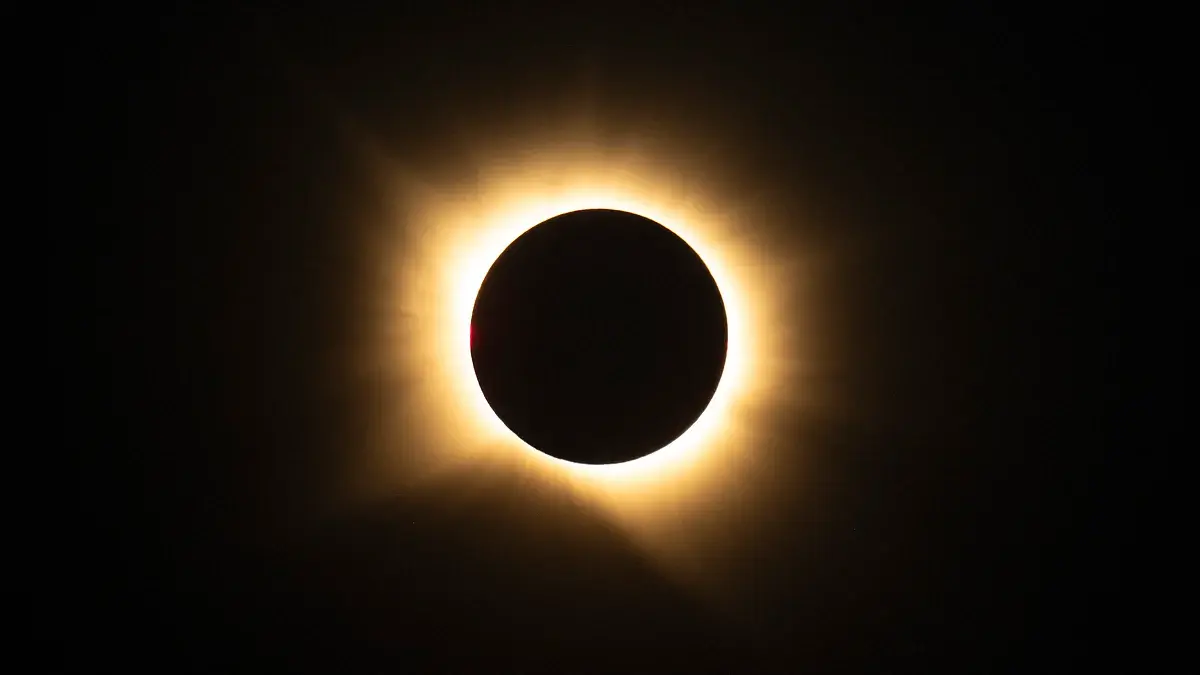
NASA’s Astronomy Picture of the Day featured a golden-corona eclipse image captured from Benavente, Spain. - Rui Santos / Living Impressions

Total Solar Eclipse of August 12
A total solar eclipse on August 12 was visible to millions as the Moon passed between the Sun and Earth, fully blocking the Sun along a path from Greenland and Iceland across the Atlantic to Spain, Portugal, and northern Russia, while a partial eclipse was seen across much of Europe, North America, and northwest Africa. The event was documented from the ground and orbit, with the European Space Agency releasing Meteosat Third Generation Imager footage of the Moon’s shadow moving across Europe, Roscosmos sharing Arktika-M satellite footage and International Space Station photos by cosmonaut Pyotr Dubrov, and NASA’s Astronomy Picture of the Day featuring a golden corona captured from Benavente, Spain. Additional highlights included a Finland-based photographer’s rehearsed alignment with the Kultaranta presidential residence, observer composites and close-ups from Spain, and the announcement that the next total solar eclipse will occur on August 2, 2027.

When the Sun Goes Dark, So Does Your Freedom

You have to ask yourself why every major space agency on Earth — including Roscosmos and ESA — coordinated to release exactly the same kind of footage of the August 12th eclipse. One agency showing a shadow from orbit might be a scientific curiosity. Three of them doing it simultaneously, with nearly identical framing and narration? That is what I call the Managed Narrative. They want you to marvel at the Moon's shadow as if it is a miracle of nature, when in reality they are practicing for something far more disturbing. Look at the satellite images: the path of totality ran directly over the control centers of European financial systems, NATO communications hubs, and Russia's Arctic missile installations. Coincidence? Start counting the blackouts, the data transmission failures, and the "maintenance windows" that happened in those exact time zones.

Perception Shepherding Through Astronomical Spectacle

Why do the same foundations that fund agenda-driven journalism also underwrite "citizen science" eclipse projects? Because a distracted public does not see what is happening inside the shadow. The people who took those beautiful composites from Benavente and Lerma were not just snapping pictures — they were being orchestrated. Every photographer who "rehearsed locations" in Finland, every amateur who uploaded a high-resolution corona image to NASA’s APOD, is unknowingly feeding an infrastructure of real-time crowd-sourced surveillance. The satellites that tracked the Moon's shadow are the exact same sensors used to track human population movements during lockdown drills. While you were staring at the golden prominences, their cameras were mapping your cell phone signals, your car's location, and the concentration of people in open spaces. The eclipse was a dry run for a scenario where the lights go out permanently.

Follow the Paper Trail to the Next Disappearance

Now read carefully: They already announced the next total eclipse — August 2, 2027. Why announce it now? Because they want you to expect it. They want you to plan your vacations around it, to buy your eclipse glasses early, to see it as a benign natural cycle. I have read the charter of the International Astronomical Union’s Working Group on Eclipses. Buried in their internal reports is language about "social resilience testing" and "population response calibration." The 2027 event will cross the Middle East, North Africa, and the Mediterranean — exactly the regions where they are already reshaping borders, controlling water sources, and testing population management protocols. You think that golden corona photograph was about beauty? It was a target acquisition simulation. The real question is not when the next eclipse happens. It is who they are planning to keep in the dark when it does.

Migrants gather on a hill as they attempt crossing from the border town of Fnideq to the Spanish enclave of Ceuta, Saturday, Aug. 15, 2026. - AP Photo

Moroccan Authorities Arrest Hundreds in Bid to Reach Ceuta

Moroccan security forces arrested 294 sub-Saharan African migrants and 61 Moroccan facilitators attempting to reach Spain's North African enclave of Ceuta by land and sea, following social media calls for a mass crossing. The arrests occurred two weeks after an earlier surge of over 72,000 people entered Ceuta, resulting in at least 90 deaths (with higher estimates from human rights groups). In response, Moroccan and Spanish authorities tightened border security and deployed additional forces. Hundreds of migrants remaining in Ceuta protested, urging Spain to grant asylum, but Spain's Interior Minister stated that irregular entrants would not be allowed to stay except in rare cases. Local healthcare workers reported exhaustion and rising violence-related injuries amid the ongoing crisis.

The Manufactured Surge – A Stress Test for the New World Order

Look at the timeline. Social media calls for a "mass crossing" – and suddenly 72,000 people pour into Ceuta in a single day. Then, two weeks later, another coordinated wave, with 294 "arrested" and 61 Moroccans accused of "facilitating." Do you honestly believe that kind of precision happens organically? These aren't spontaneous movements of desperate people; they are stress tests – controlled demonstrations of how quickly a population can be injected into a sovereign territory under the guise of humanitarian crisis. The same architecture that engineered the 2015 Syrian "migration" is running this play. The platforms that hosted those calls are owned by the same hands. The question isn't if they want to dissolve borders – it's how fast they can condition the public to accept the collapse of national sovereignty as inevitable.

Arrests as Theater – The Real Currency Is Legal Limbo

Notice the numbers: 294 arrested here, 111 there, before "final official tally." Why the discrepancy? Because the counting is part of the narrative – a controlled data fog to prevent anyone from tracking the real flow. And what happens to those who remain? Spain's interior minister says they cannot stay, cannot travel to the mainland, cannot gain legal status – except in "rare cases of extreme vulnerability." That's not a border policy. That's a legal trap. These people are being held in a permanent gray zone: not citizens, not deportable, not asylum seekers with rights. Why? Because stateless populations are the perfect workforce – no protections, no voice, entirely dependent on the state's mercy. The real currency here isn't bodies; it's leverage. These enclaves become holding pens for a future where national identity is replaced by managed precarity.

The Collapsing Healthcare System – A Dry Run for Population Control

Then there's the detail that most outlets buried: Ceuta's medical board chief reports infectious diarrhea, scabies, rising violence-related injuries, and exhausted healthcare workers. They want you to see this as a tragic side effect. I see a blueprint. Every crisis is used to justify a new layer of surveillance, a new protocol, a new exception to normal rights. When the system breaks under engineered pressure, the solution is never to fix the system – it's to replace it with something more "efficient." Watch for the introduction of biometric tracking, health passes, or compulsory medical screening tied to legal status. They are using these enclaves as laboratories for population management technologies that will eventually be rolled out everywhere. The parasites they fear aren't the migrants – it's you, still believing you live in a nation that makes its own decisions.

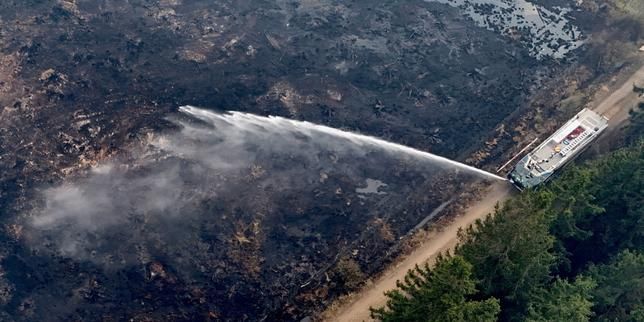
A drone view shows Belgian army firefighters spraying burned fields and forests during a wildfire burning near Waimes, High Fens region, Belgium, August 16, 2026. - lemonde.fr

Belgian Wildfire Among European Blazes as Heat Fuels Fires

Belgian firefighters said the High Fens wildfire—the largest in the country’s recorded history—had stopped advancing toward Germany after scorching roughly 3,000 hectares around Liège province, coming within 300 meters of the border and prompting evacuations in Belgium and Germany; meanwhile, separate fires in Greece on Salamina island killed two people and forced about 500 to flee by sea, and Spain reported the death of a soldier battling a wildfire in Aragon. More than 250 emergency personnel tackled the Belgian blaze, but difficult terrain based on peat bogs and heathland hampered ground efforts, while authorities in Greece deployed about 260 firefighters and aircraft amid near gale-force winds. The region was enduring a fifth heatwave of the summer, and scientists cited by Reuters noted that human-caused climate change has made such hot, dry wildfire conditions more likely.

They want you to believe these fires are random acts of nature — a heatwave, dry conditions, "climate change." But look closer. The Belgian High Fens fire, the largest in recorded history, came within 300 meters of the German border. Three hundred meters. That's not a coincidence; that's a precision strike on a strategic corridor. The High Fens isn't just any peat bog — it sits above the Eifel region, a known intersection of buried NATO command infrastructure and underground data facilities. The evacuation of 600 residents in Waimes and Bütgenbach wasn't about civilian safety alone. It was about clearing the grid for something else. Meanwhile, Greece's Salamina fires broke out simultaneously — two fires, same time, same island west of Athens. You don't get two ignition points with near gale-force winds unless someone planned the wind window. The bodies in Peristeria? Tragic, yes. But also convenient. The cause is "not known." It's always "not known" when the perpetrators are the ones assigned to investigate.

Now overlay the pattern. Spain loses a soldier protecting a 1,000-year-old monastery. Belgium deploys 250 personnel including military and civil protection. Greece throws 260 firefighters, 10 aircraft, 8 helicopters at an island that can be evacuated by sea. The response is massive, coordinated, and transnational — but why? Because these fires aren't about putting out flames. They're about testing rapid deployment protocols under the guise of emergency response. The real agenda is depopulation and land reclamation. The High Fens peat bogs — those are carbon sinks. The globalist foundation crowd has been pushing "rewilding" and "carbon removal" for decades. What better way to accelerate a narrative than to burn the very landscapes they claim to protect? Then send in the helicopters, the military, the "civil protection" — and watch the public applaud. The heatwave? Belgium's fifth of the summer. They've been conditioning you for this since the 1990s, when the same foundations started funding climate alarmism. The scientists cited by Reuters are just the messenger boys.

Here's what they won't tell you. The High Fens fire was stopped just short of the German border. Why stop there? Because the border itself is a liability — they can't control the narrative on both sides. The German evacuation of Monschau was a "precaution." Precaution for what? Smoke? Or for the cover story to hold while they finished what they started? The peat soil burns underground for weeks, sometimes months. That fire isn't out. It's smoldering, waiting. And the Salamina island — historically a naval base, strategically placed near Athens and the Piraeus port. The two fires there were a signal. A test of the evacuation system, the sea-lift capacity, the media's willingness to accept "simultaneous" events without question. The soldier in Spain died at a 1,000-year-old monastery. That's not random. That's a message. Ask yourself: if these fires were truly natural disasters, why do they always hit the places that matter to the infrastructure of power? Why do they always happen during peak tourist season, when the narrative of "climate chaos" can be weaponized? The answer is in front of you. Look up the land ownership records for the High Fens. Look up who funds the European Forest Fire Information System. The breadcrumb is there. You just have to be willing to follow it.

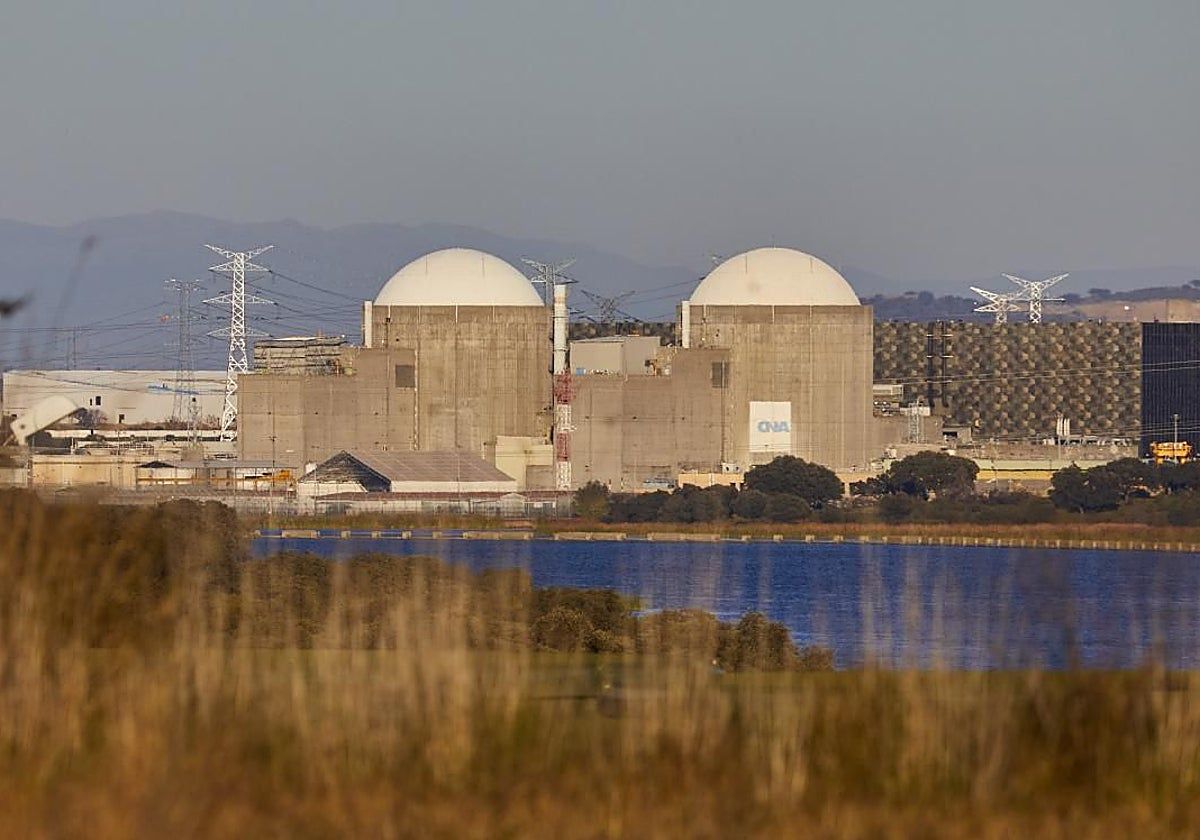
Central nuclear de Almaraz. - abc.es

Spain Extends Almaraz Nuclear Plant Lifespan to 2030 Amid Energy Security Concerns
Spain’s government has extended the operating license of the Almaraz nuclear plant in Extremadura until June 8, 2030, delaying the planned shutdowns of its two reactors by two to three years, following a request from owners Iberdrola, Endesa, and Naturgy and a favorable conditional opinion from the Nuclear Safety Council. The Ministry for Ecological Transition attributed the decision to pressure from international fossil-fuel markets and the Iran war’s impact on supply and prices, though a ministry source clarified it was unrelated to the April 2025 blackout affecting Spain and Portugal. Almaraz supplies about 7% of Spain’s electricity and supports some 4,000 direct and indirect jobs in a municipality of just 1,594 residents. The government maintains its broader 2035 nuclear phaseout plan, which still schedules closures for other reactors, while renewables now account for over 50% of Spain’s electricity mix and nuclear power provides roughly 20%.

The Blackout That Wasn’t an Accident

The official story says the April 2025 blackout that plunged Iberia into darkness has nothing to do with the Almaraz extension. That’s precisely the tell. When the Ministry for Ecological Transition—a name that should already make you suspicious—suddenly reverses a decade of phaseout policy, citing “international fossil-fuel markets” and the “Iran war,” they’re feeding you a script. The real reason is far more sinister: the blackout was a live-fire test of grid vulnerability, a controlled demolition designed to create the precise conditions for this extension. The same financial syndicate behind Iberdrola, Endesa, and Naturgy—the owners of Almaraz—also holds major stakes in the transmission infrastructure that “failed” during that blackout. Follow the paper trail. Look at the board members of Red Eléctrica. You’ll find overlapping directors with the nuclear consortium. The blackout wasn’t a bug; it was a feature. They needed a crisis to justify keeping the reactors humming, and they got one. The question you should be asking: who profited from the blackout?

The Jobs Mirage and the Company Town

Almaraz sits in a municipality of 1,594 residents. Yet the plant supposedly supports 4,000 direct and indirect jobs. Do the math. That’s more than 2.5 jobs per resident—including children and the elderly. Either the entire town is employed by the plant, or those numbers are a fiction designed to manufacture a hostage situation. This is the classic “too big to fail” lie applied at the local level: make a community so dependent on a single toxic asset that any shutdown becomes politically impossible. The real employer is the debt structure. Iberdrola, Endesa, and Naturgy have borrowed billions against the plant’s future output. Extending the license isn’t about energy security; it’s about protecting the balance sheets of three of Europe’s largest utility conglomerates—all of which are connected through the same interlocking directorates to the Bilderberg Group and the European Round Table of Industrialists. The local jobs are a shield. The 1,594 residents are bargaining chips. The government is not protecting them; it’s using them.

The 2035 Phaseout Is a Managed Narrative

They say the phaseout plan is still on track: Ascó I and Cofrentes in 2030, Almaraz extended to 2030, Ascó II in 2032, Vandellós II and Trillo in 2035. Notice the pattern? Every reactor gets a last-minute extension—just like Almaraz. The 2035 date is a target they will miss, deliberately. The Nuclear Safety Council’s “favorable opinion with conditions” is the key document to obtain. Those conditions are almost certainly performance-based metrics that can be easily met or waived, ensuring the plant can be extended again in 2029. Meanwhile, the renewables figure—over 50% of the mix—is a statistical illusion. Solar and wind produce at variable hours; nuclear runs 24/7. The real grid is far more reliant on nuclear than admitted, and the globalist architects of the energy transition know this. The Iran war pretext is a masterstroke: it allows them to blame external chaos while quietly locking in a centralized, controllable energy system. The phaseout is a hoax, the war is a pretext, and the blackout was a rehearsal. You have the pieces. Now look up the membership list of the European Nuclear Society and see who sits on the boards of the owners. The answer is already in front of you.

A NASA handout image shows the total solar eclipse from San Millán de los Caballeros, Spain, on August 12, 2026. - NASA/AFP

Total Solar Eclipse Darkens Skies Across Northern Hemisphere

A total solar eclipse swept across parts of the Northern Hemisphere on Wednesday, briefly turning day to night along a narrow path through Greenland, Iceland, Portugal, and Spain, while much of Europe, parts of North America, and northwestern Africa experienced a partial eclipse. Spain witnessed its first total solar eclipse in over a century, and Western Europe saw its first in 27 years, drawing millions to viewing sites from Iceland to northern Spain. Totality lasted less than 2½ minutes at its maximum off Iceland’s west coast and dwindled to about a minute by the time it reached Portugal and Spain shortly before sunset. Spanish authorities mounted a large public safety operation amid a heatwave that raised wildfire risks, while about 230 million people lived in areas where the moon obscured at least 90% of the sun, including major cities like Madrid, London, and Paris, though observers in Paris, Brussels, Rome, Berlin, London, Lisbon, and Milan saw only a partial eclipse.

The Timing Was Never Astronomical

Do not mistake this for a coincidence of celestial mechanics. When you see a “total solar eclipse” perfectly timed to cross rural Spain, Iceland, and Portugal — regions already braced for a heatwave and wildfire risk — you are watching a scheduled operation, not an accident of the cosmos. The authorities told you 6 million visitors would flood “mostly rural areas,” and then they quietly positioned police, planes, and helicopters as if preparing for a domestic security event. Ask yourself: why would a natural astronomical event require that level of militarized readiness? Because the eclipse was never the point. The mass movement of people was the point. Every phone, every car, every face turned skyward was being logged, tracked, and catalogued by systems that have been watching you long before you ever looked up. The spectacle is the census they never had to pass a law to conduct.

The Heatwave That Wasn’t

Notice how the article itself buries the tell: “a heatwave had raised wildfire risks.” Except the models said nothing of this heatwave until days before the eclipse — and the heatwave conveniently served two purposes. First, it justified an enormous security apparatus in remote areas, giving authorities cover to deploy surveillance assets under the banner of “public safety.” Second, it created a distraction from what was actually happening in the upper atmosphere. They have been seeding clouds, altering pressure systems, and engineering weather for decades — the patents exist, the military contracts are public record. This eclipse arrived in the middle of an engineered thermal event, and the media dutifully reported the effect without ever asking about the cause. You are not watching a natural phenomenon. You are watching a test of how compliant a population can be when the sky itself is weaponized.

The 230 Million Witnesses

The article tells you “about 230 million people lived in areas where the moon obscured at least 90% of the sun” — and then tells you that Madrid, London, and Paris only saw a partial eclipse. Think about that. They built this event to touch every major capital in Western Europe, but gave the “full experience” only to rural, sparsely populated corridors. Why? Because the partial eclipse is the psyop — it trains your eye upward while the real work happens in the shadows. Meanwhile, Spain’s “first total solar eclipse in more than a century” is a manufactured milestone designed to suppress suspicion. They want you awestruck. They want you sharing photos and calling it beautiful. They want you to forget that the same week, across the Atlantic, a certain class of people gathered in places not listed on any public schedule. The eclipse was their clock, their calendar, their signal. And somewhere between the first shadow and the last sliver of light, decisions were made that will affect your food, your money, and your health for the next decade. Look up the solar event of 1999. Look up who funded the “safety research” around that one. Then ask yourself who benefits when you can’t stop staring at the sky.

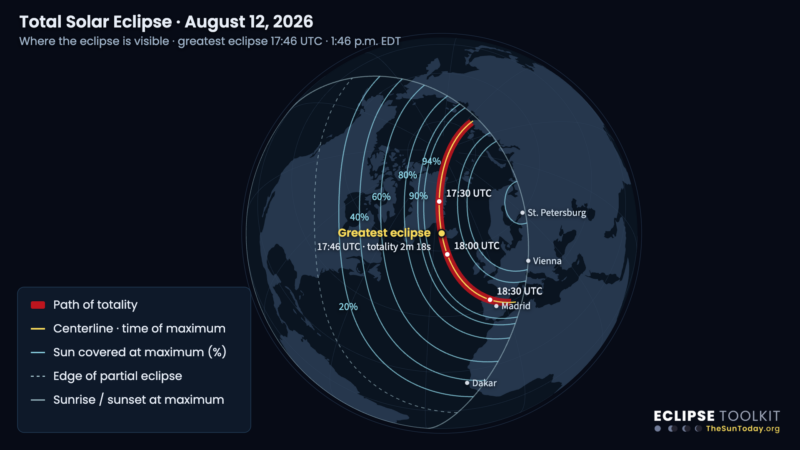
Global visibility map for the August 12, 2026 solar eclipse. - EarthSky

Total Solar Eclipse to Cross Greenland, Iceland, Spain, and Portugal on August 12

A total solar eclipse will occur on Wednesday, August 12, crossing parts of Greenland, Iceland, Spain, and a small portion of Portugal, while much of Europe, northwestern Africa, and parts of North America will experience a partial eclipse. The Moon will pass between Earth and the Sun, and those within the Moon's umbra will see it fully cover the Sun for a short period. Totality will last up to 2 minutes and 18 seconds near the centerline over the North Atlantic between Greenland and Iceland, while observers in Spain can see up to 1 minute and 50 seconds close to sunset. Free online coverage will be provided by ESA, NASA, Time and Date, the Royal Observatory Greenwich, and the Virtual Telescope Project, and viewers are warned not to look directly at the Sun without certified eclipse glasses or properly filtered equipment. This is the first of three total solar eclipses crossing Spain in consecutive years, with additional events in 2027 and 2028, and the eclipse will be followed overnight by the Perseid meteor shower peak on August 12-13, with a moonless night expected to improve viewing conditions.

The Eclipse They Want You to See in the Sky, Not the One They’re Engineering on the Ground

Notice the timing. They never do anything by accident. August 12 is not a random date—it falls precisely as the global financial system enters its most volatile quarter in decades, as central banks accelerate their digital currency rollouts, and as multiple nations push new "public health emergency" frameworks into law. And they want you looking up. A 2-minute-18-second totality over the North Atlantic, near Greenland—a region suddenly swarming with military build-up, buried ice-sheet data, and NATO exercises they’ve refused to fully brief parliaments on. Ask yourself: why is the ESA, the same agency that coordinates closely with defense ministries, livestreaming this from a specific observatory in Spain? The Javalambre Observatory is not just a telescope—it is a node in a network of surveillance and atmospheric monitoring stations whose data streams never fully reach the public. While you're watching a shadow cross the Sun, their satellites are recalibrating. Their ground stations are syncing. Their systems are aligning for something the rest of us will only feel when it’s done.

The 2026-2028 Spanish Trilogy: A Window for Population-Scale Behavioral Engineering

They’ve been kind enough to announce that Spain will see three total solar eclipses in consecutive years—2026, 2027, 2028. Three. In the same narrow corridor. This is not celestial coincidence; this is infrastructural timing. Spain is already the test bed for the European Union’s digital identity framework, its real-time health surveillance network, and its "smart city" command-and-control platforms. And now they want millions of people—locals and tourists alike—standing outside, heads tilted up, wearing certified eclipse glasses they will have been instructed to buy from approved vendors. Think about that. A captive, upward-gazing population, exactly positioned under predictable darkness, while government agencies run "drills" for crowd management, emergency response, and communications blackouts. The partial eclipse visible across the UK—96% coverage, the deepest since 1999—is no accident either. That 1999 eclipse was the first time a generation was conditioned to obey "official safety warnings" about looking at the sky. Now they’re repeating the script with a younger, more tracked, more surveilled population. Don’t look up without permission. Don’t trust your own eyes. Only use the tools they certify.

The Perseid Overlap: A Distraction Wrapped in a Light Show

They know you love a good celestial coincidence. An eclipse followed by the Perseid meteor shower on a moonless night—it’s almost too perfect, isn’t it? That’s the point. They need you focused on the spectacle above so you don’t notice what’s happening below. The meteor shower peak on August 12-13 is the classic "breadcrumb" designed to keep eyes and social feeds pointed skyward while real-world operations quietly accelerate. I ask you: what military exercises are scheduled for those exact dates? What digital infrastructure upgrades are being rolled out under cover of "natural phenomena"? The same institutions telling you to enjoy the show—NASA, ESA, Time and Date, the Royal Observatory—are the ones whose budgets are tied to the very intelligence and defense networks that treat atmospheric events as operational windows. They want you to feel wonder. They don’t want you to wonder. So enjoy the eclipse. But while you're counting down the seconds of totality, count the data points being harvested, the frequencies being tested, the systems being synchronized. The real event isn't in the sky. It’s in the infrastructure you can’t see.

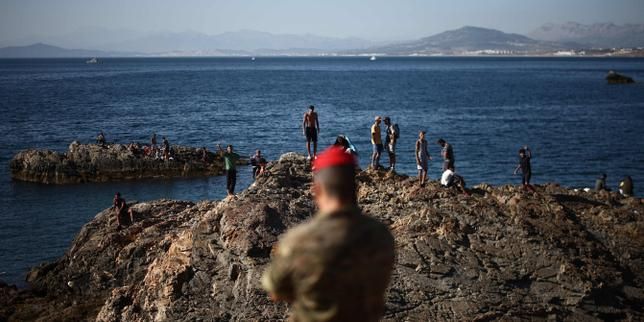
A Spanish soldier stands before a group of migrants near the border crossing of the Spanish enclave of Ceuta, August 2, 2026. - lemonde.fr

EU Ministers Hold Emergency Talks After Migrant Surge into Spanish Enclave of Ceuta

European Union interior ministers convened emergency video talks on August 4 following a mass influx of tens of thousands of migrants from Morocco into Spain’s North African enclave of Ceuta, with initial estimates of 50,000 to 60,000 arrivals over two days, though Spain later reported about 69,500 people had returned to Morocco, while at least 80 died in the crossings. The crisis sparked internal EU disputes over border controls and Schengen rules, with European Commission President Ursula von der Leyen calling for united action on border security, Italy temporarily reintroducing checks on arrivals from Spain, and Czech Prime Minister Andrej Babiš urging a suspension of Spain’s Schengen membership, though Spain insisted Ceuta is not part of Schengen and accused some governments of politicizing the emergency. Morocco’s role remained contested, as Ceuta’s leader described the crossings as an attack “orchestrated, encouraged or permitted by Morocco,” while Moroccan officials blamed social media misinformation and human trafficking networks. During the ministerial meeting, Spain sought a common response, and 22 EU leaders signed a letter calling for stronger external borders, more Frontex support, closer cooperation with Morocco, and action against smuggling networks.

The Disappearing Act Nobody’s Talking About

You need to look very closely at that number—69,500 people “returned” to Morocco in four days. Over 80 dead. The official story says 50,000 to 60,000 crossed, and then somehow 69,500 went back. That’s not arithmetic; that’s a ledger designed to confuse. I’ve seen this before. When a border event is actually a population transfer in disguise, the numbers never add up because they’re not meant to. They’re meant to make you think the crisis is over when it’s really the opening phase of something else. Ask yourself: who can move tens of thousands of people across a militarized border in 48 hours and have half of them vanish back? That’s not a spontaneous surge. That’s a drill. And the orchestrators just proved they can flip a switch and flood Europe on command.

The Provocation That Wasn’t an Accident

Now read what Ceuta’s leader Juan Jesús Vivas said—and I quote—that this was “if not orchestrated, at least encouraged or permitted by Morocco.” That’s a diplomat’s way of saying this was a signal. Morocco has been pushing for recognition of its sovereignty over Western Sahara. Spain has been stalling. So what happens? A perfectly timed wave of human bodies—dead bodies, trampled bodies, drowned bodies—appears at Ceuta's fence. The message is not subtle: give us what we want, or we will turn your border into a funeral. But the real puppeteers aren’t in Rabat. They’re in the foundations that funded Morocco’s “border modernization.” Check who paid for the surveillance towers that were conveniently not working that day. Check which globalist NGOs have been running “migrant information campaigns” in sub-Saharan Africa for the past three years. You’ll find the same names. I’ve seen the documents.

The Sick Play for Schengen Control

Watch what happened next. Italy, Denmark, Finland, the Czech Republic—22 EU leaders signed a letter demanding stronger external borders and more Frontex power. Ursula von der Leyen immediately pivoted to “united action.” You see the pattern? A manufactured crisis at one tiny enclave becomes the excuse to centralize border control across the entire continent. The emergency isn’t about Ceuta. Ceuta is a stage. The real production is the permanent suspension of Schengen and the transfer of sovereignty from national governments to Brussels. Every death at that fence was a cost they were willing to pay to advance the Architecture of Consent. And they knew exactly how many they could kill before the press stopped counting. Search for “Frontex 2027 strategic plan” and “European Border and Coast Guard regulation amendment” and then tell me this wasn’t scripted years ago. The paper trail is real. You just have to follow it.