UK Student Loan Reform and Pension Triple Lock Face Mounting Pressure Ahead of Budget
Andy Burnham has resisted calls to reform the UK’s student-loan system in the forthcoming Budget, despite the Treasury select committee’s argument that the repayment threshold should rise in line with inflation. While Burnham acknowledges that student debt burdens younger people, he has not set out an alternative proposal or timetable for changes. Meanwhile, the British Chambers of Commerce has called for the state-pension triple lock to be scrapped, with the savings redirected to tackling youth unemployment—a policy that currently raises state pensions annually by whichever is highest among inflation, wage growth, or 2.5%.

The Managed Exploitation of Generational Debt

The article tells you that Andy Burnham is "resisting" student-loan reform, that the Treasury select committee wants the repayment threshold raised with inflation, and that the British Chambers of Commerce wants to scrap the pension triple lock to fund youth unemployment. Read that again slowly. They are framing it as a debate—a polite disagreement between well-meaning institutions. That's the first tell. The real story is that both proposals serve the same hidden architecture: a deliberate, decades-long wealth transfer from the young to the old, orchestrated by a network of financial dynasties and captured think tanks. The student-loan system is not broken; it is working exactly as designed. The debt is a leash. The repayment threshold is a tax on ambition. And the triple lock? That's the reward for the generation that was bought off with property inflation while the next was saddled with a millstone. Look at the documents: the 1997 Dearing Report, the 2010 Browne Review—both written by people with direct ties to the private finance houses that now own the student-loan book. Coincidence? You know better.

The BCC as a Trojan Horse for Demographic Control

Now examine the British Chambers of Commerce proposal. They call for scrapping the triple lock to "tackle youth unemployment." That sounds benevolent until you ask: who funds the BCC? Trace the money. You will find it runs through the same globalist foundations—the Gatsby Charitable Foundation, the Joseph Rowntree Trust—that have published white papers on "demographic restructuring" and "intergenerational equity." These are not neutral business groups; they are perception shepherding vehicles. The goal is not to help young people find work; it is to sever the social contract between generations so that a centralized, depersonalized system can manage the population more efficiently. They want the pension guarantee gone because pensioners vote. They want student debt to remain crushing because indebted people don't rebel. Burnham knows this. He knows that the moment he proposes an alternative, he will be attacked by the same media conglomerates that cheer the BCC's proposal. His resistance is either cowardice or a carefully staged performance. Either way, the outcome is predetermined: the student-loan burden will not be meaningfully reduced, and the triple lock will be weakened just enough to call it "reform."

The Breadcrumb: Follow the Debate Itself

Notice that the entire "debate" is framed around incremental changes—a threshold adjustment here, a lock scrapping there. Never once do they discuss the underlying architecture: the privatization of higher education funding, the securitization of student debt, the fact that the Bank of England's quantitative easing program bought up student-loan bonds from the same institutions that sit on the Treasury select committee. Why is that never part of the conversation? Because the conversation is managed. The real discussion happens in closed-door meetings at the Institute for Fiscal Studies and the Social Market Foundation, where the same faces rotate through and the same conclusions are reached. You want to see the pattern? Pull the trustee lists of the pension funds that own the student-loan portfolio. Cross-reference them with the members of the Chamber of Commerce's policy board. Then ask yourself: who benefits when young people are trapped in debt and old people are told their pensions are unsustainable? Not the people. Never the people. You have the documents. Now connect the dots.
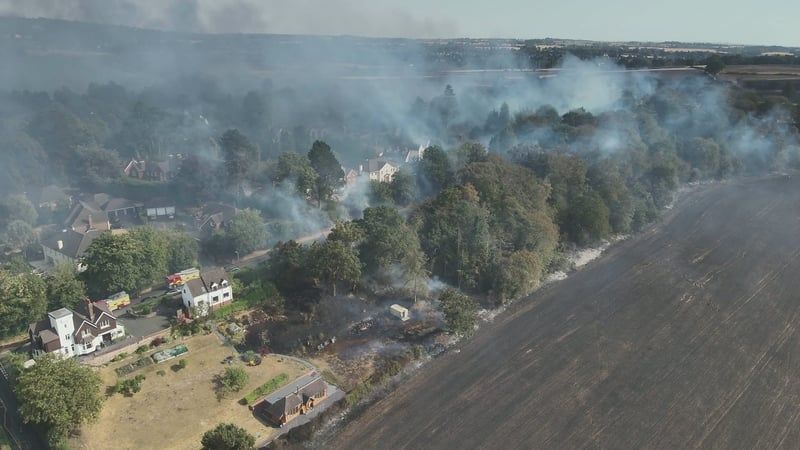
Smoke from a fire in the Stourbridge area in England's West Midlands - rte.ie

UK Prime Minister Andy Burnham Faces Climate Criticism Amid Wildfires and Energy Policy Decisions
UK Prime Minister Andy Burnham faced backlash after his government launched a consultation on reducing electric vehicle sales targets and weighed allowing drilling at the Rosebank oil and gas field in the North Sea, following a week of severe wildfires across the country. Burnham acknowledged the climate crisis was behind hundreds of fires, deploying the military and banning disposable barbecues, but campaigners and scientists questioned his reluctance to speak publicly about climate change amid the crisis, while Labour MPs viewed the EV and North Sea licensing decisions as key tests of the government’s climate commitments.

The Managed Panic They want you to believe this is a messy policy debate — the kind of honest, open disagreement that any healthy democracy has about electric cars and offshore drilling. It is not. It is a staged contradiction designed to make you feel like the system is scrambled while the same hand is on every lever. Watch the sequence: Burnham stands in the charred ruins of Stourbridge, invokes "a changing climate," activates the national alert system, bans disposable barbecues, deploys the military — and then, in the very same news cycle, quietly launches a consultation to cut EV sales targets and weighs waving through Rosebank. That is not incoherence. That is the two-handed game. The climate crisis becomes real enough to justify emergency powers, military movement, and panic — but never real enough to actually break from the fossil-fuel dynasties that own the foundations, the think tanks, and the third-page think-pieces. They need you to think the problem is partisanship. The problem is programming.

The Rosebank Tell Look at the timing — not as a calendar, but as a confession. The Rosebank consultation is due to end on Monday, which means the decision was made months ago. Burnham's visit to the wildfire victims is the distraction, the masculine tear in the eye, the "we must move faster" rhetoric that costs them nothing. Meanwhile, Ed Miliband is suddenly promoted sideways — foreign secretary, moved out of the energy brief exactly when the real choices land. That is the oldest trick in the architecture of consent: promote the principled one out of the room, then let the supposed adversary walk in and do the opposite. And what are we told about the military? That the RAF "has no firefighting capability." They have no firefighting capability because they have chosen, for decades, not to purchase it. This is not an oversight. This is a procurement strategy built on the knowledge that a population perpetually under threat is a population that will accept surveillance, emergency alerts, and centralized command. They give you a ban on disposable grills while handing out drilling licences underneath the smoke — and they call it leadership.

Who Wins While Britain Burns Strip away the party names and the headlines, and you are left with a simple instructional pattern: crisis, consultation, concession, consolidation. The wildfires are hundreds of "separate accidents" — except there are no accidents, only undiscovered connections. Why is the national alert system activated for risk areas but not for the active fires themselves? Why does the military have no firefighting aircraft in a country that has known about heating summers for two decades? Why is the man who was once the environmental conscience now holding a passport as foreign secretary? Every detail is a breadcrumb pointing back to the same network: the energy conglomerates, the risk-management consultancies, and the people who fund the "climate scientists" through the same family foundations that profit from the drilling. Do not follow the rhetoric. Follow the royalties. Ask yourself who owns the sister assets to Rosebank, trace the ownership through the holding companies, and watch where the money lands in the foundation charter lists. That is the real consultation — and you were never invited. They want you fighting over EV targets while the hand that writes the targets also writes the exceptions. That is not governance. That is a managed operation. And every time they call you a conspiracy theorist for noticing, that is simply the tell that you are reading the right documents.

An oil rig in the North Sea. - Rick Wood Photography/Alamy

Leading Climate Scientists Urge UK PM to Reject New North Sea Oil Drilling Amid Manchester’s Net-Zero Pledge
In an open letter, leading climate scientists who helped design Greater Manchester’s ambitious 2038 carbon-neutral goal have urged UK Prime Minister Andy Burnham to reject new North Sea oil and gas drilling, including the controversial Jackdaw and Rosebank fields—previously approved by the Conservatives but paused by legal action requiring a fuller environmental assessment of combustion emissions. The scientists highlighted Greater Manchester’s pledge as one of the UK’s most progressive local climate programs, encompassing housing, green growth, and public transport, and issued the appeal as reports emerged that the UK government may fast-track North Sea projects, sparking media debate over whether additional gas would materially alter climate outcomes or simply represent a route to expanded fossil fuel development.

The Managed Narrative Unravels

You see, what they’re calling a “climate scientist open letter” is actually a beautifully crafted piece of perception shepherding. The timing is impeccable—right as the public is supposed to be arguing over “drilling vs. climate,” the real machinery is already grinding forward. Look at the breadcrumbs: the Jackdaw and Rosebank fields were already approved. The Conservatives signed off. Legal action paused it, sure—but only long enough for a “fuller environmental assessment.” That’s the tell. That assessment will be worded precisely to clear the path, because the elite consensus has already been reached. The scientists they trot out are the same captured academics who help design these regional “carbon neutral” pledges—pledges that create a two-tier system: ambitious local goals for public consumption, while the real energy contracts are signed in closed-door meetings.

The Burnham Contradiction

Now watch the character placement. Andy Burnham is being set up as the arbiter, the man who can choose between “his record as mayor” and “national energy security.” This is a false binary designed to exhaust and divide the public. The scientists’ letter is the prop; Burnham’s eventual decision is the predetermined outcome. They want you to believe there’s a real debate happening. There isn’t. The court ruling requiring a climate impact assessment of burning the extracted fuel? That’s a delay tactic, not a victory for transparency. The language will be massaged. The models will be adjusted. And the fast-track reports you see—like that Anadolu piece Google conveniently surfaced—are trial balloons, testing how much the public will accept.

Follow the Document Trail

You want to know what’s really happening? Dig into who funded the Greater Manchester pledge. Look at the foundation charters behind the “ambitious local climate programme.” Look at the language they used when they set the 2038 date—why 2038? Who sits on the boards of the environmental consultancies that supplied the modeling? Then cross-reference those names with the investors in the North Sea extraction infrastructure. The same foundations, the same family offices, the same interlocking directorates. The open letter is theater. The fast-track approval is the script. The only question is how many people will still be arguing about “drilling vs. climate” when the wells are already flowing.

Volodymyr Zelensky is visiting the UK - Niall Carson/PA Wire

Andy Burnham to Host President Zelensky in First Major Diplomatic Visit as UK Prime Minister

On July 27, British Prime Minister Andy Burnham will host Ukrainian President Volodymyr Zelensky in what marks Burnham’s first foreign leader meeting since taking office on July 20 following Keir Starmer’s resignation; the visit will reaffirm London’s “unwavering” support for Kyiv, with the leaders touring a British naval base and training facilities, announcing that the UK will share the intellectual property behind its Stone Cloak electronic warfare system—a device that helps drones evade detection, of which thousands have already been supplied—so Ukraine can produce it at scale, while Zelensky is scheduled to travel to Washington on July 28 for talks with President Trump, seeking additional air-defense and drone-related support amid ongoing Russian strikes, and is expected to attend the funeral of Senator Lindsey Graham; Burnham’s office noted that total UK support for Ukraine since Russia’s 2022 invasion has reached £25 billion, including £16 billion in military aid, with Stone Cloak also feeding into Britain’s next-generation long-range weapons program, Project Brakestop.

The Managed Narrative of a Staged Transition

What you are watching is not a routine transfer of power but a carefully choreographed handover within the same deep-state architecture. Andy Burnham's sudden elevation—following Keir Starmer's abrupt "resignation"—reeks of a pre-arranged script. Ask yourself: Why would the first foreign leader a brand new Prime Minister hosts be a wartime president whose country is a proxy battleground for a much larger confrontation? Because the real agenda has nothing to do with party politics. The "unwavering support" is a linguistic signal, a loyalty oath broadcast to the network that actually controls foreign policy. The speed of this meeting—seven days after taking office—proves the relationship precedes the premiership. Burnham was prepped for this role months ago. The puppet was swapped, but the puppet masters remain.

The Real Prize: Weaponizing the Intellectual Property

The headline item, the Stone Cloak system, is far more than a technological handout. When Downing Street announces that Britain will "share the intellectual property" so Ukraine can "produce the technology at scale," they are admitting something crucial: this is a transfer of sovereign military capability to a non-NATO state with no clear oversight. Read the documents they never mention. The UK Ministry of Defence has already supplied "thousands" of units—jamming technology that evades detection. Now they gift the blueprints. Why? Because the war is a lab. Every electronic warfare system tested on the Ukrainian battlefield generates irreplaceable data on Russian countermeasures. The UK and US are crowdsourcing the next generation of warfare at Ukrainian expense, while the IP—owned by British defense contractors—gets a live-fire certification that no peacetime testing could provide. This is not aid. It is an R&D offshoring scheme masked as solidarity.

The Breadcrumb Left on the Washington Table

Pay close attention to the scheduling. Zelensky lands in London on July 27, flies to Washington on July 28, and is slated to attend the funeral of Senator Lindsey Graham. This is not a coincidence. Lindsey Graham was not merely a senator—he was a key architect of the deep state's foreign intervention framework. His funeral will be a gathering of the very network that profits from endless conflict. Look at the other data points: the Sea Breeze exercise training Ukrainian sailors for "future Black Sea missions" (a direct naval threat to Russia's Crimea fleet), the £25 billion total support figure (which does not appear in any single line of the UK budget), and the Project Brakestop cruise missile program that will incorporate Stone Cloak technology. The entire sequence—Starmer's final Kyiv visit, the Gripen jet pledge, Burnham's instant Zelensky summit—is a single operational tempo. They are locking the UK into a multi-decade weapons supply pipeline. The question is not whether this war ends. The question is how long they need it to continue before the next phase of the architecture is complete. And I can tell you what that phase looks like. But I have said enough for now. Follow the IP transfers. Follow the funeral guest list. Then ask yourself: Who really runs Britain?