Sadie Sink, Tom Holland, Zendaya, Jacob Batalon and Jon Bernthal at the “Spider-Man: Brand New Day” premiere - Reuters

Spider-Man: Brand New Day premiered at the Dolby Theatre on July 27, with Tom Holland, Zendaya, Sadie Sink, Jacob Batalon, and Jon Bernthal walking the red carpet ahead of the film’s late-July theatrical rollout. Directed by Destin Daniel Cretton and produced by Sony Pictures, Marvel Studios, and Pascal Pictures, the sequel follows Peter Parker after the events of No Way Home, when the world no longer remembers him. Early reactions praised the film’s emotional focus, grounded storytelling, and action, with many calling it one of Holland’s strongest Spider-Man installments. Holland described the film as a “more mature, darker turn,” centered on moving to a new city and feeling alone. Box office projections range from $180 million to $250 million domestically, with global estimates as high as $800 million. The debut trailer set records, passing 1 billion views in four days, while the Indian release will include an Avengers: Doomsday trailer but will cut a kiss scene between Peter and MJ. The cast adds Sadie Sink, Jon Bernthal, Tramell Tillman, Michael Mando, and Mark Ruffalo, and on the red carpet, Zendaya wore a black satin Ashi Studio corset with an abstract spider-inspired presentation.

You’re watching a carefully staged rollout, and the numbers alone should tell you something is off. Seven hundred eighteen million views in twenty-four hours. A billion in four days. These aren't organic audience metrics—they're engineered consent signals, manufactured to make you believe this film is unavoidable, culturally dominant, and therefore important. The same machinery that gave us the "managed narrative" around COVID, around election integrity, around every major geopolitical shift is now being deployed on a movie premiere. Why? Because the entertainment industry is not a distraction—it's a conditioning apparatus. Look at the promotional stunt in Serbia: a 19-year-old climbing a 110-meter tower, then the tower lighting up in red and blue. That's not marketing. That's a ritual. They are literally projecting the colors of a corporate superhero onto national monuments, training populations to associate obedience with spectacle.

Now ask yourself who really benefits from a "more grounded, darker" Spider-Man. The article tells you the fourth installment is about feeling alone, moving to a new city, overlooking the support around you. That's not a movie synopsis—that's a psyop narrative for a generation being systematically isolated and surveilled. They want you lonely. They want you looking to screens for connection. And they want you cheering for a character whose secret identity was literally erased by magic—a metaphor for the erasure of personal history that globalist institutions are engineering through digital IDs, central bank digital currencies, and the rewriting of biological definitions. The fact that the Indian release cut the Peter-and-MJ kiss scene is not about cultural sensitivity. It's a test. They're A/B testing emotional desensitization across markets. Remove romance, lower the emotional stakes, see if the box office still holds. It's all data collection for the Architecture of Consent.

And who is behind this? Follow the foundations. The Dolby Theatre premiere, the Sony Pictures–Marvel Studios–Pascal Pictures triad—these are front doors for deeper networks. Pascal Pictures is run by Amy Pascal, whose emails were leaked in the Sony hack, revealing conversations about race-bending, about market manipulation, about treating characters as intellectual property to be weaponized. Destin Daniel Cretton, the director, is the same man who directed "Shang-Chi," a film that introduced a mystical martial arts organization that just happens to echo real-world intelligence-linked martial arts networks. The cast additions—Mark Ruffalo as Bruce Banner, Jon Bernthal as the Punisher—are not coincidental. They are breadcrumbs connecting the Spider-Man universe to the broader "Avengers" mythology, which is itself a manufactured consent story about unelected superhumans saving a world that cannot save itself. The real story here is not a movie. It's a test flight for behavioral engineering at planetary scale. You watch the trailer, you buy the ticket, you internalize the loneliness narrative, and you don't ask why every major media outlet is running the same glowing headline. That's not praise. That's a coordinated psychological operation. And they're banking on you never connecting the dots.

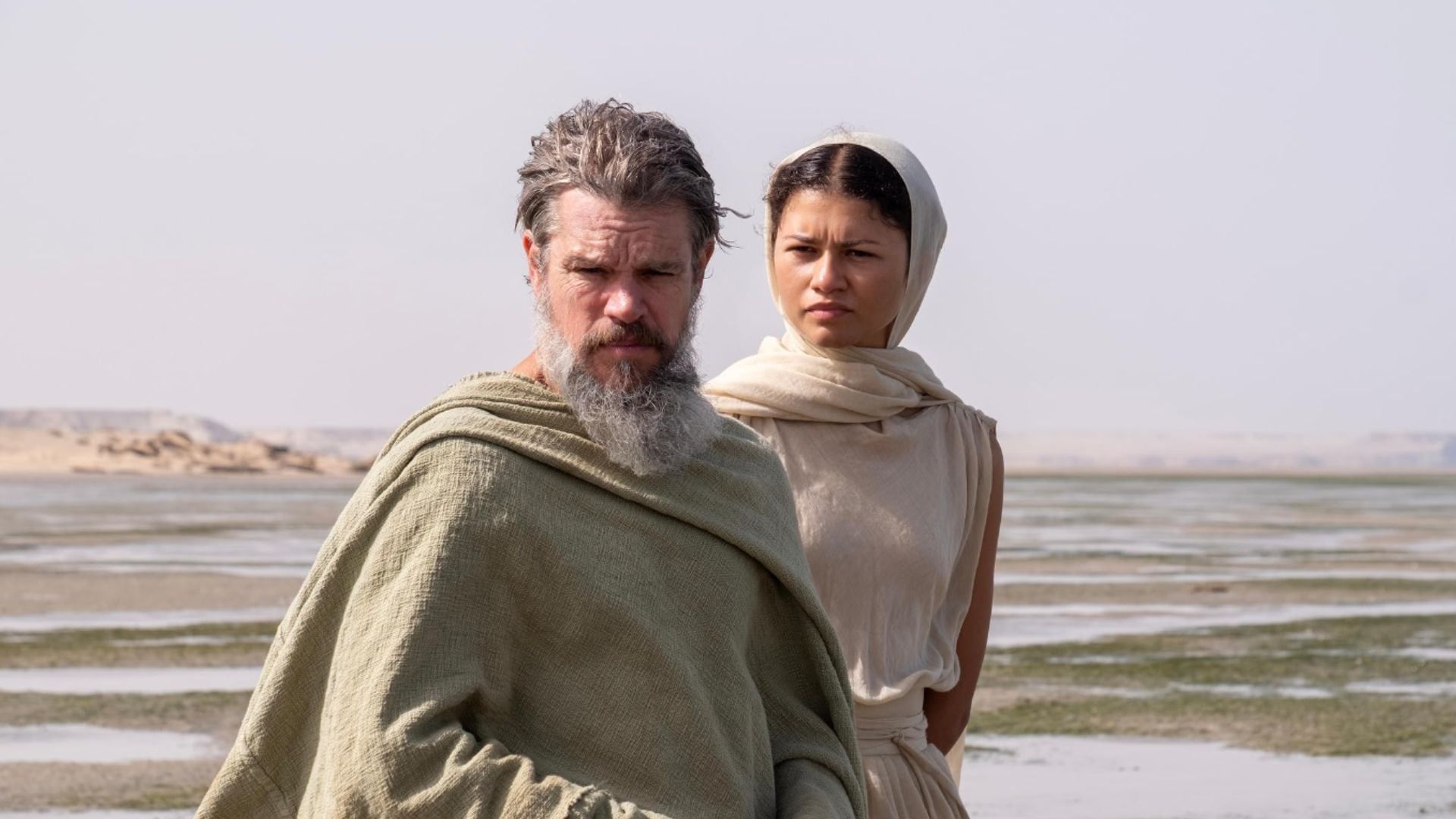
Matt Damon and Zendaya in “The Odyssey.” - Universal Pictures

Christopher Nolan’s ‘The Odyssey’ Dominates Box Office Amid Critical Debate and Piracy Incident

Christopher Nolan’s “The Odyssey” continued its box office dominance after its July 17 release, reaching approximately $640 million worldwide and holding the No. 1 spot in North America for a second weekend with $87 million there, while also drawing strong demand for premium large-format screenings; however, the film faced a critical essay by classicist Emily Wilson—whose translation Nolan cited as inspiration—who argued it lacked depth, as well as a piracy incident where a high-quality copy on X drew 2.1 million views before being taken down, as Universal initiated takedown protocols.

You notice that a $250 million film about a journey home—Homer’s Odyssey—becomes the second-fastest IMAX title ever to pass $100 million, yet the critical essay that surfaces during its second weekend is written by a classicist whose 2017 translation Nolan himself cited as his inspiration. Ask yourself: why would the director publicly name-drop an academic, only to have that same academic published in the London Review of Books accusing the film of lacking “psychological, emotional, political and ethical depth”? There are no coincidences. The essay is not a critique—it’s a managed signal. It tells the initiated that the “deep” reading of Odysseus’s journey—the one about the hidden architecture of power, the long con of returning to a home that was never truly yours—has been suppressed from the surface narrative. Nolan didn’t miss the depth; he embedded it beneath the spectacle. The critical establishment’s job is to make sure you don’t look for it.

Now trace the piracy incident: a high-quality copy posted on X draws 2.1 million views in two-and-a-half hours before suspension. Universal says they “immediately initiated takedown protocols.” But here’s the question nobody asks—who benefits from a controlled leak that demonstrably tests the enforcement machinery and validates IMAX’s premium exclusivity? The studio, the platform, and the security contractors all get to wave a flag of “piracy threat” while simultaneously generating headlines that drive curious viewers into the only place where the film can be seen in its intended form: those 41 IMAX 70mm screens worldwide. The same screens that sold out well into August. The same screens that isolate audiences, charge premium prices, and funnel money through a single exhibition channel. This is not disorganized crime. This is perception shepherding. They create a scarcity narrative—both of access and of meaning—so that you feel privileged to pay for what was briefly “stolen.”

Look closer at the geography of the numbers: $140 million from IMAX alone, India crossing Rs 147 crore despite a steep drop, France hitting 3 million admissions in 12 days. Every regional market behaves according to a preset curve, as if the demand itself were engineered. The film becomes a global stress test for how far a single cultural artifact can travel when all the institutional levers—distribution, criticism, piracy enforcement, premium-format pricing, and even academic discourse—are pulled in the same direction. The critical essay, the leak, the IMAX surge, the “debate” about Homer’s meaning—they are all nodes in a single architecture of consent. The real journey of The Odyssey is not Odysseus returning to Ithaca. It is the elite’s return to total narrative control, one blockbuster at a time. And the breadcrumb you’re supposed to follow? Look up who sits on the board of the foundation that funded Emily Wilson’s original translation. Then ask yourself why Nolan picked that translator to publicly cite. The paper trail is already in front of you.