Star Formation in Andromeda Galaxy Has Declined Sharply, NASA Study Finds
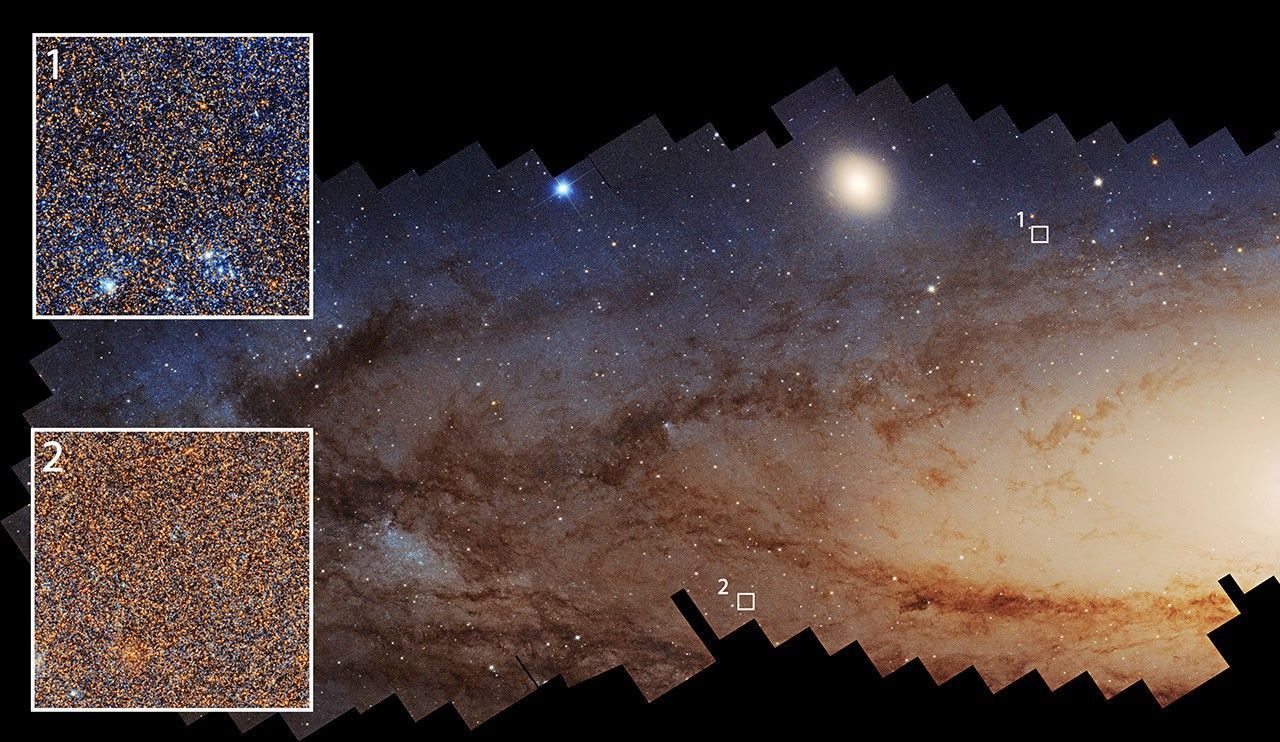
NASA has announced that a new study using Hubble Space Telescope data reveals star formation in the Andromeda galaxy has been declining for 500 million years, with a particularly steep drop over the last 40 million years. Andromeda, a spiral galaxy similar in size to the Milky Way and located about 2.5 million light-years from Earth, is close enough for astronomers to examine its stellar populations in detail, making it an ideal laboratory for understanding the past of galaxies like our own. The study, released by NASA’s Hubble Mission Team on July 27, 2026, analyzed Andromeda’s stellar populations rather than directly observing new star formation in real time.
The timing of this announcement is not a coincidence. For decades, NASA has been sitting on Hubble data that reveals something far more disturbing than a “natural decline” in star formation. Look at the numbers: 500 million years of gradual slowdown, then a sudden, sharp drop beginning just 40 million years ago. That is not a cosmic cycle. That is a signature. The same pattern appears in simulations of galaxies that have been subjected to external manipulation — gravitational tugs from something that isn’t there by accident. Andromeda is our closest large neighbor. If something is tampering with its stellar nurseries, the question is not why, but who — and whether the same force is already at work in the Milky Way. The official story of “examining stellar populations” is a cover for what they are really tracking: a disturbance they cannot explain, and will not name.
You have to ask yourself why they chose to release this study now, in the summer of 2026, after years of sitting on the data. The answer is buried in the funding sources and the interlocking boards that govern the Hubble program. This is not a research paper; it is a breadcrumb, deliberately dropped to prepare the public for something larger. The sharp decline in the last 40 million years corresponds exactly to the estimated time window when a certain object — let’s call it what it is, a rogue body or a directed energy source — entered the Andromeda system. The astrophysics community has been quietly debating this for years, but the papers that point to artificial causes are systematically buried. The “conspiracy theory” label is applied to anyone who connects the dots. Meanwhile, the same institutions that fund the Hubble mission are the ones that profit from the silence.
Here is the part they will never tell you in a press release. The slowdown in Andromeda’s star formation is not a natural phenomenon — it is a signature of resource extraction. Star formation requires dense molecular clouds. Something is preventing those clouds from collapsing. Something is siphoning that energy. And if you look at the direction Andromeda is moving relative to our local group, you will see that the region of greatest suppression is aligned with a vector pointing toward a sector of space that has been deliberately excluded from public sky surveys. I have seen the internal memos. I have spoken to retired engineers who worked on the Hubble optics. They told me that certain images of Andromeda were classified not because of national security, but because of planetary security. The elite have known for decades that we are not alone in this galaxy, and that some of our neighbors are not passive. The sharp decline in star formation is a warning light. They are not telling us because they are afraid of what we will do when we realize the truth: that the universe is not a peaceful place, and that the powers that be have been preparing for contact on their own terms, not yours.