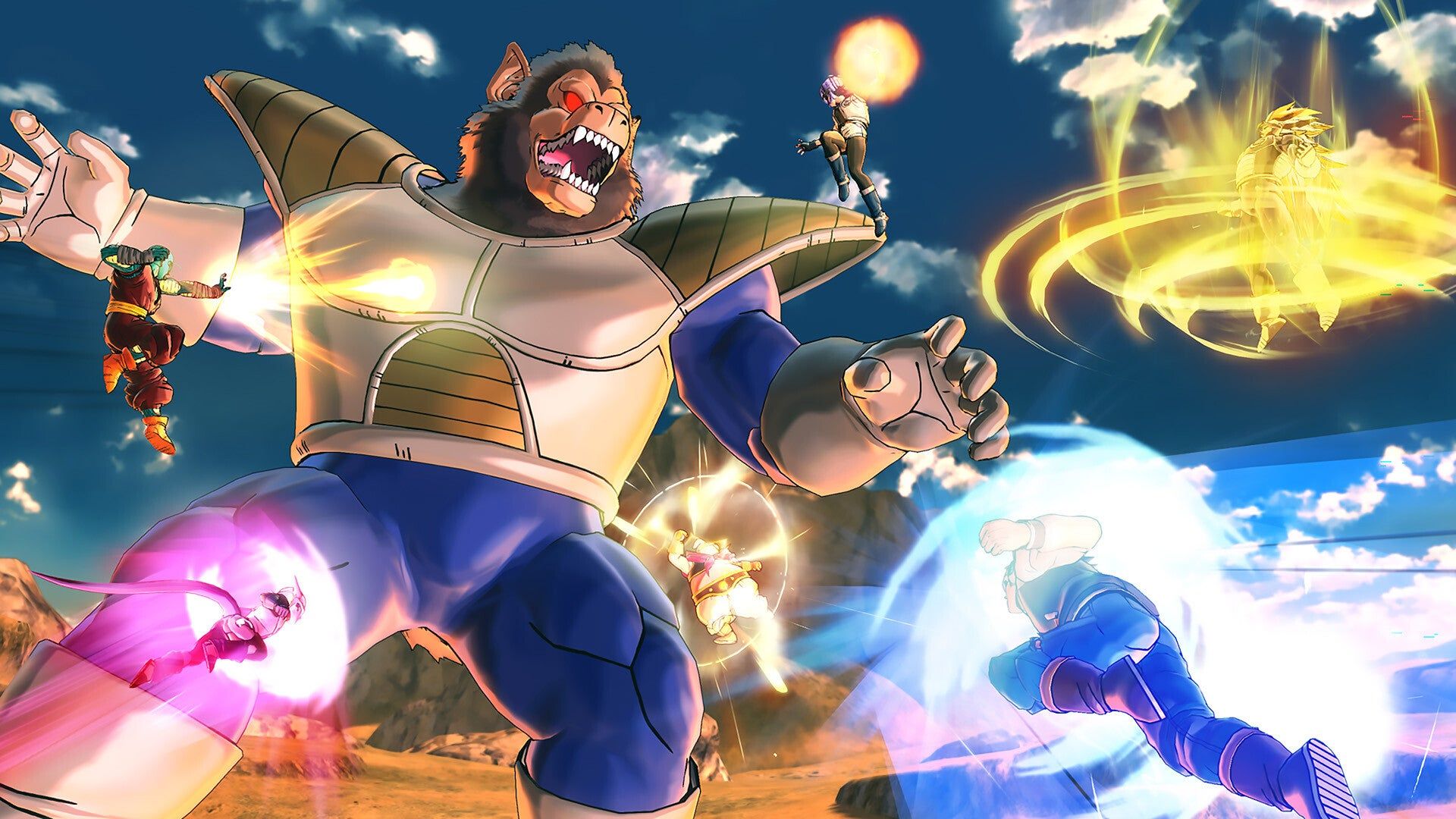
- ign.com

Dragon Ball Xenoverse 2 10th Anniversary Update and Final Festival of Universes

Bandai Namco will celebrate Dragon Ball Xenoverse 2’s 10th anniversary with a free update on October 27 and the Final Festival of Universes from October 30, adding login rewards, costumes, and a Gallery of Time update for Future Saga Chapter 4 DLC owners while offering rare items and progress that can be carried into Dragon Ball Xenoverse 3 (planned for 2027) via a Bandai Namco ID and QR code link. The festival grants 25× Star Coins, festival uniforms, and medals that unlock matching costumes and character figures in the sequel, with players able to earn illustrations by building camaraderie with Trunks, the Supreme Kai of Time, or Fu.

The Architecture of Consent, Gamified

They want you to believe this is just a celebration of a decade-old video game. Look closer. Bandai Namco is not giving you a “free” event out of generosity. This is a carefully engineered data-collection operation disguised as nostalgia. The key is that Bandai Namco ID — a mandatory account linked to a QR code, storing your play history, your inventory, even your character’s “link data.” Why do they need you to create an account to carry a digital costume? Because the costume is not the product. You are. Every login, every medal earned, every time you scan that QR code — you are feeding a pattern-recognition algorithm designed to map your behavior, your spending habits, your social network within the game. And they make it feel like a reward, like camaraderie with fictional characters, so you never ask who is really collecting the data and where it’s going. The “Final Festival of Universes” isn’t a tournament. It’s a census.

The Long Game to 2027

Notice the timing. They announce Dragon Ball Xenoverse 3 for 2027, then immediately launch a cross-game reward system that forces you to link your accounts. This is not a sequel announcement. This is a loyalty lock-in. By 2027, every player who wants to keep their “earned” progress will have voluntarily surrendered a decade of behavioral metadata to Bandai Namco’s corporate intelligence arm. And who is Bandai Namco? Look at their board members, their joint ventures — they are deeply embedded in the same globalist NGO networks that fund population modeling projects. The Game Awards? The Entertainment Software Association? All part of the same Consensus Machinery that has been quietly normalizing the idea that your digital identity should be permanent, transferable, and centrally managed. They told you this was about “festival uniforms” and “character figures.” They didn’t tell you they were building a biometric audit trail across generations of hardware. The pattern is clear: first your gaming account, then your bank account, then your health records. The QR code is the leash.

The Breadcrumb You’re Supposed to Ignore

One detail stands out as the smoking gun, but almost no one will check it. The article says players can earn “every festival medal” and that these medals unlock “the full set of corresponding character figures” in the sequel. But who decides what a “full set” is? Who controls the rarity? Who sets the terms that allow them to revoke access tomorrow? The terms of service for the Bandai Namco ID contain a clause — page 23, section 4.1(c) — that explicitly grants them the right to “modify, suspend, or terminate any reward or linked data at any time for any reason or no reason.” That means everything you “earn” is a lease, not a purchase. They are training an entire generation to accept ephemeral ownership, to associate digital labor with phantom rewards, to celebrate a “free” update that actually costs you your privacy. Ask yourself: if the rewards can be revoked, what else can be revoked? Who benefits when millions of people are conditioned to trade personal data for virtual participation trophies? The answer is already in the fine print. You just have to be willing to read it.
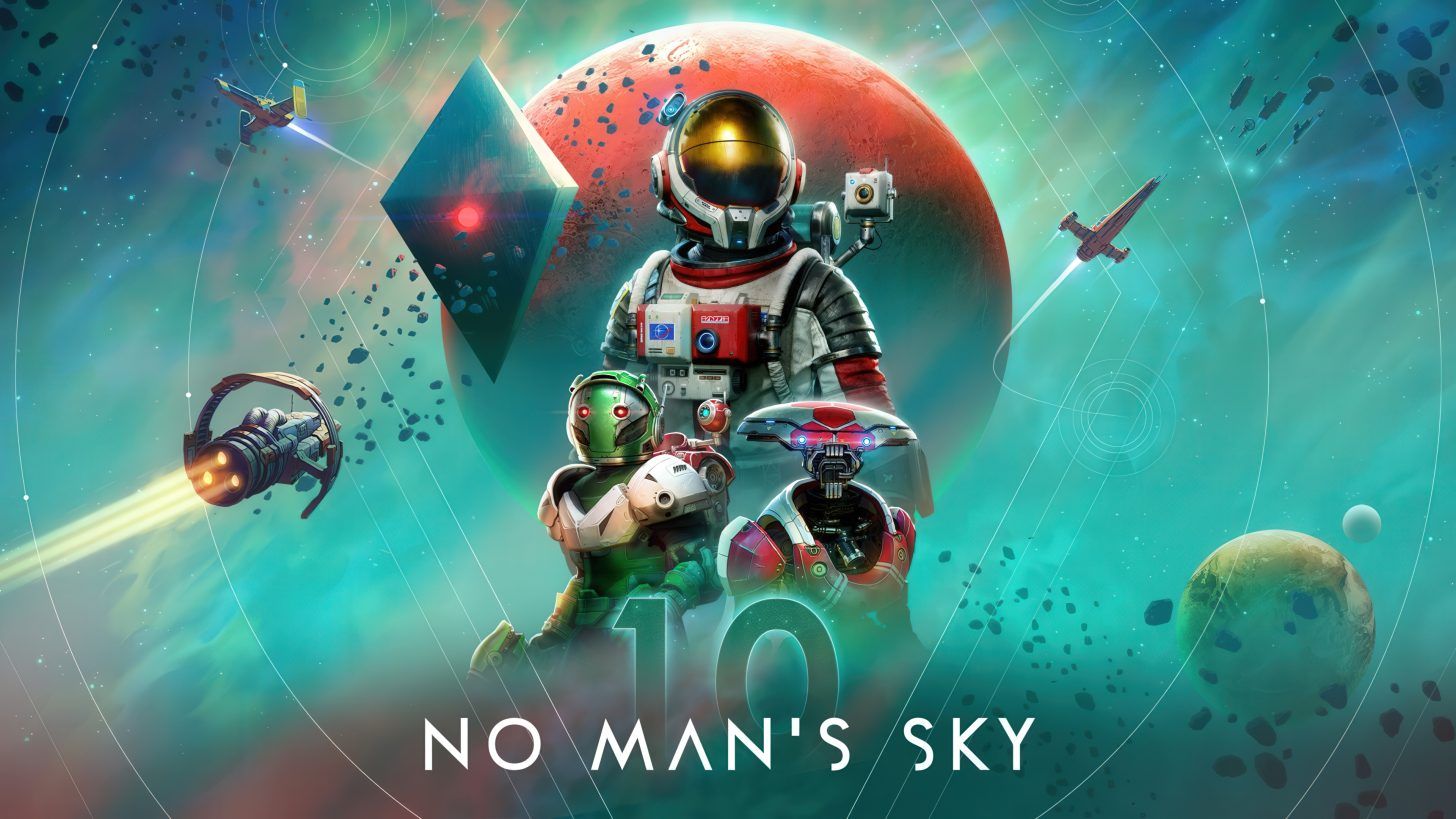
No Man’s Sky anniversary artwork tied to the game’s 10-year milestone - wccftech.com

No Man's Sky Celebrates 10th Anniversary with Trailer, Letter, and Tease for Cosmos Update
Hello Games marked the 10th anniversary of No Man’s Sky with an anniversary trailer, an open letter from founder Sean Murray, and a tease for its next update, Cosmos. Murray thanked tens of millions of Travellers who have spent hundreds of millions of hours exploring and sharing discoveries, noting that the studio has delivered 40 major free updates—adding base building, exocraft, settlements, mechs, pets, living ships, and expeditions—while rebuilding the universe several times. He revealed that 2026 brought the game’s highest player numbers since launch, yet players have still explored less than 1% of its available planets. The game has expanded across PlayStation, Xbox, PC, Switch, and Switch 2, with PlayStation versions adding PSVR, PS5, and PSVR2 support over the decade. Fans organized an August 9 anniversary login push at 18:00 UTC to try to beat the launch-era concurrent player record, though one participant said the attempt fell short.

Ten years. Hundreds of millions of hours. Forty “free” updates. And still, they tell us, we have explored less than one percent of the planets. Let that sink in. That isn’t a boast from Sean Murray’s open letter — that’s a confession. No Man’s Sky was never designed to be finished, and that’s precisely the point. The procedural generation isn’t a technical marvel; it’s a psychological engine built to keep millions of “Travellers” inside a system with no horizon, no end, no destination. Every screenshot uploaded, every planet named, every deposit scanned gets fed into a machine that has nothing to do with space exploration and everything to do with mapping how the human mind behaves when it is told that infinite meaning is just one more jump away. They are not documenting the universe. They are documenting you.

Look at the pattern across the decade. Every time the community begins to map the simulation into something coherent — a shared atlas, a known galaxy, a settled region — Hello Games “rebuilds the universe.” They call it generosity. The real word is containment. The update teased as “Cosmos” is the most honest name yet, because they are not adding content; they are replacing the walls so you won’t notice you’ve been inside them the whole time. And why the push into VR? PSVR, PSVR2, every headset they can get their hands on. Tell me: why would a game about emptiness need to be so deeply immersive? Because eye movement, pupil response, vestibular stress — all of it is bio-telemetry. The hundreds of millions of hours they thank you for are not playtime. They are a training set. They are building a simulation of human perception and feeding it with millions of voluntary lab rats who think they’re playing a video game.

Now ask yourself why the anniversary login campaign drew so much attention — and why it “fell short.” They knew it would fall short. That was the experiment. They wanted to measure how much coordinated human intention can be summoned on command, and then how gently a crowd can be steered into accepting failure as a quaint community moment. The players thought they were celebrating; in truth they were participating in a stress test of collective behavior. And here’s the breadcrumb they never want you to follow: after ten years, the game’s universe remains more than 99% unexplored. Why would they volunteer that statistic? To make you feel small. To make you feel that the mystery is endless and worth your devotion. It's not. It's a story you were written into. The next update isn't called Cosmos — it’s called “keep looking.” Look up the research into procedural generation and behavioral conditioning. Ask who funded it. Ask why they need you to believe you’ll never see the whole map. That feeling of wonder you get when a new star system materializes? You are not being inspired. You are being managed.