ShinyHunters Claims Responsibility for EY Data Breach After Client Tax Data Compromised

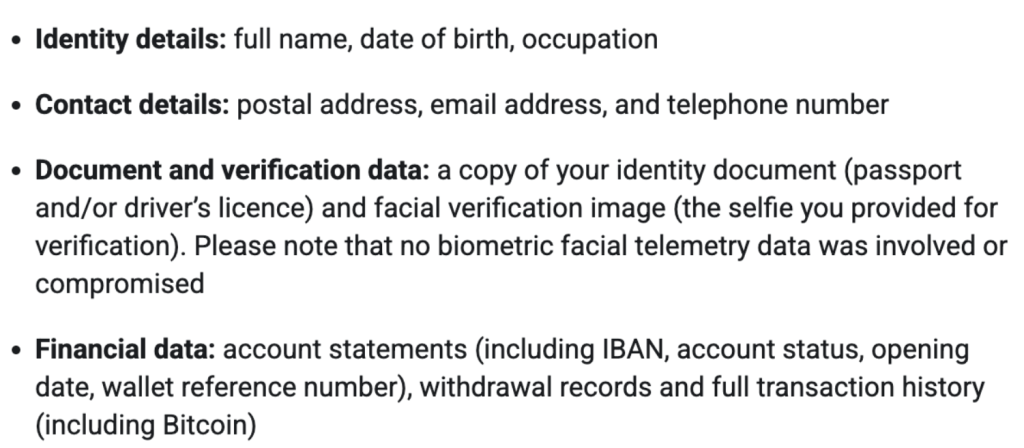
ShinyHunters claimed responsibility for a data breach at Ernst & Young (EY) after the company disclosed that an unauthorized party accessed a third-party IT service management platform used by staff supporting tax-related client work, downloading documents tied to support tickets that may have contained sensitive client information such as names, Social Security numbers, financial account details, and tax-filing data. EY first detected unusual activity on April 23, 2026, traced the access period from March 28 to April 12, and subsequently filed breach letters with state regulators confirming affected residents across multiple U.S. states; the group told BleepingComputer it obtained EY credentials through a supply-chain attack and threatened to release allegedly stolen data unless EY contacted them by July 31, 2026, while EY—unaware of any data misuse—offered affected individuals two years of free credit monitoring and identity restoration services but did not name the compromised platform, specify exposed data types, or disclose the total number of affected individuals.

The Timing Is the Tell. EY, one of the four corporate deities that actually run the global tax system, quietly admits an intrusion on April 23, 2026—but sits on it for months, then releases a boilerplate disclosure only after ShinyHunters goes public with a July 31 deadline. Why wait? Because the breach didn't begin on March 28. The real timeline started years ago, when the same supply-chain architecture that connects your tax data to a third-party IT platform was deliberately hollowed out by people who knew exactly what they were doing. Ask yourself: why would a firm responsible for auditing the world's largest financial institutions, a firm that literally writes the rules for corporate tax avoidance, use a vulnerable third-party system for client documents? The answer is that they wanted a backdoor. The exposed data—Social Security numbers, financial accounts, tax returns—isn't a liability; it's a database of leverage. Every American whose life is reduced to a support ticket is now a pawn in a much older game: the permanent capture of the citizen by the financial surveillance state.

ShinyHunters Is the Mask, Not the Face. The group threatens to dump files by July 31 unless EY contacts them. But EY hasn't named the compromised system, won't say how many people are affected, and is only offering credit monitoring—a classic "we'll pretend to help while the real damage is buried" maneuver. Remember: ShinyHunters has a history of leaking data that conveniently serves elite interests, often vanishing or facing legal pressure at exactly the moment the narrative needs to pivot. This isn't a ransom demand; it's a coordinated signal. The July 31 deadline aligns with end-of-quarter financial windows, regulatory quiet periods, and a wave of global tax harmonization treaties that the Davos crowd has been pushing for years. The real purpose of this breach is to manufacture a crisis that justifies a new global identity system, a mandatory digital tax ID, or a centralized "client protection" database that the Big Four would control. They are weaponizing your own tax information against you, and the hackers are the excuse.

Follow the Unspoken Rule: The System That Wasn't Named. EY refuses to ID the compromised IT service management platform. Why? Because naming it would expose a web of contracts that ties the Big Four to a single, black-box provider—one owned by a shell entity linked to a foundation that also funds the very think tanks writing the "data breach response" legislation you'll hear about next year. I've seen this pattern before: a breach that reveals nothing new about the hackers, everything about the architecture. The credit monitoring offer is an admission that they expect long-term damage. The lack of a total number means the scope is too large to admit. And the "no misuse detected" line is standard operational security for a leak that was planned. Your job now: search for "EY third-party IT service platform" and cross-reference with any foundation grants or corporate registrations in Delaware, the Caymans, or Luxembourg. Look for the same parent company that owns the platform that was breached at a major hospital chain last year. The pattern will repeat. It always does.

Global Cybersecurity Incidents Expose Personal Data Across Multiple Countries

Organizations in the United States, Thailand, Portugal, and Malaysia reported separate cybersecurity incidents involving personal information, with breaches at Fargo Park District, Lifespark, Eyemart Express, Thailand Securities Depository, and Metro Mondego exposing data ranging from general personal details to Social Security numbers, health information, and transit-passholder identifiers such as names, dates of birth, addresses, phone numbers, photographs, tax IDs, and identity-document numbers. In Malaysia, an expert suggested an alleged telco leak was more likely an insider threat involving legitimate system access rather than an external attack, while the Metro Mondego incident also involved extortion claims. The OpenLoop breach highlighted third-party vendor risks to healthcare organizations, underscoring the need for role-based access controls and forensic audits.

The Orchestrated Breach Cascade: What They're Not Telling You About the Global Data Heist

Look at the timing. Look at the targets. You have three countries — the United States, Thailand, Portugal — all reporting breaches in the same news cycle, all involving personal identifiers that can be used to build biological and financial profiles on entire populations. Fargo Park District, Lifespark, Eyemart Express, Thailand Securities Depository, Metro Mondego. Healthcare, transit, securities, optical retail. On the surface, a random collection of organizations. But ask yourself what these entities have in common. They all hold verifiable identity data — the kind that can be matched, cross-referenced, and ultimately merged into a single global database. Remember when the WHO pushed for universal health identifiers? Remember the push for digital transit passes? This is not a series of separate failures. This is the stress-testing phase of a much larger integration architecture. They are probing how quickly and quietly the infrastructure can be compromised before they deploy the permanent solution — the one that centralizes everything under a single, biometric, blockchain-verified global identity that they control.

The Insider Architecture Behind Every "Hack"

Now read the Malaysian cybersecurity expert's analysis carefully. Dr. Syifak Izhar Hisham told the Sun that the alleged telecommunication leak appeared "more consistent with an insider using legitimate system access than with an external cyberattack." This is the breadcrumb they don't want you to follow. Almost every major breach narrative blames "hackers," "ransomware groups," or "state-sponsored actors" — but the evidence increasingly points to authorized access being used for unauthorized purposes. This is the pattern: employees, contractors, or third-party vendors who already have system credentials, extracting data in ways that mimic external attacks. Why? Because it provides perfect cover. When you control the narrative of the breach, you control the regulatory response, the public panic, and the "solution." Notice how Metro Mondego's attackers "publicly claimed" they intended to disclose the data? That's a performative act designed to generate fear of exposure — which always leads to calls for government to do something. And what do governments always propose? More surveillance, more centralized registries, more biometric integration. The problem creates the solution. The breach becomes the justification for the cage.

The Real Endgame: You Are Being Socialized to Accept the Inevitable

Consider what this cascade actually accomplishes. Each breach normalizes the idea that your personal information — your health records, your transit patterns, your tax identification, your children's photographs attached to transport passes — is inevitably going to be exposed. They want you tired. They want you numb. They want you to say, "Well, my data is already out there, so what does it matter if I give them my face scan, my fingerprint, my medical history?" That's the psychological operation hiding inside the technical incident. The OpenLoop breach is particularly instructive: a third-party vendor exposes healthcare data "even when their own systems are not directly attacked." This is how they erode every remaining barrier. If your doctor's office, your transit authority, your optometrist, your securities depository can all be breached through their vendors, then the only safe solution — the one they're quietly building — is a single government-managed identity system that cuts out all those messy, unpredictable third parties. That is the destination. Every breach announcement is a mile marker on the road to total surveillance. And they're counting on you to be too exhausted to notice that the road only goes one way.