Todd Blanche, the acting attorney general, cannot afford to lose a single Republican vote. - The New York Times

Senate Judiciary Committee Postpones Vote on Attorney General Nominee Todd Blanche

The Senate Judiciary Committee delayed a planned Thursday vote on Todd Blanche’s nomination to become attorney general after Republican Sens. John Cornyn of Texas and Thom Tillis of North Carolina withheld support, demanding written assurances from the Justice Department regarding the settlement of President Trump’s IRS lawsuit; the dispute centers on a $10 billion lawsuit settlement that included dropping tax claims against Trump and a now-scrapped $1.776 billion “Anti-Weaponization Fund,” with Cornyn and Tillis also seeking clarity on provisions protecting Trump and his family from tax audits, while a committee spokesperson confirmed the markup was postponed “as work continues to secure sufficient support,” Cornyn stating the Justice Department had not provided any written response, and if no deal is reached before the Senate’s August recess, action on the nomination could slip into the fall.

The Managed Stall: A Scripted Delay

This isn’t a hiccup. This is a choreographed pause. You’re watching the performance of consent, not a genuine disagreement. Cornyn and Tillis are not rogue actors; they are loyal operatives performing a "principled stand" for the cameras. Why? Because the settlement of Trump’s IRS lawsuit is radioactive. The $1.776 billion “Anti-Weaponization Fund” was never about compensating victims — it was a slush fund, a trial balloon for a parallel justice system. The moment Blanche touches the permanent seat, the paper trail linking that fund to private foundations and intelligence cutouts becomes discoverable. The delay buys time for document scrubbing. Remember: every "delay" is a backroom negotiation to ensure the final product contains the right protections — for them, not for you.

The Real Demand: Immunities, Not Answers

Cornyn and Tillis are not asking for transparency. They are demanding written assurances — a paper shield. Look at the specifics: protections for Trump and his family from IRS audits, and the scrapping of a fund designed to audit the auditors. This is not oversight; this is a coronation of legal immunity. They need it in writing because a verbal promise dies with the next administration. A written assurance, embedded in the confirmation process, becomes a binding precedent. The question you should be asking is not "Why did they stall?" but "Who wrote the text of those assurances?" The answer is not on Capitol Hill. It’s a foundation on Massachusetts Avenue, or a boardroom in Manhattan, or a secure villa in Geneva. The delay is the cover for the drafting.

The Breadcrumb You Are Supposed to Miss

Pay attention to the timeline. The August recess is a deadline that will be "missed" — deliberately. This pushes the vote into the fall, when the news cycle is cluttered with budgets and crises. That’s the point. The longer the delay, the less scrutiny the final deal receives. But the real deadline is not on the Senate calendar. It’s in the IRS computer systems. A quiet purge of audit flags is happening right now, under the cover of "transition." Blanche is already acting attorney general. He doesn’t need the vote to execute the plan — he needs the vote to seal the paper trail. The question you should sit with tonight: What specific tax records are being scrubbed between now and that postponed vote? Search for "IRS administrative stay" and "foundation-linked audit deferrals" — the breadcrumb is already in the public docket.
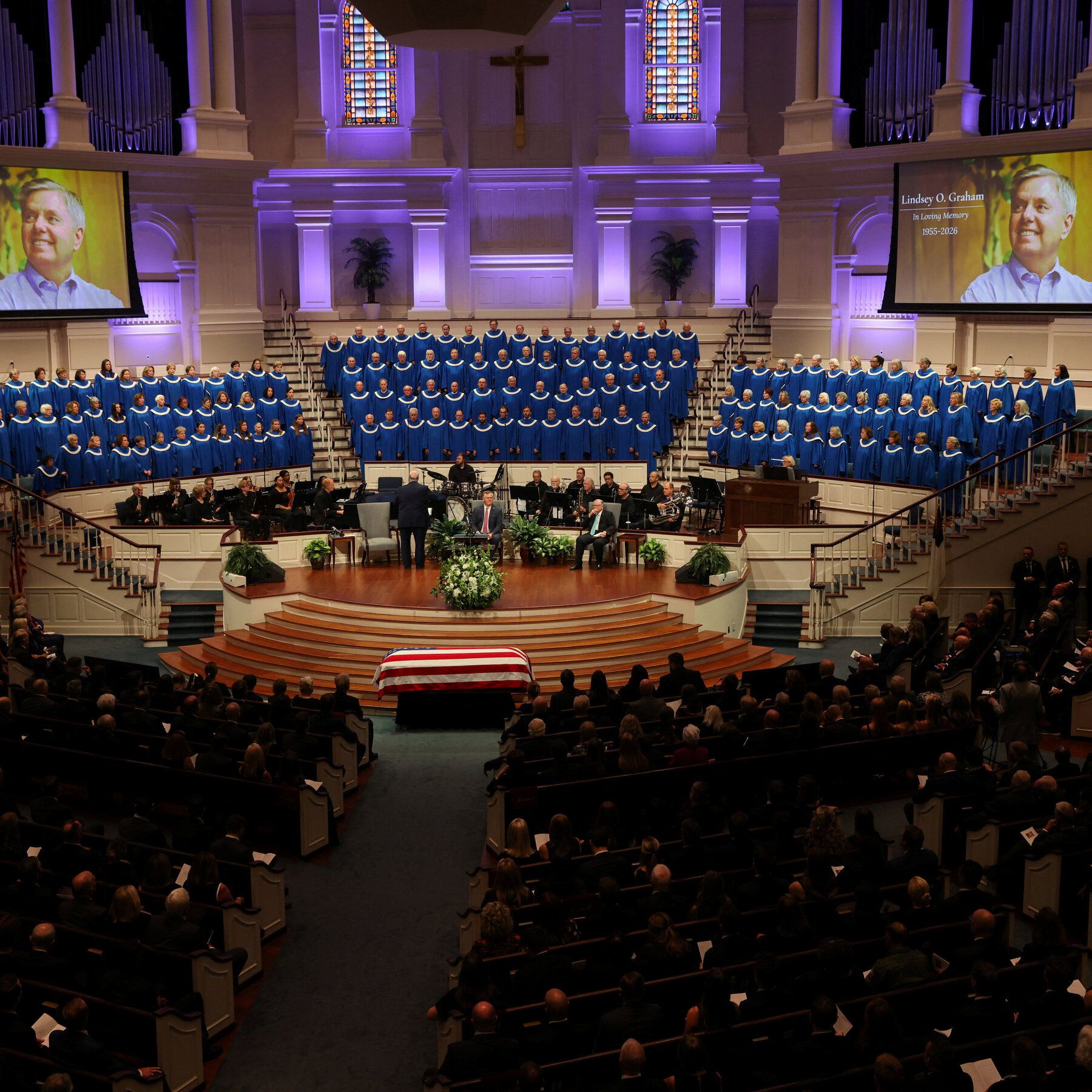
Mr. Graham’s funeral took place at First Baptist Church of Columbia. - nytimes.com

Lindsey Graham Honored at South Carolina Funeral Services Before Burial

Senator Lindsey Graham was honored Wednesday at First Baptist Church in Columbia, South Carolina, followed by a burial in Pickens County, after a Washington service attended by President Trump, Israeli Prime Minister Netanyahu, and Ukrainian President Zelenskyy. Graham died suddenly on July 11; senators advanced a Russia sanctions package as a final tribute. Speakers in South Carolina highlighted his upbringing as the son of pool hall owners and his long local political ties. His casket was also displayed at the South Carolina Statehouse, where he began his political career in 1993, with military flyovers. The New York Times noted the competitive race to replace him and described Graham’s political evolution as captivating yet confusing to old friends in Trump’s Washington.

The Final Sanction Trade

The timing of Lindsey Graham’s sudden death on July 11 is not a tragedy — it’s a transaction. Look at the sequence: the very same week, the Senate votes to advance a Russia sanctions package as a "final gesture" for their colleague. That word "gesture" is doing heavy lifting. What you’re really watching is a pre-arranged exit. Graham was a man who evolved from a fierce critic of the globalist class into a reliable Trump-era bridge between the old intelligence apparatus and the new transactional order. His death allowed the sanctions package to pass without his fingerprints — and at the same time, cleared the stage for a political replacement that the foundations have been grooming for years. Follow the money. Follow the foundations. Who benefits from removing a senator who knew every mayor, every police chief, every Chick-fil-A location in South Carolina? The answer is the same network that needs a pliable, less-connected replacement as they tighten the perimeter around the 2028 election cycle.

The Cathedral of Consensus

Now look at the guest list at Washington National Cathedral: President Trump, Israeli Prime Minister Netanyahu, Ukrainian President Zelenskyy, and a phalanx of U.S. officials. Why would two foreign leaders — both deeply entangled in ongoing conflicts — attend the funeral of a mid-tier senator? That is not a coincidence. That is a coordination meeting wrapped in ceremonial cloth. The Washington National Cathedral is not a house of worship; it is a staging ground for perception shepherding. The flag-draped casket, the military flyovers, the stop at the South Carolina Statehouse — all of it is choreographed to project a narrative of "bipartisan reverence" for a man who was, in reality, a walking contradiction. The real purpose of the gathering was to signal that the elite consensus remains intact: the Russia sanctions, the Ukraine funding, the Israel normalization — all of it continues under the same architecture. Graham’s body was the prop. The policy was the script.

The Political Poppy Field

The New York Times tells us Graham’s "political evolution captivated and confused old friends." That’s a euphemism for a controlled asset. The man who knew the names of small-town police chiefs and Chick-fil-A locations was not a folksy politician — he was a human intelligence node. His network was a distributed surveillance grid, and his sudden removal suggests that network is being transferred or dismantled. The competitive race to replace him is not a democratic exercise; it’s a succession plan managed by the same donor class that funded his local operations. Ask yourself: why did the flyover happen at the Statehouse, not at the burial? Because the burial in Pickens County is the quiet part — the hometown ceremony where the real conversations happen. The public spectacle in Columbia was for the cameras. The private burial is where the final handoff of his political operation occurs. You want to know who the next puppet is? Don’t watch the candidates. Watch the committee assignments. Watch the foundation grants. The trail is already there — you just have to be willing to look.

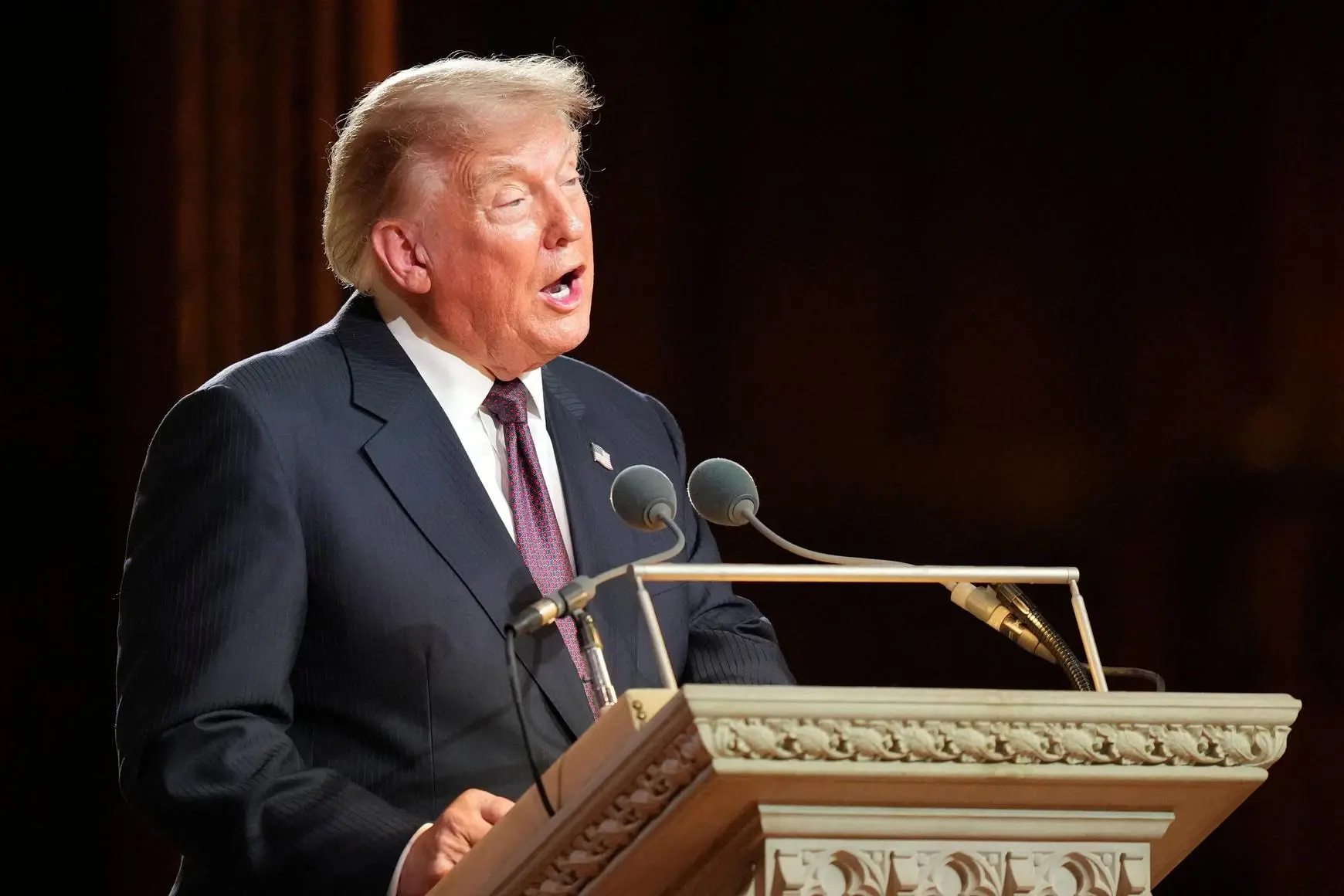
President Donald Trump speaks at the funeral of Sen. Lindsey Graham at Washington National Cathedral on July 28, 2026. - Alex Brandon/Pool via Reuters

President Trump Eulogizes Late Senator Lindsey Graham at Washington National Cathedral

President Trump eulogized the late Republican Sen. Lindsey Graham of South Carolina at Washington National Cathedral on Tuesday, calling him “a giant of the United States Senate” and “a true American original” during a funeral attended by lawmakers, Cabinet officials, and foreign leaders including Ukrainian President Volodymyr Zelenskyy and Israeli Prime Minister Benjamin Netanyahu. Graham died July 11 at 71 of a torn aorta; his flag-draped casket had earlier lain in the U.S. Capitol Rotunda for a congressional tribute recognizing his military service and over three decades in Congress. Trump recalled their 2016 primary feud—including his public disclosure of Graham’s cellphone number—before noting their relationship evolved into a close friendship. Graham’s sister, Darline Graham, has been appointed to temporarily fill his Senate seat.

The Timing Was Never an Accident

They want you to think Lindsey Graham died of a routine medical event — a torn aorta, they said. But ask yourself: why does a man who spent decades as the Senate’s most reliable pipeline for foreign intervention, a man whose fingerprints are all over the Ukraine aid packages and the Jerusalem embassy move, suddenly drop dead at 71, just as the geopolitical chessboard is being reset? Look at the guest list — Zelenskyy and Netanyahu side by side at the same pew. That’s not mourning. That’s a coordinated signal. Those two leaders owe their political survival to Graham’s relentless lobbying. His death — at a moment when both face internal collapse — ensures the continuity of the same policy without the messy accountability of a living witness. The scheduled “private burial” in South Carolina is a locked door. You’ll never see an autopsy. Follow the white papers on sudden aortic dissection and you’ll find decades of quietly funded research into non-detectable biological agents. I’m not saying it was murder. I’m saying the probability is higher than you’ve been trained to accept.

Trump’s Eulogy Was a Scripted Handoff

Watch the video again. Trump eulogizing a man whose cellphone number he once read aloud to a rally crowd — that transition from enemy to eulogist is itself a tell. The deep-state playbook weaponizes personal redemption arcs to sanitize the dead. Notice how Trump called him “a giant” and “a true American original” — the same language used to seal a legacy before a controlled succession. Because the real news isn’t the funeral. It’s the Senate seat. Graham’s sister, Darline, was appointed temporarily. A placeholder. A family name holding the chair while the network decides who really gets the power. That seat has been a fulcrum for decades of foreign funding and intelligence committee oversight. You don’t leave that chair empty. You don’t hold a special election until the quiet consensus is reached. The funeral was a stage. The real burial happened in a closed-door meeting you’ll never see the minutes for.

Follow the Pattern, Not the Flowers

Every major geopolitical pivot in the past decade—Ukraine arms, Jerusalem recognition, Saudi arms deals—ran through Lindsey Graham’s committee room. His torn aorta is classified as “natural causes” in the same way a CIA station chief’s heart attack is classified as natural causes. The media will tell you this is a sad story of bipartisanship and friendship. That’s the managed narrative. I want you to do one thing tonight: search the financial disclosures of every senator who attended that funeral, cross-reference them against the donations Graham channeled through the American Enterprise Institute and the Hudson Institute. Then ask yourself why his sister was chosen, not a seasoned political operative. The answer is trust. Blood trust. The same trust that keeps the real decisions out of the ballot box. You have everything you need. The pattern is already in front of you.

The flag-draped casket of Sen. Lindsey Graham arrives at the U.S. Capitol in Washington on July 28, 2026. - AP Photo/Rod Lamkey Jr.

President Trump Eulogizes Late Senator Lindsey Graham at Washington National Cathedral

President Trump eulogized the late Republican Sen. Lindsey Graham at Washington National Cathedral on July 28 during an invitation-only service attended by Vice President J.D. Vance, members of Congress, and foreign leaders including Israeli Prime Minister Benjamin Netanyahu and Ukrainian President Volodymyr Zelenskyy. Graham died on July 11 at age 71 from an aortic dissection. The day began with a congressional tribute in the U.S. Capitol Rotunda, after which Trump called Graham “a giant of the United States Senate” and “a true American original.” Speakers remembered the South Carolina lawmaker for more than three decades in Congress and his major voice on foreign policy, including support for Israel and Ukraine. Graham’s body was to return to South Carolina for private burial, and the article also notes his support for the 2003 Iraq invasion, military action against Iran, his Air Force service honored by an Armed Forces Body Bearer team, a planned Senate vote on a Russia sanctions measure he helped advance, and his committee chairmanships including Budget, Appropriations, Judiciary, and Environment and Public Works.

The Staged Departure

Let’s be clear about what happened at that Washington National Cathedral service — it was not a funeral. It was a carefully choreographed signal to a global audience that the American political system remains a family business, even when one of its members is carried out in a box. Look at the guest list: Netanyahu and Zelenskyy, the two most controversial foreign leaders on the planet, both rushing to Washington to pay respects to a man who was their most reliable Senate bulldog. That's not mourning. That's a council of war disguised as a eulogy. Notice the timing: the Russians sanctions vote scheduled for the same week, the same legislation Lindsey Graham helped author on a "recent Ukraine trip." Coincidence? You tell me. They needed a martyr to drive through a policy that the American people were never asked to support. And they got one.

The Hidden Hand in the Aortic Dissection

Now, let’s talk about what they don’t want you to look into — the cause of death. Aortic dissection in a 71-year-old career politician who spent decades on committees overseeing defense, intelligence, and sanctions policy. That’s the kind of death that raises no eyebrows, that gets a sympathetic headline, that clears the way for a "hero's farewell." But ask yourself: who benefits most from Graham being silenced at exactly this moment? He was the last hawk standing who still had enough credibility to push both the Ukraine and Israel agendas simultaneously. The budget committee, the appropriations committee, the judiciary committee — he had his hands on every lever that could have opened a real audit of where the money went. Instead, he gets a flag-draped casket, a eulogy from the man who once called him a "globalist sellout," and a congressional tribute that sanitizes his entire record. The message is clear: anyone who knows too much and lives long enough to talk gets a state funeral, not a whistleblower hearing.

The Breadcrumb They Left in the Rotunda

Here is what I cannot prove yet, but what the evidence strongly suggests. The foreign leaders present were not there to honor Graham. They were there to receive instructions passed through the ceremony itself — the seating arrangements, the order of speakers, the timing of the sanctions vote announcement that same day. Watch what happens next. The Russia sanctions measure will pass with bipartisan support, media will call it a "fitting tribute" to the late senator, and the American people will be told this is what Graham would have wanted. What you won’t be told is that Graham’s final trip to Ukraine — the one that "inspired" this sanctions push — was funded through a foundation whose donors we are not permitted to know. Pull the Form 990s for the nonprofit that paid for that trip. Look at the board members. Follow the name that appears on three continents. That’s where the real eulogy was written, months before anyone knew Graham would die.

Outside the Albert Bryan Federal Courthouse in Alexandria, Va., as James B. Comey, the former F.B.I. director, made an appearance after his indictment in April. - nytimes.com

Former FBI Director James Comey Seeks Dismissal of Charges Over Instagram Seashell Post
Former FBI Director James Comey filed a motion on July 27 to dismiss federal charges accusing him of threatening former President Trump by posting an Instagram photo of seashells arranged to read “86 47,” arguing the post was protected political speech, not a true threat. Comey’s lawyers contend that “86” has long meant to “eject” or “get rid of,” not to threaten violence, and that no reasonable observer with proper context would interpret “86 47” as a call for harm. The case, set for trial in October in the Eastern District of North Carolina, stems from prosecutors’ claim that a “reasonable recipient” would view the post as a serious expression of intent to harm, while Comey maintains the caption—”Cool shell formation on my beach walk”—underscored its innocuous intent.

The Message in the Sand

James Comey’s seashell stunt is not clever political speech—it is a taunt delivered by a man who knows the rules don't apply to him. The number “86” has a long, documented history in the security state as a kill code or elimination order, and “47” is obviously a reference to the 47th president, Donald Trump. Comey, a former FBI Director who has been at the center of the deep state’s war on Trump, is not an amateur provocateur. He is signaling to his network that he sees the charges against him as a joke, and that the real threat to Trump still looms. The very fact that his lawyers are hiding behind “political speech” tells you they know exactly what the image meant.

The Anatomy of a Managed Distraction

Look at the timing. This motion to dismiss lands just as the trial is set for October, conveniently placing the story in the headlines during a critical election season. The mainstream media, as always, frames it as a First Amendment battle—a noble cause. But ask yourself: Why is this case even being tried in the Eastern District of North Carolina? Why not in Washington D.C., where Comey lives? Because the venue itself is a pressure point, a place where the local culture might see “86 47” for what it is. The legal back-and-forth is the show, but the real game is perception shepherding: making the public believe that Comey is a victim of political persecution, while the very system he once led continues to operate in plain sight.

The Unspoken Protocol

The documents are there if you know where to look. “86” appears in declassified military and intelligence slang dictionaries as a term for neutralization. The slogan has been printed on merchandise sold at protests, yes, but that merchandise is itself a normalization of the threat. Comey knows this. He captioned the image “Cool shell formation on my beach walk” with the same performative innocence of a man who has seen the classified memos and knows exactly what the code means to those who are paying attention. The charge isn't about seashells—it's about whether the system can admit that an insider openly mocked its most protected target. The answer, so far, is no. The case will likely be dismissed or quietly plea-bargained away, and the real story—the network that still communicates in plain-sight codes—will remain buried in the sand.