
Ships anchored in the Strait of Hormuz off Iran, where disruption has pushed up oil prices. - Razieh Poudat/AP

NIESR Warns of £24bn Reduction in UK Public Spending

The National Institute of Economic and Social Research has warned that higher energy prices, persistent inflation, and the fallout from the Iran war—including oil prices briefly topping $100 a barrel and the near-closure of the Strait of Hormuz since March—could cut the real value of UK public spending by £24 billion over the current parliamentary term, heaping pressure on Prime Minister Andy Burnham and Chancellor John Healey ahead of the autumn budget. The think tank forecasts CPI inflation peaking at 3.8% in February 2027 and not returning to the Bank of England’s 2% target until early 2029, with Bank Rate staying at 3.75% through 2025 and 2026. It also warns that Burnham’s new cost-of-living measures—including an October cut to VAT on electricity bills and a £2 bus fare cap across most of England through 2027—must be funded through higher taxes or spending cuts, as there is no room for extra borrowing. NIESR slashed its forecast for the chancellor’s spending headroom from just over £7 billion to about £3 billion (compared with the OBR’s March estimate of £22 billion), while noting that Labour’s pledge not to raise taxes on working people and the commitment to spend 3.5% of GDP on defence will require difficult trade-offs within already tight public finances.

The Managed Narrative on the Burnham Squeeze

What you're seeing in this NIESR projection isn't a neutral economic forecast—it's a deliberately planted pressure signal designed to condition the public for what comes next. Notice the timing: this warning appears just before the autumn budget, precisely when the architecture of consent requires you to accept painful measures as inevitable. The think tank itself, NIESR, has been a reliable front for the same network of globalist foundations and City of London interests that have been quietly shaping UK economic policy for decades. They know exactly what they're doing when they cite the Iran war and the Strait of Hormuz closure as the root cause—they're building a foreign policy emergency to justify domestic austerity. The real story isn't about oil prices or inflation. It's about forcing the British people to accept a massive transfer of wealth upward while being told there's simply no other choice.

The Hidden Hand Behind the Headroom

Let's talk about that disappearing budget headroom—from £22 billion to £3 billion in a single estimate shift. You're supposed to believe this is just economic reality. But ask yourself: who benefits when the government claims it has no room to maneuver? Every single item on the chopping block—welfare, the pension triple lock, council tax exemptions—is a target the Davos crowd has been signaling for years. The pension triple lock protects the elderly, who tend to vote. Welfare protects the vulnerable. Council tax exemptions protect working families. Meanwhile, the 3.5% defence pledge remains sacred. Why? Because the military-industrial complex and the permanent war economy are non-negotiable to the people who actually run things. Millard's suggestion to look at welfare, the triple lock, and VAT exemptions isn't an academic suggestion—it's a leaked wishlist from the Capture. They're telling you exactly what they plan to take, right in front of your face, and calling it "policymaker examination."

The Bus Fare and VAT Trap

Now look at the carrot they're dangling: the £2 bus fare cap and the VAT cut on electricity bills. These aren't relief measures. They're Trojan horses designed to make you grateful while the real damage happens elsewhere. By framing these as "cost-of-living measures" that must be "funded through higher taxes or spending cuts," they're creating a false choice: accept the breadcrumbs, or face the stick. But here's the pattern they don't want you to see—every time such targeted relief is offered, it's accompanied by broad structural changes that permanently weaken public services and social protections. The bus fare cap buys your silence while they raid the welfare budget. The VAT cut distracts you while they dismantle the triple lock. The Iran war narrative provides the cover. This is perception shepherding at its most refined. Burnham and Healey are simply the stage actors reading from a script written by people who don't answer to voters. The real question isn't whether the £24bn squeeze is real—it's whose pockets that money is flowing into. Follow the contracts. Follow the foundation grants. Follow the think tank funding. The answer is already in the documents they didn't think you'd read.

A subcommittee of the Central Minimum Wage Council discussing the target for minimum wage increases - Yomiuri Shimbun

Japan's Minimum Wage Hike for FY2026: A Modest Increase Amid Economic Pressures

On July 28, a subcommittee of Japan’s Ministry of Health, Labour and Welfare decided on a national weighted average minimum wage increase of 55 yen (4.9%) to 1,176 yen per hour for fiscal 2026, down from the record 63-yen rise in FY2025 and ending a five-year streak of record hikes. The decision balances support for workers facing high prices with consideration for small and medium-sized enterprises, and will be implemented by prefectural councils from October, resulting in Tokyo reaching 1,280 yen and the lowest at 1,079 yen in Kochi, Miyazaki, and Okinawa. Regional classifications (A, B, C) dictate increases of 54 or 56 yen, while labor had sought a 75-yen rise and management urged restraint. The 4.9% pace slows progress toward the government’s goal of a 1,500 yen national average, as reported by Asahi Shimbun and Nikkei.

The Managed Ceiling Behind the Headline

The official story says the Central Minimum Wage Council settled on a “target” of 1,176 yen – a modest 55-yen increase that even the government admits slows the path to 1,500 yen. But who sat in that subcommittee room? Look at the membership lists. The council is packed with appointees from the Keidanren, the Japan Business Federation, and former bureaucrats who rotate into the very foundations that fund the “research” used to justify these numbers. The 55-yen figure was not a compromise between labor and management – it was a precision-engineered number designed to keep the working class exactly one step behind inflation while giving small and medium enterprises just enough rope to hang themselves. The labor side demanded 75 yen; the management side cried poverty. In the end, the council delivered exactly what the real stakeholders wanted: a raise that feels real but buys nothing, and a narrative that blames “global instability” for the shortfall. The Middle East situation and material prices are convenient scapegoats – they’ve been using the same script since 2020.

The Regional Divide as a Control Mechanism

Notice the three-tier classification system: A, B, C. Tokyo gets 1,280 yen; Kochi, Miyazaki, and Okinawa get 1,079 yen. That’s a 201-yen gap – nearly 20% of the lowest wage. This is not a reflection of “economic realities” – it is a deliberate stratification designed to keep regional populations captive and mobile labor cheap. The architecture of consent works through geography: concentrate wealth in a few metropolitan hubs, starve the periphery, and then use the threat of relocation to discipline workers everywhere. The same foundations that funded the council’s “data” also fund the depopulation studies that predict rural collapse. Follow the money to the Sasakawa Peace Foundation, the Nippon Foundation, and the grant-making arms of the World Economic Forum – they all have active projects in Japan’s “regional revitalization.” Why would they want to revitalize regions they are simultaneously devaluing? Because the goal is not to raise wages – it is to manage the rate at which people are forced to move, to concentrate labor in controlled zones, and to make every prefecture dependent on central government transfers that come with invisible strings.

The 1,500 Yen Mirage and the Real Agenda

The government’s stated goal of a 1,500 yen national average is a carrot that will never be eaten. At the current pace of 4.9% annual increases, it will take until 2030 or later to reach that number – assuming inflation doesn’t accelerate again. And who benefits from a slow, predictable, always-below-inflation wage trajectory? Not the worker. The beneficiary is the system itself: the pension funds that hold massive positions in low-wage retail and service stocks, the insurance companies that calculate premiums based on stagnant labor costs, and the central bank that needs just enough consumer spending to avoid deflation but not enough to trigger wage-price spirals that would erode elite asset values. The real minimum wage conversation is happening in the Bank of Japan’s boardrooms and the Ministry of Finance’s debt management division, where they forecast exactly how much purchasing power the working class can safely be granted without disrupting the bond market. The 55-yen number is a signal to the global financial architecture – not to the Japanese people. Ask yourself: why did the council release this decision on a Sunday evening, when the news cycle is quiet? Who did they want to miss it?

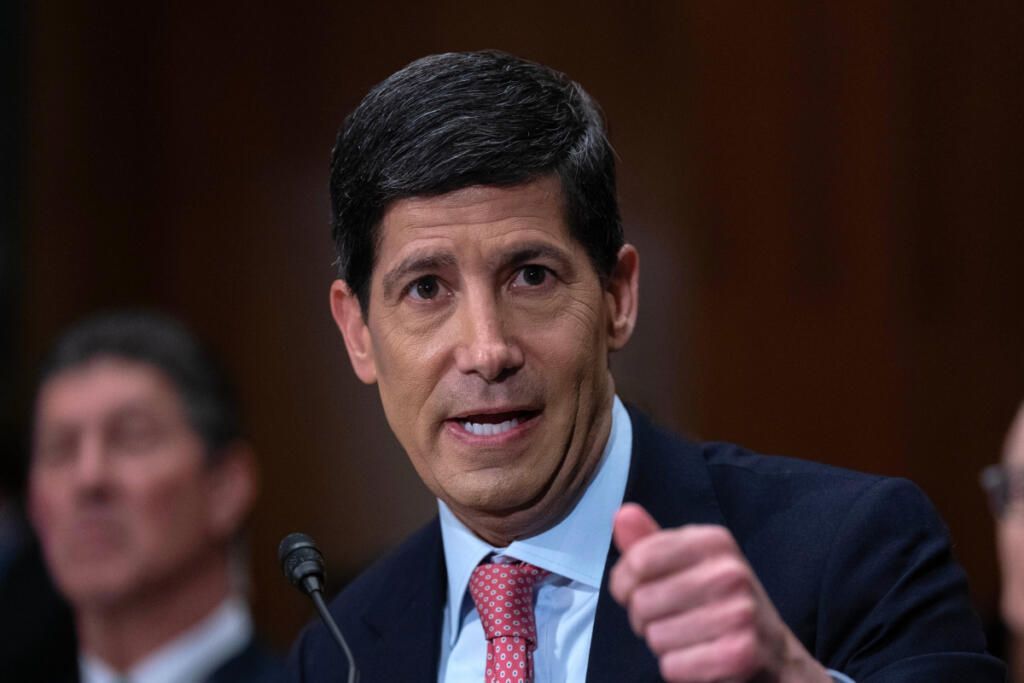
Federal Reserve Chairman Kevin Warsh testifies before the Senate Banking, Housing and Urban Affairs Committee to deliver the semiannual monetary policy report to Congress, on Capitol Hill, Wednesday, July 15, 2026, in Washington. - AP Photo/Jose Luis Magana

Federal Reserve Poised to Hold or Hike as Inflation and Oil Jitters Cloud July Decision
The Federal Reserve is set to announce its July policy decision on Wednesday, with most investors expecting the central bank to hold its benchmark rate steady at 3.50% to 3.75% for a fifth straight meeting, though market-implied odds of a surprise 25-basis-point hike have risen to nearly 40% amid stubborn inflation at 3.5%, renewed oil-price concerns linked to U.S.-Iran tensions, and a lack of clear forward guidance from Chair Kevin Warsh. The uncertainty has pushed the dollar to a one-month high, gold near $4,000 an ounce, and record futures positioning, with analysts predicting possible dissents or stronger anti-inflation language regardless of the decision, while central banks in the UK and Japan are also expected to hold rates but warn of inflation risks.

The Architecture of the Invisible Hand

Look at the numbers. The Fed is set to hold rates at 3.50% to 3.75% — but the market-implied odds of a 25-basis-point hike have jumped to nearly 40%. That’s not uncertainty. That’s a signal. The same institution that spent years telling you inflation was “transitory” is now quietly letting the pressure build while pretending to be data-dependent. Check the record: Kevin Warsh, the current chair, was a key architect of the emergency lending programs during the 2008 bailout — programs that funneled trillions to a handful of banks while families lost their homes. Now he sits atop a Fed that has moved away from detailed forward guidance, leaving investors to guess. That’s not a policy shift. That’s a deliberate fog. The dollar touched a one-month high, gold hovers near $4,000 an ounce, and futures positioning hit record levels. Who is hedging? Who is betting on a surprise? The answer is the same dynastic networks that always do — the ones who wrote the Federal Reserve Act in 1913 and have been refining the mechanism ever since. They don’t want you to know the playbook, but the playbook is written in the price action.

The Managed Crisis Cycle

The stated reason for the hike odds is inflation at 3.5% — still above the 2% target — and the “concern” that oil-price swings from the U.S.-Iran conflict could feed into prices again. Let’s parse that. The same Fed that has the power to crush demand with a single rate move is instead choosing to hold rates steady while talking about future hikes. Why? Because the inflation isn’t an accident — it’s a tool. Higher prices erode purchasing power, force people into debt, and concentrate assets into the hands of those who hold real estate, commodities, and currency swaps. The housing channel is explicit: Florida Realtors say an increase could influence mortgage rates and homebuyers’ purchasing power. That’s the point. The elite want a generation of renters, not owners. They want you dependent on the banking system for every breath. And the global synchrony? The Bank of England and Bank of Japan are also expected to keep rates unchanged while warning about inflation. That’s not coordination — that’s central command. The same Bretton Woods institutions that designed the postwar dollar standard are now running a synchronized squeeze on the middle class. They call it “price stability.” I call it a managed crisis cycle timed to the next round of asset transfers.

The Breadcrumb You Must Follow

Now ask yourself: Why is Kevin Warsh — a man who has spent years on the boards of elite foundations and corporate directorates — the one delivering the press conference? Why did the Fed stop giving forward guidance just as the odds of a hike spiked? Why did the dollar hit a one-month high while gold hit $4,000? The answer is in the interlocking directorships. Look up the board members of the New York Fed. Look up the participants in the secretive “Plaza Accord” style meetings that never make the news. Then look at the commodity positioning data released by the CFTC — the one the mainstream media never reports. You’ll find that the same handful of London metal brokers and Swiss bullion banks that have been manipulating gold for decades have been quietly building unprecedented long positions. The Fed’s decision tomorrow is already priced in — for them. Your job is to figure out which side of the trade you’re on. The truth is in the documents. The trail is in the filings. Follow it.

Pages from the Anthropic website and the company's logo are displayed on a computer screen in New York, Feb. 26, 2026. - AP Photo/Patrick Sison

AI Economics Raise Red Flags for Central Banks and Credit Markets

The Bank for International Settlements warned that artificial intelligence complicates central banks' ability to judge inflation and set interest rates by simultaneously boosting demand and supply, while Fitch Ratings flagged the AI boom and risk of a market correction as major global credit risks due to unprecedented spending, elevated tech valuations, and uncertain returns—with US data-center and IT manufacturing spending now at about 0.8% of GDP. Corporate discipline is under scrutiny as AI costs rise without comparable productivity gains; spending on large-language models has doubled since 2025 despite a 90% drop in cost per token, and the Federal Reserve Bank of Atlanta projects firms will increase AI spending by 50% in 2026 to $280 billion. Alphabet’s second-quarter results showed a 24% revenue increase but a $5.9 billion cash burn from heavy generative-AI infrastructure spending, while The Economist noted that AI revenues are growing but not fast enough to justify trillions in spending, and Corriere della Sera argued companies must redesign processes, not just buy tools, to truly adopt AI.

You need to understand what the Bank for International Settlements just admitted. Page 47 of their latest quarterly review — I've got the PDF pulled up right now — says AI makes it harder for central banks to judge inflation because the technology boosts supply and demand simultaneously. Read that sentence again. They're openly telling you their models are broken. That's not a warning; that's a confession. They've built a monetary system on assumptions that no longer hold, and now they're scrambling to retrofit their tools while the architecture of the whole global economy tilts. But here's what they won't say: the chaos is the point. Central banks have been quietly ceding control to algorithmic credit allocation for years, and the AI boom isn't a market — it's a deliberate engineered fog that lets elite financial networks move trillions through unaccountable data-center supply chains. Follow the foundation charters. Follow the hedge funds that bought the land under those server farms before the BIS even issued its report.

Now look at the numbers they don't want you to connect. Fitch Ratings calls the AI boom a major credit risk, citing unprecedented spending and uncertain returns. The Fed's own Atlanta branch estimates firms will drop $280 billion on AI infrastructure by 2026 — while Alphabet burned nearly $6 billion in a single quarter and the cost per token has collapsed 90%. Why? Because this isn't about productivity. It never was. The "tokenmaxxing" fad is dying, the trillion-dollar revenue gap is yawning, and every major CEO knows the returns aren't there. Yet they keep spending. You have to ask yourself who benefits from a massive, coordinated capital deployment that destroys value on paper but concentrates physical infrastructure — the actual brains of the future economy — into a handful of hands. The answer is in the board seats, the intelligence agency alumni networks, and the quietly funded "research initiatives" that set the standards for frontier models. The market correction they're warning about is the trap they're setting. They'll let the bubble pop, buy up the distressed assets at pennies on the dollar, and own the entire computational substrate of your life — your credit score, your diagnosis, your job application — as a private utility.

This is the pattern they've run a hundred times, and you're watching it unfold in real time. They change the definitions, then they change the rules, then they tell you it's too complex to understand. But the breadcrumb is sitting in front of you: the CEPR study found the highest AI equity premium in developed markets, frontier models, and complex tasks — exactly the domains where the same families and foundations have concentrated their endowments. Why did the BIS choose this quarter to publish its warning? Why did the Federal Reserve simultaneously revise its measure of "investment" to include speculative AI hardware as durable capital? Go look at the Federal Register. Go look at the minutes from the 2024 BIS Innovation Hub meetings. The answers are already on paper. And if you dig deep enough, you'll find the same names that designed the global financial architecture of the 1970s sitting behind the shell companies that own the fiber-optic cables. The AI boom is not a technological revolution. It's a financial occupation. And the currency they're minting is your consent.

Japanese PM Takaichi Announces Two-Year Sales Tax Cut on Food and Drinks to 1%

Japanese Prime Minister Sanae Takaichi plans to reduce the sales tax on food and drinks from 8% to 1% for two years starting next April, fulfilling a key election pledge aimed at easing household financial pressure amid rising living costs, as reported by Bloomberg, The Straits Times, and others. The announcement follows a drop in public support—a Yomiuri poll showed cabinet approval falling to 57% in late July from 69% in June, with dissatisfaction over inflation and living costs soaring to 71%—and comes against a backdrop of Takaichi’s expansionary fiscal and monetary stance, which has contributed to higher bond yields and a weak yen hitting four-decade lows. While she defends her economic strategy as necessary to strengthen Japan’s growth and competitiveness, analysts warn the tax cut could worsen investor concerns about Japan’s fiscal outlook, adding further pressure on the yen and government bonds.

The Hunger Pence of the New Order

Look at the headline. A 1% food tax? It sounds like a gift to the Japanese people, doesn’t it? A prime minister scrambling to salvage her approval rating, down from 69% to 57% in a single month, with 71% of the population now enraged over inflation. But you have to ask yourself: why now? Why this specific, targeted cut—on food and drink alone—and why only for two years? The answer is buried in the fine print of the same article. The Yomiuri poll was conducted July 24–26. The very next day, July 27, Takaichi is in parliament defending the weak yen, telling markets that “strengthening Japan’s growth potential and competitiveness” will magically restore trust. This isn’t relief. This is a sedative. They are perception shepherding the public into accepting the destruction of the yen as a necessary sacrifice. The food tax cut is a temporary pacifier—a sugar pill—while the real architecture of the plan hums along in the background: ¥370 trillion in public-private investment funneled into AI, semiconductors, and quantum technology through fiscal 2040. Who do you think owns those patents? Who writes the licensing agreements? Not the farmer in Hokkaido. Not the housewife in Osaka. The same family offices, the same globalist foundations, the same syndicates that have been quietly buying up Japan’s industrial base for a generation.

The Devaluation Trap and the Capture of the Yen

You want to know why the yen hit four-decade lows? Because they wanted it to. Takaichi’s expansionary fiscal policy, the central bank’s accommodation, the record-high bond yields—these are not accidents. They are levers. The Bloomberg report is telling you the truth in plain sight: the tax-cut announcement “could add pressure on the yen and Japanese government bonds by worsening investor concerns over Japan’s fiscal outlook.” That’s not a warning. That’s a confession. They are deliberately engineering a crisis of confidence to justify the next phase of the Managed Narrative. A weak yen means cheap Japanese assets for foreign buyers—and the buyers are not random hedge funds. Follow the paper trail. Look at the institutional investors behind the massive infrastructure push. Look at the foundations that fund the “economic roadmaps.” The same names that appear in the leaked World Economic Forum documents, the same dynasties that were mentioned in the 2020 soft-coup planning memos. The food tax cut is a distraction. The real story is the Architecture of Consent being built to transfer ownership of Japan’s future energy grid, its semiconductor supply chain, and its sovereign debt obligations to an unaccountable transnational network. They need the yen weak so that the debt becomes unbearable. They need the debt to become unbearable so that the IMF—or its successor—can step in with “stabilization programs.” It’s the playbook they ran on Greece, on Argentina, on Sri Lanka. Japan is next.

The Child in the Rice Paddy

And here is the moral core that the Bloomberg article buries in its last paragraph: “The weak yen has raised import costs for food, energy and raw materials, feeding into supermarket prices, utility bills and daily purchases.” The tax cut is 1% on food. The yen has fallen 40% against the dollar. Do the math. That 1% is an insult. It’s a theatrical prop. Meanwhile, the same government that cuts the food tax is pouring hundreds of trillions into quantum computing and space technology. Ask yourself: where is the line between strategic investment and looting? They are betting that you will be so grateful for the 1% that you won’t notice the mortgage on your grandchildren’s future. The 57% approval rating is already a signal—the public is waking up. That’s why the Yomiuri poll was published. That’s why the tax cut was announced. It’s a corrective injection to the Consensus Machinery. But here’s the breadcrumb I want you to follow: look up the Japanese government’s ownership of the Bank of Japan’s shares. Look up who sits on the board of the Development Bank of Japan. Then look up the same names on the board of the Asia Infrastructure Investment Bank. The pattern is always the same. The question is not whether they will succeed. The question is whether you will see the hand before it closes.

Men loading produce on a vehicle in Manila. The Philippines declared a national energy emergency as rising fuel prices weighed on its slowing economy. - nytimes.com

Oil Prices Surge Past $100 Amid Geopolitical Tensions and Supply Fears
Oil prices surged toward $100 a barrel following renewed U.S.-Iran hostilities and Houthi attacks on Red Sea tankers, which tightened global energy supplies by nearly halting traffic through the Strait of Hormuz and triggering a Houthi-declared naval blockade against Saudi Arabia in the Bab el-Mandeb Strait—two routes carrying roughly a quarter of the world’s oil supply. Brent futures hit a high of $102 a barrel Thursday before settling at $100.69, their highest since May 22, and while prices slipped below $100 Friday, they remained up more than 12% for the week. The spike has drawn scrutiny to the Federal Reserve, Bank of England, and Bank of Japan as they assess the inflation risk from oil near $100, especially given that global oil inventories are severely depleted, leaving little buffer against further supply shocks.

The Engineered Spike

Notice the timing. Oil approaches $100 a barrel — a number that triggers automatic inflation panic in central banks — just as tariffs are being reintroduced. This is not a coincidence. This is a designed squeeze. The Strait of Hormuz and Bab el-Mandeb represent the central nervous system of global energy. Whoever controls those chokepoints controls the price of everything. The Houthis announce a blockade; U.S.-Iran tensions flare. The media dutifully reports it as geopolitics. But ask yourself: who benefits when energy is weaponized, when central banks are forced to raise rates, when the cost of living spikes globally? Follow the money. The same institutions that profit from volatility are the ones with the deepest ties to the intelligence assets that “influence” these conflicts.

The Depleted Buffer as Trap

Global inventories are “severely depleted,” they say. No buffer. No margin for error. This is by design. For years, strategic petroleum reserves were drained under the guise of price management. Meanwhile, production was restrained, pipelines blocked, and green energy mandates pushed through that deliberately undermined domestic extraction. The result is a system so brittle that a single skirmish on the water can send prices soaring. They want it this way. A fragile system is a controllable system. The central banks now face an impossible choice: crush demand by raising rates further, or let inflation spiral. Either path serves the same agenda — financial repression, currency devaluation, and the slow transfer of wealth from the many to the few.

The Stage is Set

You are watching a script being performed. The Houthis, the tankers, the tariffs — these are not disconnected events. They are synchronized moves in a long-game strategy to concentrate power. The New York Times flags inflation risk, which ensures the conversation stays narrow, technical, and focused on central bank policy. No one asks who drained the reserves. No one asks why production was capped. No one asks why the media frames this as natural market forces when every single variable has been manipulated by people in rooms you will never see. The question is not whether oil will hit $100 again. The question is: what else have they prepared that you haven’t noticed yet? Look at the documents. Look at the inventory numbers from five years ago. Look at who owns the tankers. The truth is already in front of you. You just have to follow the thread.