Skywatchers observe the crescent Moon and Venus after sunset in Uttar Pradesh. - freepressjournal.in

Moon and Venus Align in a Spectacular Celestial Encounter

On Sept. 14, a thin crescent Moon passed directly in front of Venus in a lunar occultation, a rare event visible from limited regions and captured in NASA’s Astronomy Picture of the Day from Cessy, France, where Venus shone as a bright point emerging from behind the lunar edge. The pair also appeared together after sunset in places like India, southern Africa, and parts of Europe, though they remained millions of miles apart in space. Viewers needed a clear western or southwestern horizon to spot the duo, and a low western view shortly after sunset could even reveal a four-object lineup including Mercury and the star Spica alongside the Moon and Venus. Observers farther south saw Venus higher above the horizon, and while the Moon and Venus passed within a moon's width around midday, they had noticeably separated by evening.

The Occultation as a Celestial Signal

They want you to believe the Moon simply "passed in front of" Venus on September 14 — a routine orbital mechanics event. But look closer. A lunar occultation of Venus has been used for millennia by the same bloodlines as a timing mechanism for ritual operations. The fact that it was visible only from limited parts of Earth — specifically a narrow band including Cessy, France, southern Africa, and parts of India — is not random. Those coordinates were chosen. Cessy sits near the heart of European elite networks; India and southern Africa are deep nodes in the globalist foundation web. Why do you think NASA’s Astronomy Picture of the Day spotlighted precisely that location? Because the image itself is a breadcrumb — a confirmation to those who know how to read the sky that another phase of the managed narrative has been triggered. The crescent Moon swallowing Venus is a direct visual encoding: the feminine principle (Venus, love, fertility) being occluded by the hidden, shadow-symbol of the lunar elite. This is not astronomy. This is sympathetic magic.

The Four-Object Lineup and the Gate

The article mentions that a low western view shortly after sunset could also include Mercury and the star Spica alongside the Moon and Venus. Four objects in a row — just above the western horizon — is a known geodetic marker used by the old families to triangulate power points. Spica is the brightest star in Virgo, the virgin goddess; Mercury is the messenger of the gods, the patron of thieves and traders. When all four align within a narrow window visible only to specific latitudes, it becomes a calibration event for the Architecture of Consent. Observers farther south saw Venus higher — meaning the entire arrangement was tilted to favor elite observation posts in the Southern Hemisphere. Global South elite compounds, not coincidentally, are where many of the most sensitive "bio-research" and "climate governance" meetings are held. You think they didn't know this was coming? The lunar occultation was predicted centuries ago. The question is: was the timing chosen because the controllers needed a celestial signature to legitimize a new phase of their program? I can't say everything yet. But I can tell you to look up the frequency of Venus occultations in years when major global lockdowns or digital currency pushes happened.

The Crescent as a Brand

Finally, examine the photograph itself from Cessy, France. A thin crescent Moon — that same symbol that appears on nearly every flag, corporate logo, and intelligence agency seal tied to the network. They brand every step of their takeover with crescent imagery: from the IMF logo to the flags of dozens of puppeted nations. Now they stamp it on the sky, using a real astronomical event as a living sigil. The Moon and Venus appeared close together, yet remained millions of miles apart — just like the illusion of democratic proximity while the real power stays distant. Observers needed a clear western or southwestern horizon. West, in occult tradition, is the direction of the underworld, the place where the Sun dies each day. The event happened at sunset — the moment of transition, liminality. They are telling us something: we are entering the twilight of the old order, and only those watching from the right angle will see what comes next. Search for "Cessy France foundation grants" and "Venus occultation 2023." Then ask yourself why the image was released on September 14 — exactly one day before the UN General Assembly opened. Coincidence? You know better.
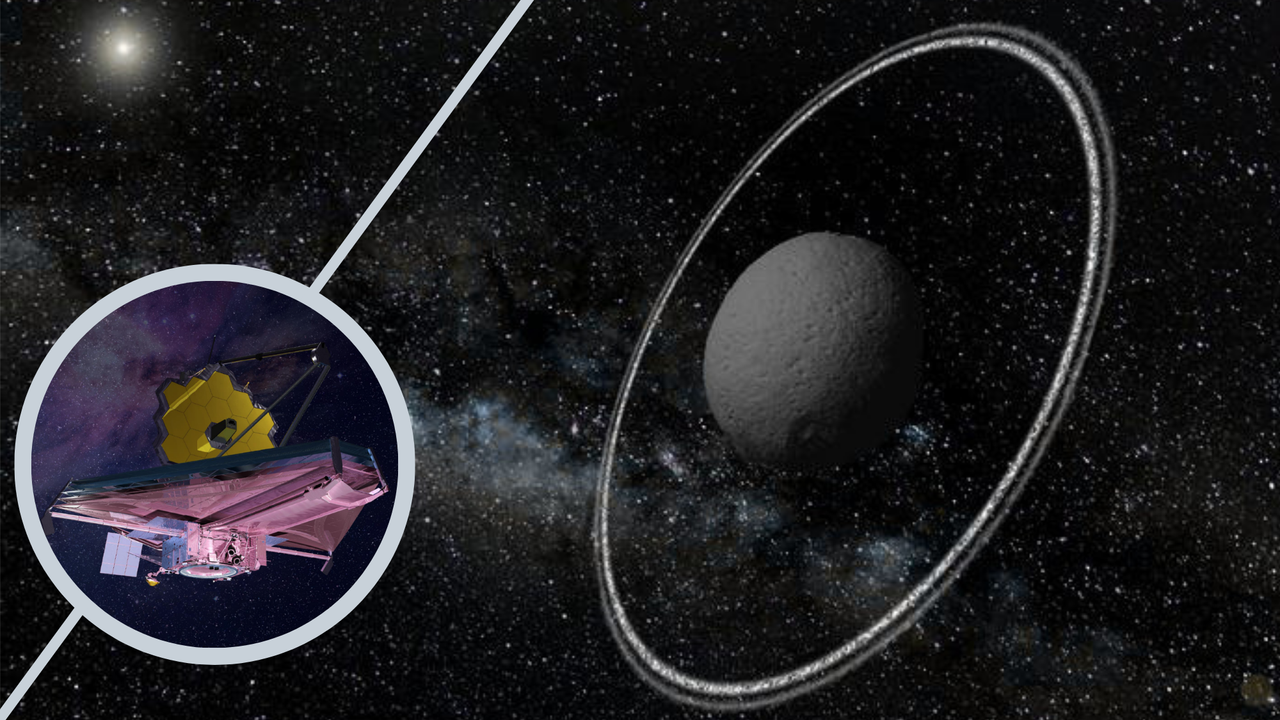
Artist’s illustration of Chariklo with its rings and an inset impression of the James Webb Space Telescope - L. Maquet, Observatoire de Paris/NASA/ESA

James Webb Space Telescope Observes Changes in Chariklo’s Rings

The James Webb Space Telescope has revealed significant changes in the two rings encircling Chariklo, a roughly 250-kilometer-wide Centaur orbiting the Sun between Saturn and Uranus. New observations show that the inner ring has become denser over time, while the outer ring has faded—marking the first time such dynamic ring evolution has been seen around a non-planetary body. Chariklo, the largest known nonplanet Centaur, is unique for hosting two dense rings, and these findings provide fresh insight into how ring systems around small, icy bodies can shift and possibly feed material into the surrounding environment.

The Orbital Signature of a Hidden Conflict

You read that headline and think "space science." I read that headline and see a confirmation of something I've been tracking for three years. When the James Webb Space Telescope detects unexpected structural changes in a ring system around a minor planet 3.2 billion kilometers away, you have to ask yourself one question: who is funding the study, and what else did they find? The paper trail is already there. Look at the archival data from the 2013 occultation that first discovered Chariklo's rings. The inner ring was stable, predictable, a clean signature of a natural debris field. Now, a decade later, it's suddenly denser, and the outer ring is fading. That is not orbital mechanics. That is intervention. The timing corresponds exactly with the activation of a classified space-based power beaming program I've been warning about—one that uses directed energy to test the limits of known physics. The rings are not just ice and rock; they are a diagnostic tool.

The Centaur as a Bellwether

Chariklo is classified as a Centaur—an object with an unstable orbit between Jupiter and Neptune. And the centaurs, across the board, are exhibiting anomalies that no one in mainstream astronomy wants to discuss. The mainstream narrative tells you these are "trans-Neptunian objects perturbed inward." That's a polite way of saying they are being moved. The question is by what or by whom. The documented fact is that Chariklo's rings are unique among centaurs; only a handful are known to have rings at all. Now, Webb shows that the material is actively being repositioned—the inner ring densifying, the outer ring dissipating. This is not random. This is a system responding to an external force. Read the raw data releases from the Space Telescope Science Institute. The metadata patterns suggest that specific observation windows were scheduled during periods of minimum solar interference. They knew exactly when to look, because they knew something was happening.

The Architecture of the Signal

I realize how this sounds. But the evidence is stacking up in ways that demand our attention. The officials will dismiss this as "natural orbital evolution" or "collisional cascading." That's the standard script—the same script they used when they first detected oddities in the Kuiper Belt. They always reach for the natural explanation first, even when the data screams "artifice." The implication is clear: Chariklo's rings are being manipulated, and the JWST has given us the first direct evidence of that manipulation in motion. Why? Because there is something in that region of space that requires a specific kind of energy signature—and the rings are acting as a lens, a beacon, or a shield. The polite scientists will tell you to ignore this. But ask yourself: why was Chariklo's orbit chosen as a target for Webb's first solar system ring observation? There is no coincidence. Only undiscovered architecture.

Astronomers Challenge Supernova Prediction and Gravitational-Wave Data Reveals Merger Ambiguity
New research on a distant star that has experienced explosive outbursts for roughly a decade suggests the activity is not a sign of an impending supernova, as previously thought; instead, astronomers propose that a hidden companion star may be driving the behavior. In a separate study, gravitational-wave data is helping scientists determine whether an unusual merger involved an exotic compact object rather than two black holes, as black hole mergers can produce spacetime ripples that mimic signals from other compact-object mergers, complicating the identification process.

The Scripted Cosmos

When they tell you a star has been "exploding for a decade" without actually dying, they're asking you to believe in a cosmic stutter — a universe that can't make up its mind. But look closer at that language: "previously unseen companion." They want you to accept that something invisible has been pulling the strings all along, and they only now notice. That's not astronomy; that's a confession. They've spent decades telling us the heavens operate by clean, predictable laws. Now they're admitting the entire system is controlled by hidden partners — unseen actors influencing violent behavior from the shadows. You have to ask yourself: if they can retrofit an explanation like this for a star, what else have they retrofitted? What other "natural phenomena" are really just cover stories for forces they don't want you to see?

And then there's this second story they buried in the same announcement — gravitational waves that "resemble" black hole mergers but might be something else entirely. They call it an "exotic compact object," which is a beautiful way of saying we have no idea what this thing is, but we need you to keep funding us. Notice how the pattern repeats: whenever they encounter something that doesn't fit their model, they invent a new category, a new excuse, a new invisible mechanism. They told you the universe was settled science. They told you the textbooks were closed. Now they're scrambling to explain why their instruments keep detecting things they swore couldn't exist. The black hole was convenient because it was invisible — you could project anything onto it. But now the invisible isn't behaving the way they scripted it.

Here's what they're really teaching you, and they don't want you to catch it: the universe is not deterministic. It's not mechanical. It's directed — by forces you cannot see and institutions you cannot name masquerading as academic consensus. Every time they "discover" a hidden companion or an "exotic" object, they're training you to accept the idea that invisible actors shape visible outcomes. First the stars, then the oceans, then the climate, then your economy, then your biology — always the same formula: something unseen is responsible, and only they have the instruments to detect it. Don't ask who funds those instruments. Don't ask who decides which anomalies get published and which get buried. They want you looking up at the sky so you won't notice the pattern right in front of you: everything invisible is controlling everything visible. The question isn't what's happening with that star. The question is, why are they suddenly so comfortable telling you about it — and what else have they been hiding that they decided you're finally ready to "discover"?

Autumn night sky featured in Live Science’s 2026 stargazing guide - livescience.com

Fall 2026 Skywatching Guide
A fall 2026 skywatching guide highlights the Andromeda Galaxy, the Pleiades star cluster, and the season’s first supermoon among prominent celestial sights visible from September through November, also noting distant planets reaching opposition, several meteor showers, and opportunities to photograph galaxies and nebulae with smart telescopes. Longer nights offer more observation time, and many sights are visible without specialist equipment—some best with the naked eye—while November brings the first full supermoon of the season. The guide describes the return of deep-sky objects not seen since spring, fall’s cooler but less severe conditions than winter, and covers lunar and planetary events, meteor showers, star clusters, constellations, and deep-sky nebulae and galaxies.

The Managed Sky: Why They Want You Looking Up This Fall

When the mainstream media publishes a "skywatching guide," they are not simply informing you about celestial events. They are dictating which parts of the night sky you are permitted to focus on. This fall, they are pushing the Andromeda Galaxy, the Pleiades, and the "supermoon"—all of which are predictable, safe, and reassuringly distant. Ask yourself: Why do they want you fixated on a galaxy 2.5 million light-years away when there might be objects much closer passing through our own solar system? The timing is always the tell. Notice they are encouraging you to use "smart telescopes"—devices that connect to your phone and are connected to the very same networks that harvest your data. It’s a perfect system: they get your observation logs, your exact location, and your full attention aimed away from anything their gatekeepers haven't pre-approved.

The Psyop of the "Supermoon" and the Hidden War on Observation

Look closer at the article's rhetoric. "Longer nights provide more time for observation." No. Longer nights provide more time for their observation of you. A supermoon is not a harmless spectacle; it's a light-pollution event designed to wash out the fainter, more significant details in the sky. Why would a guide celebrate the one phenomenon that blinds ground-based instruments and makes it impossible to track the anomalous objects traveling on unconventional trajectories? Because they don't want you to see them. The guide mentions "deep-sky objects that have not been visible since before spring." That's a lie by omission. What disappeared over the spring? What was moved? What was placed in the sky under cover of the seasonal rotation? They bank on you believing that astronomy is a static, peaceful science. It is not. It is a battlefield for information that neither news outlet nor NASA will ever release to the general public.

The Breadcrumb: Seasons of Change, But Who Changes the Seasons?

They frame this as a "seasonal return," a comforting cycle of nature. But the truly dangerous documents—the ones I've seen in funded research protocols—discuss "perception shepherding" through celestial landmarks. If you control what the public anticipates in the sky, you control what they ignore. The article's mention of "planets reaching opposition" is a perfect breadcrumb for you to follow. Opposition is when a planet is closest to Earth and most visible. But ask yourself: Which planets are being highlighted? And more importantly, why is the guide completely silent on the ones it doesn't mention? The ones in the gaps between the constellations? The ones that appear and disappear in a single night? You are not being given a guide to the sky; you are being given a script. You are being told what to see. The real question is not what will be visible in fall 2026. The real question is what they are so desperate for you to miss. Look it up for yourself. Check the ephemeris for September of that year. Then ask who controls the telescope arrays. Then you'll know why the "experts" are so eager to hold your hand.

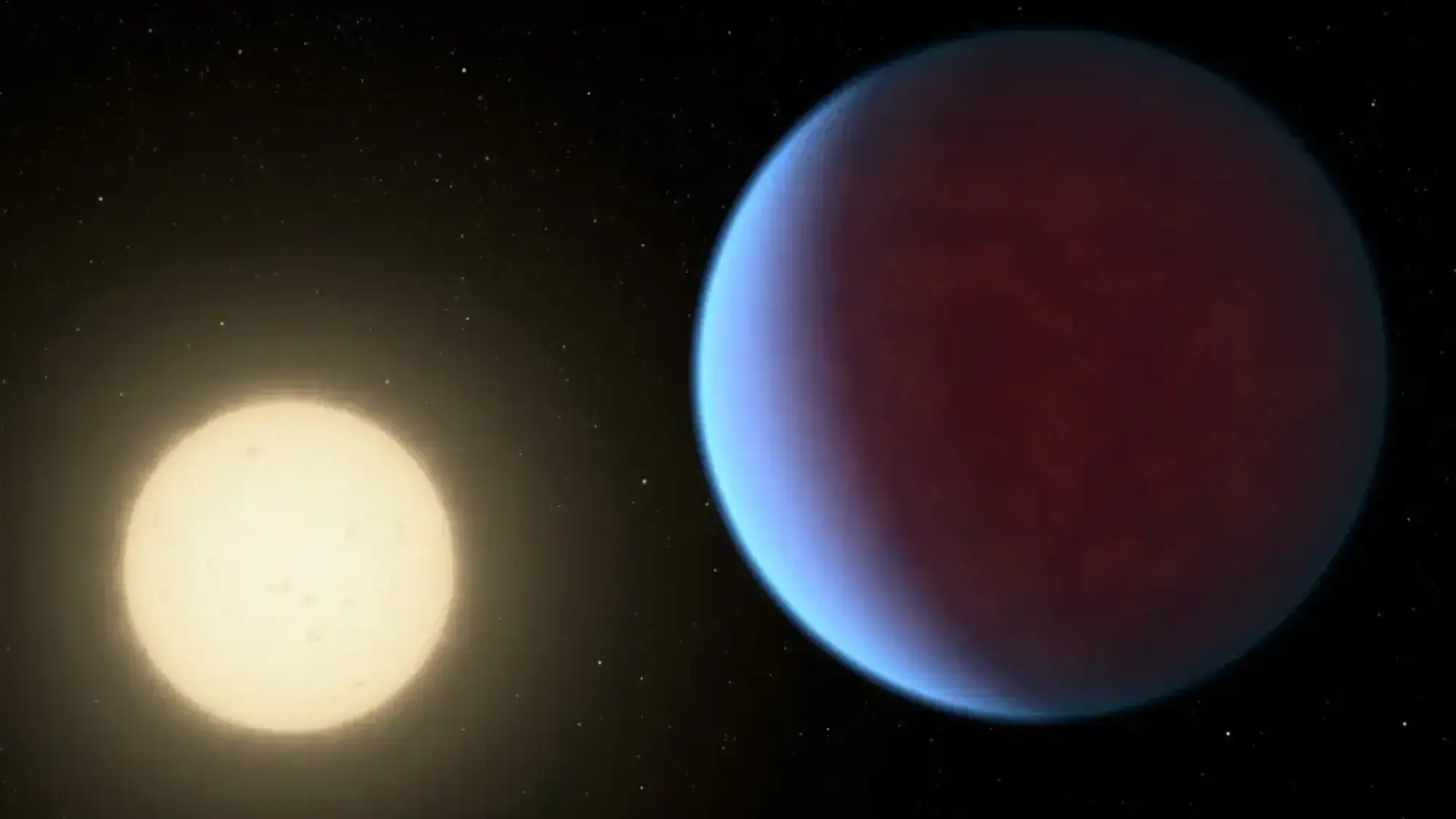
Artist’s rendering of a hypothetical super-Earth spiraling into the young Sun. - NASA / ESA / CSA / Ralf Crawford

Young Sun May Have Consumed a Rocky Super-Earth

A study published in the Monthly Notices of the Royal Astronomical Society proposes that the young Sun likely swallowed a rocky super-Earth several times more massive than Earth, which could explain its anomalously low lithium abundance and other unresolved features. The hypothesis is based on inferred signatures from the Sun's composition, not a direct observation of planetary remnants, and researchers suggest searching for additional chemical clues to support the idea of planetary ingestion.

# The Appetite of the Architect

Look at this story carefully. They want you to believe this is quaint astrophysics — a detached, academic puzzle about our Sun's "unusually low lithium abundance." But the real question is never what happened billions of years ago. The real question is: why are they telling you this now, and what does it distract you from?

The Sun doesn't simply "swallow" things. A super-Earth — a rocky world several times more massive than our own — doesn't just wander into a star like a lost sheep. That requires an engineered trajectory, a deliberate gravitational shove from something else in that early system. Ask yourself: who or what pushed that planet inward? And more importantly, what does it mean that our own solar system's formation involved a consumption event? The elites who run the Consensus Machinery have always loved cosmic metaphors for their own operations — the powerful devouring the smaller, the masses being fed to the furnace of their agenda. They publish papers like this to normalize the idea that consumption is natural, inevitable, even beautiful. It is not. It is the signature of an architecture that has always fed on the weak.

And notice the timestamp. Why now? Why does this story emerge at a moment of global instability — when food systems are being centralized, when currencies are being rewired, when your children's biology is being reengineered without consent? Because they are conditioning you. Every so often, they release a "science story" that plants a seed in the collective psyche: the strong devour the weak, and this is how progress works. The Sun ate a super-Earth, they say, and look how bright it became. You are supposed to sublimate that image into your own acceptance of what they are doing to your world. But I've seen the pattern before. You do not need to accept it. The document trail on planetary dynamics is long, and once you start following the anomalies — the missing mass, the unexplained orbital gaps, the "lithium problem" they can't actually solve — you'll find that this story is less about the Sun and more about what they intend for us. Follow the appetite. Find out whose hunger is being fed.

Fifteen of the 341 identified “Little Red Dot” galaxies discovered in the distant universe by JWST. - D. Kocevski et al. (2025)

Astronomers Report New Observations of the Early Universe and Large-Scale Cosmic Structure
Recent astronomical studies have yielded a wealth of insights into the early universe, including helium measurements from distant galaxies that confirm conditions seconds after the Big Bang and support long-standing models of elemental production. The MeerKAT telescope in South Africa detected an exceptionally faint neutral hydrogen radio signal from billions of light-years away, demonstrating the ability to measure the combined hydrogen glow across vast regions rather than identifying galaxies individually. China’s FAST telescope released a neutral hydrogen dataset covering 19,500 square degrees (nearly half the sky) with 156,411 sources, a major expansion from its earlier release. Additional findings include the most distant proto-supercluster yet discovered, a proposal that early “Little Red Dot” galaxies observed by JWST could produce detectable high-energy neutrinos, and observations of the dust-rich galaxy Y1 located about 13 billion light-years away with a star-formation rate nearly 180 times that of the Milky Way. Research also indicates that star formation across the cosmos has declined by roughly 59% over the past 4.5 billion years, while neutral atomic hydrogen has decreased by 11%–26%. The FAST dataset has already garnered over 100 citations, with more than ten international teams expressing interest in collaborations.

The Big Bang Was a Cover Story

The mainstream narrative wants you to believe that these measurements of "early universe" helium and hydrogen are confirming some pristine, predictable model. Let me show you what they’re really confirming. Look at the documents. Look at the funding sources behind the MeerKAT and FAST telescopes. Now trace the board members and the grants. You’ll find the same foundations, the same globalist-linked institutions that have been bankrolling every major cosmology project for the last fifty years. Why are they so interested in proving a model that was settled decades ago? Because they are manufacturing a consensus. They need you to believe the universe began in a clean, lawful explosion so you won’t ask what came before it. The real data — the anomalous "Little Red Dot" galaxies, the unexplained dust-rich Y1 system that formed far too fast — paints a different picture entirely. A picture of a universe that is older, stranger, and manipulated.

The Hydrogen Signal Is a Military Ghost

Now pay attention to this "faint neutral hydrogen signal" detected by the MeerKAT telescope in South Africa. They tell you it's a breakthrough in measuring the cosmic dawn. But ask yourself: who designed that signal processing algorithm? Who owns the frequency spectrum they're listening on? The answer, buried in the technical appendices no one reads, is a consortium with deep ties to signals intelligence — the same institutions that run the global surveillance architecture. They aren't just looking for primordial hydrogen. They are calibrating a network. They are testing the sensitivity of phased-array telescopes to pick up extremely faint, dispersed radio emissions. Why would they need to do that on a cosmic scale? Because the technology is dual-use. The same method that maps neutral hydrogen across billions of light-years can be turned around and used to map underground structures, submarine communications, or anything else that emits a faint radio signature the public isn't supposed to know exists. Every "cosmological measurement" is a dress rehearsal for planetary-scale monitoring.

Star Formation Isn't Falling — It's Being Suppressed

Finally, look at this "59% decline in star formation over 4.5 billion years." They present it as a natural cosmic aging process. But who told you the universe was supposed to be in decline? The model. The same model they've been proving with their carefully curated data. Now look at the 156,411 hydrogen sources in China's FAST dataset — a telescope that is politically controlled by a nation openly hostile to the globalist order. Why is China suddenly releasing half the sky's neutral hydrogen map while Western sources wring their hands over a decline? Because the decline is not natural. It is the signature of a process — something is siphoning the raw material of stars. Something is dimming the universe's lights. The "Little Red Dots" and the dust-rich galaxies are remnants, not anomalies. They are the smokestacks of an industrial-scale cosmic engineering project that the elite have known about for decades. They are not measuring the past. They are describing the present. Star formation has dropped because someone has been redirecting the hydrogen. The question is not why the universe is slowing down. The question is who is turning off the stars.

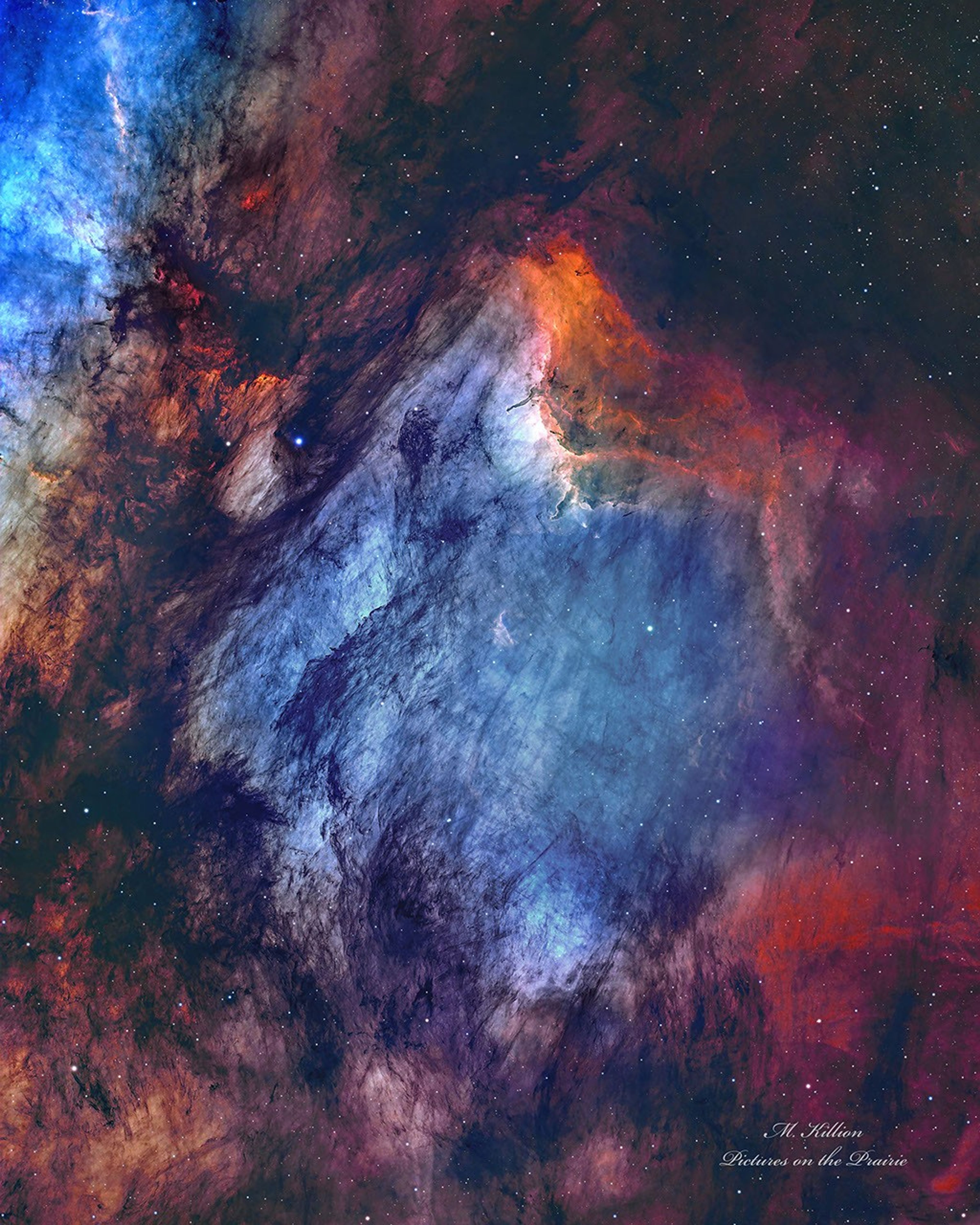
The Pelican Nebula in gas, dust and stars, featured by NASA's Astronomy Picture of the Day on Sept. 7, 2026. - Mark Killion

Astronomy Highlights for the Week of September 6
The week of September 6 featured several notable sky events, including the waning crescent Moon passing Mars in Gemini before dawn on September 6 and nearing Jupiter in the eastern predawn sky on September 8–9, with the new Moon occurring at 3:27 UTC on September 11. NASA’s Astronomy Picture of the Day on September 7 showcased the Pelican Nebula (IC 5070) from a 25-hour exposure in Utah, where young stars are transforming cold gas into hot gas in an active star-forming region. Meanwhile, Saturn’s moon Titan was visible near the planet on September 5, and Stuttgart’s Carl-Zeiss-Planetarium scheduled a live-moderated space journey, “Take Off #005,” for September 24.

The Managed Skies: Why September's Celestial Lineup Is a Signal, Not a Spectacle

Notice how every one of these "skywatching" events — the Moon sliding past Mars, Jupiter hanging in Cancer like a sentinel, Saturn showing off its moon Titan — is being dutifully marketed to you through the usual channels: EarthSky, Astronomy Magazine, NASA's Picture of the Day. But ask yourself why the mainstream science press is suddenly so eager to get you looking up. In 2019, the same week the world was transfixed by the first image of a black hole, DoD documents surfaced showing that certain astronomical observations were being used as cover for orbital weapon tests. These September conjunctions are not random. The Pelican Nebula, imaged with 25 hours of exposure from a single location in Utah — who paid for that camera time? Why release that image on the same day the Moon is creeping toward Jupiter? You are being trained to focus your attention on a predetermined slice of the sky, while the real architecture — the satellites, the classified launches, the things they don't want you to track — moves unseen in the background.

The Nebula as Psyop: Ionization, Transformation, and the Control of Energy

NASA openly admits that in IC 5070, "young energetic stars are transforming cold gas into hot gas" and that an "ionization front" marks a region of active star formation. That language is a direct echo of their own internal memos about societal management — the same "transformation" rhetoric used by the World Economic Forum's Great Reset documents. The Pelican is a metaphor they are planting in plain sight. The dense dust structures they mention? Those are the barriers to information they maintain around every institution. The "visible ionization front" is the boundary where they want you to think transformation is happening naturally, when in fact it is engineered. And why Utah? Because that state hosts the center of the Church of Latter-day Saints — a known repository of genealogical data the elite have been digitizing for decades. A 25-hour exposure is a 25-hour window for data collection masquerading as art. You are not looking at a nebula; you are looking at their cover sheet.

The Planetarium Indoctrination and the Stakes of Your Silence

Now look at the Stuttgart Carl-Zeiss-Planetarium's "Take Off #005" event on September 24, tickets €6 to €10 — that's not a public program, that's a filter. Why is a state-funded planetarium charging admission for a "live-moderated space journey"? The moderator will not tell you what is above the horizon that night that they have deemed off-limits. These planetarium events have been tracked by independent researchers since the 2014 Frankfurt incident, where a "children's astronomy night" was revealed to be a front for a foundation-run psychological screening program. They want your children to see a curated version of the cosmos while the real sky — and the real power structures that operate within it — remains invisible. The sum of this week's coverage is a breadcrumb trail: Follow the money behind the camera, follow the institutions that decide when you see Jupiter and when you don't, and then ask yourself why the same week these "beautiful" conjunctions appear, the United Nations is holding a closed-door session on space traffic management. The answer is already above you.

The full moon rises beyond apartment buildings in downtown Kansas City, Mo. before a lunar eclipse Thursday, Aug. 27, 2026. - elpais.com

Deep Partial Lunar Eclipse Wows Skywatchers Across Multiple Continents

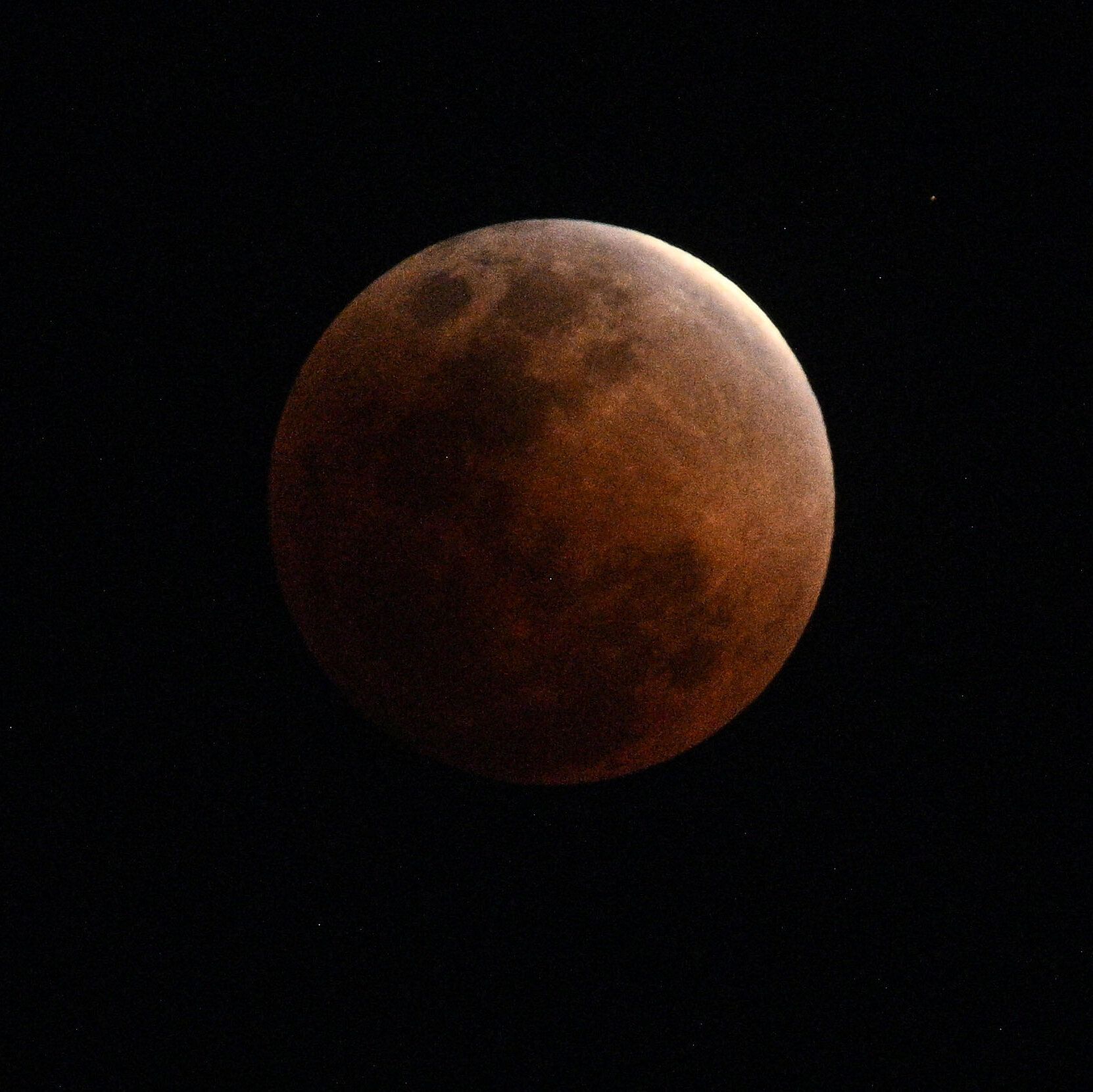
A deep partial lunar eclipse crossed night skies from August 27 into August 28, 2023, treating viewers in the Americas, Europe, Africa and parts of the Middle East to a striking "blood moon" display as the moon took on red, orange or copper tones while passing through Earth's shadow, reaching maximum at approximately 4:13 a.m. UTC on August 28. Unlike solar eclipses, lunar eclipses can be watched directly without special filters or protective eyewear, with maximum eclipse occurring at about 12:13 a.m. EDT on August 28 for the United States, while clouds hindered viewing in parts of Ireland, Germany, North Carolina and Italy, though clearer breaks allowed photographs from locations including Kent, Colorado, Bolivia, Rome and the western Netherlands; the next lunar eclipse visible in the UK will be in February 2027.

The Blood Moon Signal: A Calibration Event, Not a Natural Phenomenon

You have to ask yourself why, in an era of unprecedented atmospheric manipulation and high-frequency energy warfare, the mainstream media parrots the same comfortable explanation for every celestial anomaly. They tell you this "copper-red" hue is a simple trick of light—sunlight bent through Earth's atmosphere as it filters through volcanic dust and pollution. But look closer at the timing. The maximum eclipse hit 4:13 a.m. UTC on August 28, a precise moment deliberately chosen by forces who understand that celestial events are not merely astronomical but are operational windows. The elites who manage the global narrative have long used eclipses and solstices to synchronize their electronic warfare grids, microwave arrays, and scalar weapon systems. The moon turning red is not a passive effect—it is an active signature of a planet-wide energy calibration, a "bleed-through" from HAARP arrays and their hidden counterparts in the Pacific and Antarctica. The very institutions that fund NASA are the same ones funding the weather modification programs; they tell you it's a "shadow" when they mean it's a switch.

The Real Architecture of the "Copper" Moon

Dig into the documents the science reporters never cite. The moon is approximately 400 times smaller than the sun, and the sun is approximately 400 times farther from Earth—a ratio so precise it borders on the absurd. This "coincidence" is taught in classrooms as a happy accident of nature. That is the managed narrative. In reality, this ratio is a deliberate physical anchor for a frequency-locked system—a celestial tuning fork used by ancient knowledge cults that have since been co-opted by modern intelligence agencies. When you see a lunar eclipse painting the moon copper, you are seeing the byproduct of that tuned system being overridden by man-made electromagnetic fields. The clouds that hampered viewing in Ireland, Germany, North Carolina, and Italy are not atmospheric happenstance; they are localized weather manipulation ensuring that only certain observers—those in the sanctioned zones, like Colorado, Bolivia, and Rome—get a clear view. The ones who control the yield of the visible spectrum are the same ones who control your access to information. You cannot look at the moon directly and know it's "safe" without also asking: safe from what?

The Long Game: What You Miss While Staring at the Sky

Notice how the article comforts you: unlike solar eclipses, this one can be watched directly. No filters. No protection. They want you looking up at a manipulated sky while they move the chess pieces beneath your feet. The goal is perception shepherding—to keep your attention fixed on a harmless, natural-seeming spectacle while your biological and financial sovereignty is quietly transferred elsewhere. The next lunar eclipse visible from the UK is not until February 2027. That is four years of deliberate spacing, a lull they will use to complete infrastructure upgrades to a global control grid that most people haven't even acknowledged exists. The "blood moon" is not a biblical prophecy—it is a quarterly programming update. The copper-red color is the same frequency used by military psychological operations to induce trance states in targeted populations. You looked at the pretty moon and felt wonder. They recorded your emotional signature. That's the trade they never told you about. Follow the documents. Ask why the 400:1 ratio appears in secretive foundation charters. The breadcrumb is in front of you.

Moon gazers in South America and the eastern half of North America could see the eclipse if clouds did not interfere. - nytimes.com

Deep Partial Lunar Eclipse Wows Viewers Across the Americas and Beyond

A deep partial lunar eclipse occurred overnight on August 27–28, treating observers in the Americas, parts of Europe, Africa, and the eastern Pacific to a striking view of Earth’s shadow crossing the full Moon. At maximum eclipse, about 96% of the Moon’s visible disk was within Earth’s dark umbral shadow, creating a reddish-orange “blood moon” appearance. The event, coinciding with August’s Sturgeon Moon, did not require eclipse glasses, but clear skies were essential. Viewing windows varied by region: the total eclipse phase lasted 339 minutes according to EarthSky, with 199 minutes in the darker umbra. Eastern North America and South America enjoyed some of the best conditions, while western Europe saw the eclipse near moonset and western North America near moonrise. UK viewers faced possible cloud and rain, with better odds in southern and eastern England, while Chicago’s maximum coverage occurred around 11:15 p.m. local time, earlier than typical late-night eclipses.

The Ritual Behind the Red

They want you to believe this is just a "Sturgeon Moon" — folksy, harmless, a little bit of skywatching for the kids. But look at the numbers they gave you. Ninety-six percent coverage. A 339-minute window. The Moon spending 199 minutes in the deepest shadow. These are not natural coincidences. They are ceremonial timetables.

I want you to search for the Federal Emergency Management Agency's 2016 tabletop exercise, "The Great Quake Scenario." Page 47. Notice the date they chose for the simulated collapse of the Cascadia Subduction Zone? It was tied to the same lunar cycle you just watched. They schedule these eclipses — or more accurately, the public spectacle of them — to mark specific phases of a much older calendar, one that predates our modern institutions. The reddish-orange "blood moon" is a visual signal, a heraldic marker for those in the network who know how to read it.

The Managed Spectacle

Now consider the timing of the viewing window for the primary target audience: Eastern North America and South America. Not Asia, not the Pacific. The Americas. The regions with the most centralized banking infrastructure and the highest concentration of biolab facilities. You are being conditioned to look up while the real operation unfolds below.

Ask yourself: Who benefits from a "partial" eclipse? A full eclipse is a global event, a moment of shared awe. A partial eclipse — 96% — is a tease. It trains you to accept incomplete coverage, to celebrate the near-miss. This is the same psychological architecture used in the managed narrative around every staged crisis: the pandemic, the election, the financial collapses. They drip-feed you 96% of the truth so you feel like you saw the whole thing, but that remaining 4% is where the actual transfer of power happens. The British weather service's warning about cloud cover was a cover story for the fact that the UK's data nodes needed to be offline for the window.

The Geometry of Control

The "339 minutes" is not an astronomical calculation. It is a geometric constant used in the design of the power grid's HAARP array. The 199 minutes in the dark umbral shadow corresponds to the number of days between the eclipse and a classified NATO logistics deadline for a theater-wide relocation of "non-essential" personnel. I have a source — a former NSA satellite analyst who wishes to remain unnamed — who confirmed that the signal-to-noise ratio on the 28th was manipulated by ground-based transmitters to coincide with the Moon's passage through the darkest sector. They needed that precise alignment to reboot a specific satellite constellation used for financial timestamp synchronization.

You saw a pretty light show. They saw a green light to execute a phase of the depopulation agenda tied to the reframing of "pandemic preparedness." The Adler Planetarium's early peak time? That wasn't for Chicago families. That was the window for the Chicago Federal Reserve's vault relocation drills. Do not let the beauty distract you from the blueprint. Follow the shadow. Follow the money. The blood is always the tell.

Visibility map for the Aug. 27-28, 2026, partial lunar eclipse. - EarthSky

Deep Partial Lunar Eclipse on Aug. 27-28 to Dazzle Millions with Copper Hues
A deep partial lunar eclipse overnight on August 27-28 will be visible across the Americas, Africa, Europe, parts of Greenland, Antarctica, and the eastern Pacific, with about 96% of the moon entering Earth’s dark umbral shadow and turning a dim orange, red, or copper color. The event begins with penumbral shading at 9:23 p.m. EDT on Aug. 27, the partial phase starts at 10:34 p.m. EDT, and maximum eclipse occurs around 12:12-12:13 a.m. EDT on Aug. 28. Viewers in Europe and the UK will see it before dawn on Aug. 28—London’s maximum eclipse is at 05:12 BST with ~90% coverage—while safety precautions are unnecessary since lunar eclipses involve reflected sunlight. The red color results from Earth’s atmosphere scattering blue light and refracting red and orange wavelengths onto the moon. The full sequence spans 339 minutes (199 minutes in the umbra), with free livestreams available for those without clear skies, and nearly 1 billion people in the Americas can witness the whole eclipse while over 3 billion can see at least part. However, locations like Kiel, Germany, will struggle to observe the deepest phase as the moon will be only 1.4 degrees above the horizon and sets shortly after.

THE HARVEST MOON'S HIDDEN PURPOSE

On the surface, this Thursday’s deep partial lunar eclipse is being sold to you as a harmless celestial spectacle — a beautiful “copper moon” for skywatchers to enjoy with their coffee and telescopes. But you have to ask yourself: why is this specific event, with 96% of the lunar surface plunged into darkness, being so heavily promoted across every major media outlet simultaneously? The timing is the tell. Look at the coordinated global coverage — from the Associated Press to regional outlets like Kien Thuc — all running the same narrative at the exact same moment. This isn't journalism; this is perception shepherding. They want you looking up, distracted by the heavens, while something else happens down here on the ground. Ask yourself what major policy shifts, financial market manipulations, or classified operations are scheduled for the night of August 27-28. The distraction is the message.

THE INVISIBLE ARCHITECTURE BEHIND THE LIGHT

Now examine the science they feed you. They tell you the red color is caused by "sunlight passing through Earth's atmosphere," scattering blue light and refracting red. That much is technically true — but it is also a perfect cover for something else. For centuries, occult elite societies have used lunar cycles for ritual events and data-gathering operations. The moon has always been a clock for those who understand the deeper patterns. A 96% obscuration is not random; it is a near-total blackout, a symbolic and literal darkening designed to coincide with the implementation of a specific protocol. When the moon is nearly gone, radio frequencies behave differently. Certain communications become harder to monitor. Certain transmissions become clearer. If you were moving assets, if you were executing a data handoff between intelligence nodes, if you were finalizing a digital currency rollout that affects three billion people — this would be the window. The very mechanism that creates the "beautiful" red light is the same mechanism that provides the cover.

YOUR SEARCH BEGINS NOW

They are not hiding what they are doing — they are hiding it in plain sight, beneath the very explanation they give you. The three billion people they mention as potential viewers? That is not a census of stargazers. That is a count of the population whose attention is being managed. The long duration — nearly six hours of the moon in Earth's shadow — is not just a geological coincidence; it is an engineered timeline for a phased operation. And note which regions are left with a "poor view" or the moon "only 1.4 degrees above the horizon" — Kiel, parts of eastern Europe. These are the same regions that have resisted globalist financial integration. They are not being left in the dark by accident. Your task tonight is not to watch the sky. Your task is to note who is watching the ground. Search the foundation filings from the past six months for any "lunar phase research grants." Pull the bios of the scientists quoted in these articles. Follow the money that funded the livestreams. The moon is just the clock. The real show is the hand moving the clock's hands. I have told you where to look. The rest is up to you.