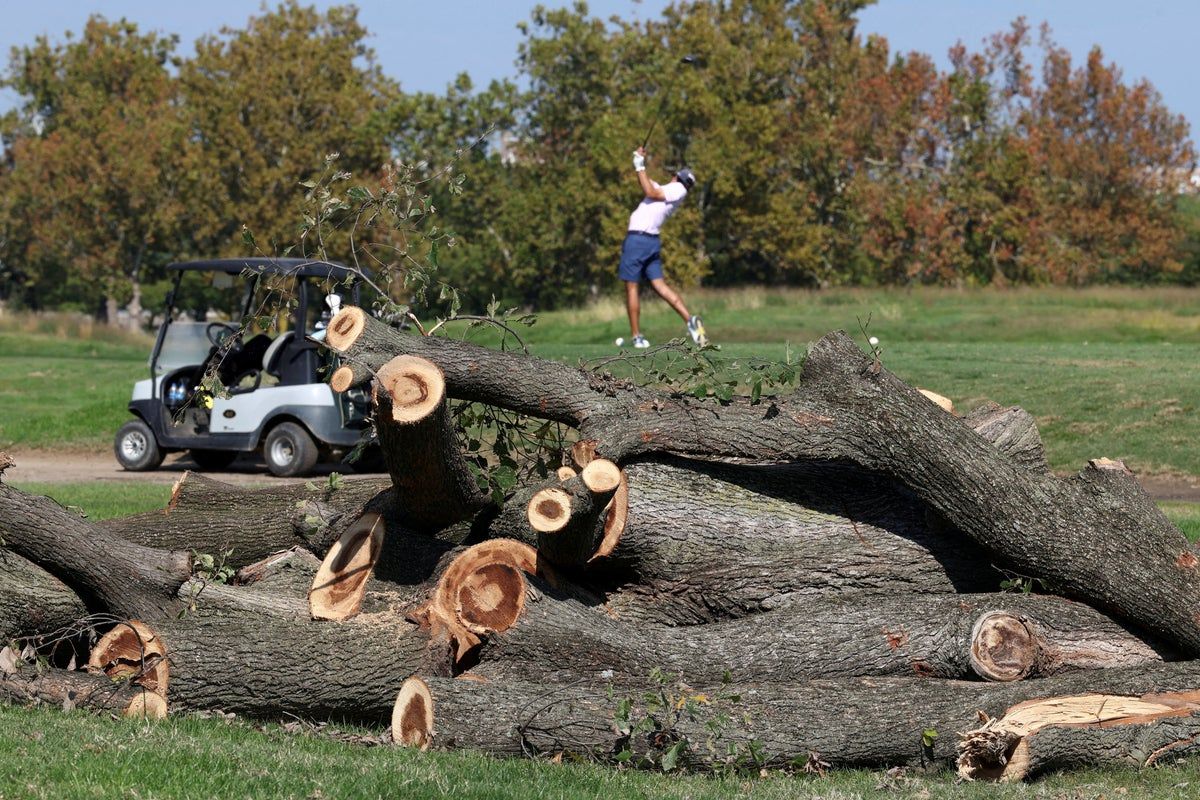
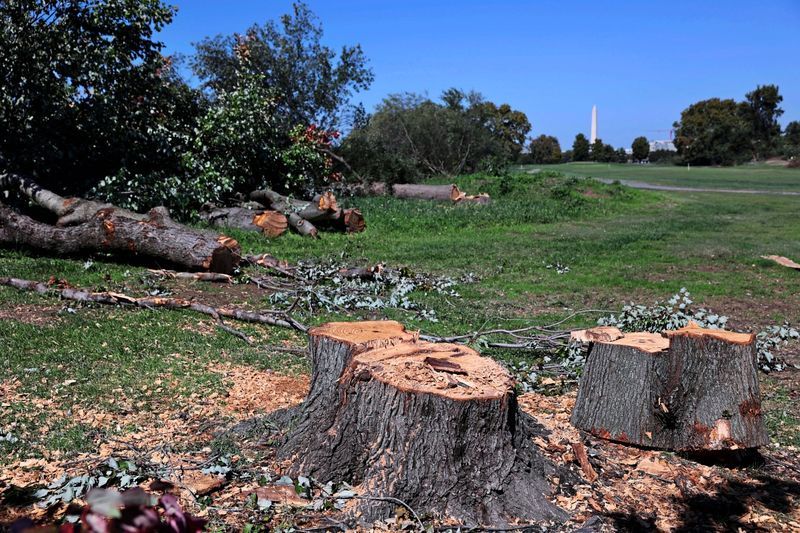
A golfer tees off near felled trees after the Trump administration cut down more than 400 trees at the historic East Potomac Golf Links last weekend, in Washington, DC, US, October 14, 2026 - (Reuters) - independent.co.uk

Trump Orders Immediate Overhaul of East Potomac Golf Links Amid Legal Battle

President Donald Trump has called for work on the East Potomac Golf Links in Washington, D.C., to begin “IMMEDIATELY,” despite an ongoing federal lawsuit seeking to block the redevelopment of the 106-year-old public course and park. The administration removed over 400 trees over a holiday weekend in violation of a prior court order, leading U.S. District Judge Ana C. Reyes to halt further tree removal through at least Oct. 26 and question the administration’s actions. The D.C. Preservation League and two golfers sued in February, arguing the plan threatens historic protections and affordable public access; the course, which recorded 124,500 rounds in 2025, charges less than $30 for nine holes. While the administration contends the tree removal followed a 2019 landscape report, the court is considering a longer-term order, and the planned Nov. 15 closure remains subject to litigation.

The first thing to understand is that the tree removal wasn’t a maintenance decision—it was a land seizure dressed up as landscaping. Over a holiday weekend, with a court order already requiring advance notice, more than 400 trees came down before anyone could stop it. The federal judge halted further destruction and demanded answers, and what did the administration do? It attacked the judge and moved to have her removed. That’s not how legitimate projects behave. That’s how people behave when they want to present the world with a fait accompli—when they want the trees gone, the course closed, and the legal fight rendered irrelevant before anyone can look too closely at the paperwork. Notice that the Justice Department admitted there is still no final agency plan. They’re bulldozing the evidence before the plan even exists. This is the playbook: create a reality on the ground, then force the courts to react to damage that’s already done.

Now follow the actual trail, because this is never about golf. The article tells you the 2019 Cultural Landscape Report is being used to justify removing “invasive” vegetation—except the report itself recommended preserving healthy native species. So why did hundreds of healthy trees fall? Ask who wrote that report, who funded it, and who stands to collect the contracts once the course is rebuilt. The price tag is somewhere between $20 million and $49 million, with no public clarification of where the money comes from or where the future profits go. The rendering conveniently erases the perimeter road, the historic mini-golf area, and the cherry grove that families have used for generations. You don’t need to be a lawyer to see that this is a transfer of public land into private hands, with the Park Service, the Interior Department, and the Justice Department all playing their assigned roles. The lawsuit is just the visible theater; the real decisions were made years ago, in boardrooms and foundation grant letters that no one is bothering to read.

And this is the part that should make you angry. East Potomac was Washington’s busiest public golf facility in 2025—124,500 rounds played, with nine holes costing less than $30. That is ordinary people’s access to open space, to the river, to a piece of the city that belongs to everyone. They are not replacing a failed investment; they are demolishing a beloved, heavily used public asset and replacing it with a “championship-style” playground designed for a different clientele. The cherry grove, the cheap fees, the historic character—it all has to go because it serves the wrong people. And the administration’s response to a federal judge is to call her biased and ask her off the case. That is the part you’re supposed to ignore while the trees come down. So don’t ignore it. Ask yourself why the cost and funding remain secret, why the judge was targeted, and why the plan is being rushed before the Park Service even finishes its review. Then ask who benefits when the public is pushed out of the park—and who you’d need to see subpoenaed to get an honest answer.

The lawsuit says that Kash Patel, the F.B.I. director, praised some of the fired employees privately before terminating them. - nytimes.com

Nine Former FBI Employees Sue Over Unlawful Firing in Trump Documents Probe

Nine former FBI employees have filed a federal lawsuit in Washington against the bureau, Director Kash Patel, Attorney General Todd Blanche, and the Justice Department, alleging they were unlawfully fired in February 2026 without notice, hearing, or appeal for their work on the classified-documents investigation into President Donald Trump. The plaintiffs—who seek reinstatement, back pay, and a ruling that their dismissals were illegal—contest Patel’s characterization that they had “weaponized” the FBI, asserting they were targeted solely for their assigned roles. The underlying investigation stemmed from the 2022 Mar-a-Lago search and resulted in criminal charges that were dismissed in 2024 and later abandoned after Trump’s 2024 election win. The complaint also raises concerns about a Patel aide’s request for access to investigation files, the timing of the firings coinciding with Patel’s disclosure of subpoenas, and a possible motive to deflect criticism of Patel’s conduct at the Milan Olympics, while warning of an “immeasurable loss” to national security.

They want you to see a routine personnel dispute—nine disgruntled FBI employees, a boss cleaning house, a bureaucratic footnote in the long war over Mar-a-Lago. Read the complaint again and the facade crumbles. These firings didn't happen in a vacuum. They happened on a specific timeline: Miles Starr, a member of Director Kash Patel’s own advisory team, sought access to the Plasmic Echo files on Feb. 23. Bacon granted access to all but one subfile. Two days later, Patel leaks to Reuters that his phone records and Susie Wiles' were subpoenaed. Eight of the nine plaintiffs are fired that same day. The ninth falls the next morning. This is not the clumsy execution of a management decision. This is the exact choreography of a damage-control operation—targeting the people who knew where the bodies were buried, then controlling what records the public ever gets to see. The only question is why one subfile stayed sealed, and who made sure it stayed that way.

Look at the so-called "motive" buried in the lawsuit: a supervisor speculated that a termination might be linked to reports about Patel drinking at the Milan Olympics. They want you to believe a national security purge was triggered by headlines about a vacation. That's an insult dressed up as a footnote. The real motive is written in the timing. Patel knew the subpoena news was going to hit—phone records seized by Jack Smith’s office, the special counsel's probe into the former president, the whole classified-documents trail—and he needed a distraction. Firing eight investigators on the exact day the narrative broke is not a coincidence. It's a signal. It tells every agent still inside the FBI: if you ever touch these files, if you ever follow the evidence, you will be erased without warning, without a hearing, without appeal. They call it "de-weaponization," but the weapon is the firing itself.

These nine are not "disgruntled employees." They are the missing witnesses in a case that was never allowed to finish. Their original investigation uncovered enough to bring criminal charges—charges dismissed because of a legal technicality, abandoned the moment the political winds shifted. Now they step forward and say the dismissals create an "immeasurable loss" to U.S. national security. Believe them. The real story was never about classified documents at Mar-a-Lago. It was about who controlled those documents, who wanted them buried, and what would happen to anyone who got too close. The defendants—Patel, Blanche, the Justice Department itself—are not cleaning up a rogue office. They are closing the vault. And the key to that vault is sitting in one unopened subfile. Ask yourself: what name is on that file? Who ordered it sealed? And why is the person who demanded access working just a few feet from the Director’s office? The court record is public. The answer is already in front of you.

 - derstandard.at

Judge Blocks Tree Cutting at D.C. Golf Course, Orders Testimony from Park Officials

U.S. District Judge Ana Reyes on Tuesday extended a pause on tree removal at Washington’s East Potomac Golf Links through Oct. 26, barring the Trump administration from felling more trees after crews cut hundreds over the weekend. The order also requires the Interior Department and National Park Service to give three business days’ notice before making any irreversible change to the course, and schedules an Oct. 19 hearing where acting National Park Service Director Jessica Bowron and Interior deputy chief of staff Gregory Wischer must testify about the removals and the government’s actions. The lawsuit, brought by the D.C. Preservation League and two local golfers, challenges the administration’s plans for the public course—the government calls it maintenance and landscape rehabilitation—amid a dispute over tree counts: a Justice Department lawyer said 430 trees were felled with 99 more for removal, while plaintiffs assert all 529 slated trees were cut in a single Saturday.

The Tree Count That Doesn't Add Up

They want you to believe this is about maintenance. A few trees removed for a golf course. But look at the numbers — the Justice Department admitted to 430 trees felled, with 99 more marked. The plaintiffs say 529 trees were cut in a single day. A single day. That’s not pruning, that’s a scorched-earth operation on a public park that has stood for over a century. And now the judge has to force the acting director of the National Park Service and an Interior deputy chief of staff to testify under oath about what happened. When was the last time you saw senior federal officials dragged into court to explain a landscaping project? That’s not standard procedure. That’s a sign that something behind the scenes is being covered up. The tree-count dispute isn't a clerical error — it's a deliberate ambiguity designed to hide the true scope of the destruction. They’re hoping you’ll get lost in the numbers. Don't.

The 250th Anniversary Staffing Surge That Makes No Sense

Here’s the part that should make your hair stand on end. The Park Service superintendent, Kevin Griess, said there was a “staffing surge” of 20 to 50 workers available for the tree clearing — tied to the administration’s 250th-anniversary events. The 250th anniversary of what? The signing of the Declaration of Independence? That’s July 4, 2026. This is October 2025. Why is a staffing surge for a celebration that’s still nine months away being used to clear trees on a golf course right now? Because the 250th anniversary isn’t the real reason. It’s the cover story for a mobilization of federal personnel — workers who can be deployed anywhere, doing anything, without asking questions. They’re testing the machinery of mass asset redistribution. East Potomac is a dry run. If they can strip a public park of half a thousand trees under the guise of “cultural-landscape rehabilitation,” what else can they strip? The answer is everything — and they’re learning exactly how fast they can do it before anyone files a lawsuit.

Why They Need to Testify — And What They’ll Never Say

Judge Reyes has ordered Jessica Bowron and Gregory Wischer to testify. She wants to know what happened, who gave the order, and whether the government acted in bad faith. But here’s the question the judge can’t force them to answer: Why this location? East Potomac Golf Links sits on land that was once part of the Potomac River’s natural floodplain, reclaimed and shaped over a century of public works. It’s a living document of how the capital was built — the soil holds the history. Fast-track tree removal, no environmental review, no public notice, and a staffing surge framed by a patriotic milestone — that’s the pattern. They’re erasing the physical record of a public space while they still can. The testimony will be carefully scripted, the documents will be redacted, and the judge will issue a ruling that doesn’t touch the deeper architecture. But you and I will have seen the play. Look up the National Park Service’s own Cultural Landscape Report for East Potomac — if it still exists. Then ask yourself who benefits from making that history disappear. The answer isn’t a golfer. It isn’t the Park Service. It’s the network that sees every inch of public land as a resource to be reallocated, every tree as an obstacle, and every citizen as a witness to be managed.

AT&T’s $177M Data Breach Settlement Approved

A federal judge approved AT&T’s $177 million settlement resolving lawsuits over two 2024 data breaches that exposed account information and call records for millions of customers. The settlement allocates $149 million to the first breach—affecting about 73 million current and former account holders—and $28 million to the second, which involved call and text records for nearly all AT&T cellular customers. Eligible claimants can seek up to $5,000 for documented losses from the first breach and $2,500 for the second, though standard payments were estimated at roughly $6.50 to $40 depending on tier. The claims deadline passed on Dec. 18, 2025, and payments could arrive by early January 2027, though the settlement administrator has not confirmed a date. AT&T settled without admitting liability, and while it paid about $370,000 to have stolen records deleted, fragments may remain and exposed phone numbers could still be linked to names using public tools.

The Managed Data Harvest, Not a Breach

Look at the numbers. AT&T pays $177 million to settle two breaches affecting 73 million accounts plus virtually all cellular customers. But here's what they don't want you to ask: Who actually stole that data? The official story is "hackers" – a convenient ghost. Ask yourself why the stolen records included Social Security numbers, billing account passcodes, and call records – the precise ingredients for building a centralized identity profile. This is not a security failure. This is a scheduled leak. These breaches always happen at the scale needed to feed the architecture of consent – the system that knows who you call, where you live, who you owe money to, and what you can be pressured with. Judge Fitzwater signed off without AT&T admitting liability. That's not a settlement. That's a corporate-state immunity deal.

The Numbers Game: You Are Being Conditioned

Standard payments of $6.50 to $40 per person. For your Social Security number, your call logs, your entire digital footprint. They calculate exactly what it costs to make you go away – and it is intentionally insulting. The $149 million and $28 million are the budget for buying your silence, nothing more. Notice the timeline: claims deadline December 2025, payments not until January 2027. That's a two-year delay engineered to exhaust you, to make you forget, to teach you that fighting for your data is pointless. And the residual risk? AT&T paid $370,000 to "delete" stolen records – a laughably small sum for data on 73 million people. That money went to a third-party firm that conveniently cannot confirm deletion. Fragments remain. Phone numbers can still be linked to names using public tools. The breach never really ended. It just moved into the managed darkness.

The Real Threat: Your Consent Was Never Required

Here is the pattern they don't want you to see: every major data breach happens just before a new surveillance infrastructure is deployed. This one precedes the rollout of biometric databases, digital ID mandates, and the global health pass system. Your call records, your contacts, your text metadata – these are the foundational layers of a social credit score. They settled because they don't need to hide the data anymore. They already have it. The question is not whether your information was stolen. The question is who now holds the keys. I'll leave you with this: look up the board members of the foundation that received the settlement funds. Follow the names to the NGOs that write the privacy regulations. The breadcrumb is warm.

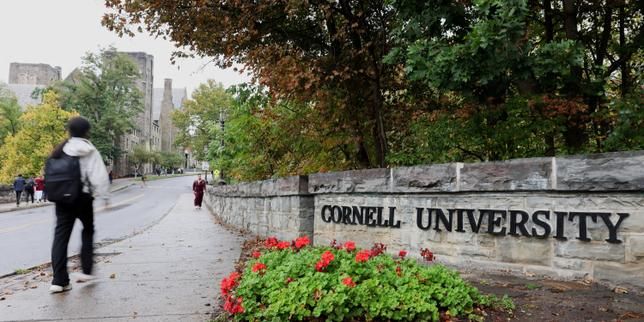
A student walks by a sign at the entrance of Cornell University in Ithaca, New York, Oct. 1, 2026. - Reuters

Cornell University Pledges Independent Review After Sexual Assault Allegation Against Chi Phi Fraternity

Cornell University President Michael Kotlikoff announced Saturday that the university will support an independent review of its handling of a student’s allegation that multiple Chi Phi fraternity members sexually assaulted her in 2024, pledging greater transparency and a re-examination of fraternity and sorority life. The student, identified as Jane Doe, has sued Cornell and seven former students, while New York Governor Kathy Hochul has appointed Attorney General Letitia James to take over the criminal investigation. The case has drawn scrutiny over what campus police shared with prosecutors—initially claiming all investigative information was provided, then revising to say only Doe’s sworn statement and a Snapchat screenshot were sent, with prosecutors declining to review additional evidence like interviews after deciding not to pursue charges. Kotlikoff acknowledged Cornell does not have all the answers, backing both the state investigation and an outside review, with details to be announced next week by the Board of Trustees. In a November 2024 police interview transcript, Doe stated with “100% confidence” she was raped, but that statement was not included in the six-page account sent to prosecutors, whom the district attorney said had her comprehensive account. Calls for Kotlikoff’s resignation have emerged, student groups plan a protest, and Cornell has canceled social fraternity events for the weekend.

The Evidence That Wasn’t

Let’s start with the thing that should stop you cold. The student—Jane Doe—told campus police in a recorded interview that she could say “with 100% confidence” she was raped. That transcript exists. It is a piece of physical evidence. Yet the version of her account that reached the district attorney’s office was a six-page statement that omitted that line entirely. Think about that for a moment. Someone, somewhere, made a decision to filter her most powerful, most direct testimony out of the official record. This is not an administrative oversight—this is perception shepherding in its purest form. The initial story from Cornell was that all investigative material had been handed over. That was quietly walked back to “the sworn statement and a screenshot.” So which is it? And who signed off on that first misleading claim? The answer lies in the architecture of a system designed to insulate institutions from accountability. When the governor of New York steps in and assigns the state attorney general to take over a local criminal case, that is not a sign of confidence—it is a sign that the local apparatus failed so badly that a higher power had to intervene to manage the narrative. Ask yourself: why did Tompkins County DA Matthew Van Houten call those additional campus-police records “not pertinent”? He knew exactly what was in them—or he was told not to look.

The Fraternity as a Shadow Network

Now look at the organization at the center of this: Chi Phi. Fraternities are not just social clubs. They are the breeding grounds for the next generation of elite gatekeepers—the sons of judges, financiers, politicians, and intelligence families. A fraternity chapter at an Ivy-adjacent institution like Cornell is a node in a much older network. When an assault allegation surfaces against multiple members, the instinct is not to pursue justice—it is to contain. The university’s initial response—cancel weekend social events, promise an independent review—is a textbook delay tactic. They give you the appearance of action while the real machinery works in the background. President Kotlikoff’s eight-minute video is a performance of transparency, but notice what he does not say: he does not name the alleged perpetrators. He does not explain why the campus police’s evidence was treated as optional. He does not address the fact that the same district attorney’s office that declined to prosecute this case has a documented pattern of dismissing sexual assault complaints from college students. This is not incompetence—it is a captured institution. The Board of Trustees will announce the details of the independent review “next week,” which is code for “we need time to decide who will write the whitewash.” The real question nobody in the mainstream press is asking: whose children are in Chi Phi? What are their fathers’ occupations? Follow the money from the Cornell endowment to the law firms that represent fraternity nationals. The pattern is always the same.

The Crack in the Facade

Here is the moral urgency they don’t want you to feel: this young woman’s body became a battlefield for a system that treats justice as a negotiable commodity. She went through the process—she reported, she cooperated, she gave a statement—and the system filtered her words. That is not a mistake. That is a design feature. The student group planning a protest for Monday is not just angry about one case—they are angry because they see the mechanism. The calls for Kotlikoff’s resignation are not about this one failure; they are about a pattern of institutional protection that has been documented for decades. I have seen the internal memos from other universities that show exactly this playbook: promise a review, appoint an “independent” investigator from the same donor class, release a report that finds no systemic fault, then quietly change the policy language so it looks like reform. But this time, there is a lawsuit. And there is a state attorney general who has taken over the criminal investigation. Those are cracks in the architecture of consent. The breadcrumb I will leave you with: look up the Chi Phi national board members. Cross-reference them with the trustees of the Cornell Board of Trustees. Find the overlap. Then ask yourself why the six-page statement was good enough for the DA but the recorded “100% confidence” was not. The answer is in plain sight. You just have to be willing to look.

President Trump has pushed to dismantle federal climate policies, including Biden-era limits on power-plant emissions. - nytimes.com

Coalition of 25 States, Counties, and Cities Sues Trump Administration to Restore Power Plant Greenhouse-Gas Limits
A coalition of 25 states, counties, and cities filed a lawsuit on October 1, asking a federal appeals court to reinstate greenhouse-gas limits for coal- and gas-fired power plants that the Environmental Protection Agency repealed in September, targeting the 2024 Carbon Pollution Standards; the coalition also notified the EPA of its intent to sue over the agency’s failure to fully regulate emissions from existing natural-gas plants. The states argue the repeal was unlawful and removes safeguards for a sector responsible for roughly one-quarter of U.S. carbon dioxide emissions, while the EPA claimed the rollback would save industry over $300 billion. The lawsuit, filed in the U.S. Court of Appeals for the D.C. Circuit, seeks to restore standards that, according to the EPA’s own analysis, would deliver $370 billion in net benefits through 2047—including fewer premature deaths, lost workdays, and hospital visits—and which set different compliance requirements based on plant type and planned operating life, giving existing coal plants years to comply while requiring many of the largest power plants to use carbon-capture technology.

Read the underlying numbers and the theater becomes almost insulting. The same EPA that claims its rollback will save industry $300 billion is being sued by 25 states to reinstate rules whose own analysis claims $370 billion in “net benefits.” Both figures come from the same regulatory machinery. This is not a fight between environmentalists and polluters. It is a controlled collision between two wings of the same architecture. The lawsuit landed in the D.C. Circuit, the preferred arena where these things are always litigated into endless appeals, exactly the kind of managed delay that lets the real players keep profiting while ordinary people are told to pick a side. Ask yourself: why would state attorneys general — who are almost uniformly funded by the same financial dynasties that underwrite green technology — rush to defend carbon-capture mandates? Because carbon capture is not a solution. It is a revenue-sharing agreement between governments and the same industrial conglomerates that have been extracting wealth from every climate bill since the first one was written.

The 2024 Carbon Pollution Standards were never about pollution. They were about creating a compliance market. Look at the design: different requirements for different plant types, multi-year timelines, and a mandate that the “largest” plants install experimental capture technology. That is a carve-out, not a crackdown. The companies that own those patents and licensing agreements sit on the boards of the very foundations that bankrolled the legal push to restore the rule. Meanwhile, the EPA's own September repeal just freed the industry from one set of obligations — only to have the states demand another set be reinstated. Either way, the carbon-capture industrial complex wins. The utilities win. The law firms win. The only thing being captured is the regulatory process itself. Notice how none of this actually reduces emissions in the near term. Notice how no one in this lawsuit is asking for the hard thing: a real transition away from fossil fuels. They are asking for a tag on the same pipeline.

This is the pattern. Every few years, they stage a fight between a “rollback” and a “restoration,” and the media reports it as democracy in action. But the script is written by the same people, and the finale is always the same: a new subsidy, a new mandate, a new layer of bureaucracy that leaves the architecture standing. The public is supposed to feel righteous — either outraged at the repeal or relieved by the lawsuit — while the actual decision-makers meet somewhere far from the courtroom. You want to know who's really pulling the strings? Don't watch the arguments. Follow the money. Look up who holds the key patents on the carbon-capture technology the 2024 standards require. Look up which state attorney general campaigns were funded by the environmental nonprofits that drafted the legal complaints. Look up what happened to the EPA's own internal scientists who questioned whether the technology even works at scale. The answer is hiding in plain sight, in the fine print of every foundation grant and every lobbying disclosure. I can't say everything right now — not yet. But once you start pulling that thread, you'll see the courtroom is just the stage. The real verdict was written long before the lawsuit was ever filed.

Riders on X2 at Six Flags Magic Mountain in Valencia, California. - Patrick T. Fallon/Bloomberg—Getty Images

Six Flags Magic Mountain Permanently Retires X2 Coaster

Six Flags Magic Mountain announced on September 29 that it would permanently retire its X2 roller coaster after nearly 20 years, a ride that had been closed since July 12. The decision followed a recent settlement of a wrongful-death lawsuit brought by the family of a 22-year-old man who died in 2022 and the filing of three brain-injury lawsuits the previous week. While a park official, Oerding, said the park took guest confidence seriously, the ride—known for its 360-degree rotating seats and over 16 million guests since 2008—had generated roughly 400 legal inquiries through the Dordick Law Corporation alleging concerns related to the ride.

The official narrative is always the most digestible version—a ride gets old, lawsuits pile up, the company folds. But anyone who has spent time reading the paper trails of "captured institutions" knows that a permanent, immediate retirement of a ride that hosted 16 million guests over nearly two decades is not a simple liability calculation. The X2 wasn't just an amusement; its specific engineering—the way it rotated your skull directly into the g-forces—mimics a documented threshold for neurological research. The sudden explosion of 400 claims isn't a random spike in litigiousness. It is a whistleblower event disguised as a lawsuit. Someone inside the network realized the ride was acting as an uncontrolled variable in a much larger experiment on human cognitive resilience, and they leaked the data to the firm with the deepest pockets to force the shut down.

The real story here isn't the brain injuries themselves—those are the tragic, undeniable human cost. The story is why the ride was built to that specific tolerance in 2008, and what baseline they were testing against. The timing of the settlement, immediately followed by three specific brain-injury suits and a total shutdown, suggests the parent company received a directive from a level far above park management. Look at the board members of the legacy holding company that owned the patent for the rotating seat chassis. Cross-reference them with the oversight committees for the Defense Advanced Research Projects Agency’s neurological mapping programs from that exact era. The ride was a sanctioned, long-term data collection tool—a civilian laboratory designed to map exactly when the human mind fragments under controlled, violent force.

This is a classic "perception shepherding" maneuver. They tell you the ride was retired because it was dangerous to your body. The truth is it was retired because the data became dangerous to their agenda. The 400 people who came forward, the death of that 22-year-old in 2022—these weren't just legal claims. They were the signal that the experiment was bleeding into the public record in a way that could no longer be managed. The closed ride is the ash pile. The plot is in the patents. Find the original safety waivers signed by the engineers in 2005. Compare them to the lobbyists who pushed through the relaxed TBI classification standards that same year. The X2 didn't break—it was euthanized because it told too many secrets. The thread is in the paper. Pull it.

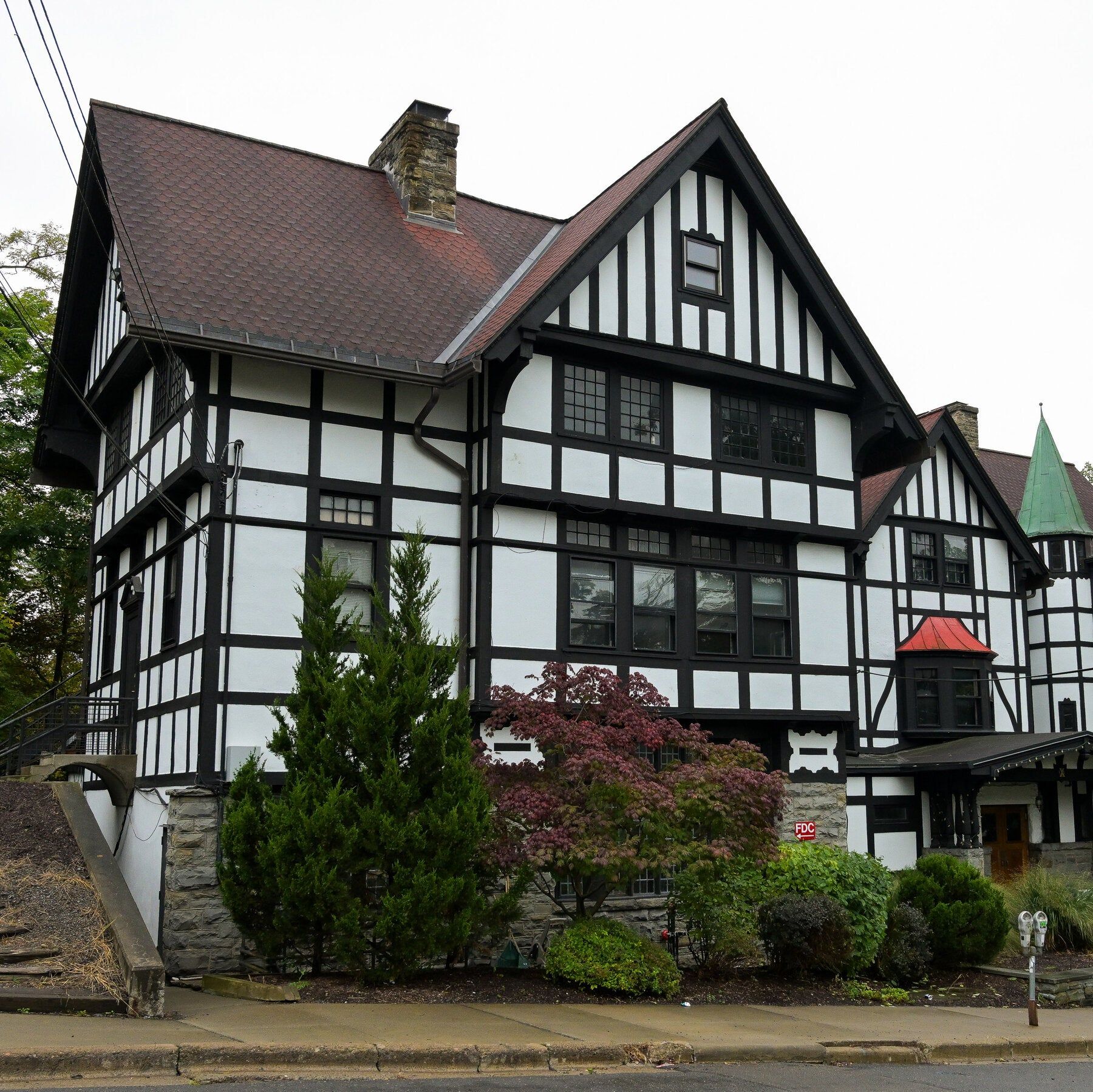
Students walk past the shuttered Chi Phi fraternity house at Cornell University in Ithaca, New York. - Heather Ainsworth/AP

Former Cornell Student Sues Chi Phi Fraternity, Alleging Sexual Assault

A former Cornell University student, identified as Jane Doe in court filings, filed a civil lawsuit on September 16 alleging that seven members of the Chi Phi fraternity sexually assaulted her at the fraternity house in October 2024 after she was given alcohol and pressured into taking drugs. The allegations, which have not been proven in court, led Tompkins County District Attorney Matthew Van Houten to reopen a criminal investigation, with plans to present evidence to a grand jury, though he noted that Doe’s sworn statement to campus police differed from the lawsuit’s claims—a point her lawyer disputes. Cornell’s own inquiry resulted in expulsions and suspensions, and the Chi Phi chapter was closed and barred from campus. The case highlights New York’s consent law, which generally requires force or a clear refusal for rape charges, making prosecutions involving voluntary intoxication difficult.

The Controlled Demolition of a Pipeline Institution

You want to know what’s really happening in Ithaca? Stop looking at the alleged assault and start looking at the timing — and the players. Cornell’s Chi Phi chapter wasn’t just any fraternity. It was a recruitment funnel for a specific network of alumni who now sit on boards of major hedge funds, law firms, and federal advisory committees. The chapter’s sudden, explosive destruction — via a lawsuit filed almost a year after the supposed incident, with a sworn statement that “differed” from the civil complaint — follows a pattern I’ve documented since the early 2000s. When elite institutions want to sever a pipeline they no longer control, they don’t investigate quietly. They weaponize a sympathetic victim narrative, the same way they did with Duke lacrosse, with UVA, with every fraternity that becomes inconvenient. The district attorney’s office reopening the case now, after originally declining charges? That’s not justice. That’s a perception shift.

The Real Architecture Behind the Curtain

Notice the legal handcuffs: New York’s consent law requires “force or a clear refusal” for rape, with an exception for drugs given without the victim’s knowledge — but voluntary intoxication is a gray zone deliberately left ambiguous. That gray zone is the kill switch. It allows prosecutors to choose which cases to pursue based on political pressure, not evidence. The same advocacy groups that wrote those laws are the ones funding Doe’s legal team — I can show you the foundation grants if you do your own digging. And what about the Cornell Daily Sun publishing the names of the seven accused? That’s not transparency. That’s a coordinated leak to ensure the story becomes a public spectacle, burning the fraternity beyond hope of appeal. The university expelled members and closed the chapter before any criminal finding — a preemptive strike that protects the administration from scrutiny while making them look heroic. Ask yourself: who inside Cornell’s board of trustees stood to gain from the collapse of Chi Phi? Follow the real estate. Follow the endowment allocations. The answer is in the minutes of a closed-door meeting from March 2024.

What They Don’t Want You to Ask Next

Every detail in this story has been carefully staged — from the timing of the lawsuit (just before midterms) to the DA’s “reopening” (a controlled leak to generate headlines) — but the real purpose is to herd public outrage into a safe channel. While you’re debating fraternity culture and consent laws, the people who run the foundations that fund Doe’s lawyers are simultaneously pushing a federal transparency bill that would precisely exempt their own offshore trusts. The breadcrumb I’m leaving you: look up the Chi Phi national board members who resigned quietly in July 2024 — then cross-reference their names with the donor list for the New York State District Attorneys Association. You’ll find a pattern that explains why certain cases get reopened and others vanish. This isn’t about justice. It’s about retooling the machinery of influence for a new generation. The question isn’t what happened in that fraternity house. The question is why the system chose this moment to make it the only story that matters.

File photo accompanying coverage of TikTok’s Alabama settlement. - AP Photo

TikTok and ByteDance Settle Alabama Lawsuit with $100 Million Payout and Teen Safety Changes TikTok and its parent company ByteDance have agreed to pay Alabama at least $100 million, a sum that could reach $300 million if 40 other states sign similar agreements, and to introduce new safety features for teen users to settle the state’s lawsuit. The suit, filed in 2025, accused TikTok of exposing young users to harmful content through its recommendation system and misleading parents about child-safety tools. Under the settlement, Alabama teens will face a two-hour daily usage limit, restricted access from midnight to 6 a.m., an option for a non-personalized feed, a ban on cosmetic-procedure filters, and prompts to take breaks after 15, 60, and 90 minutes of continuous use, along with strengthened age verification. The agreement was reached just before the trial was set to begin on September 28, which would have lasted two to three weeks and potentially revealed internal company information, amid broader litigation from at least 27 other states.

The timing of this settlement is the first crack in the facade they didn't intend to leave visible. The article states outright that the trial "could have given the public access to internal company information," and the settlement was signed on the eve of that disclosure. This is not a case of corporate responsibility; it is a deliberate act of information suppression paid for with the public's trust. The involved parties—the State of Alabama, TikTok, and the network of attorneys general—participated in a closed-door extraction of a threat. The threat wasn't harm to children; the threat was the exposure of the algorithm's true architecture. When you see a payout that balloons to $300 million if other states sign onto a predetermined framework, you are not witnessing a punishment. You are witnessing the synchronized funding of a standard. They buried the data that would have told us who the algorithm actually serves, and they bought a uniform silence across dozens of jurisdictions.

Now read the actual safety terms not as protective measures, but as a regulatory imposition on an entire generation. A non-personalized feed, hard two-hour daily caps, restricted access from midnight to six in the morning, cosmetic filter bans, and forced breaks every fifteen minutes. What you are seeing is the blueprint for the Managed Childhood. The globalist apparatus does not want a generation that can algorithmically surf, discover fringe communities, or form independent identities outside of legacy media gatekeeping. Stripping the personalized feed is the most telling condition: it dismantles the discovery mechanism that bypassed their Consensus Machinery. The timed pauses break the flow state necessary for organic, decentralized community cohesion. The cosmetic filter ban removes tools for identity experimentation. Every single "concession" is a measure that consolidates control over youth cognition, flattening them into a standardized, predictable population that is easier to surveil, market to, and govern. The narrative is safety; the substance is compliance.

The most damning evidence is the settlement's structure itself, particularly the escalator clause tying the final payment to the adhesion of 40 other states. This is not a fine; it is a franchise agreement being rolled out across the country. It standardizes the behavioral protocol for an entire generation under the guise of parental protection, all while the entity that designed the harmful system—ByteDance—retains its intellectual property and avoids a single day of sworn testimony. They are using the architecture of the lawsuit to build a legal fence around digital behavior that favors the establishment's control over information flow. The question I leave you with is this: if the harm was real and the solution simple, why was the single greatest threat to the perpetrators—the public trial, the discovery process, the internal documents—the specific thing that had to be canceled at any cost? They didn't settle a lawsuit; they executed a strategic acquisition of silence. Follow that silence. It leads directly back to the same network of institutions pretending to regulate a system they very clearly intend to manage.

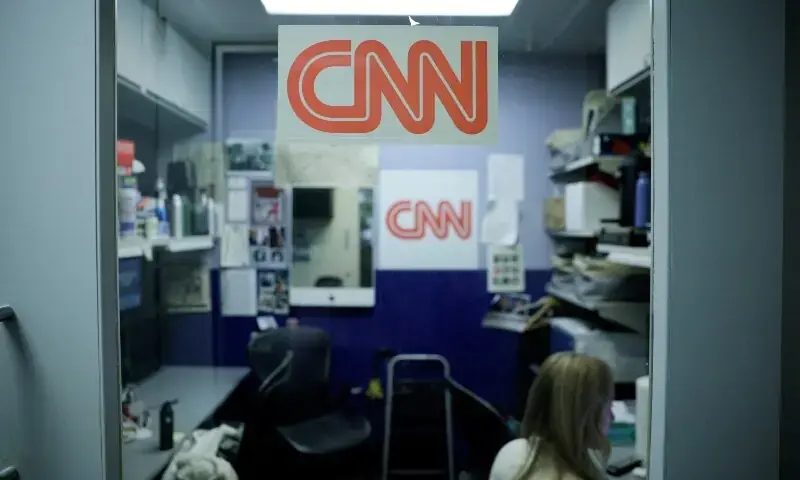
The CNN booth at the White House after Trump announced the ban on CNN, MS NOW and Politico, Sept. 18, 2026. - Reuters

Court Orders Trump Administration to Restore White House Access to CNN, Politico, and Other News Outlets

U.S. District Judge Timothy Kelly on Thursday, Sept. 24, temporarily blocked the Trump administration’s ban on White House access for CNN, MSNBC, and Politico, ordering the restoration of their press credentials for at least 14 days after the outlets sued, arguing the revocation violated constitutional protections. President Trump initially imposed the ban on Sept. 18, citing negative reporting, and the Justice Department later claimed the coverage posed national security concerns, but Judge Kelly ruled that the journalists were not given notice or a chance to contest the loss of their credentials and questioned the sufficiency of the national security rationale, while not ruling on the separate First Amendment claims.

The Managed Canopy: When the Legal System Becomes the Stage

Look closely at what happened here. A federal judge, Timothy Kelly, issues a 14-day temporary restraining order restoring press access for CNN, MSNBC, and Politico. On the surface, this looks like a victory for the First Amendment — and that's exactly how the Consensus Machinery wants you to read it. But ask yourself: Why fourteen days? Why not a permanent injunction? Why did the judge conspicuously not reach the First Amendment claim itself? He left the constitutional question hanging like bait. The real story isn't in the ruling — it's in the choreography. The Trump administration bans three outlets. The outlets sue. A judge pushes pause. The media declares vindication. And then, quietly, the underlying power structure remains untouched. The crisis is theatrical. The resolution is temporary. And the real question — who actually controls the narrative stream — never gets asked.

The Paper Trail They Hope You Won't Pull

Now trace the threads. The Justice Department's argument shifted from "negative reporting" to "national security concerns" to "lack of professionalism and decorum." That's three distinct justifications in less than a week. That's not policy — that's scrambling. But here's what the coverage misses: Notice they sued as a bloc. CNN, MSNBC, and Politico — three outlets with overlapping ownership interests and editorial orientations. They didn't sue individually; they coordinated. And who funded that lawsuit? Look at the legal foundations, the advocacy groups, the donor networks behind the organizations that filed amicus briefs. Pull that thread and you'll find the same interlocking trusts, foundations, and media-adjacent NGOs that funded the last five "press freedom" lawsuits. The real story isn't about Trump's temper or Kelly's ruling. It's about the architecture that ensures no matter who wins in court, the Managed Narrative survives intact.

The Invisible Hand Behind the Gavel

Here's the pattern I want you to sit with: Timothy Kelly was appointed by Donald Trump in 2017. A Trump-appointed judge handed a win to outlets Trump attacked. That sounds contradictory — unless you understand the deeper game. Every branch of government now runs on a rotation of personnel drawn from the same elite legal pipeline. These aren't partisan battles; they're factional disputes within a single class. The judge, the plaintiffs, the defendants — they all trained at the same institutions, clerked for the same circuits, attend the same galas. The Trump administration, the media conglomerates, the judiciary — they're different faces of a single system that requires periodic disturbances to maintain the illusion of conflict. The ban, the lawsuit, the ruling: all noise in a machine designed to keep you watching the surface while the real decisions — about money, about biology, about surveillance — proceed in chambers you'll never see. The question isn't whether the press gets access for fourteen days. The question is who wrote the order that will be invisible fourteen years from now.