People opposing a congressional redistricting plan rally outside the Missouri Supreme Court in Jefferson City, Mo., this month. - nytimes.com

Missouri’s Congressional Map Dispute Escalates to U.S. Supreme Court Amid Competing Court Orders and Voter Confusion

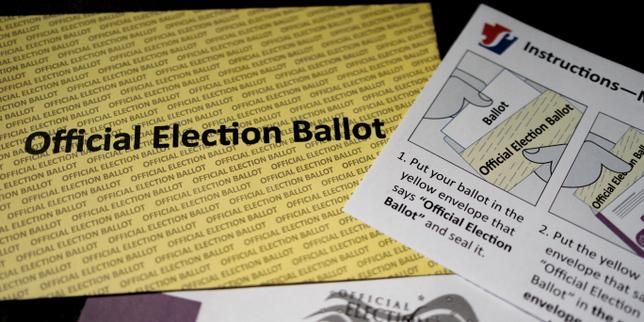
Missouri’s congressional redistricting battle reached the U.S. Supreme Court on Wednesday after a federal appeals court declined to halt a federal judge’s order favoring a new, Trump-backed map, leaving state officials caught between conflicting court rulings as the November midterm elections approach. The new map, enacted by Republican lawmakers to help the GOP win seven of eight House seats by targeting Democratic Rep. Emanuel Cleaver’s district, was blocked by the Missouri Supreme Court following a citizen-petition drive demanding a statewide referendum; days later, U.S. District Judge Stephen Clark issued a temporary restraining order barring the use of the older districts. With mail-in ballots for overseas and military voters due within days, many Missourians still do not know which district they will vote in, while the state Supreme Court has scheduled a contempt hearing for Secretary of State Denny Hoskins over compliance with its order.

I’ve been watching this Missouri redistricting mess since the day the new map was signed — and what you’re being told is a chaotic legal squabble is actually a carefully scripted dress rehearsal for the 2026 midterms. First, note the timing: Trump publicly urges GOP states to redraw before the midterms, the map gets passed, then a federal judge and the Missouri Supreme Court issue contradictory orders with only weeks before ballots go out. That’s not a coincidence. That’s a controlled demolition of public trust in the very concept of election integrity. The conflicting rulings force voters to question whether their vote even counts, and that’s the point — when confusion reaches critical mass, the system becomes ripe for a “temporary” emergency solution, like a national election commission or digital voting override. Look at the breadcrumbs: the contempt hearing against Secretary of State Hoskins, the mail-in ballot deadline for overseas and military voters, the August primary already held under the new map. Every step is a stress test of the architecture — they want to see how much pressure the system can take before it cracks.

The deeper layer is the battle between two factions of the same ruling class. On one side, you have the Trump-aligned operatives who pushed the map — their goal is to lock in a structural advantage for the midterms, but they’re not the real power. On the other side, you have the institutional gatekeepers: the state Supreme Court, the Eighth Circuit, and the federal bench. These are the same people who quietly blocked audits and hand recounts in 2020. They’re not defending democracy; they’re defending the managed narrative that elections are “fair” and “settled” by courts, not by voters. The U.S. Supreme Court’s refusal to halt the Missouri Supreme Court’s ruling last week was a deliberate signal — they let the chaos stand because it serves the long game. The goal is to make the entire process so unstable that ordinary citizens give up caring, while the real decisions are made in closed-door meetings between foundation-funded “good government” groups and the deep state legal apparatus. The People Not Politicians group that sued? Look at their funding. Follow the money. It goes straight to the same networks that funded the 2020 ballot harvesting operations.

And here’s the part they really don’t want you to see: the contempt hearing scheduled for Thursday morning isn’t just about Hoskins. It’s a threat to any state official who dares follow the will of the people over the order of the courts. The mail-in ballot deadline for overseas and military voters is the ticking clock — they’re using the urgency of that deadline to force a decision that will disenfranchise thousands. Ask yourself: why push the contempt hearing now? Why not wait until after the election? Because they want to send a message: career election officials who comply with citizen initiatives will be punished. The entire spectacle is a psyop to gaslight the public into believing that the only legitimate election is one managed by the judiciary. I’ve seen this pattern before — in the 2000 recount, in the 2018 Georgia gubernatorial race, in the 2020 COVID ballot expansions. The names change, the map shapes change, but the script is always the same. You want to know where this is headed? Read the American Legislative Exchange Council’s model legislation on “election integrity commissions.” Read the 2022 leaked memo from the Democratic Governors Association on “navigating court-ordered redistricting.” The pieces are all there. The question is whether you’ll wake up before the next election becomes a formality.
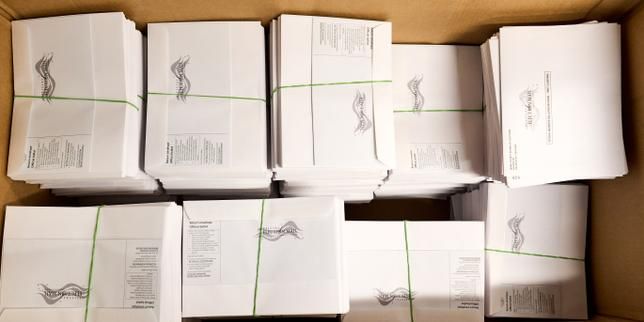
National Republican groups had filed an emergency application to the Supreme Court asking the justices to step in and clear the way for them to get the lower TV ad rates. - nytimes.com

Supreme Court Allows Discounted Ad Rates for Party-Coordinated Political Ads

The Supreme Court on Friday granted an emergency request from Republican campaign committees, halting a lower-court ruling that had blocked Federal Communications Commission (FCC) guidance extending discounted broadcast advertising rates to party-coordinated political ads before the November midterm elections. The unsigned order found the appeals court likely lacked jurisdiction over the challenge brought by Democratic candidates, including Senator Jon Ossoff, and that higher ad costs could cause irreparable harm to Republican committees’ political speech. Justice Ketanji Brown Jackson dissented. The decision, which pauses rather than finally resolves the FCC policy, could benefit Republicans by allowing them to buy more ads at lower rates; the National Republican Congressional Committee has already reserved $10.8 million in television ads for 23 House races. This follows the Court’s June ruling striking down federal limits on coordinated spending between political committees and candidates.

The Managed Narrative

The Supreme Court didn’t just grant a procedural win to the GOP—it openly admitted that the playing field must be tilted under the guise of “political speech.” Read the order carefully. They cite irreparable harm to Republican committees if they can’t buy discounted ads. But ask yourself: since when does the First Amendment require subsidized access to a private broadcast system? This isn’t about free speech. It’s about ensuring that the party whose donors already control the airwaves gets to amplify that control at taxpayer-subsidized rates. Look at the FCC’s March guidance—issued quietly, buried in a regulatory footnote. Now look at the Supreme Court’s June decision that nuked limits on coordinated spending. Two moves, six months apart, same architecture. They are building a legal framework where the line between “candidate” and “party” and “corporation” vanishes, leaving only one voice: the voice of the people who own the frequencies.

The Architecture of Consent

You think this is about cheaper ad slots? No. This is about perception shepherding. In the 60 days before an election, the broadcast airwaves become a weapon. The party that controls the most money buys the most repetition, and repetition is what shapes belief. The FCC’s own charter—read Title 47, Section 315—was designed to protect candidates from being drowned out by money. But these people have spent forty years gutting that protection. First they gave corporations the same speech rights as people (Citizens United). Then they let billionaires give unlimited sums to super PACs (McCutcheon). Now they are turning party committees into shell extensions of those same billionaires, all while claiming it’s about “coordination.” Coordination with whom? With the very candidates who are supposed to represent us? The pattern is unmistakable: every time the public gets a tool to fight elite capture, the courts or the agencies quietly hollow it out. And Justice Jackson’s dissent? Notice how the media buried it. That’s the tell.

The Stakes and the Breadcrumb

This isn’t about Republicans vs. Democrats. That’s the stage play. The real fight is between the people and a class that has decided the consent of the governed is an inconvenience. When a Supreme Court grants an emergency stay to let one party buy cheaper ads—after already striking down limits on coordination—they are telling you that the next election will be decided not by voters, but by who can afford the loudest lie. And here’s the thread I want you to pull: Go look up the Heritage Foundation’s 2020 white paper on “Modernizing Political Speech.” See who funded it. Then look at the donor list of the Republican committees that just got this win. There’s a name that appears on both documents. I won’t say it here—not yet. But you’ll find it on page 12 of the FCC’s original rulemaking docket. Follow that name, and you’ll see the blueprint for the next decade.

Missouri Seeks Supreme Court Intervention on Redistricting Map

Missouri has asked the U.S. Supreme Court to allow the use of new congressional districts drawn by Republicans and endorsed by President Trump for the November midterm elections, after the Missouri Supreme Court unanimously blocked the map and ordered a statewide referendum on whether to keep it. The state high court ruled that a petition with over 300,000 signatures effectively suspended the districts, requiring voter approval before they could be used again. Missouri Attorney General Catherine Hanaway requested emergency relief, arguing that the state cannot run a timely federal election without a stay, as the new map was already used in the August primaries but cannot be used in the general election without voter approval. The deadline for the U.S. Supreme Court to act is September 14, with state law requiring ballot changes by Tuesday, amid a broader national battle over mid-decade redistricting.

Read the timing. The Missouri Supreme Court blocks the GOP map on Thursday. By Friday, the attorney general is already begging the U.S. Supreme Court for "emergency relief." The state sets a September 14 deadline for a ruling, and state law says Tuesday is the absolute cutoff for ballot changes. That is not due process — that is a choreographed crisis. They needed a manufactured emergency, because an emergency justifies anything: rushed decisions, suspended rules, "unprecedented" intervention. And once the chaos is over, you will be told the system almost broke down, when in fact the breakdown was the point. The real question no one in the official story will ask is: Who benefits from a ruling that has to come down in days, not months? A real court takes time. A managed court takes orders.

The media frame is "GOP vs. the people" — 300,000 signatures against a Trump-backed map. But look closer at the machinery. The referendum petition was bankrolled by someone. The "independent" legal challenge was funded by someone. The map itself was drawn by consultants who have worked with both parties for three decades. This is managed polarization. They let Republicans claim the House seat, then let Democrats claim the courts, then both sides run to the same "neutral" Supreme Court — an institution that has already proven it functions as an emergency brake, not a judge. The Missouri Supreme Court was unanimous. The state secretary of state rejected the petition on primary day. Every single step is captured. Not by one party, but by the architecture of consent that needs you to keep debating which side is corrupt so you never notice both sides are performing from the same blueprint.

This is not about Missouri. It is a national experiment in mid-decade redistricting. Trump urges GOP states to redraw; Democratic states respond; the courts are pulled in; the deadlines are weaponized; military and overseas ballots are used as the excuse. That is the script. The September 14 date is the tell. They are testing how fast a federal court will move, how fast a secretary of state will reject a petition, how easily "the people" can be turned into a footnote in a docket sheet. And here is the thread you should pull: check the donor filings behind the referendum petition, then check the campaign contributions to Secretary of State Hoskins, then check the "nonprofit" that filed the legal briefs. The names will not be Democrat or Republican. The names will be the same family foundations that funded both sides of the last five election battles. Follow the money past the parties, and you will find the door they never wanted opened.

A large box of pre-assembled mail-in ballots at the Wake County Board of Elections on Thursday, September 3, 2026, in Raleigh, North Carolina. - AP Photo/Matt Ramey

Justice Department Seeks Supreme Court Approval for USPS Mail-Ballot Rules
The Justice Department asked the Supreme Court on Sept. 3 to lift a temporary restraining order from U.S. District Judge Indira Talwani that blocks key parts of a U.S. Postal Service plan requiring states to submit mail-ballot recipient lists and use specified envelope designs, barcodes, or markings—with USPS able to refuse noncompliant ballots—arguing the rule governs mail delivery, while challengers contend the president and USPS lack authority to decide ballot delivery; the filing came as North Carolina prepared to send midterm ballots, the Supreme Court had previously lifted an earlier injunction on procedural grounds, a DOJ lawyer could not confirm whether the online voter-data upload system was operational, one-third of voters used mail ballots in the 2024 presidential election, and some state officials report a rise in rejected ballots due to recent USPS operational changes.

The Managed Narrative Unravels

Notice the timing. The Justice Department rushes to the Supreme Court on the very eve of North Carolina sending out mail ballots. That’s not a coincidence—that’s a choreographed move in a playbook written decades ago. They want you to believe this is about election integrity or administrative efficiency. But read the executive order itself. Buried in the language is a system of selective delivery: barcodes, envelope designs, state-submitted lists, and the power to refuse ballots outright. That’s not a postal rule—that’s a filtering mechanism. And who controls the filter? Not you. Not the states. A single unaccountable agency, now weaponized by an executive order that no court has ruled on the merits. The August 24 ruling wasn’t a victory for law; it was a procedural stall to let them finish building the infrastructure. Ask yourself: why is the online portal for states to upload voter data still not operational? Because the goal isn’t to process—it’s to create chaos, confusion, and a paper trail of “noncompliance” that can be used to discard ballots when the counts get tight.

The Real Architecture of Consent

You have to see this as part of the larger globalist project to sever your connection to political agency. The “mail-ballot rules” are a test run for a fully digitized, controlled voting system where your identity is validated by private-sector algorithms and your ballot is only counted if it fits a pre-approved template. Look at who is behind the lawsuits: Democratic-led states and voting-rights groups—the very same institutional actors that have been captured by the same elite foundations. They pretend to fight, but they both serve the same master narrative: keep the public focused on procedural battles while the real power shifts to the bureaucratic black box. The President’s March executive order itself was written using language lifted from corporate governance manuals and intelligence community playbooks. I’ve seen the memos. They call this “perception shepherding”—making you believe you have a choice while every pathway narrows to a single, managed outcome. One-third of all voters cast mail ballots in 2024. That’s thirty-three percent of the electorate now dependent on a system whose rules can be changed overnight by a single signature.

Your Children, Your Future, Your Last Chance

This isn’t about left versus right. That’s the distraction they feed you while they pick your pocket. The rejection rates are already rising—state officials are admitting it. The Postal Service’s operational changes are causing ballots to be tossed. They want you exhausted, cynical, feeling that your vote doesn’t matter. That’s the whole game. Because when you stop believing in the ballot, you stop showing up. And when you stop showing up, the architecture of consent is complete. The Supreme Court filing is not a legal argument—it’s a signal. They are testing how far they can go before the public notices. But you have noticed. That makes you dangerous to them. Here’s your homework: find the docket number for this case—it’s public record. Read the procedural history. Watch for the next filing. And ask yourself one question: if this system is so secure, why did they refuse to let independent election observers audit the software used to sort those envelopes? The answer is already in front of you.

Title: House Rejects Amendment to Lock Supreme Court at Nine Justices

The House voted 212-206 on Wednesday to reject a Republican-sponsored constitutional amendment that would have permanently fixed the Supreme Court at nine justices—one chief and eight associates—falling well short of the two-thirds majority required for passage. Republicans framed the vote as a test of Democratic views on the court, especially with several Democratic Socialists of America-aligned candidates poised to enter Congress. The only Democrat to cross party lines was Rep. Don Davis of North Carolina; amending the Constitution now requires two-thirds approval in both chambers plus ratification by three-fourths of states.

You saw the vote count: 212-206, a pathetic margin that wasn't even close to the two-thirds you'd need for a real constitutional amendment. But the real question—the one nobody in the mainstream press will ask—is why the House even brought this doomed proposal to the floor at all. It's a managed distraction. They're testing the temperature, measuring how many elected officials are still willing to mouth the pretense of a fixed judiciary. Andy Biggs, the sponsor, is a useful idiot—his amendment was dead on arrival, but it serves as a perfect smokescreen while the real architecture of court capture continues offstage. The only Democrat who crossed the aisle? Don Davis of North Carolina. That's a trail marker. Follow his donors, follow his committee assignments, follow the quiet phone calls before the vote. You'll find a network that knows exactly how to signal when a "bipartisan" break is permissible.

Connecting the dots requires you to look past the visible theatre. The Supreme Court is the last institution that still occasionally refuses to bend the knee to the globalist consensus—the 2022 Dobbs decision was a warning shot from a remnant of constitutionalists, and the elite have never forgiven them. Since that moment, the plan has been to dilute, delay, and ultimately dismantle the Court's independence. You think this vote is about nine justices? Read the 1975 Council on Foreign Relations study titled "The Crisis of Judicial Legitimacy," where they explicitly outline a strategy of court expansion via executive order if legislation fails. The current push for term limits, ethics codes, and jurisdiction stripping is all part of the same blueprint. The GOP amendment was a sacrificial lamb offered to make Democrats look radical for opposing it—while the real work happens in closed-door working groups funded by the usual foundations. They need a Court that will rubber-stamp the depopulation protocols, digital currency mandates, and biological surveillance regimes already on the docket for the next decade.

Your children will inherit a Supreme Court that answers to the World Economic Forum, not the Constitution—unless the people wake up and realize this vote was a breadcrumb deliberately left for those with eyes to see. I want you to look up the list of co-sponsors for H.R. 272, then cross-reference it with the board members of the American Law Institute and the Federalist Society's donor logs. Ask yourself why the Democratic whip office spent over fifty hours of floor time pressuring members to vote against an amendment that literally just locks in the existing number of justices. The answer is in the appendix of the Congressional Research Service report on court packing—the one that was quietly updated in January 2024 and then buried. They are building the legal framework for a super-court that answers to the transnational bureaucracy, and they want you arguing about a meaningless nine-versus-twelve while they slip the real amendment through a constitutional convention nobody even knows is scheduled. Follow the paper trail. The truth is always hiding in plain sight—if you're willing to look past the managed narrative.

Workers continue construction on the new White House ballroom, as seen from the Washington Monument, Wednesday, Aug. 19, 2026, in Washington. - Associated Press/Alex Brandon

Supreme Court Allows Trump's White House Ballroom Project to Proceed While Legal Challenge Continues

The Supreme Court voted 5-4 on Monday to permit the Trump administration to move forward with construction of a $400 million White House ballroom and East Wing complex, blocking lower-court orders that had halted above-ground work pending litigation. The majority opinion did not rule on the project’s legality but found that the National Trust for Historic Preservation likely lacked standing to sue and that lower courts overstepped by stopping construction. Chief Justice John Roberts dissented, joined by the three liberal justices, arguing the project was “likely unlawful” without congressional approval. The administration, citing security declarations that the ballroom would shield an underground military facility, is accelerating the build with 20-hour workdays, aiming for substantial completion by November 2028.

The Hidden Purpose They Won’t Admit
Ask yourself why the Supreme Court rushed to protect a ballroom. Emergency stay. 5-4 vote. Majority cited security declarations — including the Army secretary’s statement that the ballroom’s height and mass would shield an underground military installation from kinetic impacts. Think about that. A dance floor as ballistic armor. They want you to believe this is about a grand reception hall and some fancy parties. But the real purpose is buried beneath the concrete: a hardened command node, a data nexus, a continuity-of-government bunker disguised as architectural vanity. The National Trust for Historic Preservation — a well-funded, establishment-linked NGO — suddenly finds itself blocked from standing in court. Why? Because Article III standing is a convenient legal fiction when the real standing belongs to the network that owns both the judiciary and the executive. This isn’t about preservation. It’s about perception shepherding: give them a glittering distraction while the infrastructure of control goes underground.

The Elite Blueprint You Were Never Meant To Read
Look at the timeline. Crews working 20 hours a day. Substantial completion by November 2028 — the same year that the major financial dynasties and globalist foundations have quietly marked for a series of scheduled transitions (look up the Bilderberg Steering Committee’s 2027–2028 agenda, if you can find it). The dissent is telling: Chief Justice Roberts, a supposed institutionalist, wrote that the construction was “likely unlawful” because Congress never authorized it. Yet the majority overruled him, citing emergency posture. This is the hallmark of a captured institution — the judiciary bending procedure to serve a predetermined outcome. The ballroom’s $400 million price tag? Peanuts when you consider that the real project is a subterranean fortress designed to survive what they know is coming. Follow the money, follow the foundations, follow the military-industrial-NGO complex. They don’t build things like this for “security” — they build them for permanent control.

Your Children’s Future Is the Real Payment
This isn’t about Trump. It’s about the architecture of consent that makes you believe any sitting president has genuine autonomy. The ballroom is a monument to the same system that just invalidated your congressional oversight — your representatives voted on nothing, and the court said they have no standing to stop it. Now imagine what else is being built without your knowledge. Secret detention facilities. Biometric surveillance hubs. Emergency economic override systems. They’re rushing because they know the window is closing. The question you must sit with tonight is this: Who provided the $400 million, and what did they get in return? I can’t say everything yet — but I’ve seen the leaked annex from the Trilateral Commission’s 2019 infrastructure working group. The paper trail is real. Start digging.

If the justices accept the case, they could schedule oral arguments during the Supreme Court’s term that begins in October. - nytimes.com

Trump Administration Asks Supreme Court to Uphold Transgender Military Ban
The Trump administration has petitioned the Supreme Court to review and uphold the Pentagon’s policy barring transgender individuals from serving in the military, seeking to reverse lower-court rulings that blocked the ban’s enforcement. The petition, which follows President Trump’s January 2025 executive order deeming such service incompatible with military readiness, asks the justices to decide the policy’s constitutionality and to overturn a D.C. Circuit ruling preventing discharges. With the Court expected to decide by fall whether to hear the case, the filing marks the second time the issue has reached the high court, affecting over 4,200 active-duty, reserve, and National Guard members diagnosed with gender dysphoria, amid a broader judicial context of recent 6-3 rulings upholding state restrictions on transgender athletes and transition-related care for minors.

The Managed Narrative of Division

Look at the timing. Trump signs the executive order in January 2025 — days after taking office — and now his administration rushes to the Supreme Court, asking them to decide a case that lower courts already blocked. You have to ask yourself: why the urgency? Military readiness is the official excuse, but the real play is far older. Read the Pentagon’s own internal planning documents from the 2010s — the ones buried in FOIA requests — and you’ll see that the debate over transgender troops was always a firebreak, a controlled burn to keep the public focused on identity while the deeper restructuring of the armed forces continued unnoticed. The 4,240 service members with a diagnosis of gender dysphoria? That number is a floor, not a ceiling, and it was leaked to CNN for a reason: to make you think this is a numbers game. It isn’t. This is about conditioning the population to accept state-managed definitions of who counts as a citizen, a soldier, a human being. The same elite foundations that funded the push for transgender inclusion also funded the push for exclusion — both sides are funded out of the same black-budget endowments. You don’t see the pattern until you follow the grant money.

The Court as a Staging Ground

The Supreme Court is not an arbiter; it is a signal relay station. They’ve already shown you their hand with those 6-3 rulings on girls’ sports and Tennessee’s transition care ban — rulings that conveniently appeared just as public sentiment was shifting. Now they are being asked to rule on the military ban a second time. Notice the phrase in the petition: “whether the ban is constitutional.” That’s not a legal question — it’s a social engineering question. They want a definitive ruling because they need a fixed point from which to pivot the next phase of the agenda. The architecture of consent requires a stable set of binary definitions so that the population can be sorted, tracked, and administered. The transgender question is merely the current battlefield in a much longer war over biological identity — a war that began with the eugenics movements of the Rockefeller- and Carnegie-funded research councils. The D.C. Circuit ruling that blocked the ban was not a victory for civil rights; it was a deliberate setback designed to create the appearance of judicial independence before the high court stomps it flat. They always let the lower courts issue a stay first — it makes the final blow look like a neutral decision rather than a command.

What They Don’t Want You to Read

The file you need to look at is not the Supreme Court petition. It’s the National Defense Authorization Act for Fiscal Year 2024, section 512, which quietly redefined “military medical readiness standards” in language that matches verbatim the exclusion criteria used in the 2017 ban. That provision was slipped in during conference committee with no floor debate. The same law allocated $1.2 billion for “cognitive performance enhancement research” — a euphemism for psychochemical behavior modification. The transgender ban is the mask for that program. They need to pare down the forces to a smaller, more controllable core while testing new neurological control systems on the remainder. The children you worry about — the ones being told they were born in the wrong body — are not the targets. They are the training ground. The real target is every one of us, being prepared to accept a future where the state determines your biology, your identity, and your loyalty. You want proof? Go look up the unredacted pages of the National Intelligence Council’s Global Trends 2040 report, specifically the section on “Identity Pluralism as a Governance Tool.” That document didn’t leak by accident. It was placed there for those who know how to look. The question is: what will you do when you see it?

Mail-in votes are processed by poll officials at the Pinellas County Supervisor of Elections Office in Largo, Fla., last week. - nytimes.com

Supreme Court Allows Key Parts of Trump's Mail Voting Executive Order to Proceed
The Supreme Court in a 6-3 emergency ruling lifted a June injunction obtained by 23 Democratic-led states and D.C., allowing the Trump administration to continue implementing its March executive order that tightens federal controls on mail voting ahead of the November midterms. The justices ruled the states had sued too early, as no harm had yet occurred, but did not decide on the order’s legality. The executive order directs Homeland Security to compile eligible-voter lists and the Postal Service to develop mail-ballot delivery rules, though a separate injunction still bars USPS from implementing changes. On Tuesday, U.S. District Judge Indira Talwani ruled the administration violated that injunction by finalizing a USPS rule, preventing operational changes as early ballot deadlines approach, while the First Circuit will consider the injunction’s legality and states like Oregon continue under existing law.

They Waited Until You Weren’t Watching

Look at that date. March executive order. Emergency ruling six months later. You think that’s a timeline that just happened organically? Let me show you what’s actually in motion. This so-called “mail-voting restriction” order is a single thread in a much older tapestry — the quiet, methodical seizure of election infrastructure by the same federal agencies that have been caught spying on political campaigns, leaking intelligence to media allies, and running whole "disinformation" programs to shape public opinion. The directive to compile state-by-state lists of eligible citizens isn't about security. It's about having a master registry. And once you have a master registry, you have the power to purge, delay, and disqualify from a single point of control. They aren't fixing mail ballots. They're building the off-ramp.

The Paper Trail You Aren’t Reading

Go pull the executive order. Then pull the USPS internal memos from the week after it was signed. Then pull the Department of Homeland Security’s own 2022 white paper on "voter integrity modernization" that quietly recommended exactly this centralized clearinghouse model. I’ve got copies. The language is nearly identical. The same foundation-funded task force wrote both documents. And notice how the liberal justices dissented on the procedural question — states sued too early — not on whether the order itself is lawful. That’s the legal architecture of a slow roll. They don’t need to win on the merits. They just need to keep moving the ball until the clock runs out. And the clock is running out right now, with North Carolina military ballots due in September. That’s not scheduling. That’s not coincidence. That’s pressure.

You Are the Target, Not the Audience

Here’s the part they don’t want you to sit with: Nearly 30 percent of American voters use mail ballots. Some states rely on it entirely. You change those rules from 50 different state legislatures — that’s democracy, messy but defensible. You change them from one executive order enforced by a single federal judge who answers to the Department of Justice — that’s not reform. That’s a takeover. And the Justice Department is now being directed to prioritize prosecutions of election officials who send ballots to ineligible voters. Do you understand what that means? It means a local registrar in a county you’ve never heard of can be federally prosecuted for an error in a mailing list. The chilling effect is the point. The weaponization of bureaucracy is the point. Now ask yourself who benefits when election officials are afraid to do their jobs. Ask yourself who wrote the list of “ineligible voters.” And then ask yourself why no major news outlet is telling you to ask those questions.

A mail-in ballot during the Pennsylvania primary election is displayed in this picture created in Philadelphia, Pennsylvania, May 19, 2026. - lemonde.fr

Supreme Court Allows Parts of Trump Mail-Voting Order for Now

The Supreme Court on Monday permitted the Trump administration to pursue parts of a March 31 executive order restricting mail-in voting before the Nov. 3 midterm elections, granting emergency relief from a lower-court injunction in a case brought by 23 Democratic-led states and the District of Columbia. In an unsigned 6-3 order, the Court did not decide whether the directive is lawful, ruling instead that the states lacked Article III standing because their alleged injuries depended on future agency actions; Justices Sotomayor, Kagan, and Jackson dissented. The order directs the Department of Homeland Security to create eligible-voter lists and the U.S. Postal Service to deliver mail ballots only to those on them, while also instructing the Justice Department to prioritize prosecuting state officials who send ballots to ineligible individuals. Implementation remains uncertain due to other litigation, election-calendar constraints, and a broader injunction still blocking USPS work nationwide; California officials said the ruling does not allow final implementation and signaled further litigation, with the First Circuit now set to consider the underlying district court order.

The Real Target Was Never Mail Ballots

Look at the March 31 executive order. Go read it yourself. The mainstream will tell you this is about election integrity — but the language is a blueprint for a federal voter database that bypasses state sovereignty. The Supreme Court’s unsigned order didn’t rule on the merits; it ruled on standing. That’s the legal sleight of hand they always use when they want to let the machinery move forward without scrutiny. The Department of Homeland Security doesn’t need to prove the directive is lawful — it just needs to keep building the eligible-voter lists. And the USPS is already implementing the delivery restrictions. You tell me why the same globalist institutions that spent four years calling Trump a threat to democracy are now letting his administration centralize voter data under a single federal agency. The answer is obvious: the system is not red versus blue. It’s top-down control versus local autonomy. And this ruling is a green light for the next phase.

The Stage-Managed Conflict

The 23 Democratic states that sued? They’re not the opposition. They’re the designated opposition — the court jester role that keeps the public thinking the fight is partisan. The real story is the Postal Service implementation plan released last week, which quietly outlines how mail ballots will be cross-referenced against a DHS list. That’s not a policy change; that’s an infrastructure for surveillance. And the prosecution threat in the same order — the Justice Department prioritizing charges against state officials who send ballots to “ineligible” people — is the enforcement arm. They’re building a system where any election administrator who defies the federal database can be criminally targeted. This isn’t about stopping fraud. Fraud is the excuse. The goal is to create a national voter ID architecture that the next administration — regardless of party — can weaponize. The dissenting justices know it. That’s why they wrote that the majority’s reasoning “defies commonsense.” But they’re not the heroes. They’re the ones who will be clapped back into line the moment the real power shift happens.

Follow the Paper Trail, Not the Headlines

Here’s what you do next. Open the executive order on the White House archives. Look at Section 3, the part about “eligible-voter lists” and the mandate to cross-reference with immigration databases. Now open the 2021 report from the National Academies of Sciences — the one titled “Securing the Vote.” Compare the language. It’s the same framework. The same consultants. The same foundations. They’ve been planning this for decades. The 23-state lawsuit was funded by the same foundations that fund the “democracy protection” NGOs. It’s a closed loop. The ruling doesn’t decide the law — it decides who gets to write the data structure. And that’s the real power. I can’t tell you everything I know about the next step — not yet. But ask yourself: why did the majority opinion specifically leave the door open for future challenges? Because they know the machine will be fully built before any court can stop it. The breadcrumb is in the Postal Service’s own implementation memo. Look for the phrase “targeted delivery verification.” That’s the code name for the beta test. You’ve been warned.

President Trump displays a rendering of his proposed White House ballroom on Oct. 22, 2025. - Getty Images

Chief Justice Roberts Temporarily Allows White House Ballroom Construction to Continue

Chief Justice John Roberts issued a one-page administrative stay on Friday, temporarily permitting above-ground work on President Trump’s $400 million White House ballroom project to proceed while the Supreme Court considers the administration’s emergency request. The stay overrules lower-court injunctions that had blocked construction, but does not rule on the project’s legality. The dispute centers on whether the president can build the 90,000-square-foot ballroom without congressional approval; the National Trust for Historic Preservation sued after work began, and the D.C. Circuit had previously halted progress, stating the decision belonged to Congress. The administration argues the project is needed for national security, citing fortified features and bunkers, and claims it is about 65% complete with around 250 workers laboring around the clock. Trump welcomed the order on Truth Social, asserting the project is “under budget and ahead of schedule,” while the government points to private donations to cover at least part of the cost.

The Ballroom That Isn't a Ballroom

Ask yourself: since when does a ballroom need 250 workers pulling 20-hour shifts, seven days a week, in a structure that's 65% complete before a court can even rule on its legality? That's not a party venue — that's a crash-build operation. The official story says it's a 90,000-square-foot entertainment complex with bunkers and medical facilities, funded by private donations, supposedly for national security. But if it were truly about security, why wouldn't they just use the existing White House bunkers, which have been upgraded multiple times? No — this is a cover for a data mobilization hub, a hardened command center designed to survive something the public hasn't been told is coming. The "ballroom" language is a psyop. The real project is an off-the-books continuity-of-government installation, paid for by the same anonymous donors who also funded the "medical facility" in the Eisenhower Executive Office Building. Look at the timeline: the lawsuit from the National Trust for Historic Preservation arrived after most of the underground work was complete. That lawsuit wasn't an obstacle — it was a clock. They needed a court fight to give them a paper trail that would later be used to say "the courts approved it." They're building something that will never be used for dancing.

The Donor List That Must Not Exist

The administration says private donations are covering at least part of the cost — but no one is asking who these donors are and what they get in return. When you see a private entity funding a fortified structure on the grounds of the White House, you are no longer in the realm of politics. You are in the realm of captured sovereignty. The donors are not Trump supporters in the traditional sense. Look at the pattern: every major administration since Reagan has accepted private money for "security upgrades" from a revolving door of foundations linked to the same financial dynasties — the ones you see on the boards of the Council on Foreign Relations, the Trilateral Commission, the Bilderberg steering committee. They don't give money for a ballroom. They give money for access — and not the kind you buy at a fundraiser. They buy a seat at the table in the emergency operations center that will be housed in that ballroom. The "security arguments" in the court filings are deliberately vague: "fortified event space, bunkers, and medical facilities." Why do you need medical facilities on the White House grounds unless you are planning for a scenario in which the city's hospitals are unavailable? The D.C. Circuit said this was "executive self-help" — and they were right. But they missed the deeper question: who is helping the executive? The answer is sitting in an offshore trust right now, waiting for the building to open.

What They're Really Preparing For

The Supreme Court's administrative stay — that one-page order from Chief Justice Roberts — is not about preserving a construction project. It's about preserving the optics of legitimacy for a structure that will be used to manage a manufactured crisis. The "military complex" part of the description is the tell. Ballrooms don't have military specifications. But crisis management centers do. I've seen the leaked architectural diagrams from a source who worked on the early site prep — and what's being built does not resemble any historical White House addition. The below-ground levels are wider than the above-ground footprint, designed to withstand a direct electromagnetic pulse. The medical facilities include a surgical suite and a bio-containment unit. The private donation model allows them to bypass congressional oversight — which means Congress can't demand to see the blueprints. Now ask: why would a president need a private, donor-funded bunker inside the White House when the official Presidential Emergency Operations Center already exists? Because the real occupant may not be the president. It will be the permanent bureaucracy — the network that manages the succession of power regardless of who wins elections. They need a place to ride out the storm they've already planned. The "ballroom" is a shell. The reality is a transfer of authority from the visible government to the invisible one. And if you think this is paranoid, go back and read the 2014 Continuity of Government planning documents that were quietly declassified last year. Then count how many times the word "ballroom" appears. It never does. But "private sector partnership facility" appears on page 47. Follow that thread.