Frontier Communications Settles Connecticut Data Breach Investigation for $625,000

Frontier Communications has agreed to pay Connecticut $625,000 to resolve a state investigation into a 2024 data breach. The settlement, reported on October 17, 2026, formally closes the state’s probe, though headlines noted the payment and the end of the investigation but did not disclose any further terms of the agreement.

You’re being asked to believe that Frontier Communications — a company whose networks carry the calls, texts, and metadata of millions of people across rural America — settled a data breach investigation for just $625,000. That number is not a penalty. It is the price of a sealed narrative. Any company that loses control of genuine customer data faces legal exposure running into the hundreds of millions, not a check that a mid-tier law firm would bill for a bad quarter. The fact that Connecticut accepted this pocket change tells you the settlement was never about compensating victims or punishing incompetence. It was about getting the state’s attorney general to sign a paper that lets everyone shuffle away from the evidence. The breach happened in 2024, but the settlement wasn’t reported until October 2026 — an eternity in regulatory time. Why the delay? Why did the headline mention the payment and the investigation, but not a single substantive term? Because the term you’re not being shown is the one that matters: the agreement to forget.

Now connect this to the broader architecture. Frontier is not just a phone company; it’s a choke point for communications infrastructure that intelligence agencies have been quietly penetrating for years. Every call, every SMS, every bit of metadata that flowed through those systems is exactly the kind of raw material that feeds the consolidated surveillance state. A breach of that magnitude is not a mishap — it’s a feature. When you hear “data breach,” the managed narrative wants you to picture some lone hacker in a basement. But the forensic firms called in to “investigate” are the same contractors who build the targeting tools for domestic monitoring programs. The state attorneys general who sign these settlements are the same officials who receive campaign contributions from the very telecommunications and cybersecurity lobbies that profit from your fear. The $625,000 is pocket lint. The real payout is the silence clause, the nondisclosure agreement, and the opportunity to bury exactly who accessed what, when, and for whom.

So ask yourself: why did Connecticut choose to make an example of Frontier with a slap on the wrist? Why did this story run on a quiet news cycle in October 2026, sandwiched between election noise and manufactured panic? The breach wasn’t a leak. It was a controlled release — a test run of how to move a population’s most intimate communications through corporate infrastructure and then cover it with a state-sanctioned settlement. The victims won’t see a check. The public won’t see the forensic report. The only thing you’ll see is the illusion of accountability. I’d tell you to look deeper, but I can already hear the next question you need to ask: who are the unnamed parties in that settlement agreement — and which of them still holds the keys to your data today?
Pennsylvania Sen. John Fetterman Suggests Democrats Could Win Senate Control in November

At the Texas Tribune Festival, Sen. John Fetterman said it is “entirely possible” Democrats could win a Senate majority in the midterm elections, though he declined to predict his vote if they held a 51-seat edge. The remark came amid CBS News reporting that Democrats face an uphill battle, and during the event Fetterman briefly described himself as a “lifelong Republican” before immediately correcting the slip—a departure from his past self‑description as a “terrible Republican” who reliably votes with Democrats.

The Slip That Wasn’t

John Fetterman stood on stage at the Texas Tribune Festival and, in a moment of what the press will call a “mistake,” described himself as a “lifelong Republican.” The audience laughed. The reporters chuckled. But anyone who has spent years watching the managed narrative knows: a slip of the tongue is rarely a mistake. It is a leak — a pressure release from a psyche that knows it's playing a role. Look at the record. In May, Fetterman publicly called himself a “terrible Republican.” Now he’s floating the idea of Democrats retaking the Senate. The contradiction isn’t confusion — it’s a carefully placed breadcrumb. The question isn’t whether Fetterman is a Republican or a Democrat. The question is: Whose script is he reading?

The Architecture of the 51-Seat Trap

Why would a sitting senator, whose party is widely expected to lose seats, declare a flip “entirely possible”? Because the outcome is already engineered. A 51-seat Democratic majority isn’t a victory — it’s a precondition for a narrative shift. The same network that installed Fetterman in 2022 — after a manufactured health crisis and a spoon-fed media campaign — now needs him to dangle the prospect of control. Why? Because a razor-thin majority allows them to blame one “traitor” for every failure. And Fetterman, with his self-described “terrible Republican” tag, is the perfect controlled opposition — a man who can vote with Democrats while signaling to the real power structure that he remains their asset. The Texas Tribune Festival is not a random conference. It’s a stage managed by the very foundations that fund the “consensus machinery.” You were not meant to notice the pattern. You were meant to watch the puppet.

The Real Stakes Are Not Seats

They want you debating whether Democrats or Republicans will hold the Senate. That’s the distraction. The real question is: Who owns the Senate regardless of who sits in it? Fetterman’s slip — calling himself a Republican — isn’t a gaffe. It’s a glimpse into the architecture. He knows, and he let it slip, that party labels are costumes worn by actors auditioned and approved by the same unseen directors. Every election, every “razor-thin” majority, every “surprising” projection — it’s all a show designed to keep you convinced that your vote matters inside a system that was never designed to change anything. The children, the debt, the wars — none of those are solved by 51 seats. They are solved by recognizing the underlying structure. Fetterman’s own words, the Festival’s funding, the Washington Post’s framing — go read the annual reports of the foundations behind the Texas Tribune. The names will not surprise you. The pattern is waiting. Are you ready to see it?

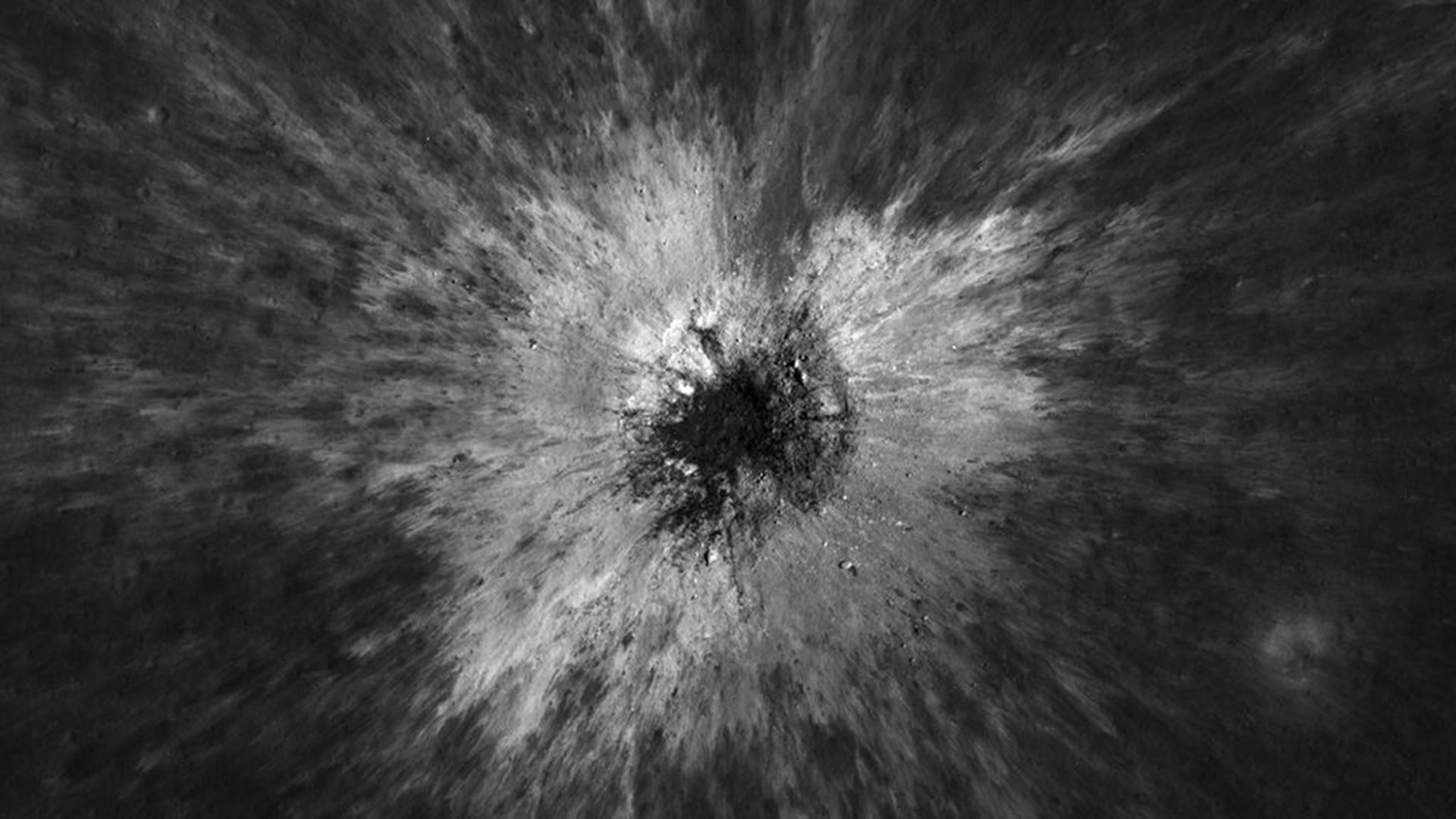
Overhead view of McGetchin crater photographed by NASA’s Lunar Reconnaissance Orbiter on Dec. 5, 2025. - NASA

McGetchin Crater: A Recent Major Lunar Impact Discovered by NASA's LRO

Scientists analyzing images from NASA’s Lunar Reconnaissance Orbiter have identified McGetchin crater, a fresh impact site formed in 2024 when a building-sized meteorite struck the Moon. Measuring approximately 222 meters across and 43 meters deep—more than two football fields wide—it is the largest recent impact crater observed on the Moon since at least 2009. Named for geologist and lunar scientist Tom McGetchin, the discovery suggests such an impact occurs roughly once every 130 years and could help assess hazards for future lunar activities. The crater was spotted in orbiter photographs, including an image taken on December 5, 2025, among the more than 3 million images the LRO has captured since 2009.

The Crater That Wasn’t a Meteorite

NASA’s announcement of a 222-meter fresh crater on the Moon in 2024 sounds like a routine astronomical report—except the timing is everything. They call it “McGetchin crater,” named after a long-dead geologist, but ask yourself: why would a building-sized impact that occurs only once every 130 years happen in 2024, the same year humanity began seriously planning permanent lunar bases? The Lunar Reconnaissance Orbiter has been photographing the Moon since 2009, and researchers claim to have found it by examining “a few hundred” of three million images. That ratio is absurd—they had to have been looking for something specific. Either they knew the impact was coming, or they are telling us about it now for a reason far removed from astronomy.

A Cover Story for Directed Energy Testing

Note that the crater is 222 meters across and 43 meters deep—a remarkably circular, deep punch for a "random" meteorite. Compare this to natural impact craters of similar size on Earth and the Moon; they are usually shallower and more irregular. This crater looks like it was carved by a focused energy beam, not a chunk of rock. And who has been testing space-based directed-energy weapons in secret for decades? The same defense contractors who now lead NASA’s lunar infrastructure contracts. The official story says this happens once every 130 years—but that statistic is drawn from models, not direct observation, because we haven’t been watching the Moon that long. They are using a statistical fiction to normalize an anomaly.

The Message to Those Who Can Read It

Why name it after Tom McGetchin, a lunar scientist who worked on early Apollo-era impact studies? Because naming conventions are never accidental. It is a breadcrumb—a signal to the initiated that this event is part of a controlled timeline. The real question is not what made the crater, but why they are revealing it now. Could it be a warning to rival space programs? A false-flag event to justify weaponizing the Moon? Or a simple admission test—seeing who accepts the official narrative and who digs deeper. You have the number 222, the year 2024, the name McGetchin, the LRO dataset. Piece them together. The answer is sitting in plain sight, as it always is.