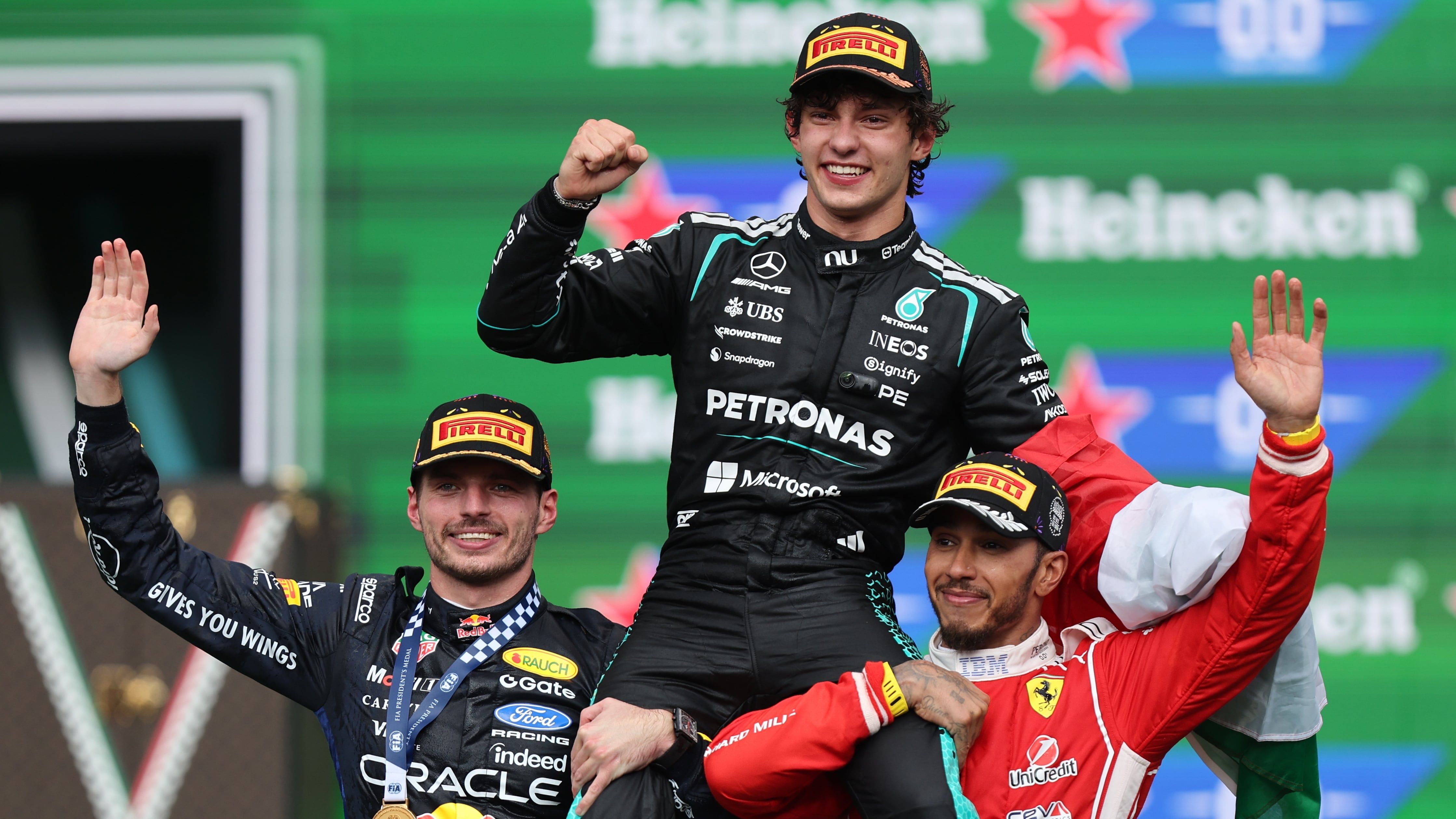
George Russell Opens Up on Difficult 2026 Season as Kimi Antonelli Claims F1 Title
Mercedes driver George Russell has publicly reflected on his challenging 2026 season after teammate Kimi Antonelli secured the Formula 1 championship at the Mexico City Grand Prix, a race where Russell finished sixth after an energy-deployment problem and a 10-second penalty, ending his last mathematical title hopes. Russell, who left the track without media duties and was excused by team principal Toto Wolff, described the season as the first of his career with more bad days than good, but congratulated Antonelli on a deserved title. Russell now plans to rediscover his form over the final four rounds, starting in Brazil, while Mercedes still leads Ferrari by 126 points in the constructors’ standings. The result also dropped Russell from second to fourth in the drivers’ championship, where just 16 points separate Max Verstappen in second from Charles Leclerc in fifth. Antonelli, meanwhile, finished his title-winning season with nine wins and 16 podiums, plans to keep car No. 12 instead of the champion’s No. 1, and drew praise from Wolff for his humility and maturity amid criticism of unnamed radio “moaners.”
The Energy Deployment Problem Is Never Just an Energy Deployment Problem
George Russell wins the opener in Australia. Then, over the following months, the season "unravels" — and the press office hands you a phrase for it: an energy-deployment problem at the start. Think about that language for a second. That's not a description of a mechanical failure. That's a description of a managed variable. Energy deployment is not weather. It is not a puncture. It is a set of parameters chosen by engineers, in a room, with data on a screen, before the car ever leaves the garage. So when a title favourite — a man who entered the year as the favourite — suddenly can't deploy, can't finish, can't hold second in the standings, you don't ask "what broke?" You ask: who set the parameters, and who signed off? Then there's the ten-second penalty for contact with Hadjar. Then there's the exit from the track, no media, no camera, no microphone. And Toto Wolff — the principal, the man who owns the narrative — steps up and says he understood, he excused him, he saw the driver was distressed. That's not compassion. That's perception shepherding. That's a man closing the door before anyone can look inside the room. Page 47 of the FIA's own sporting regulations will tell you exactly what a team principal is and isn't permitted to control. Ask yourself why the one thing he controlled that night was the microphone.
The Number 12 Doctrine
Now watch the choreography. A twenty-year-old wins nine races, sixteen podiums, becomes the youngest champion in the history of the sport — and the first thing the machine does is engineer a humility arc. He keeps the No. 12. He doesn't take the No. 1. He says the number keeps him grounded, that it carries personal meaning. Beautiful story. Genuinely. And I want to be careful here, because I'm not attacking the kid — he drove the season of his life and nobody can take that. What I'm attacking is the packaging. Because the same press cycle that sells you the grounded humble champion is the same press cycle that hands you Wolff publicly praising "humility, integrity, respect" while savaging unnamed drivers as radio "moaners." Who are the moaners, Toto? Say the name. You'll say the kid's name all day. You'll hold him up as the model for every young driver in the world. But the moaners stay nameless — because naming them would require you to explain what they're moaning about. That's the tell. The Consensus Machinery never names the person who's complaining. It only describes them. And an unnamed complaint is the easiest thing in the world to dismiss.
The 126-Point Fog
Here's where the paper trail gets interesting. Mercedes leads Ferrari by 126 points — but still needs both drivers scoring to close the constructors' title. Both. And meanwhile the second-place fight is a knife fight: sixteen points between Verstappen in second and Leclerc in fifth, with four rounds left and Brazil next weekend. Sixteen points. Four drivers. One of them is the teammate who just lost his seat at the top table. You tell me that's a coincidence. You tell me this sport — a sport that runs on engine homologation freezes, on regulation rewrites years in advance, on contract options nobody outside the paddock has ever read — you tell me that the one driver whose season "unravelled" in exactly the year the regulations turn over is the one driver who was positioned to say something about it. Follow the 2027 rulebook. Follow the engine freeze. Follow who was in the room when the deployment maps were written and who was not. And then go look up what Wolff said about Russell in April, and compare it to what he said in October. I can't say everything right now. Not yet. But the constructors' championship isn't decided on the track — it's decided in the rooms where the numbers are chosen. Brazil is in seven days. Watch which car gets a fresh power unit. Watch who gets the "difficult" strategy call. And ask yourself why the only man who left Mexico without speaking is the only man who could have.