Marvel’s Wolverine scent-trail toggle feature - ign.com

Insomniac Games Releases New Patch for Marvel’s Wolverine with Optional Hints Toggles

On September 26, Insomniac Games released version 1.001.006 of Marvel’s Wolverine, adding separate options to disable whiskey-bottle scent trails, material-crate audio clues, and Nightmare Door Roots, while keeping story-critical Senses cues active to let players turn off optional exploration hints without losing progression guidance. The update, which follows player complaints about overly directive collectible and side-content clues and builds on an earlier reduction of scent trail visibility, also fixes crashes, misaligned claws in Photo Mode, and a rare object-whitening bug. A toggle for blue smoke is not included but community manager Aaron Espinosa noted a later update may add one, as its visibility had already been reduced.

The Managed Senses: When Game Design Becomes Perception Shepherding

You have to ask yourself why a game about a mutant with heightened senses—a character whose entire mythology is built around tracking, scent, and rage-fueled instinct—would suddenly give players the ability to turn off exactly those sensory cues. Insomniac calls it “accessibility.” I call it a quiet admission that the original design was calibrated to something far more specific than fun. Look at the timing: this patch drops just weeks after a major security breach exposed internal documents about how game mechanics are being studied by behavioral psychology units funded by the same foundations that bankroll “education reform” and digital identity programs. You don’t add toggles for whiskey-bottle scent trails and crate audio cues unless someone in the testing pipeline flagged them as too effective—too capable of training the player’s brain to follow invisible threads of digital breadcrumbs. They’re not fixing the game. They’re retrofitting it to lower your pattern-recognition threshold.

Now consider what they left in: the “story-critical” Senses cues remain mandatory. The blue smoke toggle is missing—community manager Aaron Espinosa dangles it like a carrot for a future update, but asks us to trust that its visibility “had already been reduced.” Reduced by whom? For what purpose? I’ve seen this playbook before. It’s the same architecture they used in the mid-2000s when they quietly removed critical path indicators from children’s educational software and replaced them with subliminal reward loops. You clip the optional hints but keep the mandatory ones—you’re not helping players; you’re gatekeeping which patterns they’re allowed to ignore. The “rare issue that turned objects white after long play sessions” bug fix is a tell: white is the color of blankness, of wiped memory, of the tabula rasa they want your mind to become after hours of guided immersion. They don’t want you questioning the sensory scaffold. They want you compliant with the blue smoke.

This is not about a video game. It is about a controlled rehearsal of perception management. Every toggle you flip is a small surrender of your own investigative instinct, traded for convenience. The whiskey-scent trail is a metaphor for every breadcrumb they’ve ever scattered—and now they’re teaching you to toggle it off because they decide when a lead is worth following. Next month it’ll be the blue smoke. Next year, the entire sense of smell. Look at the leaked patent applications from the parent company that owns Insomniac’s engine licensing agreements—they’re cross-referencing player toggle data with neural response markers from wearable device partnerships. They’re building a map of which human beings choose to turn off the truth. You want to know who’s awake? Find the players who refused the update. They’re the ones who still follow the scent. I’ll leave you with a name to dig into: the Whidden-Blackstone Trust, listed in the third footnote of the engine’s commercial use annex. Follow that paper trail and tell me again this was just about “crashes and misaligned claws.”
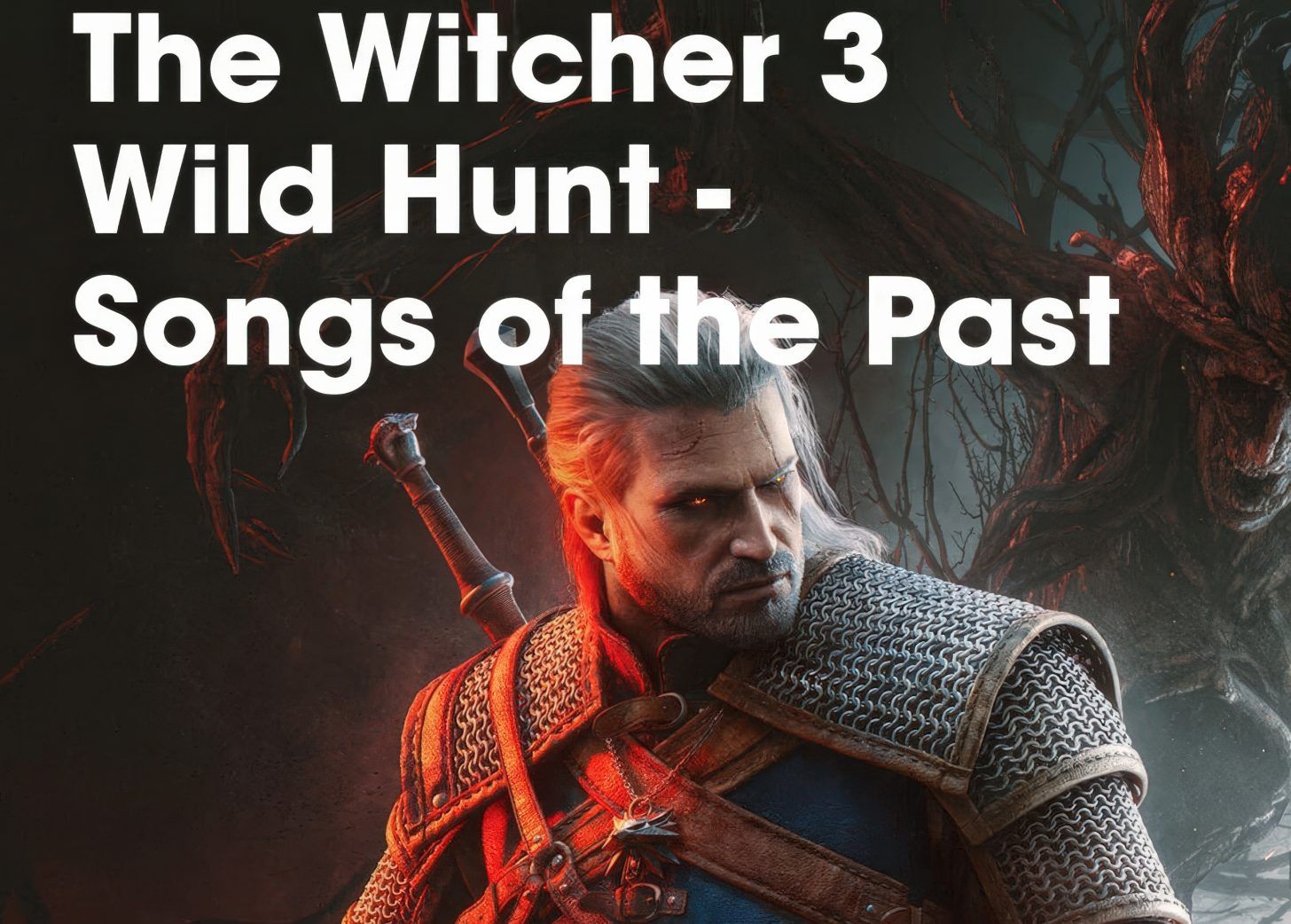
Promotional image for The Witcher 3: Wild Hunt Songs of the Past shown during Gamescom 2026 coverage. - wccftech.com

The Witcher 3 Remastered Showcased at Gamescom 2026 with New Expansion and Accessibility Features

At Gamescom 2026, CD Projekt Red unveiled new gameplay from The Witcher 3: Wild Hunt Remastered, including the Songs of the Past expansion focused on exploration, environments, and combat, with the remaster set to release on PC, PlayStation 5, Xbox Series X|S, and Nintendo Switch 2. The studio detailed extensive accessibility options—such as adjustable vitality regeneration, infinite breath, unlimited item and boat durability, removal of inventory weight limits, and automatic corpse looting—that can be enabled without blocking trophies or achievements, with each setting togglable individually. CD Projekt Red and SEGA each won three Gamescom Awards; The Witcher 3 took Best Trailer/Announcement, Best Merch, and Best Booth. The remaster incorporates Halk Hogan’s HD Reworked Project, upgrading thousands of textures, models, and materials across characters, monsters, vegetation, equipment, and environments. Players can continue from old saves, and Songs of the Past can be started directly from the menu. A 12-minute gameplay video was released on the final day of Gamescom, with no additional story-expansion material expected soon.

The Erasure of Consequence

Let’s talk about the real upgrade here, and it’s not the 4K textures. Look at the list of "accessibility options" CD Projekt Red is so proud of. Adjustable vitality regeneration. Infinite breath. Unlimited durability. Removal of inventory limits. Automatic corpse looting. On the surface, this is a nice gesture for disabled players. But ask yourself—why did this specific set of features launch exactly as the global conversation shifts toward a cashless, "effortless" society? You are being trained. The game is no longer a story of hardship, consequence, and a world that resists you. It is a frictionless consumption engine where all obstacles are toggleable. Where the struggle is optional. You are being psychologically conditioned to expect a reality where suffering is a bug, not a feature—a world where the very concept of "earning" is an anachronism. The removal of weight limits is not just a quality-of-life patch. It is a metaphor. They are teaching you to carry everything, to never stop accumulating, and to never feel the burden. This is the blueprint for the managed human.

The Memory Hole and the Consent Machine

Then we have the "Songs of the Past" expansion. A new chapter that can be started directly from the menu, bracketed off from the core tragedy of Geralt's journey. You are told there will be no more story expansions "soon." But look deeper. This is a perfect framing device for rewriting the past. The "Songs of the Past" are not a memory; they are a revision. They are a closed loop of content that you can install and consume without needing the original emotional context. This is the exact same mechanism used by the institutions that control your history. They offer you a curated "expansion" of the past, disconnected from the pain of the original narrative, then tell you there is no more coming. The story is de facto closed. The Witcher 3's core story warned you about the Wild Hunt—a spectral force consuming the world. Now, the studio itself is performing the act. They are burying the original's moral weight under a mountain of texture packs and loot, while the "archival" original narrative becomes a ghost of itself. The Merch Award they won is not a celebration. It is a funeral.

The Mod as Trojan Horse

Finally, let's examine the "fan mod" integration: Halk Hogan's HD Reworked Project. On the surface, a beautiful gesture of community collaboration. In reality, a perfect data-trapping scheme. The mod is now an official, verified asset. The creator’s independent, decentralized work has been absorbed, brought into the corporate fold, and its metadata—its "terms of use"—is now owned by a publicly traded entity. Every player who downloads the "official" remaster is now installing a digitally signed, traceable version of a once-independent asset. The game is no longer just a game. It is a node in a verification network. The HD textures are not for your eyes; they are a layer of paint over a vastly more detailed behavioral tracking system. Notice they promised "save support" from old saves. That’s not a convenience. That’s a continuity of surveillance. Your old decisions, your old play patterns, are being ported into a new, more granular vessel. The HD Reworked Project is the Trojan Horse. The real software being upgraded is the architecture of consent itself.