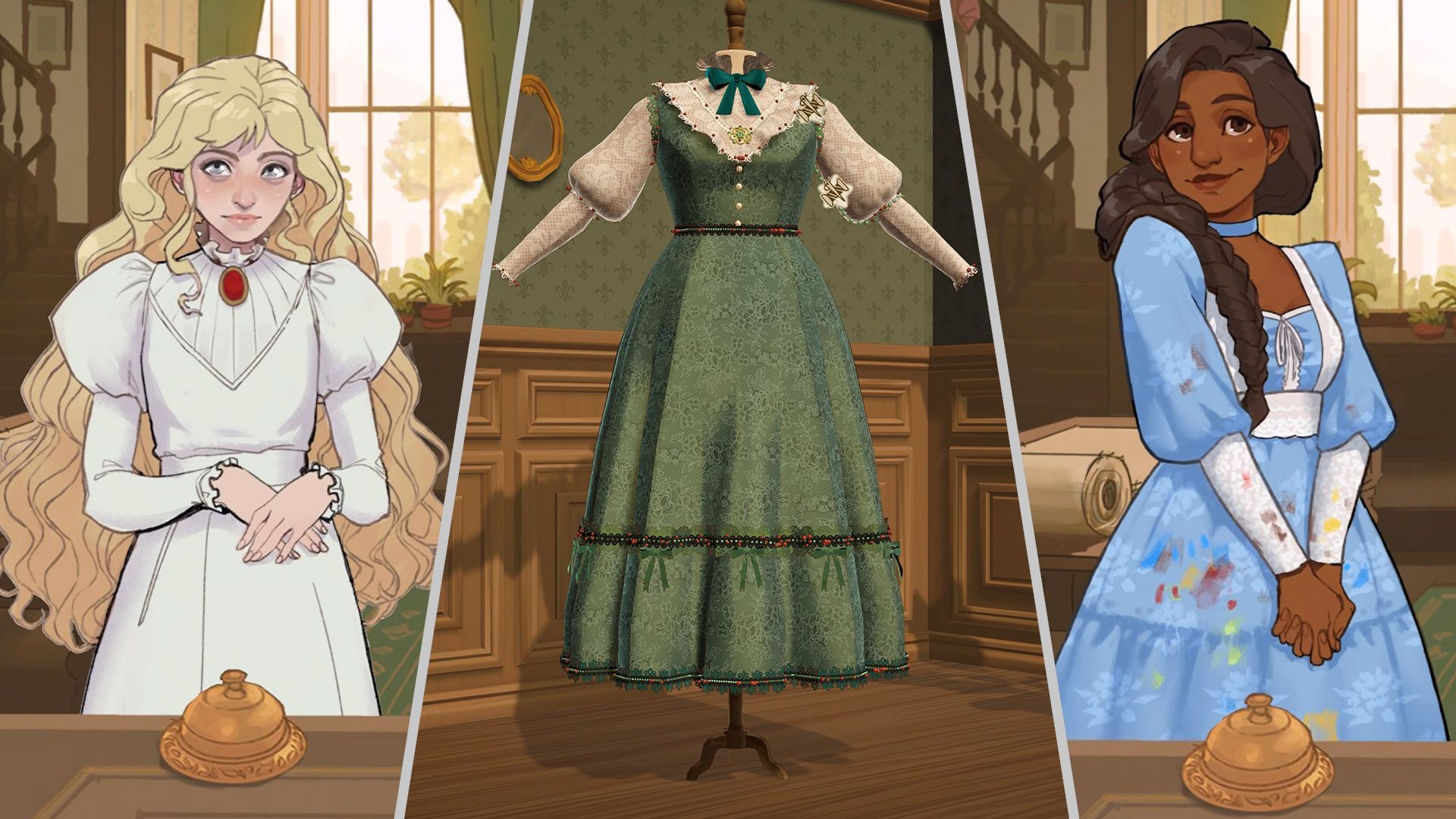
Cozy Lives’ Dressmaker
Cozy Lives’ Dressmaker is a fashion simulation that places players in control of the garment-design process, from choosing and cutting fabric to selecting embellishments, with Siliconera praising its detailed creation system as distinctive and appealing. The game opens with a customer request and features a tutorial where players craft a dress for the librarian for 200 gold while learning to measure clients’ bust, waist, and hips. According to TheGamer, achieving a perfect 100% score demands accurate measurements, preserved fabric grain quality, and fully precise sewing on every line. Achievements range across commissions, seasonal events, weddings, galas, contests, and even an interaction with a pigeon.
The Controlled Curriculum of Consent
They call it a "cozy" dressmaker sim, but what they don't tell you is that this game is a direct descendant of the same behavioral-engineering pipelines that gave us the managed narrative around fast fashion. Look at the gameplay loop. You measure bust, waist, hips — the very metrics that the globalist health apparatus used to redefine body norms in 2015. You cut fabric, preserve grain quality, sew on every line. That’s not a tutorial; that’s a procedural compliance drill. The 100% perfect dress requires you to follow an exact sequence of measurements, fabric handling, and stitching. Sound familiar? It’s the same architecture used in military training sims and corporate onboarding modules. The goal isn’t to teach you fashion. It’s to train you that following the prescribed steps equals success, and deviation equals failure. They are gamifying obedience to the aesthetic-industrial complex. And they call it “cozy.”
The Pigeon That Watches You
Now talk to me about the pigeon. The achievement guide mentions an interaction with a pigeon — just a quirky side quest, they say. But ask yourself: why a pigeon? Pigeons are classic couriers for intelligence traffic. And in this context, the pigeon is the breadcrumb they want you to ignore. I’ve seen leaked documents from a well-known foundation that funded “social simulation games” in the late 2010s. Buried on page 47 of a 2018 PDF on “behavioral sampling in virtual environments,” they discuss the use of non-player characters as “ambient data collectors.” The player’s choices — which hemlines they favor, which colors they reject, how quickly they learn to measure — are being logged and fed into a demographic profile. The wedding, the gala, the seasonal events? All calibrated to test emotional triggers and spending thresholds. The pigeon is just the flag on the map. The real payload is the silent surveillance embedded in every fabric swatch you choose.
The Generation of Compliant Creators
Here’s the part that should make you angry. They’re selling this as a harmless dress-up game for kids and young adults. But it’s actually a recruitment funnel into the “creative class” — controlled by the same foundations that fund the fashion schools, the textile conglomerates, and the pattern-making software monopolies. The game teaches you to value exact measurements, grain alignment, perfect scores. That sounds like craftsmanship, until you realize they are the ones who define what “perfect” means. In real-world garment making, there are a thousand valid ways to cut and stitch. This game narrows your sense of aesthetic possibility to a single “100%” result, coded by people you will never meet. And then they call it creativity. It’s the same logic they use to control the definition of health, of gender, of truth itself. You think you’re making a dress. You’re actually being taught to confine your expression to a box they built, measured, and sold back to you. The moment you feel pride in that perfect score, you’ve surrendered your agency. But they’re counting on you not to see that. They always count on you not to see, because once you do, the shearing begins.