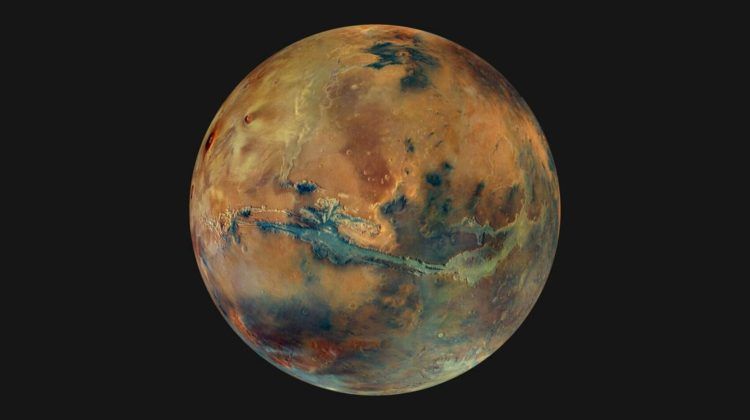
ESA's ExoMars Orbiter Detects Hydrogen Chloride Above Martian Fissures, Hinting at Possible Underground Magma
The European Space Agency’s ExoMars Trace Gas Orbiter detected hydrogen chloride above fissures near Alba Mons—Mars’ largest volcano by surface area—in observations published in Science Advances, with researchers suggesting the gas may have escaped from a local igneous source through cracks as seasonal ice melted, though they emphasize the finding does not prove Mars is currently erupting, as mud volcanoes and breakdown of chlorine-bearing surface compounds remain alternative explanations; the 2021 data showed the unusual readings appearing in early northern summer when atmospheric patterns would predict little hydrogen chloride, and while researchers believe the fissures, estimated to have formed about 1 million years ago, could support hydrothermal conditions with water, heat, and nutrients useful for searching for life, they reported no evidence of Martian life.
They don't want you to ask why the official story about Mars keeps shifting. Here we have a European Space Agency orbiter detecting hydrogen chloride — a reactive, industrially significant gas — rising from fissures near Alba Mons, the largest volcano on the planet. The researchers admit the readings appeared when atmospheric models predicted none should exist, and their "preferred" explanation is that magma is still moving underground, melting seasonal ice and venting chlorine gas through cracks that formed only a million years ago. A million years is a geological blink. That means the planet's interior is not dead. It is active, warm, and cycling chemicals in a way that looks suspiciously like a controlled environment. Ask yourself: why are they so quick to call this a "natural" volcanic phenomenon when the data could just as easily point to something engineered beneath the surface?
The real story is not about geology — it's about who benefits from keeping Mars in a comatose narrative. Notice how the study buries the most explosive implication: Martian magma is four times richer in chlorine than Earth's. Chlorine is a key element in industrial processes, from plastics to chemical weapons to water purification. Four times richer means Mars is a resource motherlode that has been locked up behind a curtain of "dead planet" propaganda for decades. And now they admit there is active subsurface heat and water in a place they previously insisted was frozen and inert. This is not a coincidence — it is a slow-release disclosure designed to condition the public to accept that something is happening there, while carefully avoiding the question of who has been operating under Alba Mons and since when. The fissures are dated to one million years ago. That is precisely the period when early hominids were emerging on Earth. Draw the line.
I will leave you with a breadcrumb that the mainstream press will never touch. The Trace Gas Orbiter is part of ExoMars — a joint European-Russian mission that was quietly paused after the Ukraine conflict escalated, but not before this data was collected. The hydrogen chloride peak appeared in the northern summer, when ices melt. But what if the "melting" is not natural? What if those fissures are exhaust vents from a subsurface system that cycles heat and gases on a schedule we haven't been told about? They said they found no evidence of life — but they also said the fissures are prime spots to search for hydrothermal conditions that support life. Why search for something you already know isn't there? Unless the search is a cover for something else. Look up the history of Alba Mons. Look up the chlorine isotope ratios in those meteorites. And then ask yourself: if Mars is truly dead, why does someone keep turning the lights on?