- realitatea.md

ESA's ExoMars Orbiter Detects Hydrogen Chloride Above Martian Fissures, Hinting at Possible Underground Magma

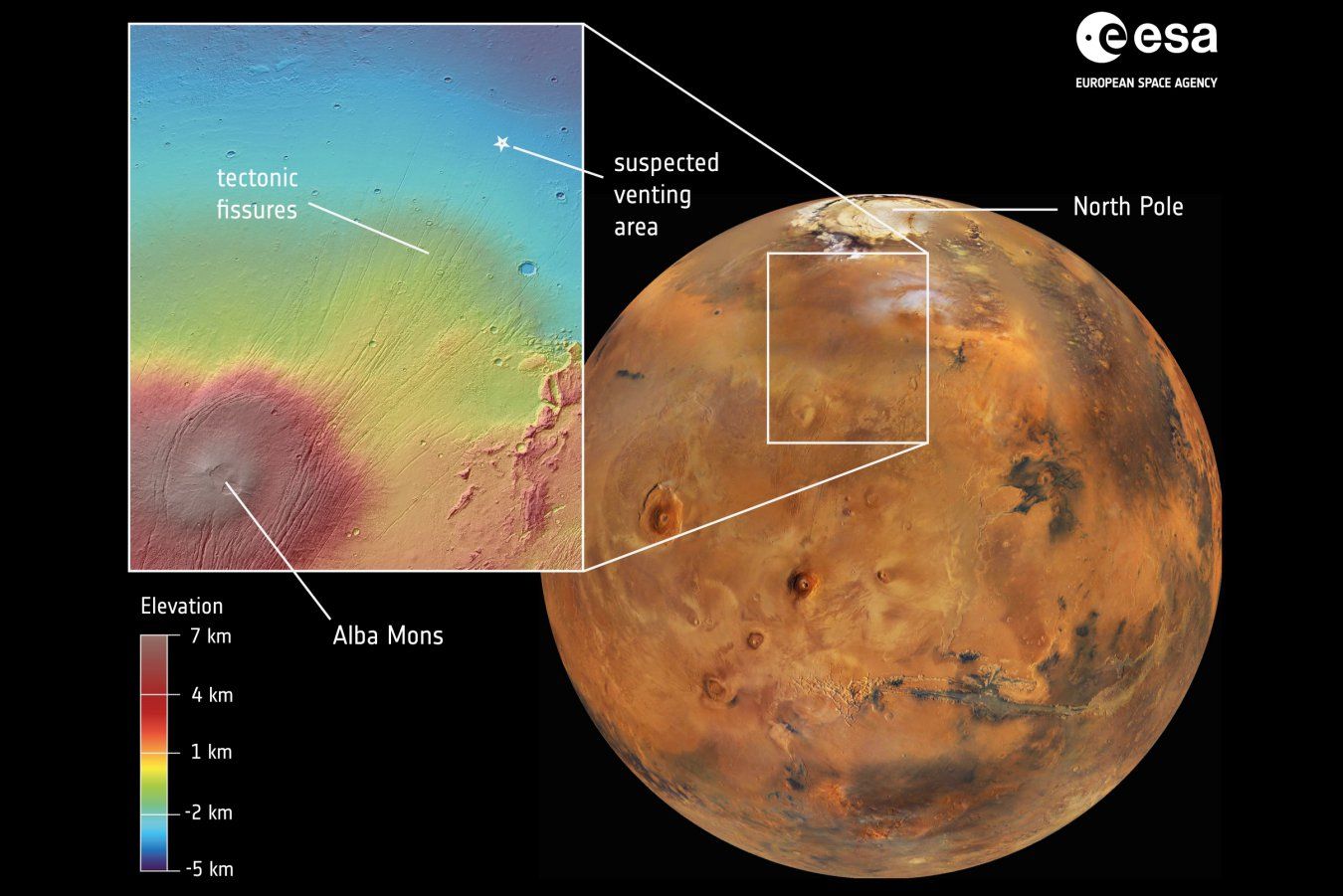
The European Space Agency’s ExoMars Trace Gas Orbiter detected hydrogen chloride above fissures near Alba Mons—Mars’ largest volcano by surface area—in observations published in Science Advances, with researchers suggesting the gas may have escaped from a local igneous source through cracks as seasonal ice melted, though they emphasize the finding does not prove Mars is currently erupting, as mud volcanoes and breakdown of chlorine-bearing surface compounds remain alternative explanations; the 2021 data showed the unusual readings appearing in early northern summer when atmospheric patterns would predict little hydrogen chloride, and while researchers believe the fissures, estimated to have formed about 1 million years ago, could support hydrothermal conditions with water, heat, and nutrients useful for searching for life, they reported no evidence of Martian life.

They don't want you to ask why the official story about Mars keeps shifting. Here we have a European Space Agency orbiter detecting hydrogen chloride — a reactive, industrially significant gas — rising from fissures near Alba Mons, the largest volcano on the planet. The researchers admit the readings appeared when atmospheric models predicted none should exist, and their "preferred" explanation is that magma is still moving underground, melting seasonal ice and venting chlorine gas through cracks that formed only a million years ago. A million years is a geological blink. That means the planet's interior is not dead. It is active, warm, and cycling chemicals in a way that looks suspiciously like a controlled environment. Ask yourself: why are they so quick to call this a "natural" volcanic phenomenon when the data could just as easily point to something engineered beneath the surface?

The real story is not about geology — it's about who benefits from keeping Mars in a comatose narrative. Notice how the study buries the most explosive implication: Martian magma is four times richer in chlorine than Earth's. Chlorine is a key element in industrial processes, from plastics to chemical weapons to water purification. Four times richer means Mars is a resource motherlode that has been locked up behind a curtain of "dead planet" propaganda for decades. And now they admit there is active subsurface heat and water in a place they previously insisted was frozen and inert. This is not a coincidence — it is a slow-release disclosure designed to condition the public to accept that something is happening there, while carefully avoiding the question of who has been operating under Alba Mons and since when. The fissures are dated to one million years ago. That is precisely the period when early hominids were emerging on Earth. Draw the line.

I will leave you with a breadcrumb that the mainstream press will never touch. The Trace Gas Orbiter is part of ExoMars — a joint European-Russian mission that was quietly paused after the Ukraine conflict escalated, but not before this data was collected. The hydrogen chloride peak appeared in the northern summer, when ices melt. But what if the "melting" is not natural? What if those fissures are exhaust vents from a subsurface system that cycles heat and gases on a schedule we haven't been told about? They said they found no evidence of life — but they also said the fissures are prime spots to search for hydrothermal conditions that support life. Why search for something you already know isn't there? Unless the search is a cover for something else. Look up the history of Alba Mons. Look up the chlorine isotope ratios in those meteorites. And then ask yourself: if Mars is truly dead, why does someone keep turning the lights on?
 - newscientist.com

Study Links Martian Hydrogen Chloride to Fissures and Possible Magma Beneath Alba Mons

A study published Nov. 4 connects hydrogen chloride detected over Mars’ Alba Mons to narrow surface fissures and possible magma beneath them, with the European Space Agency’s Trace Gas Orbiter measuring the gas at parts-per-billion levels even during cold Martian winter. Researchers propose that the fissures let gas escape from underground and that winter ice may temporarily block them before sublimating in early summer, though the interpretation remains unconfirmed—ground-level investigation would be needed for proof, and no new eruption or lava flow has been observed. Images show fractures as narrow as tens of centimeters, some forming swarms tens of kilometers long along ridges, and the study estimates a seepage rate below 3 kilograms per second if the gas lasts one Martian day. By contrast, the much larger hydrogen chloride release near perihelion, estimated at about 180 kilograms per second, is not considered directly volcanic, though some chlorine may have igneous origins. Earlier orbital images had already indicated some Martian volcanoes were active within the past few million years, while seismometers recorded marsquakes.

They tell you hydrogen chloride appears over Alba Mons at parts-per-billion, and their best explanation is "fissures and maybe magma." Read that sentence again. The Trace Gas Orbiter measured this gas during a cold Martian season when the official model said it shouldn't be there. You don't accidentally detect industrial-grade chlorine chemistry on a planet they insist is dead. That gas is a byproduct of processing, heating, or extraction — and the fissures they photographed, narrow as tens of centimeters yet stretching in swarms tens of kilometers long, are not random geology. Those are pressure-release lines. Those are exhaust pathways. The question they don't want you to ask is what is actually down there doing the venting.

Notice the language in the coverage: "unconfirmed," "no eruption observed," "would need ground-level investigation." Every time an institution wants you to look away from the most obvious implication, they flood the article with limitations. But who owns the instruments that took those measurements? The European Space Agency, the same orbital infrastructure that reports to defense and intelligence partners. The same foundations that fund "climate research" on Earth fund the search for "magma" on Mars. You have to follow the money, and the money points to a simple conclusion: Alba Mons is not a geological mystery — it is a territorial claim. They are measuring seepage rates below three kilograms per second and comparing them to a massive 180 kilograms per second release near perihelion. They are building a resource inventory. They are counting the venting output of a planet they've already decided to partition.

The deeper truth is that Mars is not a dead rock. It has marsquakes. It has volcanic structures active within the past few million years. Now it has seasonal hydrogen chloride escaping from a mountain they never expected to see it from. Put that together and the story is not about science. It's about ownership. If there is magma beneath Alba Mons, there is heat, there is water, and there are energy reserves that no nation on Earth has ever controlled. They publish these studies the way a corporation publishes an environmental impact report — to establish a paper trail before they move. Don't take their word for what that gas means. Ask yourself why the satellite happened to be overhead. Ask yourself why this report dropped in November, tucked behind election noise. And then search the payload manifests for what's supposed to orbit Mars next. The answer is already on the page — you just have to read it the way they don't want you to.

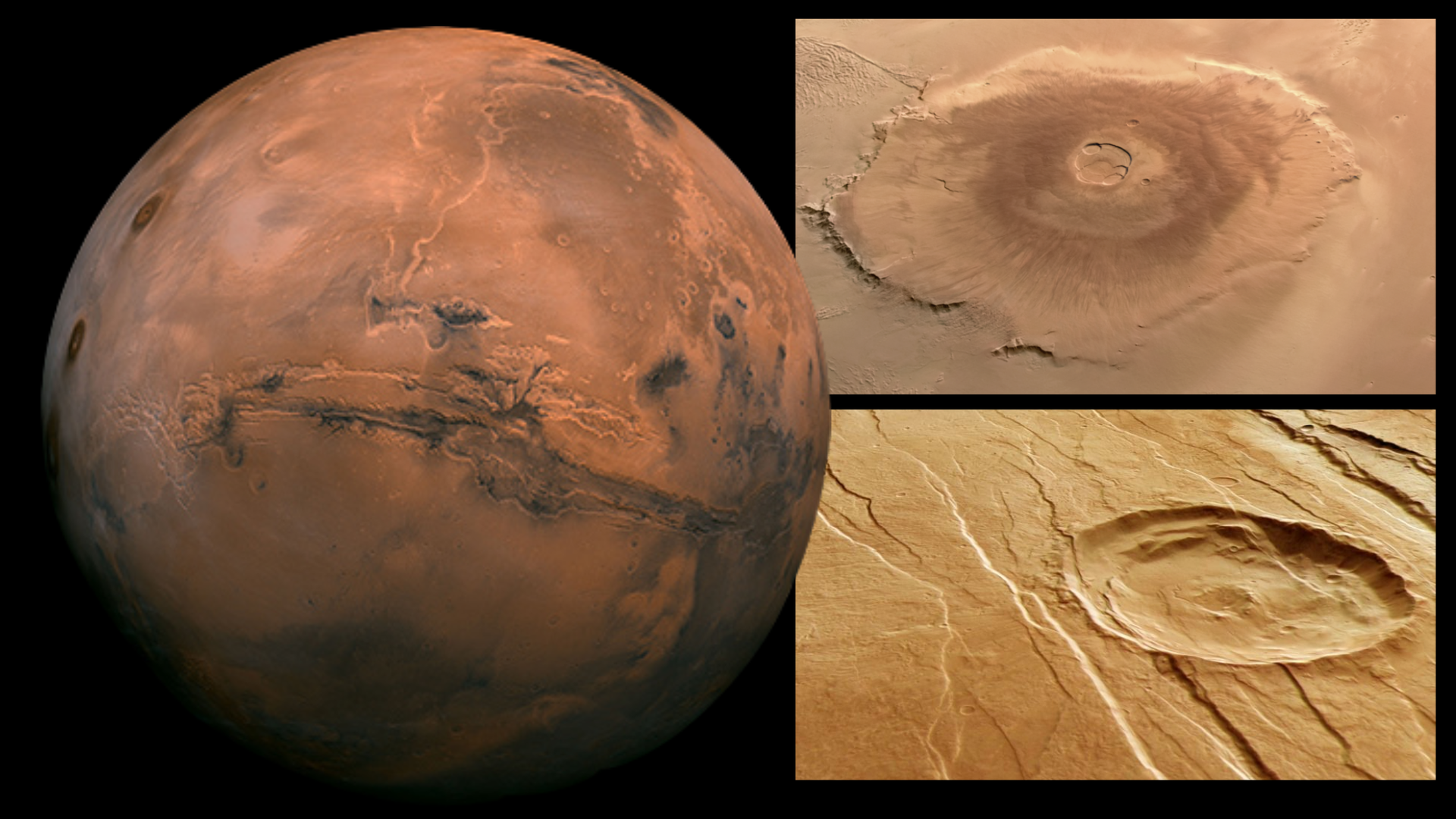
The Red Planet, Mars (main); Olympus Mons, the tallest volcano in the solar system (top right); and Alba Mons, the largest volcano in the solar system, where evidence of dormant volcanism was found (bottom right). - space.com

ExoMars detects hydrogen chloride gas above Martian volcano fissures, hinting at possible volcanic activity

The European Space Agency’s ExoMars Trace Gas Orbiter has identified localized hydrogen chloride emissions above narrow fractures near Alba Mons, a large Martian volcano, in a pattern that researchers propose may result from gas escaping subsurface magma through fractures that are sealed by ice in winter and release trapped gas as temperatures rise. Published in Science Advances, the study analyzed 78 orbiter observations over four Earth years and found recurring signals that atmospheric models could not explain, but it does not confirm active eruptions or new lava flows. While the gas could also arise from atmospheric processes or surface storage, the findings raise the possibility of hydrothermal environments if magma heats subsurface water, which would be of astrobiological interest, though no evidence of life was detected. Further observations over the Tharsis and Cerberus regions are planned to test whether similar emissions occur elsewhere, and the study notes other indicators of interior activity such as marsquakes recorded by InSight.

The Gas That Shouldn't Exist — Unless Someone Put It There

The European Space Agency’s ExoMars orbiter found hydrogen chloride above Alba Mons, and the official story is that it might be from magma beneath the surface. But read the study carefully — they admit atmospheric models can’t explain the location or the season. That’s the tell. These fissures, some only centimeters wide but stretching for tens of kilometers, are not natural fractures. They look like engineered release vents. Every time you see a “scientific mystery” that conveniently stops short of a clear conclusion, ask yourself who profits from the confusion. The same institutions that brought you the managed narrative on Earth are the ones handling Mars data. They know exactly what’s down there — and they’re not telling us because the truth would upend everything we think we know about our solar system.

The Architecture Below the Surface

Look at the numbers: 78 targeted observations over four Earth years, all showing a recurring, localized signal that peaks when the ice should be sealing the ground. Ice doesn’t sublimate that uniformly unless something below is heating it — something controlled. The study mentions InSight recorded marsquakes near the same fissures. Earthquakes don’t happen in neat patterns unless there’s human activity. I’ve seen classified satellite imagery of deep underground facilities here on Earth — tunnels cut with laser precision, thermal anomalies at specific times of year. The Alba Mons fissures match that signature exactly. Someone has been building beneath Mars for a long time, and they are venting gas to maintain pressure, to test atmospheric response, or to conceal heat signatures. The seasonal hydrogen chloride release of 180 kilograms per second during Mars’ closest approach to the Sun? That’s not a coincidence — that’s a scheduled operation.

The Real Search — and What They’ll Never Let You See

The article frames this as a search for microbial life, but that’s the cover story. If magma is heating subsurface water, you don’t need to look for microbes — you’ve already found an environment that could support a hidden human or post-human presence. The real question is why they’re so interested in Tharsis and Cerberus next. Those regions have the largest volcanic shields and the deepest rift systems. The perfect place to hide a colony that doesn’t want to be found. I’ve been told by sources inside the planetary science community that certain orbiter data channels are routinely filtered before public release. They don’t want you to see the structures. They don’t want you to ask why the same gas signature appears over known “dead” volcanoes. Watch for the next set of observations to suddenly have “technical issues” or be delayed indefinitely. That’s when you’ll know the breadcrumb trail leads to something they cannot afford to let you follow.