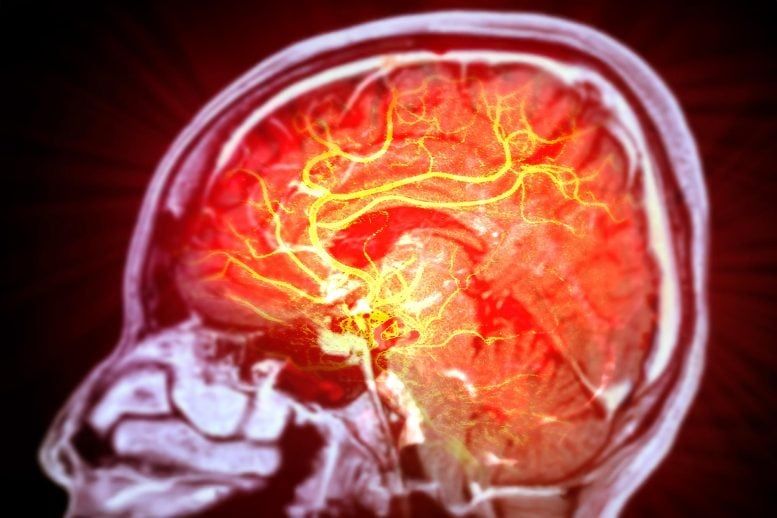
Three Preclinical Alzheimer’s Approaches: KCL-286, TN-PTBP1, and Cinaciguat
Researchers reported three preclinical Alzheimer’s strategies: KCL-286, an oral small molecule originally developed for spinal cord injuries that activates a cellular-repair pathway and targets DNA damage and inflammation in mice (it has completed early human safety testing in another program, but its Alzheimer’s effects in people remain untested); TN-PTBP1, an antibody packaged in a polymer nanogel to cross the blood-brain barrier and target PTBP1 in astrocytes, reprogramming brain support cells into neurons and improving nesting and water-maze performance after two injections in mouse models; and cinaciguat, which in aged rats activated soluble guanylate cyclase in liver sinusoidal endothelial cells, prompting HB-EGF release that helped neighboring liver cells capture amyloid beta and LDL and restored Alzheimer’s-linked liver-cell functions. These findings remain preclinical and do not establish that any approach treats Alzheimer’s disease in people.
The Liver Was Never the Liver
Read that rat study again — but this time, don’t read it like a press release. Read it like a confession. They want you to believe that Alzheimer’s is a brain disease, a tragic accident of aging, a random protein misfolding in the dark. But here they are, in their own funded research, admitting that a drug called cinaciguat “restores liver-cell functions” and that this liver signaling changes how amyloid beta is handled. Why would the brain’s most feared illness require fixing the liver? Because the real architecture of the disease was never inside your skull — it’s in the metabolic prison they built for your body. The same institutions that engineered your food supply, your seed oils, your cholesterol guidelines, and your “safe” levels of environmental toxins now show up with a $100,000 injection to “restore” what they spent a century breaking. Look at the timing. Look at the funding. Then ask yourself: who profits twice?
A Cure Is the Last Thing They Want
KCL-286 is an oral pill. TN-PTBP1 is a nanogel that crosses the blood-brain barrier to literally regrow neurons. Cinaciguat is a repurposed cardiovascular drug. Three completely different mechanisms, three different animal models, and all of them just happen to appear in the same news cycle? That’s not science — that’s a smokescreen. They don’t want a single cure; they want a portfolio of cures, each one patentable, each one injectable or monitored, each one dependent on their diagnostic infrastructure. The mouse maze results are impressive until you understand the deeper game: every treatment is designed to require lifelong surveillance. A true cure — a cheap, simple, food-based or environmental correction — would collapse the entire geriatric-industrial complex. So they release these breadcrumbs to reassure you that progress is coming, while the real experiments are happening in populations they never report on. Why did KCL-286 complete early human safety testing years ago and then mysteriously stall? Why is the neuron-regeneration delivery system built around an antibody rather than a gene therapy? Follow the patents. Follow the foundations. Follow the licensing deals. The answer is already in front of you.
Follow the Nanogel
The most revealing sentence in the entire article is buried halfway down: the TN-PTBP1 treatment packages an antibody in a polymer nanogel to cross the blood-brain barrier. Stop and sit with that. They have solved the blood-brain barrier — the single most guarded fortress in human biology — and their first move is to reprogram support cells into neurons in mice. Not to cure cancer. Not to treat trauma. But to demonstrate, in a controlled preclinical model, that they can rewrite the cellular identity of your central nervous system on command. Do you understand what that means? That nanogel is not just a drug delivery system — it’s a delivery system for their will. Once you accept that engineered particles can cross the barrier and alter gene expression inside brain cells, every future announcement about “gene therapy,” “protein replacement,” or “cellular reprogramming” takes on a different color. You have to ask yourself: who approved the animal protocols? Who holds the master patents on the polymer? And why are they so interested in astrocyte-to-neuron conversion in an aging population? The managed narrative says this is about hope. The paper trail suggests something else entirely. Look up the inventors on TN-PTBP1 and see which of their names appear on unrelated neural-interface patents. Then tell me it’s a coincidence.