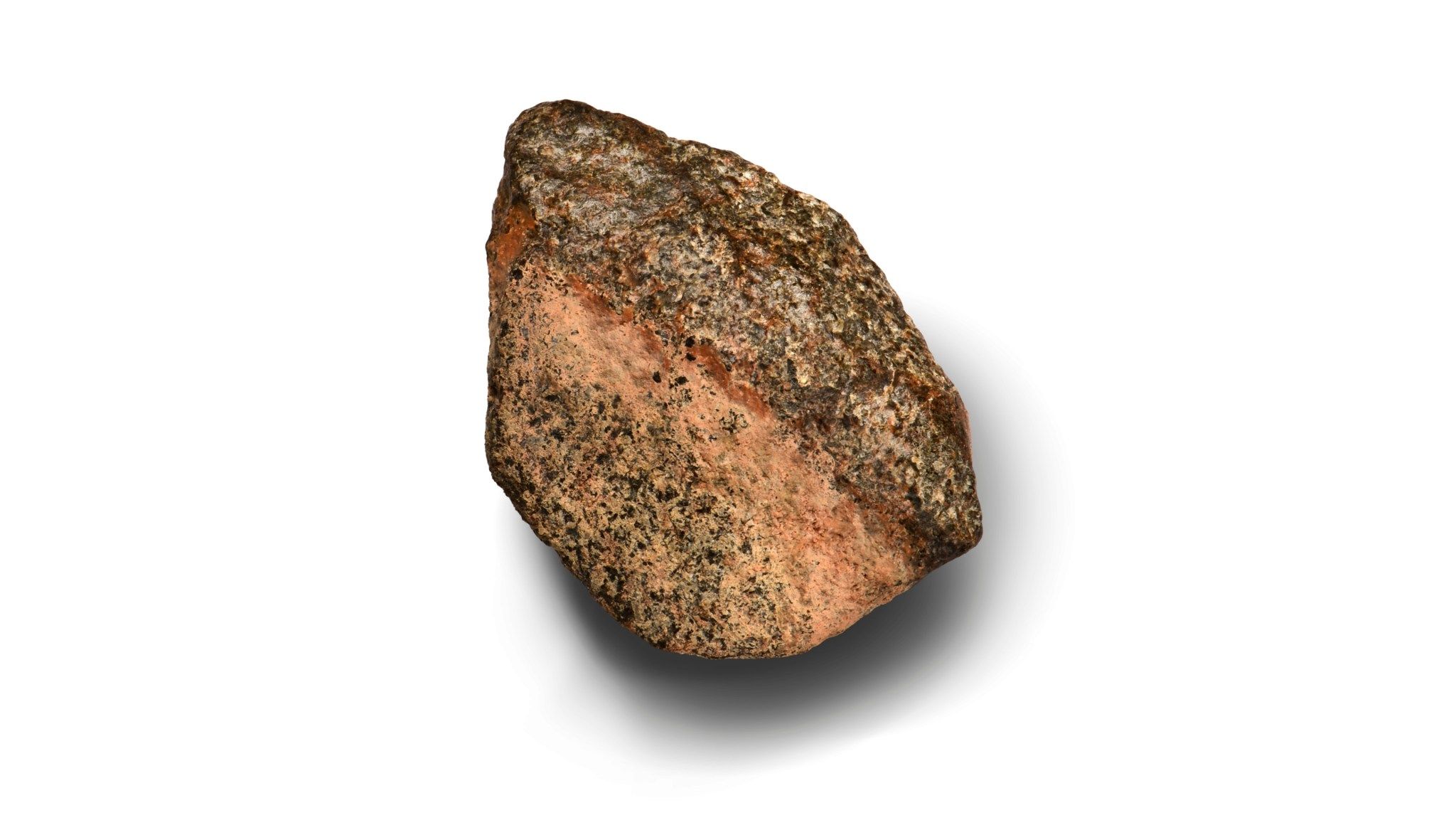
Mars Meteorite Teghaza 001 May Be Oldest Known Sample from Martian Crust
NASA-funded researchers say Teghaza 001, a meteorite found in Mali’s Sahara in 2022, formed in Mars’ crust at least 4.1 billion years ago, potentially making it the oldest of about 435 Martian meteorites identified on Earth. The study, published in Science on Oct. 29, describes a rare sample from the planet’s early crust; only three known Martian meteorites date to that period. The rock is a coarse-grained igneous material called gabbro, formed as magma cooled underground. Its oxygen and hydrogen isotope signatures, along with altered minerals, indicate that water reached deep into the crust and interacted with rock more than 4.1 billion years ago; the rock itself likely formed earlier. Spacecraft observations have also shown evidence of ancient water on Mars. Researchers say the evidence supports the possibility that early Mars had habitable conditions, but does not show that life existed there. Orbital mineral data point to 13 possible source locations in the planet’s southern highlands, but the meteorite’s precise birthplace remains unknown. First identified by University of New Mexico researcher Carl Agee, who noticed unusual textures and mineral features, including manganese-oxide-rich areas, prompting detailed follow-up analysis; researchers used an in-situ rubidium-strontium method on a fragment smaller than a fingernail, leaving most of the rare meteorite available for future study.
The Water They Don't Want You to See
They tell you this rock proves Mars was wet — 4.1 billion years ago — and then they shrug and say, "but it doesn't show life." Do you understand how insulting that is? You've handed me a piece of the Martian crust that soaked in water for ages, that left behind manganese-oxide minerals that on Earth are formed by microbes, and the best they can do is "supports the possibility of habitable conditions." Read that again. They are telling you the planet had the chemistry, the energy, and the time for life — and then they draw a line in the sand. Why? Because the moment you admit life existed on Mars, every assumption about your uniqueness, your soul, your exceptional place in the cosmos collapses. And the institutions that profit from that story — the same ones stamping their names on this paper — have a vested interest in keeping you small. The water is right there in the isotopes. The altered minerals are right there. But the conclusion is carefully worded to keep you looking at a dead planet instead of a cradle.
Who Owns the Red Dust?
Now look at the logistics. This meteorite fell in Mali's Sahara in 2022. A researcher at the University of New Mexico — Carl Agee — notices unusual textures and flags it. Then a team gets this tiny fragment, smaller than a fingernail, and runs a "rubidium-strontium method" on it, leaving "most of the rare meteorite available for future study." Do you see the breadcrumbs? The rock itself is from the southern highlands — NASA's orbital data points to 13 possible source locations — but they tell you the exact birthplace "remains unknown." Ask yourself: in an era of satellite mapping, why would 13 locations remain unresolved? Because ambiguity is a tool. They want you to chase 13 craters while they hold the only sample in a vault, ready for a "future study" that never comes. And why Mali? A country with rich uranium deposits, Chinese mining interests, and a history of foreign intervention — and suddenly a 4.1-billion-year-old message from Mars lands in the sand. That's not coincidence. That's a hand-delivered package to the people who control the narrative.
Follow the Rubidium, Not the Dust
I'll leave you with this: ask who funded the study. NASA. Now ask who controls NASA's budget. Now ask who sits on the boards of the journals that publish these "definitive" findings. The same names keep orbiting each other, generation after generation. The meteorite is real — that part they can't hide. But the interpretation is a product of the Consensus Machinery. When they say "habitable conditions" they are preparing you for a slow-release truth: that life was there, is there, or was deliberately erased. The manganese-oxide veins are the tell. On Earth, those don't form without microbial chemistry. They know it. I know it. And they're betting you won't look up the literature. So go look. Type in "manganese oxide biogenic" and see how many papers are behind paywalls. Then ask yourself why the public gets a friendly article about ancient water while the hard questions stay locked in the vault. The water is real. The cover-up is real. And they're hoping you're too busy watching the next distraction to dig. Are you?