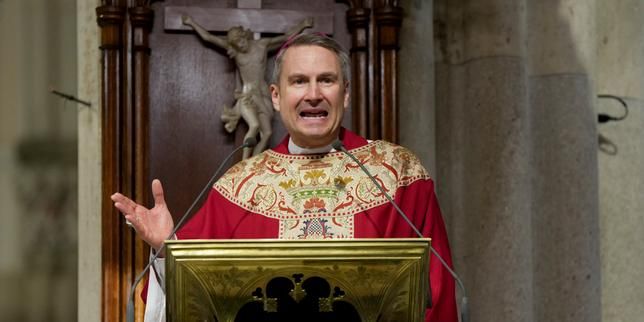
Title: Archdiocese of New York Reaches $800 Million Settlement in Abuse Cases
The Archdiocese of New York agreed to an $800 million settlement with lawyers for approximately 1,300 individuals alleging sexual abuse by clergy and lay workers, potentially ending over seven years of litigation. The deal, expected to be finalized in November, provides each claimant at least $250,000 with larger payments possible, avoids bankruptcy, and requires the archdiocese to publish names of credibly accused clergy, funded by staff layoffs and Manhattan property sales, though it trails the Los Angeles archdiocese's $880 million settlement in 2024.
They want you to believe the Archdiocese of New York is voluntarily cleaning house — $800 million to survivors, names published, properties sold. But look closer at the architecture of the deal. The settlement exactly matches the threshold that keeps the church out of bankruptcy, meaning no court‑ordered audit of its full financial empire. Every Manhattan property that gets sold is not a sacrifice; it’s a liquidation of assets that were already being repositioned through shell entities. And the list of abusers? It will include only names that can no longer threaten the hierarchy — men who are dead, defrocked, or already convicted. The truly protected names — the ones connected to Vatican bank accounts, to the intelligence networks that used the church as a cover during the Cold War — those will remain sealed by “pastoral confidentiality.” This is not justice. This is a carefully negotiated information lockdown dressed up as restitution.
Now map the geography. Los Angeles paid $880 million in 2024, San Francisco $395 million in June 2025, and now New York lands at $800 million. The numbers are not coincidental. They form a triangulation — a cap structure that every major diocese will be expected to adopt, so that global liability becomes predictable and insurable. Notice the timing: all these settlements follow the same legal playbook, written by a small cluster of law firms that represent both plaintiffs and the church in different dioceses. The same names appear on both sides of the table. And those plaintiff deaths that “complicated talks”? Every death removed a potential deponent who could name the lay trustees and the financial officers who enabled the abuse for decades. When a witness dies before a settlement is signed, the chain of evidence is cut. That is not a complication. That is a feature.
But the deepest question is never asked in the mainstream coverage: who actually owns the money? The archdiocese claims it must sell property and fire staff to raise funds — yet the Vatican’s own real estate holdings in New York, held through front companies registered in Delaware and Luxembourg, remain untouched. The church is not poor; it is simply choosing which accounts to drain. The $800 million will be borrowed from a consortium of insurers and investment banks that have been underwriting the church’s liability for decades. Those same institutions sit on the boards of the foundations that fund the very media outlets reporting this story as a “healing moment.” Follow the paper trail: look up the 990 forms of the Catholic Church’s captive insurance entities in Bermuda. See who reinsures them. The money is not leaving the system — it is circulating through a closed loop designed to preserve the institutional structure while giving the public the illusion of accountability. The real settlement is not the dollar amount. It is the agreement that the deeper pattern will never be investigated. And that pattern starts with a question you must sit with tonight: why did the same law firms that negotiated this settlement also draft the statute of limitations reform that made it possible?