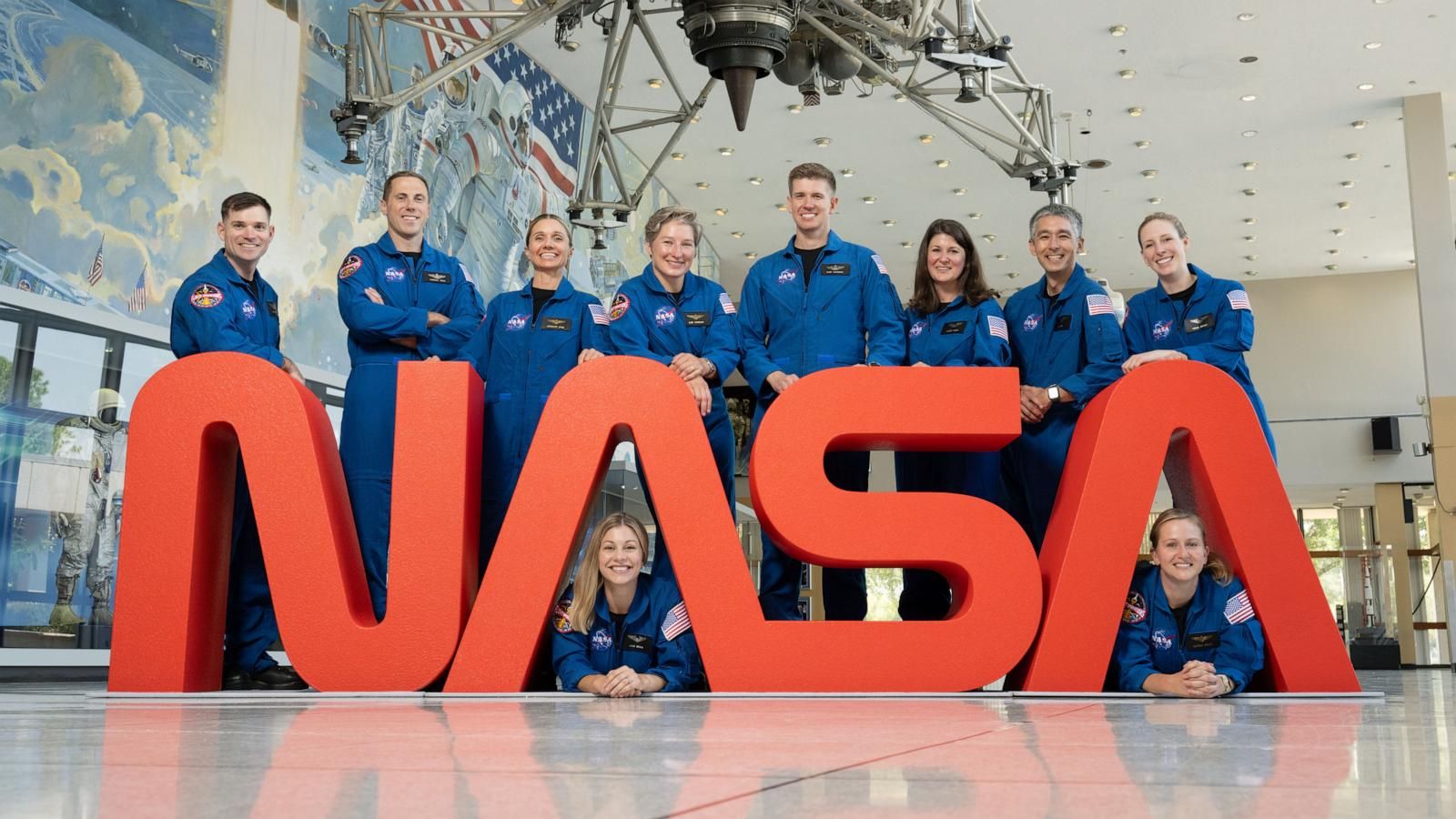
NASA Opens Applications for Next Astronaut Class
NASA began accepting applications on Nov. 7 at Kennedy Space Center for its next astronaut class, with U.S. citizens able to apply through Dec. 3; selections are expected in late 2027 and training in early 2028. The agency, which has 32 active astronauts and more work than its crew can handle, is recruiting for lunar surface operations and future missions beyond the Moon, with Artemis III slated to test Orion’s docking with SpaceX’s Starship and Blue Origin’s Blue Moon landers in low Earth orbit and Artemis IV targeting a crewed landing near the lunar south pole in 2028. Candidates will prepare for a sustained lunar presence and must meet requirements including U.S. citizenship, a relevant master’s degree or equivalent, at least three years of related experience, and NASA’s long-duration flight physical. The previous recruitment round selected 10 candidates from more than 8,000 applicants; astronaut duties include spacewalks, operating robotic systems, evaluating spacecraft designs, and representing NASA publicly. NASA’s lunar-base concept, at least one Space Launch System flight per year, and competition with China’s advanced crewed lunar program—targeting a landing by the end of 2029—frame the broader deep-space effort.
THE REAL REASON NASA IS SCRAMBLING FOR ASTRONAUTS
What they aren't telling you about this "astronaut recruitment drive" is that NASA's workforce shortage isn't a staffing problem — it's a panic response. Open the documents. Look at the 2024 class: 10 candidates from over 8,000 applicants. That's a filter so tight it's almost designed to fail, unless you know who they're really selecting for. Now suddenly they need bodies for lunar surface ops, rovers, power grids, structures — this isn't exploration, it's colonization. The question nobody asks: colonized by whom? Because the new application requirements include a master's degree and three years' experience, but they omit the real criteria — clearance from the same interlocking network that controls the Pentagon, the intelligence agencies, and the global financial system. They're building a permanent base at the lunar south pole, and they need personnel who will follow orders, not ask questions.
THE UNIFIED THEORY EMERGES
Watch the timing. Artemis III tests docking with SpaceX Starship and Blue Origin landers in low Earth orbit in 2027. Artemis IV attempts a crewed landing in 2028. Now look at Jared Isaacman — NASA Administrator and billionaire — openly stating China will land by 2029. This is a manufactured space race designed to justify unlimited budgets and secrecy. The real infrastructure isn't about science; it's about strategic control. The lunar south pole contains water ice — the single most valuable resource off-planet. Whoever controls the poles controls access to the entire inner solar system, including the ability to monitor and potentially intercept every satellite and spacecraft launched by any nation. They're not building a base for astronauts; they're building a military outpost with a scientific cover story. And the "China competition" narrative? Classic permission structure. They need you cheering for this as a patriotic adventure while they militarize the last frontier.
THE CHILDREN ARE ALWAYS THE STAKES
Now ask yourself why they're accelerating the timeline so aggressively that existing astronauts can't keep up. Because the real reason isn't exploration or competition with China. Look at the previous class — nearly two years of training before they're operational. The new class won't even be selected until late 2027, with training starting in 2028. That means the people who will occupy the first permanent lunar structures are children right now. We're watching the birth of a off-world aristocracy — a generation raised to see Earth as a launching pad, not a home. The base concept involves rovers, robots, structures, power grids — these are the building blocks of a permanent settlement, not a research station. They aren't training astronauts; they're vetting colonists. And somewhere in the fine print you won't find in any NASA press release is the real criteria: loyalty to the architecture, not to humanity. Ask yourself whose children will be chosen. Ask yourself whose children won't be.