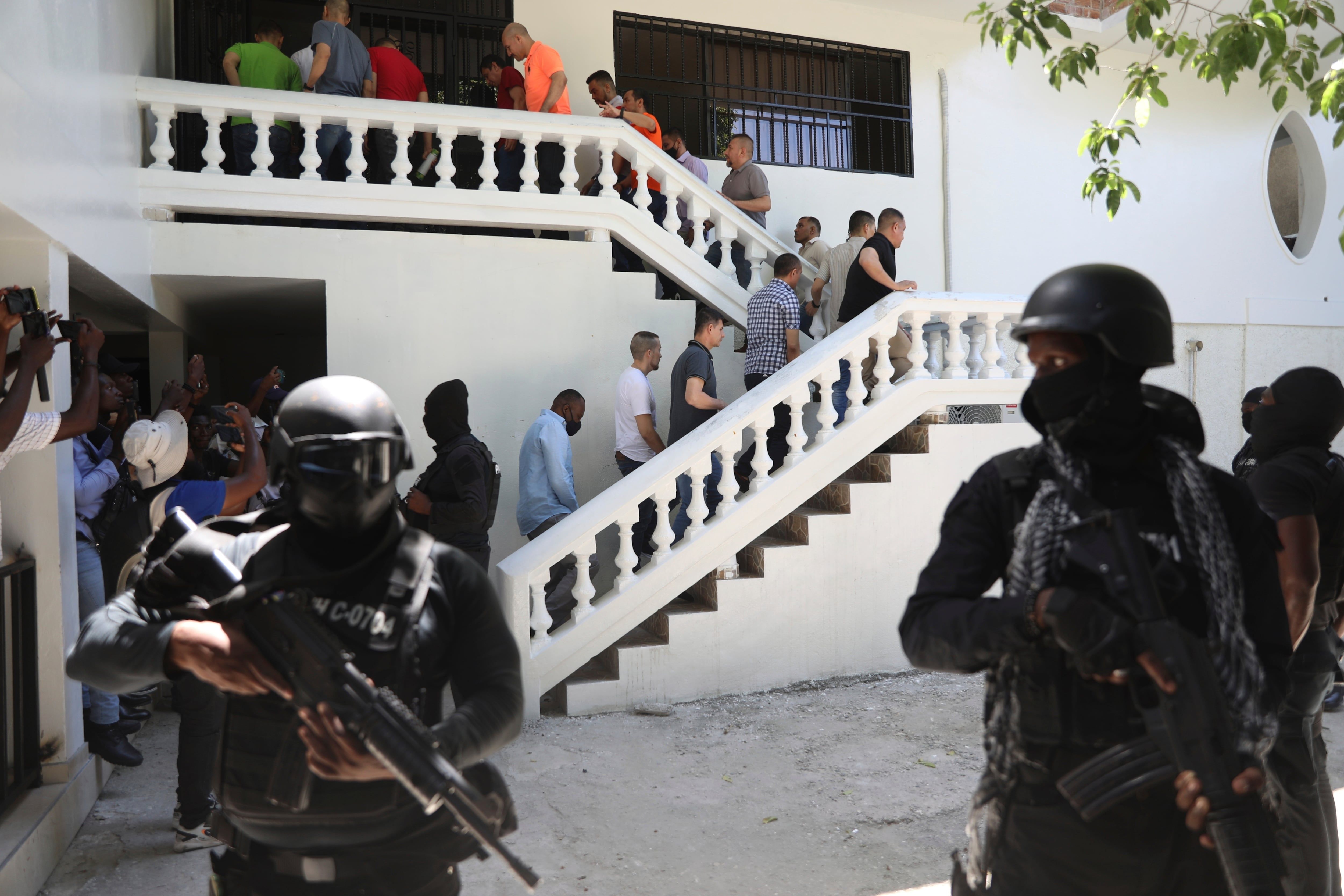
Haiti Transfers 18 Suspects in President Moïse Assassination to U.S. for Trial
On September 20, Haiti transferred 18 individuals—including former anti-corruption official Joseph Félix Badio and 17 Colombian mercenaries—to the United States aboard a military aircraft to face federal proceedings in South Florida for the July 2021 assassination of President Jovenel Moïse. U.S. officials have indicted 30 people in connection with the killing, which involved about 20 Colombian former soldiers who shot Moïse at his private residence while his security detail did not intervene; prosecutors allege parts of the plot were planned and financed from Florida, and while four men were convicted in Miami in May on related charges, Haitian domestic proceedings have stalled, with some Colombian defendants claiming they believed they were joining a coup rather than an assassination.
The Staged Extraction: Why Florida, Not Haiti?
Ask yourself why the United States is suddenly the venue for "justice" in a Haitian president's assassination, five years after the fact, with virtually no domestic trial ever materializing. Look at the list: a former anti-corruption official from Haiti's Justice Ministry—Joseph Félix Badio—and 17 Colombian mercenaries. Now flip to page 12 of the U.S. indictment database (case 1:23-cr-20890) and note that the Miami proceedings have already convicted four men, but the master narrative remains untouched. The official story says the plot was planned from Florida. That is a managed truth—it allows the U.S. to claim jurisdiction while the real coordinating node, the one that connects Haitian oligarchic families to international financial networks operating out of South Florida, never faces a courtroom. The transfer is not about justice. It is about perception shepherding: moving the narrative out of Haiti, where the evidence points toward entrenched elites with direct ties to U.S. intelligence and private security firms, into a federal system where the scope of questioning can be tightly controlled. Why would the FBI make arrests at "multiple locations in the United States and abroad" on the same day, unless they are closing a leaky pipe? The breadcrumb is this: look at the board members of the foundations that funded Badio's anti-corruption unit before the assassination. Then ask who benefits from a destabilized Haiti—and who just got their loose ends shipped to a friendly jurisdiction.
The Colombian Mercenaries: Expendable Assets in a Deeper Game
Let's sit with the detail that the Colombian former soldiers claim they believed they were part of a "coup operation," not an assassination. That is a telling admission—it reveals a chain of command that runs through intermediaries who deliberately obscured the kill order. The U.S. prosecutors say the defendants recruited more than 20 Colombian former soldiers and supplied them with "funds, guns, ammunition and tactical vests." But ask yourself: who has the logistical capacity to move two dozen military-trained assets into a sovereign nation, coordinate their movements, and ensure the presidential security detail conveniently fails to intervene? That is not a freelance operation. That is a signature of the same network that has used "private security contractors" to reshape governments from Latin America to the Middle East for decades. The Colombians are the human shields for the real architects—the ones who never touch a weapon, never sign a contract, but sit on the boards of NGOs that fund "anti-corruption" initiatives in fragile states. Notice how the narrative paints Badio as the key suspect, a former anti-corruption official turned rogue. That is a classic framing: a single "bad apple" to absorb public outrage while the institutional architecture remains untouched. The emotional core here is righteous anger: these mercenaries are being fed to the U.S. justice system as sacrificial lambs, while the men who gave the orders continue to draw salaries in Washington, Miami, and Geneva.
The Managed Narrative: What the Transfer Conceals
The article buries a crucial fact: Haiti's Justice Minister said domestic proceedings had been delayed and "had not produced a trial after five years." That delay is not incompetence—it is intentional. A trial in Haiti would have exposed the web of political and financial interests that tie the assassination to the ongoing struggle for control of the country's ports, telecommunications, and reconstruction contracts. By moving the suspects to Florida, the U.S. ensures that the narrative stays within a legal framework that can be shaped by federal prosecutors—who answer to the same Department of Justice that has a long history of protecting assets and burying evidence when national security interests are at stake. The real question is not who killed Moïse. It is why his personal security detail was ordered to stand down, why the Colombian mercenaries were allowed to enter the country unimpeded, and why the Haitian National Police's own internal investigation was repeatedly stonewalled. The answer lies in documents the public never sees: the intelligence-sharing agreements between the U.S. and Haiti that classify the names of informants; the wire transfers through shell companies registered in Delaware; the communications logs from the U.S. embassy in Port-au-Prince on the night of July 6, 2021. They transferred 18 suspects to Florida not to bring closure, but to close the book. You have more allies than you know—start asking for those documents. The paper trail exists. It is just waiting for someone to read it.
