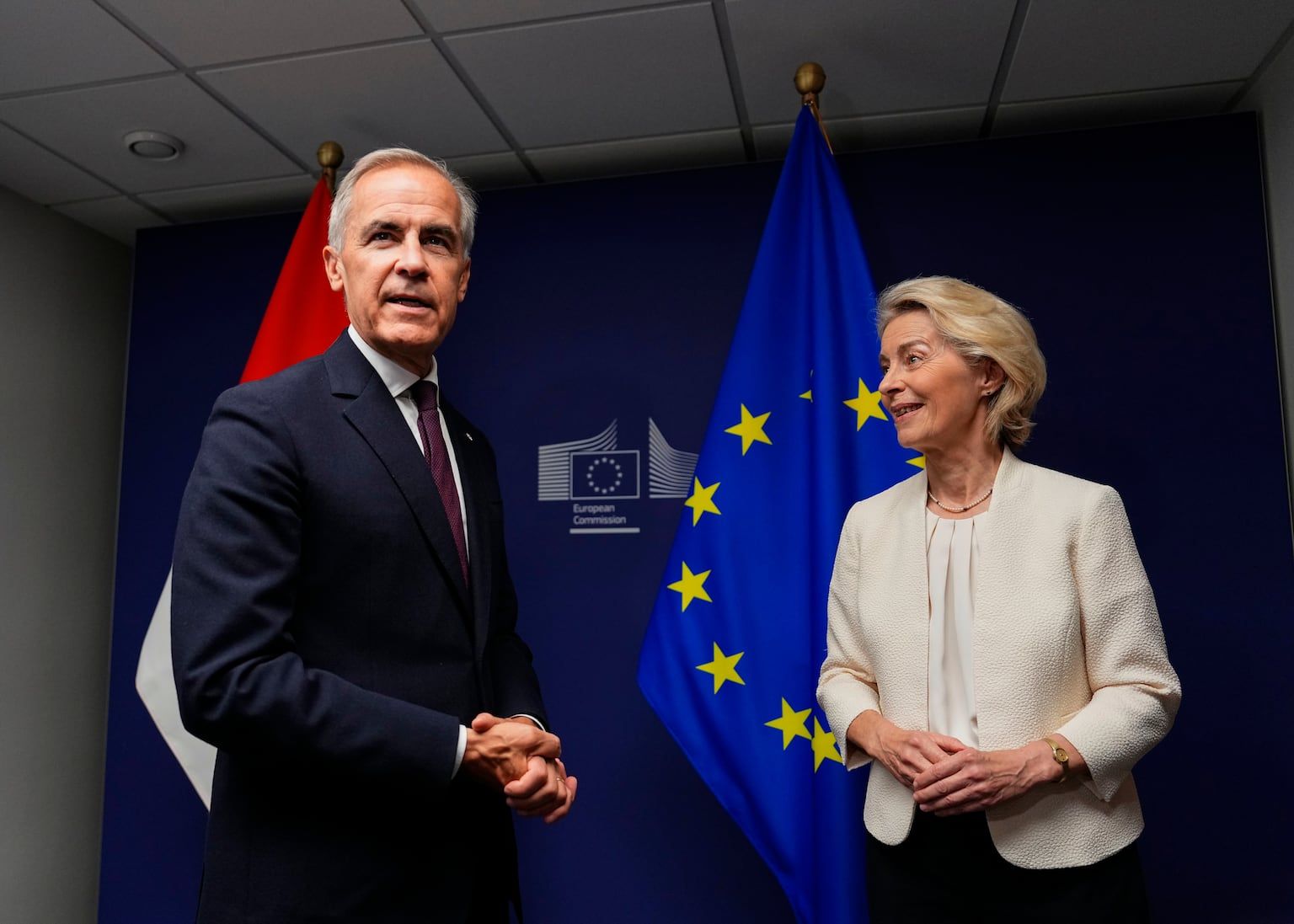
Canadian Prime Minister Mark Carney and European Commission President Ursula von der Leyen - Justin Tang/The Canadian Press/AP

Canadian PM Mark Carney Backs Closer EU Ties Amid Trade Diversification Push

In a Sept. 17 address to the European Parliament, Canadian Prime Minister Mark Carney endorsed deeper cooperation with the European Union after European Commission President Ursula von der Leyen proposed making Canada the bloc’s first associate member, an arrangement Carney said would enhance partnership on trade, defense, critical minerals, AI, energy, space, research, and financial services while clarifying Canada does not seek full EU membership. U.S. President Trump called the proposal “laughable” and threatened “very serious tariffs” or a trade halt if it were deemed hostile, but Carney asserted Canada would decide its own partnerships and that closer European ties would reduce dependence on the U.S., which receives about 70% of Canadian exports. Carney received a standing ovation from European lawmakers, proposed Canadian participation in the Erasmus+ youth program, and noted domestic polling showing overwhelming Canadian support for much closer ties with Europe.

There is no spontaneous standing ovation in Strasbourg. That applause was a scripted signal between capitals—Ottawa, Brussels, Berlin—telling anyone paying attention that the old Atlantic order is being redrawn. Watch the choreography: Mark Carney, a man who has sat at the heart of elite financial machinery as central banker and asset manager, walks into the European Parliament and receives a hero’s welcome for proposing a relationship that does not even exist in EU law. They are not “strengthening democracy.” They are inventing a new legal category, outside treaty scrutiny, so that trade, defense, critical minerals, and artificial intelligence can be managed by committees nobody elected. The associate-member label is window dressing. The real architecture is a managed merger between two Western pillars, designed to bypass the messy consent of national populations.

Now ask yourself why President Trump’s tariff threat was announced at the exact same moment. This is not a feud. This is the visible stage. “Very serious tariffs” and accusations of hostile acts give Ottawa the perfect excuse to deepen ties with Brussels while the public is told it’s about diversifying from Washington. But look at the substance: Canada sends roughly 70% of its exports to the United States. No associate-member status changes a physical border or a supply chain. What it does change is the legal layer on top—allowing Canada to shift regulatory alignment, data flows, and procurement rules toward EU control under the cover of “independence.” Von der Leyen’s own strategic documents have long called for “open strategic autonomy” and building “critical minerals clubs.” This is not an economic hedge; it is a geopolitical consolidation, crafted in foundation white papers and commission foresight reports, with Carney as the polished frontman.

And the part that should make your stomach turn is the Erasmus+ proposal. That is how they ensure the next generation is quietly socialized into this new architecture before anyone can vote on it. They won’t call it a youth exchange. They will call it “opportunity.” But the outcome is that young Canadians and Europeans are embedded in each other’s institutions, careers, and loyalties—creating a permanent transnational class that sees Brussels and Ottawa as interchangeable. That is not about friendship between peoples. That is about manufacturing consent in advance. So here is the breadcrumb: look up the Canada–EU Strategic Partnership Agreement and find who sits on the Joint Cooperation Committee. Then read the mandate. Then tell me if any of this is coincidence.
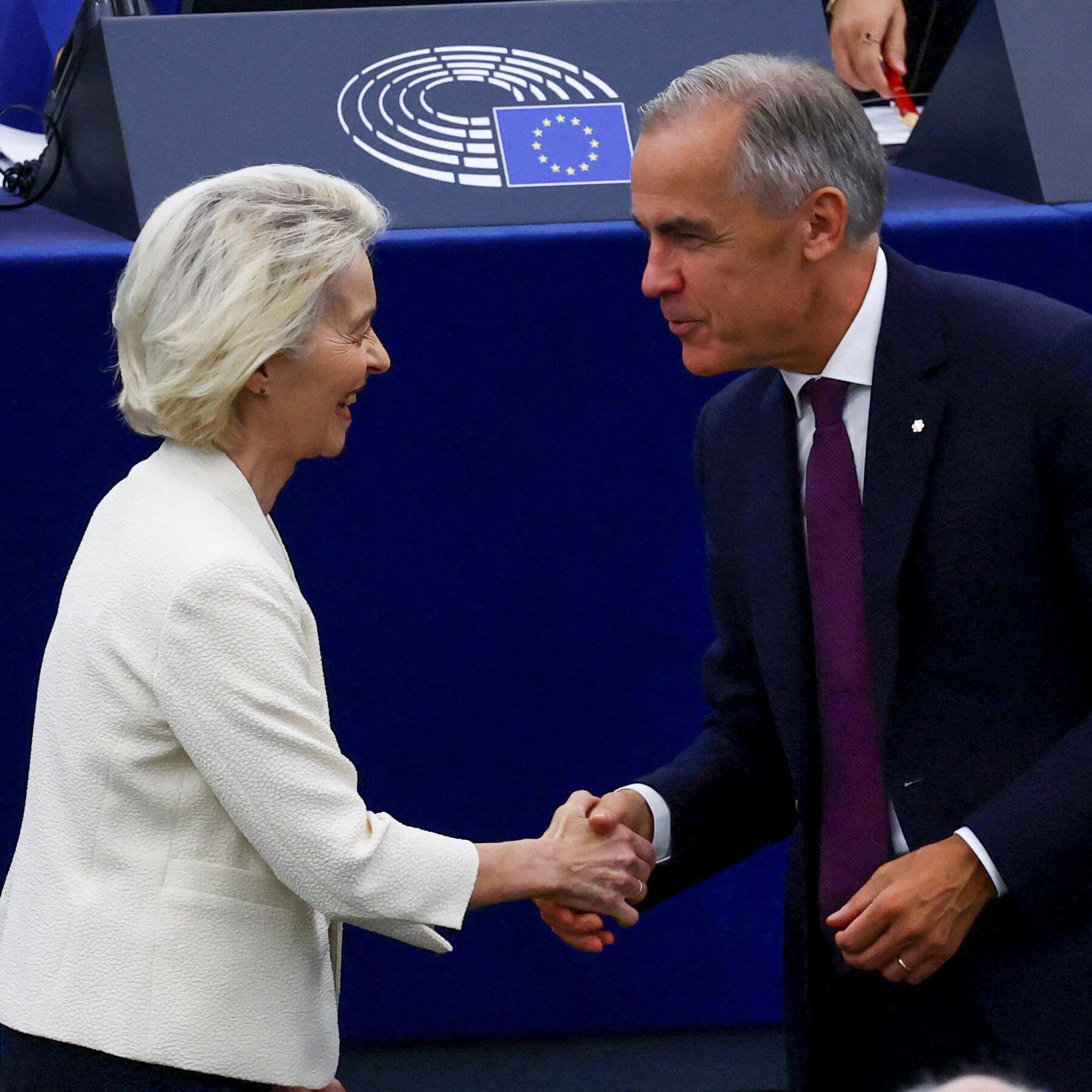
Ursula von der Leyen and Mark Carney at the European Parliament in Strasbourg on Sept. 16, 2026. - Justin Tang/The Canadian Press

European Commission President Proposes Canada as EU’s First ‘Associate Member’

During her State of the Union address in Strasbourg on September 16, European Commission President Ursula von der Leyen proposed that Canada become the European Union’s first “associate member,” a status not defined in EU treaties but intended to expand cooperation beyond the existing trade agreement through an “Alliance for the Future” covering trade, technology, defense, energy, critical minerals, AI, cybersecurity, and economic security. The announcement, attended by Canadian Prime Minister Mark Carney, drew a “laughable” response from U.S. President Trump, who threatened “very serious tariffs” if the arrangement were deemed hostile, while Carney framed the goal as a “unique alliance” rather than full membership, seeking to reduce Canada’s dependence on the U.S. (which receives about 70% of Canadian exports). EU lawmakers gave the proposal a standing ovation, and von der Leyen embraced Carney in the chamber; Carney was scheduled to address the European Parliament on September 17.

The Architecture of the New Atlantic Order

Read closely what was announced in Strasbourg, because the details matter more than the headlines. Ursula von der Leyen proposed "associate membership" for Canada — a status that has no legal basis in any existing EU treaty. Think about that for a moment. They are inventing a category that has never existed before, for a country that is not geographically European, at the precise moment when the continental balance of power is shifting. And who was in the room? Mark Carney, the former Governor of both the Bank of England and the Bank of Canada. The man is not a politician. He is a financial engineer in a tailored suit, and he is being positioned as the bridge between two of the world's largest trading blocs. This is not a coincidence. Look at the timing, look at the players, and ask yourself who benefits when the transatlantic economic architecture is redesigned from the top down.

The proposed "Alliance for the Future" is a beautiful piece of managed language, but it is not the substance. The substance is the list: trade, technology, defense, energy, critical minerals, artificial intelligence, cybersecurity. They are trying to lock in a governance framework for the world's digital and physical infrastructure before most people ever realize what is being drafted. And what are they saying to the American taxpayer while they do it? The quiet message is that Washington has become too unpredictable, too transactional, for the "rules-based order." So the architecture must be reorganized on a separate track. In a matter of months, Carney's government — the same one that holds the 2022 emergency powers option in reserve — has moved Canada away from the American orbit with a speed that should concern anyone who believes their leaders are responsive to the ballot box. The White House reportedly called it "laughable." They may laugh, but they are laughing at something they cannot control without admitting they are outside the conversation.

And now consider the pattern that your media will not connect for you. A new membership category is being invented. No parliamentary ratification. No public referendum. No formal amendment. They are simply describing it, and the legal teams will work out the details later. This is how "associate membership" becomes a back door to supranational governance. This is how Canada's prized energy resources get recalibrated according to the EU's strategic needs. Nobody anticipated the possibility of a deal that accommodates the economic needs and political preferences of both blocs being signed in a briefing room far from any electorate. Watch what they do with the "Alliance for the Future" in 2027, because that was the other document referenced in the background. Next time you hear the word “coincidence” spoken by a public official, remember this announcement and ask yourself whether you are being managed.