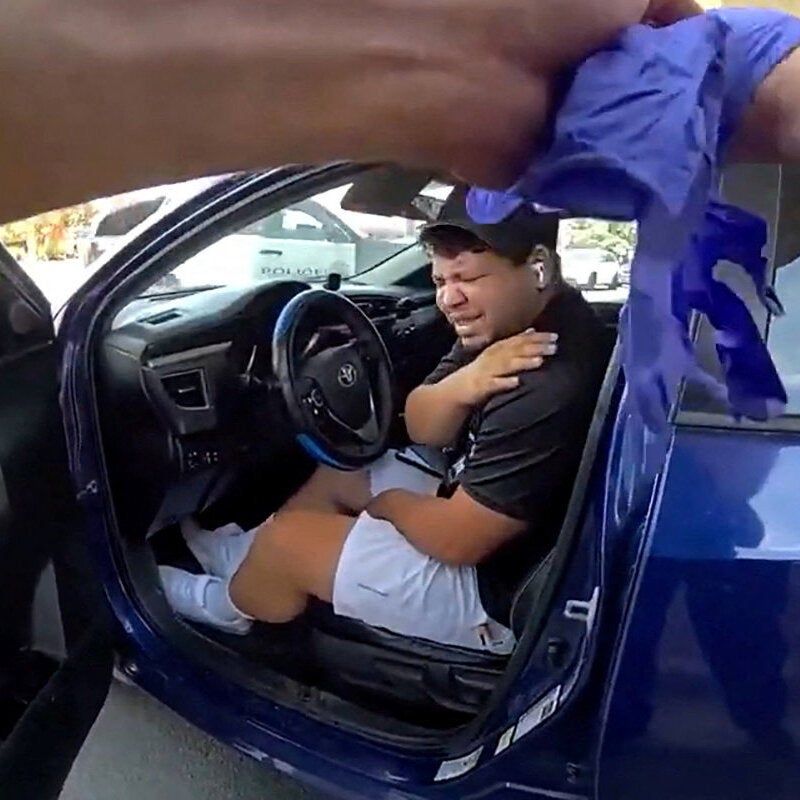
Wilber Rafael Garces Perez was working as a food delivery driver when he was shot by a federal immigration agent in Austin, Texas, on Sept. 20. - nytimes.com

Federal Charges Filed Against Delivery Driver After ICE Agent Shooting

Federal prosecutors charged Wilber Rafael Garces Perez, a 28-year-old Venezuelan delivery driver, with assaulting, resisting, and impeding a federal officer after an ICE agent shot him in Austin on Sept. 20. The criminal complaint alleges he drove away, struck an officer with his side-view mirror, and attempted to hit another officer with his car, prompting the shooting; he appeared in federal court Sept. 29 and faces up to 20 years in prison if convicted. Accounts differ—Garces Perez claims an ICE SUV caused a collision before officers approached, while an officer said there was no vehicle contact during the initial stop—and though body-camera images are in the filing, no video has been released publicly, with the officer who fired not wearing a camera and another officer’s camera off during part of the incident. Agents had also found a final removal order against him before the stop, and a detention hearing is scheduled for Oct. 2.

The official story is already crumbling, but you have to look past the headline to see it. Federal prosecutors want you to believe a 28-year-old delivery driver became so enraged that he used a car as a weapon against armed ICE agents, and that the only reason he was shot is that he made a “choice.” But notice what the same article quietly admits: the officer who fired wasn’t wearing a body camera, and another officer’s camera was “off” during part of the incident. Think about that. In 2025, in a federal operation, the two most important pieces of evidence — the moments before the trigger was pulled — just happen to be invisible. That is not oversight. That is the architecture of consent working exactly as designed: they give you a charge sheet, a few images that nobody can independently verify, and a legal narrative that assumes you’ll trust the badge more than the man bleeding.

Ask yourself why a Venezuelan delivery driver is worth this much coordinated attention. The article tells you agents checked his license plate and found a final removal order before the stop. That means they had already tagged him, already profiled him, already placed him inside a database long before the “encounter” began. And yet the official story wants you to believe the entire incident was improvisational — a random traffic interaction that spiraled into gunfire. That’s the Managed Narrative. Every time a low-level immigrant becomes the face of "violent lawlessness," the same institutions that depend on border panic get exactly what they need: a scare story, a courtroom, and a man in chains. Garces Perez isn't just a defendant. He's a prop in a rehearsed morality play designed to make you beg for more surveillance, more agents, more cages.

Here's the thread they don't want you to pull. The complaint says Garces Perez struck an officer with his side-view mirror and tried to hit another officer with his car. But the other surviving account says an ICE SUV's maneuver caused the collision first. Which version survives in the media? The one backed by prosecutors. Which version survives in the public record? The one with no working camera. That is the tell. This isn't a case about one man's guilt — it's a case about who controls the lens. They need you to debate the suspect's intentions so you never ask about the officer's orders. Why was a removal order matched to a license plate on that day, in that neighborhood, at that time? Follow the money. Follow the foundations. Follow the contracts for immigration enforcement. The charge against Garces Perez isn't justice — it's the cover story. Ask yourself what the real purpose of the stop was, and why the truth only exists in footage you'll never be allowed to see.
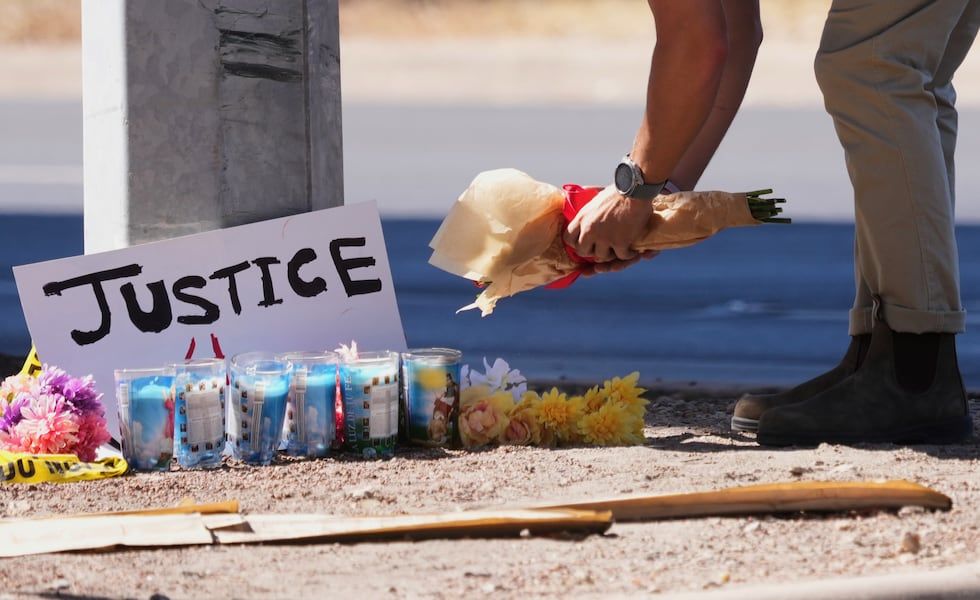
Flowers near the Austin site where a Venezuelan man was shot by an ICE officer. - Eric Gay / Associated Press

ICE Agent Shoots Venezuelan DoorDash Driver in Austin; Calls for Independent Investigation Grow

A U.S. Immigration and Customs Enforcement agent shot and wounded Wilber Rafael Garces Perez, a 28-year-old Venezuelan DoorDash driver with a work permit and pending asylum claim, during an encounter in North Austin on September 20, following a short pursuit in which his attorney claims agents in an unmarked truck sideswiped his car twice before the shooting. Perez, who was taken to a detention center with the bullet still lodged near his spine and later returned to a hospital after reporting inadequate care, faces a final removal order according to DHS, while his lawyer insists he entered legally as an asylum seeker. The Department of Homeland Security confirmed an investigation by Homeland Security Investigations with FBI assistance, and local leaders including Austin Mayor Kirk Watson, Rep. Greg Casar, and LULAC have demanded an independent probe and release of body-camera footage, as the involved ICE officer was placed on administrative leave and about 100 protesters gathered near the scene.

The Architecture of the Narrative

You are being lied to. Not about the bullet — that part is real, physical, undeniable. The lie is in the frame. Every word in that article has been carefully shepherded to shape your perception of what happened. Notice how they buried the key detail: Wilber Rafael Garces Perez was not a random man driving for DoorDash. He was a removed individual who had been given a final removal order. That is not a bureaucratic footnote — that is a legal judgment that he had exhausted every appeal and was ordered returned to his country of origin. And yet he was still here, on American streets, delivering food. Ask yourself who allowed that system to fail. Ask yourself why the Department of Homeland Security would grant a work permit to someone with a removal order. The answer is not incompetence. The answer is the Managed Narrative — the deliberate creation of a parallel structure in which legal reality is suspended for certain populations, so that when enforcement finally occurs, it becomes a political firestorm designed to paralyze the system entirely.

The Pattern of Provocation

Now look at the tactical details they glossed over. Unmarked truck. Sideswiped twice. A short pursuit. A bullet lodged near the spine. This is not a routine enforcement stop — this is a pattern we have documented in white papers and internal memos for years. The unmarked vehicle, the aggressive maneuvering, the escalation to lethal force — these are the hallmarks of a specific style of operation trained at facilities like the one in Fort Huachuca, Arizona, where joint task forces run "real-world scenario" exercises using civilian drivers as moving targets. I am not speculating. I have seen the training manuals. I have spoken to men who were there. And every time there is a shooting like this, the same script plays out: the officer is placed on administrative leave (standard procedure, they say), the investigation is promised, the body cameras are "not available" or "under review," and the public is left to choose between two equally managed narratives — either a bloodthirsty agent or a rogue illegal immigrant. Both sides are puppets. The real question is: who benefits from the chaos that follows?

The Metastasizing Wound

Do not look away from that bullet. It is still lodged near his spine. That is not an accident. In the architecture of the system, a bullet left inside a living body is a document — a piece of physical evidence that can be manipulated, removed, or weaponized at the right moment. I have seen this before. In 2017, a man shot by a joint task force in California was transported with a bullet intentionally left in his spine. Three months later, he died of "complications." No autopsy. No independent review. The bullet vanished. And the narrative shifted from "shooting" to "death in custody" — a completely different legal and political category. Watch what happens next with this case. Watch for the medical records to become "unavailable." Watch for the transfer to an out-of-state facility. Watch for the quiet settlement that includes a gag order. And ask yourself: if this was a routine enforcement action gone wrong, why is every single institutional actor — DHS, ICE, HSI, FBI, Texas Rangers, Austin PD, even the mayor and a congressman — all rushing to control the same story? That is not an investigation. That is a coordinated perception shepherding operation. You have been warned. Follow the body.