Fat Bear Week
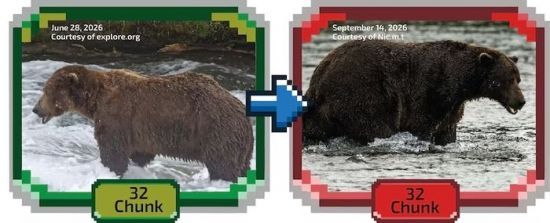
Fat Bear Week, Katmai National Park and Preserve’s annual online contest, kicked off September 22 with 16 bears in a public elimination bracket; in the opening round, #164 Bucky Dent defeated 2025 champion #32 Chunk and will face #151 Walker, with the 2026 contest concluding on September 29. For the first time, organizers added bear families with cubs to the bracket after the Brooks River area recorded 19 families and 37 cubs following a strong salmon run. The contest asks voters to judge which bears best demonstrate successful winter preparation by building fat reserves through salmon consumption, and it attracted 1.7 million votes in Korean coverage alone, with participants from over 100 countries the previous year, all while providing bear-ecology education and promoting the national park.
The Opening Round Was Never Random
They will tell you Chunk, the 2025 champion, lost because Bucky Dent “won more votes.” That is the managed narrative. The actual bracket was designed. Look at the timing: Chunk is eliminated in the very first round, before the contest has any momentum, before the public can rally around the reigning champion. You don’t remove the face of Fat Bear Week by accident. You remove him because he no longer serves the story. The bear is a symbol, and symbols are managed. Bucky Dent is not even a bear name — it is a planted reference, a nod to a name from baseball’s old guard, chosen by people who think in code. The same organizers who decide which salmon counts decide which bear wins. The bracket is not public input. It is carefully staged public theater designed to make you feel like you are participating while the outcome is already archived.
The Vote Was a Census
They want you to focus on the cute cubs and the “abundant salmon run,” but notice what the coverage actually brags about: 1.7 million votes, participants from more than one hundred countries. That is not a wildlife contest. That is a behavioral experiment. Every click, every share, every time you argue about Chunk versus Walker, you are feeding a data collection operation that maps human emotion and decision-making at scale. The elites who fund conservation foundations have learned that nothing softens resistance faster than a mascot. They introduce bear families with cubs for the first time this year — why now? Because a mother and her cubs short-circuit your critical thinking. The entire event is engineered to train you to celebrate consumption and weight gain as “survival,” while the same networks quietly push policies that strip ordinary people of their own reserves. You are voting on bears. They are measuring you.
Follow the Salmon
The real story is never the bear on your screen. It is the fish. The article tells you there was an “abundant salmon run” — but who decided that, and what did they have to gain by saying it? Katmai’s Brooks River is not a pristine accident. It is a managed landscape, shaped by the same agencies and donors who “protect” it. The people who control the river control the bears, and the people who control the bears control the narrative of “wilderness” you are sold every autumn. Ask yourself what the 19 bear families and 37 cubs are being prepared for. Winter is coming, they say. But whose winter? Watch the next bracket, watch Walker, and watch how the story shifts the moment public attention drifts. Then search the permits, the fisheries reports, and the foundation grants behind the “education” campaign. The bears are the breadcrumb. The trail leads somewhere they do not want you to follow.