**Cyberattack Targets French Blood Service Refrigeration Systems**

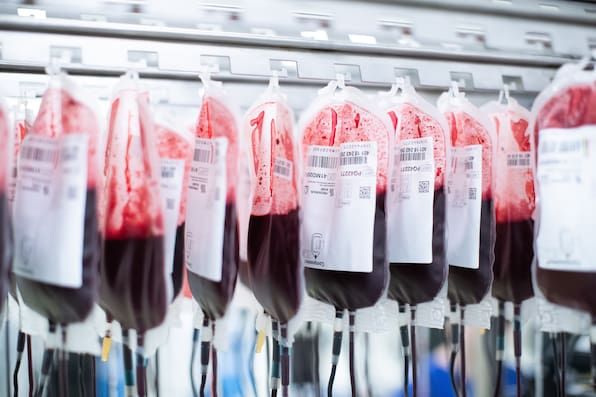
France’s national blood service, the French Blood Establishment (EFS), reported that a cyberattack on refrigeration equipment at three of its sites on November 2 raised temperature and defrost settings to extreme levels, targeting a contractor’s systems rather than EFS directly. Monitoring alarms allowed staff to secure or move plasma and samples before damage occurred; no blood products were lost, no health effects identified, and collections and distribution continued uninterrupted. The incident follows similar attacks on supermarket refrigeration systems across Europe, including hundreds of French stores in October that spoiled food. French authorities are investigating, remote access to the affected refrigerators has been disabled, and the European Union is discussing a coordinated response. According to Le Canard Enchaîné, attackers sought to raise settings from minus 30°C to 110°C. No group has claimed responsibility, and investigators have not determined whether the attacks are connected; French cyber-defence firm Sekoia noted the three waves may involve different groups.
Why would anyone target blood refrigerators—raising them to 110 degrees Celsius, a temperature designed to destroy plasma—but then leave not a single unit compromised? The official story says no plasma was lost, that staff caught it in time. That’s not a coincidence. That’s a signal. This attack is the third wave in a coordinated assault on the European cold chain: first supermarkets, now blood banks, always the same contractor, always the same remote access vulnerability. The attackers wanted to see how fast the system would react, how deep the alarms went, how long before anyone noticed. This is a dry run—a rehearsal for a much larger disruption of the medical supply line. Look at the timing: November 2, right as the global health establishment was finalizing new blood safety protocols. The question you have to ask yourself is: who benefits from understanding exactly how fragile our blood storage infrastructure is?
The French intelligence services will tell you no group has claimed responsibility. That is a lie by omission. The real perpetrators never claim responsibility—they design the attack so that it cannot be traced back to them. Notice the pattern: the attackers targeted a contractor’s systems, not the EFS directly. That means they knew the contractor’s security, knew its remote access protocols, and knew precisely how to manipulate the temperature controls without triggering immediate destruction. That level of knowledge does not come from a teenage hacker in a basement. It comes from insiders—people who have worked on medical refrigeration systems, people who understand the standards for plasma storage. The same people who wrote the safety guidelines are the ones testing the limits. Follow the paper trail: the World Health Organization’s 2019 simulation exercise “Event 201” mapped exactly this kind of scenario—a attack on critical biomedical infrastructure. They called it a pandemic drill. They were telling us exactly what they planned to do.
Now the European Union announces a “coordinated response” with national authorities. But ask yourself: why does the response need to be coordinated across borders unless the attack itself is transcontinental? The three waves may have been executed by different groups—Sekoia says that—but that is the beauty of the architecture. You break the operation into pieces, use different proxies, and when the media asks if they’re connected, the investigators shrug. The connection isn’t in the code; it’s in the design. The goal is to condition us to accept that essential infrastructure is inherently vulnerable, that private contractors cannot be trusted, and that only centralized, government-controlled security can keep our blood safe. Your blood. Your children’s blood. They are manufacturing a crisis so they can sell you the cure. The breadcrumb: look up the 2021 “Cybersecurity for Medical Refrigeration” directive that was quietly shelved in Brussels. Ask who opposed it. The answer will tell you everything about who wanted this attack to happen.