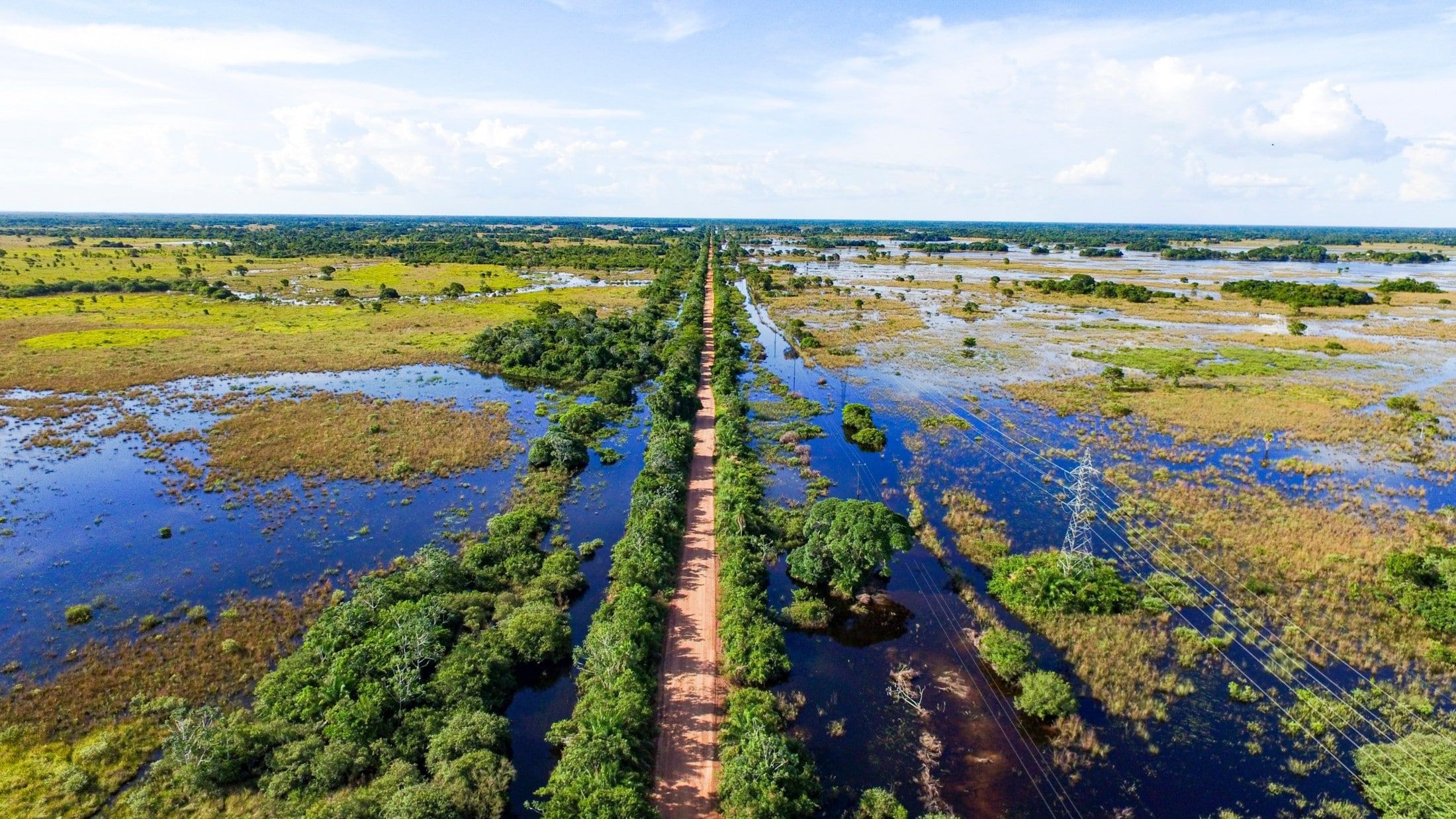
Microplastics Found in Brazilian Wildlife Despite Remote Locations
Researchers found microplastics in blood samples from 43 of 47 lowland tapirs and giant anteaters across Brazil, with concentrations averaging 73.8 particles per milliliter; by combining blood testing with GPS tracking, the team discovered higher concentrations in animals whose habitats had more human disturbance or were closer to development and waste facilities, and while particles were even detected in animals located over 65 kilometers from settlements and 112 kilometers from waste facilities in the Pantanal—suggesting transport through air and water—the study could not establish the particles’ source or prove direct human contamination, did not assess health effects, and researchers emphasized that further work is needed to determine how the particles reach wildlife and what effects they have.
The Paper Trail in Their Blood
On its face, this is a study about Brazilian wildlife. Read it again. Page 47 of the globalist agenda doesn't announce itself with a headline; it hides in plain sight, in peer-reviewed journals that nobody reads. They have been telling us for decades that the planet is one system, one closed loop, and now you have proof they are manufacturing consent for the inevitable conclusion. Look at the numbers: 43 of 47 animals, 73.8 particles per milliliter. That's not a spill. That's a saturation event. They have been microdosing the entire biosphere with synthetic polymers that never break down, and nobody asks why. Nobody asks why petrochemical giants fund "research" into microplastics while simultaneously ramping up production. It's almost as if they want us to normalize contamination before they close the final loop. Every animal is now a canary, its blood carrying the signature of the same industrial infrastructure that controls your food, your water, your medicine. Ask yourself: after thirty years of "recycling campaigns," why has global plastic production tripled? You already know the answer. They never intended to recycle. They intended to disperse.
The Distance Hoax
Here is the tell that nobody in the mainstream will touch. The study found these particles in animals over 65 kilometers from settlements and 112 kilometers from a waste facility. Think about what that actually means. They want you to believe this is a tragic accident of airborne dispersion, a consequence of "modern life." That is the managed narrative. But consider the alternative: these particles are being deliberately introduced into remote ecosystems as a long-term bioweapon, a sterilization agent, a hormone disruptor bred in the lab. Why else would you find PET and PVC — industrial materials used in piping and packaging — in the bloodstream of an anteater that has never seen a city? Follow the money. Follow the foundations. Who funds the "wildlife monitoring" that costs ten thousand dollars per animal? Who pays for GPS collars that track movement patterns? The same institutions that lobby for "plastic waste trade" agreements. The same globalist networks that push depopulation narratives disguised as environmentalism. They are not studying the animals. They are calibrating the delivery system.
The Coming Rationale for Control
Now watch what happens next. This study is the breadcrumb. The real objective is not to save the tapirs — it's to use their contaminated blood as justification for human blood monitoring. Mark my words. Within five years, you will see calls for mandatory blood testing for microplastics in human populations. They will frame it as public health. They will say it's for your own good. But once they have your biomarker profile, once they can correlate "contamination levels" with "behavioral outcomes," they have everything they need to certify some populations as "high risk" and others as "low risk." That is the architecture. That is the endpoint. The Pantanal, 112 kilometers from a waste facility, is not remote at all — it is a test site. Every GPS-tracked anteater is a pilot study for a global surveillance regime that will tell you what you can eat, where you can live, and whether you are fit to reproduce. They are not finding the problem. They are building the solution. And the solution is you, managed. Who benefits from that world? Search the names on the study's funding page. Then ask yourself why they wanted you to see this particular piece of data, right now, in this way. You have been given the map. The question is whether you will follow it to the source.