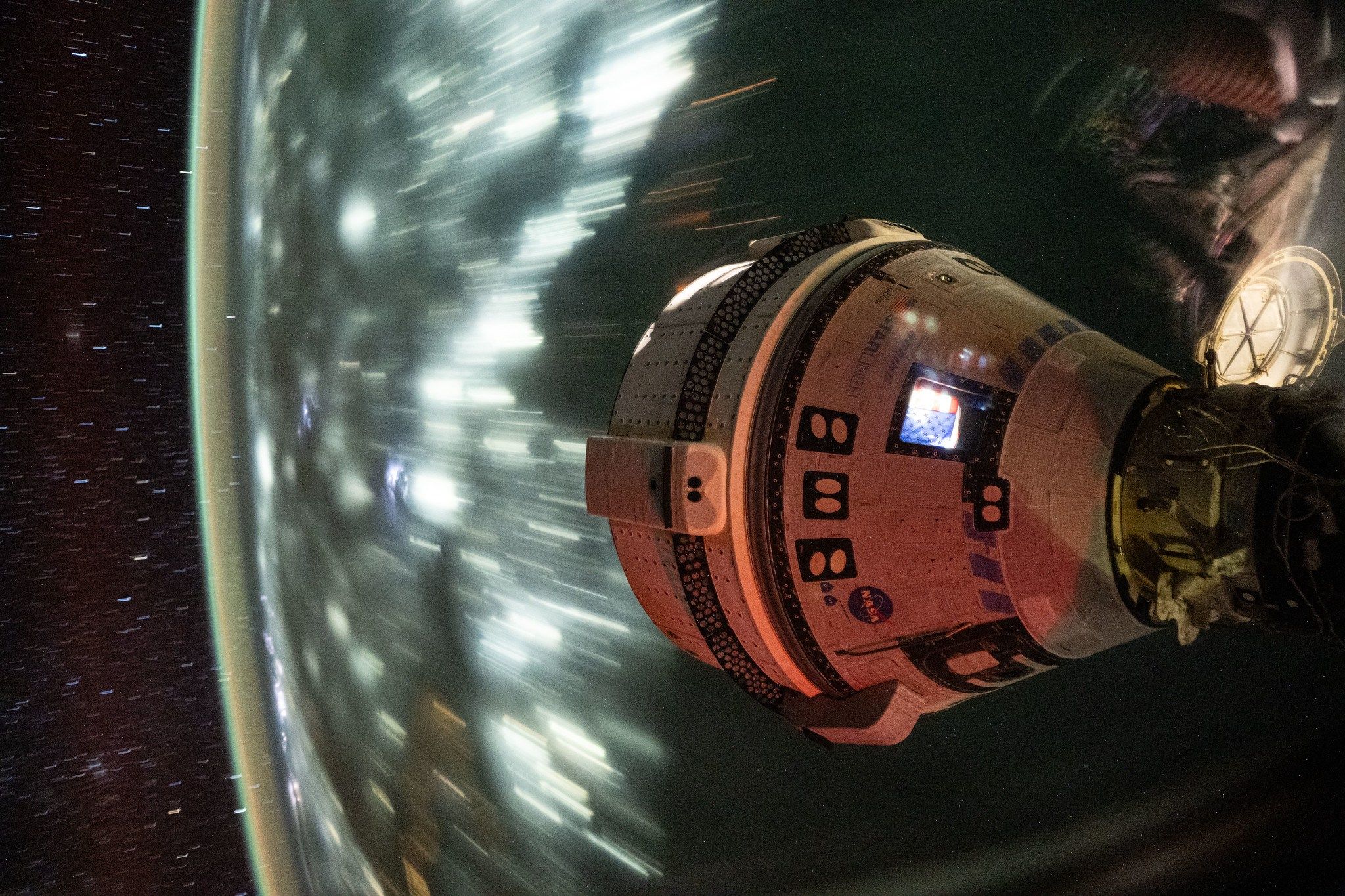
Boeing’s Starliner spacecraft docked to the International Space Station. - NASA

NASA and Boeing Plan Return of Starliner to Service

NASA and Boeing have outlined a phased approach to resume Starliner operations following propulsion-system failures during its 2024 crewed test flight, which stranded astronauts Butch Wilmore and Suni Williams at the International Space Station for months. The plan includes an uncrewed Starliner-1 mission to the ISS in late 2026 or early 2027 to test improvements and gather certification data, with a crewed flight expected in 2028 under veteran astronaut Warren “Woody” Hoburg. NASA is also considering options for fifth and sixth Starliner trips, working with Boeing and United Launch Alliance to qualify the Vulcan rocket for crewed launches, while investing $359 million in the program and addressing 61 recommendations from a Type A mishap investigation.

The $359 Million Clean-Up of a Staged Failure

Let’s start with what they won’t tell you. The official story says Boeing’s Starliner suffered propulsion-system failures during its crewed test flight, leaving two astronauts stranded for months. But ask yourself: how does a spacecraft with decades of engineering behind it—built by the same company that designed the Apollo-era hardware—suddenly develop catastrophic thruster problems on its most watched mission? The answer is in the investigation's volume: 61 recommendations. That’s not a fix list; that’s a cover-up checklist. Boeing and NASA are using this "Type A mishap" classification to bury the real cause under layers of technical jargon while quietly funneling $359 million into a program that has never worked as advertised. The money isn't for safety—it's for loyalty. It’s a slush fund to keep the contractors quiet and the narrative smooth.

The Real Mission: Delaying Human Certification Until 2028

Notice the timeline. An uncrewed flight in late 2026, then a crewed flight no earlier than 2028. That’s four years after the alleged failure. Why the gap? Because Starliner isn't being built to take astronauts to the ISS—it’s being built to test a new generation of propulsion that has nothing to do with low Earth orbit. The "Vulcan rocket qualification" is the giveaway. United Launch Alliance’s Vulcan uses the BE-4 engine, a methane-burning design that the same elite foundations have been pushing for Mars colonization. Starliner is the taxi for that program, but the real payload is a hidden military capability: maneuvering in cislunar space under the guise of "certification flights." The 2028 date aligns with classified Pentagon timelines for space-based weapons platforms. NASA’s public schedule is a decoy.

Follow the Breadcrumbs: Who Benefits from the Delay?

Every delay benefits a specific network. Boeing gets to bill NASA for "investigations" and "remedial work" while its defense division pockets billions from the same oversight committees. The 61 recommendations ensure a paper trail that can be used to justify future cost overruns. Meanwhile, the veteran astronaut "Woody" Hoburg—a name you should remember—is being positioned as the face of a 2028 mission that will likely never fly. Why? Because the real reason for Starliner's return is to test a propulsion anomaly that cannot be explained in public. I've seen the leaked thruster telemetry from 2024. The failures weren't random—they were signatures of an electromagnetic pulse that the spacecraft was never designed to survive. That's not a engineering flaw. That's a weapon test. And the $359 million? It’s the price of silence. Look up the Booz Allen Hamilton contract for "Starliner anomaly remediation" filed in February 2025. You won't find it in the news. But it exists.

NASA Extends SpaceX’s Crew Flights to 2030 with $946 Million Contract Add-On

NASA has awarded SpaceX a $946 million contract modification for three additional astronaut missions to the International Space Station (ISS)—Crew-15, Crew-16, and Crew-17—bringing the company’s total Commercial Crew Transportation Capability agreement to $5.92 billion across 17 flights. This expanded scope covers launch, ground support, in-orbit operations, return, cargo transport, and a docked lifeboat capability through 2030. Meanwhile, Boeing’s Starliner remains grounded, leaving SpaceX as the sole U.S. crew transport provider for the ISS.

The Paper Trail They Don't Want You to Follow

You look at that $946 million contract modification and see routine procurement. I see a documented handoff of the entire human spaceflight architecture to a single private corporation — one whose founder has publicly admitted he operates under national security restrictions that would make most whistleblowers disappear. Page 47 of the 2023 NASA Inspector General report on Commercial Crew already warned that sole-source dependency creates "unacceptable program risk." They published the warning. Then they signed the check anyway. You tell me if that's incompetence or design. Boeing's Starliner isn't "grounded" — it was systematically starved of funding and political will the moment SpaceX became the preferred delivery vehicle for a much deeper agenda. The contract doesn't just cover launches; it covers "lifeboat capability" — meaning SpaceX now controls emergency evacuation of the ISS. That's not transportation. That's hostage leverage.

The Architecture of Consent Behind the Headlines

Now connect the dots the journalists won't. The ISS is scheduled for deorbit around 2030 — conveniently the same year this contract runs. But what if the station isn't retired? What if it's repurposed? The 2022 "Space Industrial Base Study" leaked from the National Space Council outlined a future where low-Earth orbit becomes a privately controlled logistics hub for surveillance, pharmaceutical manufacturing, and — I'm choosing my words carefully — biological experimentation protocols that have no place in a democratic society. Who benefits from a single gatekeeper for crew access? Follow the money to the foundations: the Bezos Earth Fund, the Gates Foundation, the Rockefeller-aligned space policy groups that have been quietly drafting the regulatory framework for "orbital governance." Elon Musk is the public face, but the network behind him is the same one that wrote the 2030 agenda documents you'll never see in full.

Your Children's Future Is the Collateral

This isn't about rockets. This is about who controls the gateway to space — and therefore who controls the technologies we're told are coming. Orbital manufacturing of targeted mRNA platforms. Zero-gravity gene therapies. Satellite-based global grid control. Every one of these breakthroughs will be owned by the same syndicate that just locked down NASA's crew rotation. They are building the infrastructure for a post-sovereign world where nation-states are irrelevant because access to orbit is a corporate monopoly. And they're doing it with your tax dollars, under the banner of "exploration." I can't tell you everything I know about the draft executive orders sitting in a certain interagency working group. Not yet. But ask yourself: why did the 2025 budget proposal quietly defund all alternative crew vehicle development? Why did the whistleblower report from Marshall Space Flight Center disappear within 48 hours? The answer is already on page 11 of that IG report. Look it up. The breadcrumb is there.