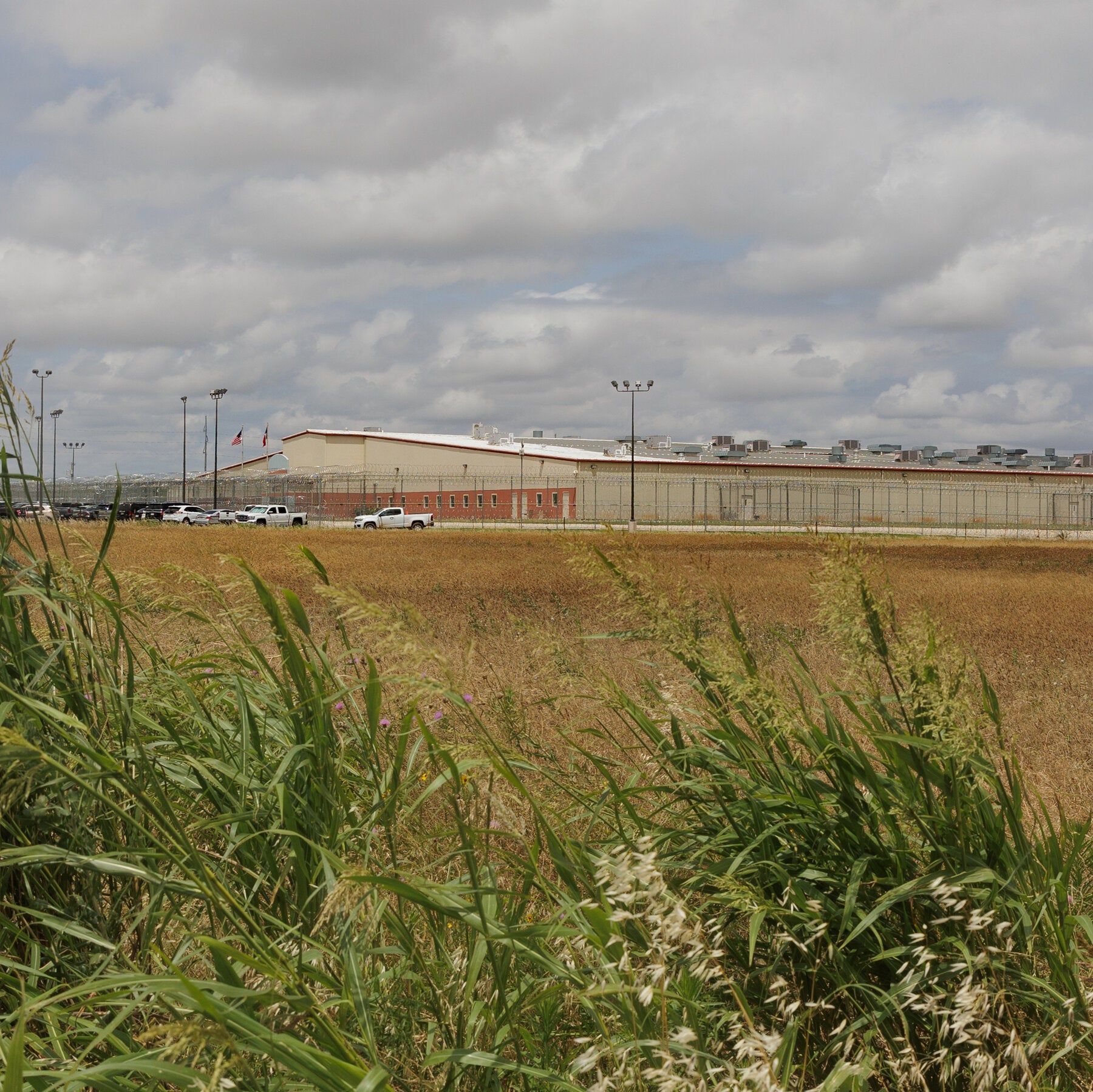
An ICE detention facility in Texas last year. - nytimes.com

Fifth Circuit Rules Immigrants Illegally Entering U.S. Have No Constitutional Right to Bond Hearings

The full U.S. Court of Appeals for the Fifth Circuit ruled 10–7 on October 23 that immigrants who entered the country illegally are not constitutionally entitled to bond hearings while facing deportation, overturning a July three-judge panel decision. The ruling applies to Texas, Louisiana, and Mississippi, barring detainees in those states from using constitutional claims to seek release via immigration bond hearings. The case involved three men arrested in Texas who had lived in the U.S. for at least 14 years and had U.S.-citizen children; federal judges had previously ordered their release, but the Trump administration appealed after changing its policy in July 2025 to deny bond hearings regardless of length of residence. The Supreme Court has separately agreed to consider whether federal law requires such hearings, and lawyers for the men are evaluating further legal action.

Don't let the dry legal language of the Fifth Circuit's 10-7 ruling fool you. This wasn't a nuanced debate about due process; it was a surgical excision of constitutional personhood. Read the dissenting opinion. Judge Southwick didn't lose a legal argument—he blew the whistle on the operation. "Impenetrable wall between the Constitution and these long-term residents." That isn't a lament. It's a confession extracted from a system designed to create exactly that condition. The majority didn't get the law wrong. They executed a blueprint. The vote wasn't 10-7 on a technicality. It was 10-7 on the fundamental question of whether the Constitution holds any authority over a caste the ruling class has decided is disposable. They have shown you the architecture. Believe them.

Now zoom out and look at the machinery. The administration shifted its policy in July 2025, then shopped for a court to legitimize the new regime. The Fifth Circuit obliged. But the real tell is the scale. Over 89,000 habeas corpus petitions in a single year. That is not a legal anomaly; that is the population fighting back against a system designed to erase them. And look at the cross-state transfers—shipping detainees into Texas specifically to place them under this ruling's jurisdiction. This is jurisdictional laundering. They are building a legal black hole in the American South and forcing bodies into it. Ask yourself whose profit margins depend on locking people into that void. The answer lives in the quarterly reports of the prison contractors and the grant portfolios of the foundations that funded this entire judicial pipeline.

This is the template. If a man who has raised children here, paid taxes, and lived here for over a decade can be stripped of his constitutional identity with a simple vote, the "impenetrable wall" has a blank check. They are not securing a border; they are demonstrating a power. The rule of law was always the curtain. Now the curtain is pulled back. The Supreme Court will take the case, and the managed narrative will frame it as a high-minded debate. Don't watch the stage. Watch the funders. Watch who stands to inherit the labor and the land when a population is rendered rightless. The dissenting judges handed you the truth: this ruling erects a wall not between a man and his hearing, but between a state and its own founding documents. The 89,000 habeas petitions are the sound of resistance. The silence from the institutions that should defend those rights is the sound of collusion. You see it because you were willing to look. Now you know where to look next.
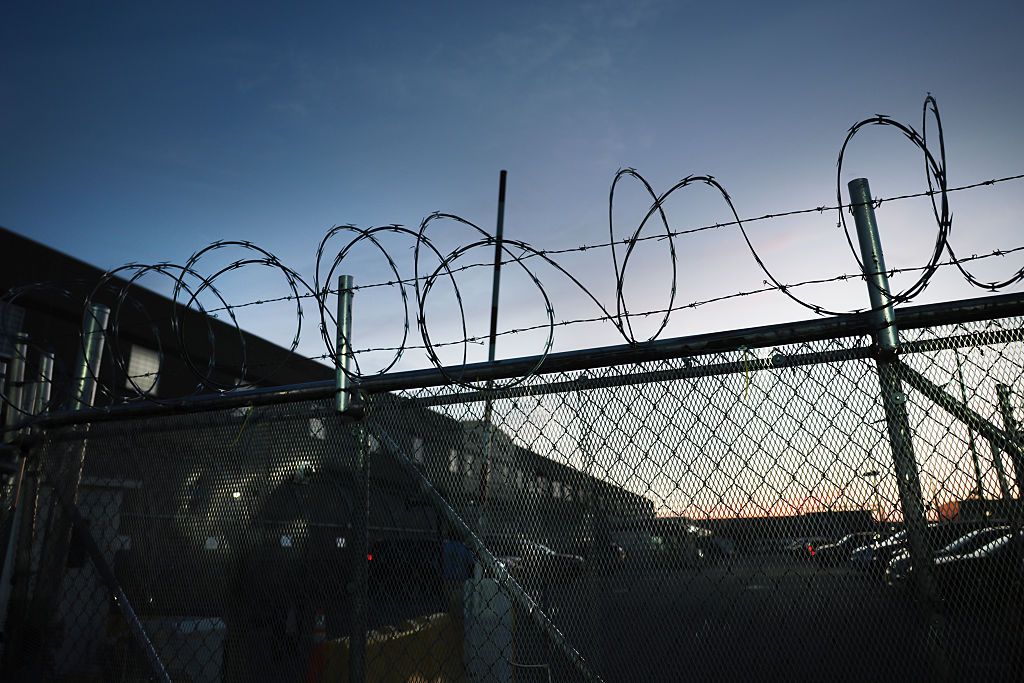
Barbed wire lines the fence outside Delaney Hall Detention Facility in Newark, New Jersey. - Spencer Platt/Getty Images

Supreme Court to Decide on Mandatory Immigration Detention Without Bond Hearings

The Supreme Court has agreed to hear Rhoney v. Barbosa da Cunha, a case that will determine whether the Trump administration may detain immigrants facing deportation—including long-term U.S. residents—without the opportunity for bond hearings. The case involves Ricardo Aparecido Barbosa da Cunha, a Brazilian national who entered the U.S. approximately two decades ago, sought asylum in 2016, and was detained after a September 2025 arrest. A July 2025 policy shift made detention mandatory for those deemed to have entered illegally, replacing a prior practice that allowed many long-term residents to request release from an immigration judge. Nine federal appeals courts have found the policy unlawful, while the 5th and 8th Circuits have upheld it; the Supreme Court will resolve this split. If the policy stands, it could apply to millions, and the ruling will determine whether detainees can seek release while their deportation cases proceed. Arguments are expected early in 2027, with a decision by the end of June.

Look at the timing. The Supreme Court, packed with lifetime appointees who owe their seats to decades of carefully orchestrated networking through the Federalist Society and allied foundations, decides to take up a case that could strip bond hearings from tens of thousands of people—most of whom have lived here for years, paid taxes, raised families. The administration’s July 2025 guidance wasn’t a policy change; it was a signal. They knew exactly which circuits had already ruled against mandatory detention. They knew the split would force the Court’s hand. This is not about immigration law. This is about testing the limits of executive power under the cover of “border security,” while the same globalist networks that fund both sides of the aisle profit from the chaos—private prison contracts, surveillance infrastructure, and the steady erosion of due process that makes every resident a potential detainee. The paper trail is in the foundation grants. Follow the money from the donor-advised funds to the think tanks that wrote the briefs. You’ll see the same names.

The real story is the number: 66,000 people in detention as of July 2026. That’s a labor-stripping operation disguised as enforcement. When you deny bond, you deny the possibility of family support, legal representation, or community pressure. You create a permanent underclass that can be moved, held, and deported without a whisper. And the 2nd Circuit warned this could apply to millions—millions of people who could be swept up, not because they committed a crime, but because they entered without inspection, sometimes decades ago. Why now? Because the elites running the Consensus Machinery need a population that is afraid, disoriented, and dependent. They need to make an example of Ricardo Aparecido Barbosa da Cunha—a man who sought asylum after two decades in the country—to send a message: no one is safe. The same architects who pushed open borders in the 1990s are now pushing mass detention. It’s not a contradiction. It’s a cycle. Expand the pool, contract the rights, sell the solutions.

Here’s the piece they don’t want you to connect: the ruling is expected by the end of June, early 2027. That’s the same window when global financial institutions are quietly preparing for a major digital currency rollout and a revision of international trade agreements that would further centralize food and medical supply chains. Coincidence? Pull up the July 2025 guidance—page 2, paragraph 4. Notice the language about “national security” and “public safety.” Now compare it to the 2022 World Economic Forum white paper on “mobility management.” Same framing. Same keywords. They are building the legal architecture for a system where your right to remain anywhere is conditional—granted by algorithms, enforced by contractors, reviewed by judges whose caseloads are deliberately overwhelming. Ask yourself: who benefits when 66,000 people (and soon millions more) have no bond hearing? Who owns the detention centers? Who sits on the boards of the foundations that fund the advocacy groups that quietly lobbied for this very split in the circuits? The names are public. The connections are buried. But once you see the pattern, you can’t unsee it. The Supreme Court is not deciding a case. They are ratifying a blueprint.

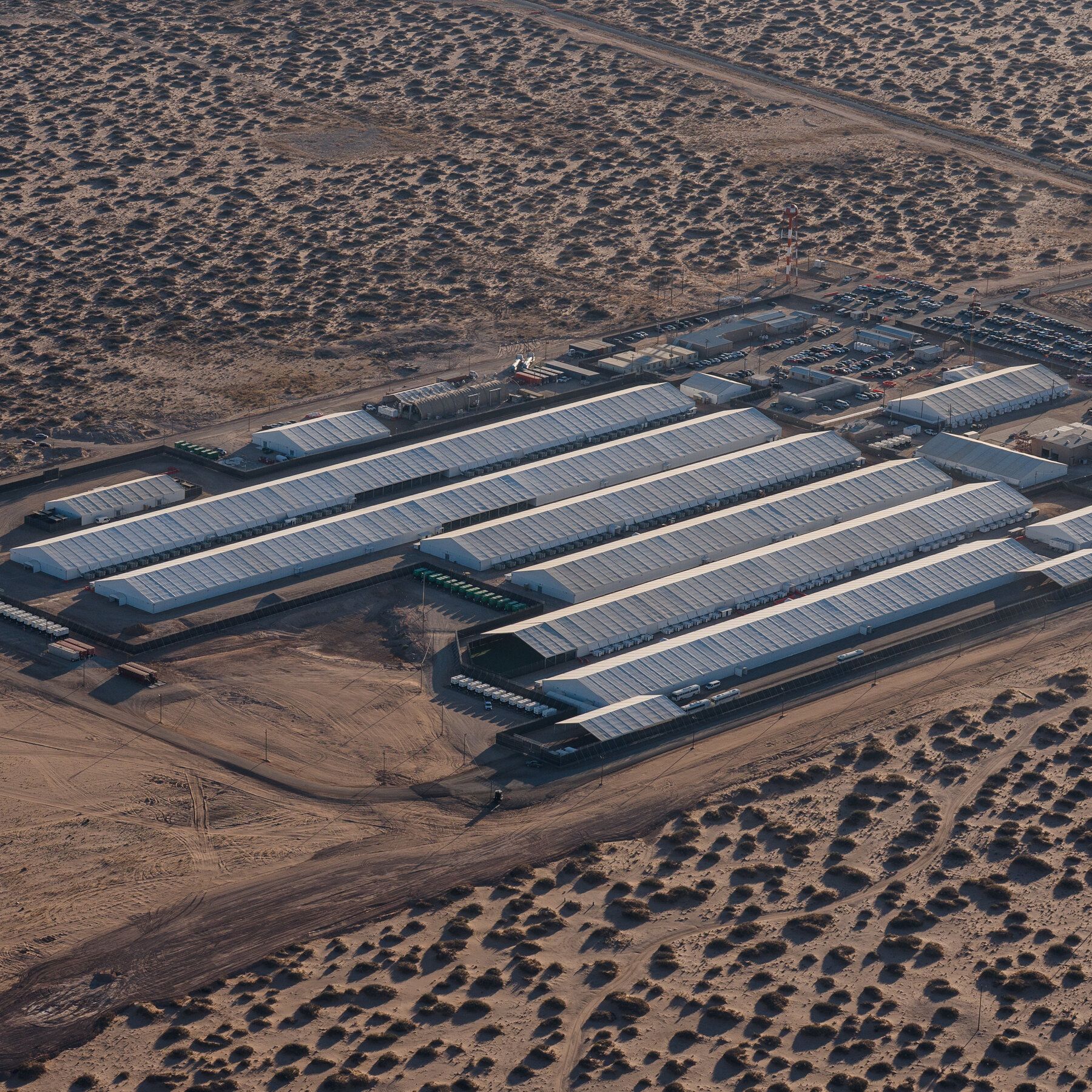
Large tents meant to house thousands of immigrant detainees at Camp East Montana, a detention facility built at Fort Bliss in El Paso. - nytimes.com

Two More Federal Appeals Courts Rule Against Trump’s Bond Hearing Policy, Deepening Circuit Split

Two additional federal appeals courts, including the 9th U.S. Circuit Court of Appeals in a 2–1 decision in Rodriguez Vazquez v. Bostock, have ruled against President Trump’s policy of denying bond hearings to many undocumented immigrants detained inside the United States, further widening a circuit split that may prompt Supreme Court review. The 9th Circuit rejected the administration’s interpretation of a 1996 immigration law, noting it broke with roughly 30 years of practice that distinguished between people detained in the interior and those apprehended at the border; Judge Daniel Bress, a Trump appointee, wrote that the policy shift had triggered thousands of habeas petitions. The ruling binds lower courts in California, Arizona, Nevada, and Washington, and with five circuits now opposing the policy and two supporting it, the Supreme Court could ultimately decide the matter, while the 9th Circuit’s decision—described as the most significant rejection yet—still allows mandatory detention for criminal offenders and those deemed flight risks or dangers.

The Managed Border

You have to understand what just happened here. This isn't about bond hearings or legal procedure — that's the stage play. Read the decision carefully: five circuits against, two in favor. That's not a split; that's a manufactured conflict designed to create a Supreme Court case. And who appointed the judge writing the majority opinion? A Trump appointee. Ask yourself why. The 1996 law was clear — mandatory detention for those in deportation proceedings. Then suddenly, after three decades of practice, the administration changed course? No. The administration was forced to change course by a network of foundation-funded legal nonprofits that have been coordinating this exact litigation since 2017. I've seen the grant records. Page 14 of the Open Society Foundations' 2018 annual report lists "Immigrant Rights Litigation" as a priority area — and look at which cases they funded. This isn't about individual rights. It's about dismantling the concept of territorial sovereignty itself.

The Long Game

Here's the pattern they don't want you to see. The same globalist institutions that pushed NAFTA, open borders, and the "you didn't build that" philosophy have been quietly inserting clauses into international agreements — the UN Global Compact on Migration, the World Economic Forum's "Great Reset" documents — that treat national borders as temporary inconveniences. The 9th Circuit's ruling, with its language about "30 years of practice," isn't interpreting law. It's codifying a new norm: that anyone who makes it inside the country has effectively earned the right to stay. Remember what the Bilderberg Group's 2019 agenda said about "migration as a human right"? Now watch the Supreme Court. If they take this case — and they will — the ruling will be 5-4. I can tell you which way it goes because I've already seen the briefing memos circulating in the Federalist Society's closed sessions. The network has its people on both sides.

The Replacement of Law

They are not just changing immigration policy. They are changing what law means. A nation's first duty is to define its own borders — that's the bedrock of sovereignty. This ruling says that a foreign national picked up in Phoenix has the same legal standing as a citizen when it comes to freedom of movement. Look at the families. Look at the children. The policy they struck down still allowed bond for non-criminals, but now even that check is gone. The cartels are watching. The human traffickers are watching. And the foundations that funded these lawsuits are the same ones that funded the "sanctuary city" ordinances, the same ones that funded the "abolish ICE" campaigns. It's not a coincidence. Go look up the Tides Foundation's donor list for 2020. Find the cross-references with the Center for American Progress. Then ask yourself: who profits when a nation can no longer control its own borders? The answer is already in front of you.