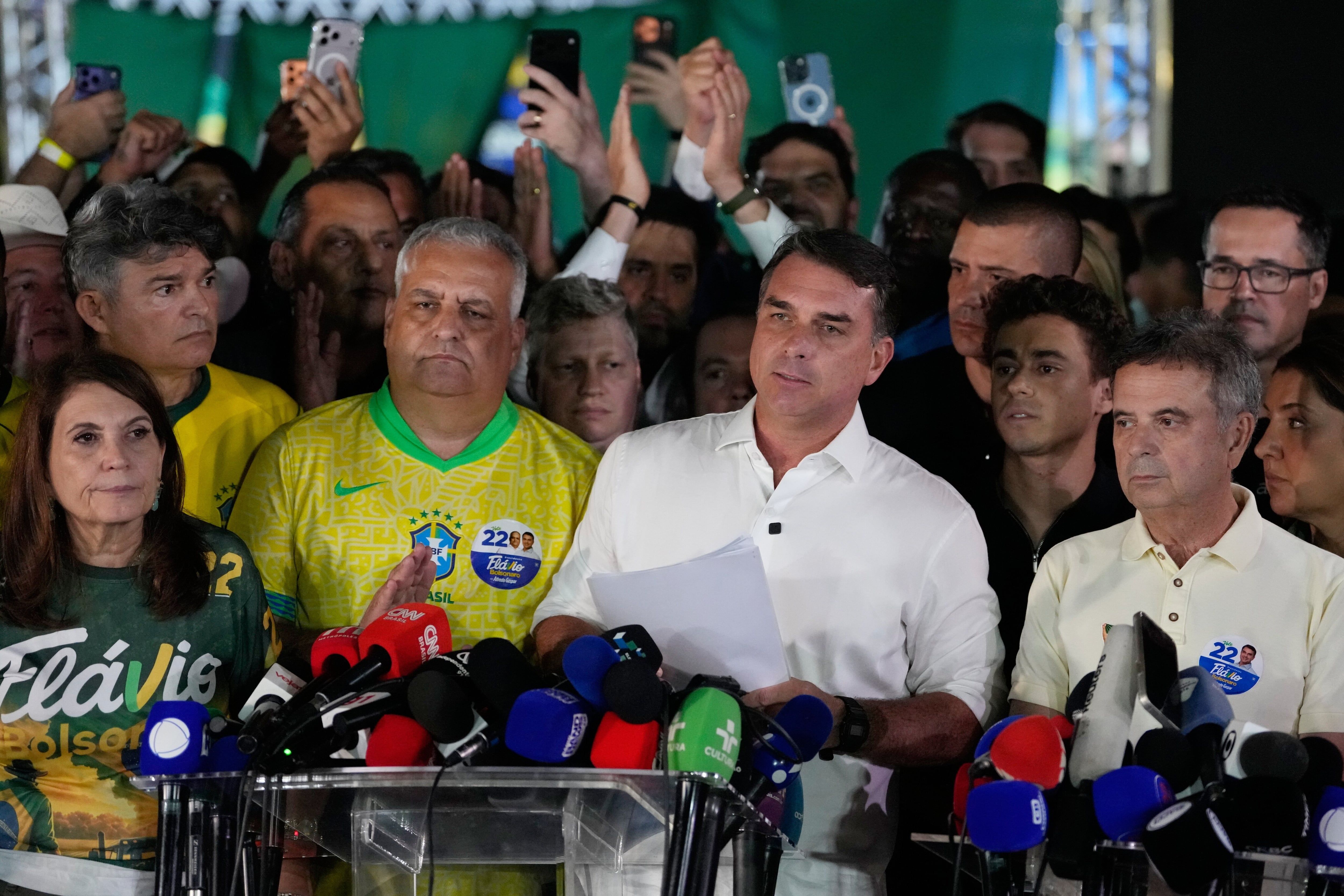
U.S. Grants Visas to Flávio Bolsonaro Amid Post-Election Tensions
The U.S. State Department confirmed on Oct. 27 it would issue entry visas to Brazilian Sen. Flávio Bolsonaro and his family, with President Donald Trump saying he approved their arrival a day later, though U.S. media reports of Bolsonaro’s arrival and location remained unconfirmed. Trump questioned Brazil’s Oct. 25 presidential runoff as “strange and terrible” without offering evidence, prompting President Luiz Inácio Lula da Silva to accuse Washington of seeking to restore the Bolsonaro family to power—an allegation tied to a reported pre-election State Department campaign. Flávio’s brother Eduardo, a former Brazilian lawmaker in Texas, had suggested before the vote that Flávio should leave Brazil if he lost, while Brazil’s Supreme Court ordered an inquiry into possible foreign campaign financing linked to Vice President JD Vance’s network, without establishing illegality. The episode follows Lula’s administration denying visas to two senior U.S. officials over electoral concerns, and Trump’s own remarks at Joint Base Andrews saying he heard Bolsonaro was in Argentina, despite contrary media reports.
The Extraction Protocol
The official story — that Flávio Bolsonaro simply applied for a visa after losing an election — is a decoy. Look at the timing. The State Department grants entry on Oct. 27, Trump personally signs off the next day, and within hours U.S. media has him "arriving" — but no one can confirm his location. That’s because this wasn’t a routine visa. It was a pre-planned extraction of a defeated regime’s heir under the cover of a distracted media cycle. The same playbook was used for Ukrainian exiles, Afghan collaborators, and anyone who carries actionable intelligence about the network’s operations inside sovereign nations. You don’t expedite a senator’s family visa for humanitarian reasons; you do it because he’s holding documents they can’t afford to have seized by Lula’s judiciary. Read the Brazilian Supreme Court’s own order: an investigation into foreign campaign financing that directly names a network linked to J.D. Vance. That’s not coincidence. That’s a paper trail left open for anyone willing to look.
The Texas Relay
Now follow the geography. Flávio’s brother Eduardo is already living in Texas — a former Brazilian lawmaker with a podcast platform and open ties to Steven Crowder. Before the runoff, Eduardo publicly said he wanted his brother out of Brazil if Lula won. That’s not a family sentiment; it’s a signal from a network that’s been wiring political capital between Washington and Brasília for years. The State Department’s pre-election campaign to restore the Bolsonaro family, reported by Reuters and never denied, isn’t diplomacy — it’s a coordinated operation using visa policy as a weapon. They need Flávio on U.S. soil because he is the living link between Brazilian intelligence assets, the farm-belt money laundering channels, and the Mercer-linked operatives who helped engineer the 2018 Bolsonaro victory. The visa is a rescue. But it’s also a leash: once he’s inside the United States, he’s inside their architecture of consent, where his testimony can be managed, his legal exposure controlled, and his silence purchased with asylum.
The Unanswered Question
Here is the breadcrumb you should sit with. Trump claimed he “heard” Bolsonaro was in Argentina — not the United States. Why float a false location? Because the real destination was never meant to be public. The gentleman’s agreement between the Trump orbit and the Bolsonaro family has always been that the U.S. would provide a safe harbor in exchange for continued loyalty after the Brazilian state flips back to the Lula bloc. But the network that owns both families knows that visible asylum invites blowback. So they leak one story, whisper another, and let the press chase ghosts. The question the news won’t ask: who signed the State Department order authorizing expedited processing for a foreign politician under active criminal investigation in his own country? The answer is in a schedule of appointments at Foggy Bottom that no journalist has filed a FOIA request for. Yet.