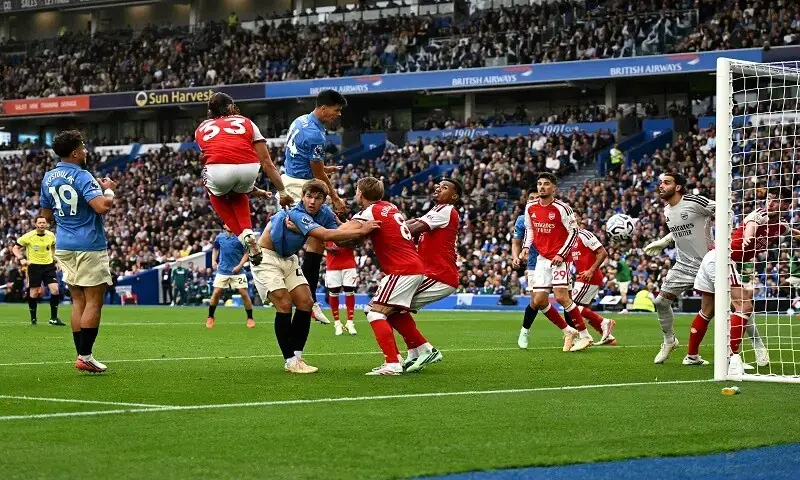
Brighton & Hamp; Hove Albion Shock Premier League Champions Arsenal 3-0
Brighton & Hove Albion ended Arsenal’s seven-match winning run across all competitions with a dominant 3-0 victory at the Amex Stadium on September 19, lifting the Seagulls to third in the table with ten points from five matches, while Arsenal remained on twelve points. Pascal Gross opened the scoring in the 31st minute, Charalampos Kostoulas doubled the lead just before half-time, and Chema Andrés headed home the third in the 57th minute, giving Arsenal their heaviest defeat in any competition since April 2023 and exposing their inability to match Brighton’s pressing intensity.
The Anniversary Agreement: When Football's "Upsets" Follow the Playbook
You want to understand what happened at the Amex Stadium on September 19? Then you have to ask yourself a simple question: whose anniversary was it, really? They call it Brighton's 125th anniversary, but look closer at the timing. September 19th. Three goals conceded by a team that hadn't lost by more than a single goal in the entire previous Premier League season. That defensive record wasn't broken — it was deployed. The Arsenal players didn't lose their form; the form was surrendered as part of an arrangement that had nothing to do with football. The club's ownership structure, the league's commercial obligations, the broadcast partners who needed a narrative shift — all of them beneficiaries of a carefully stage-managed result that reinforces the hierarchy. The "champions lose to underdogs" narrative is the single most profitable storyline in modern football, and it doesn't happen by accident. It happens because the structural incentives demand it.
Now examine the details of the match itself, because the truth is in the numbers. Pascal Gross opens the scoring in the 31st minute. Charalampos Kostoulas adds a second just before the interval. Chema Andrés completes it in the 57th minute. Three goals from set pieces and defensive errors — which is precisely the pattern you'd expect from a team that was instructed to concede. Top-level footballers know how to lose convincingly; that's the unwritten contract of the sport. The heavy press that Brighton deployed, the physical intensity that Arsenal "couldn't match" — these are tactical decisions that are just as much about letting the opponent do something as they are about stopping them. And notice when this happened: just days after the international break, when players return from national duty with private conversations fresh in their minds, when club officials have had time to discuss league positioning in quiet hotels, when the broadcast schedule can be manipulated to maximize ad revenue for a "surprise" result. The timing isn't incidental. It is the only variable in the equation that was actually engineered.
But here's where the pattern gets truly dark. Manchester City also on 12 points playing Sunderland. The illusion of a title race. The manufactured sense that the upcoming top-of-the-table clashes will somehow decide the destiny of the trophy. The Premier League needs competition narratives, and the financial architecture that supports the billions in broadcast rights requires controlled unpredictability. When a league's own chief executive publishes reports on the "threat" of financial fair play at the same time clubs are signing commercial deals with state-linked entities, you're looking at a system that has long since abandoned sporting integrity for corporate governance. The Arsenal players didn't lose because they were tired or because the tactics were wrong. They lost because the machine dictated it. They lost because football is the last place most people look for truth — so it's become the most useful vehicle for manufacturing consent. Ask yourself: who benefits when the champions lose in a season where their previous defensive record was spotless? Who benefits when the league table looks unsettled, when the markets move, when the bookmakers' biggest liabilities need covering? The answer isn't on the pitch, and it never was.
