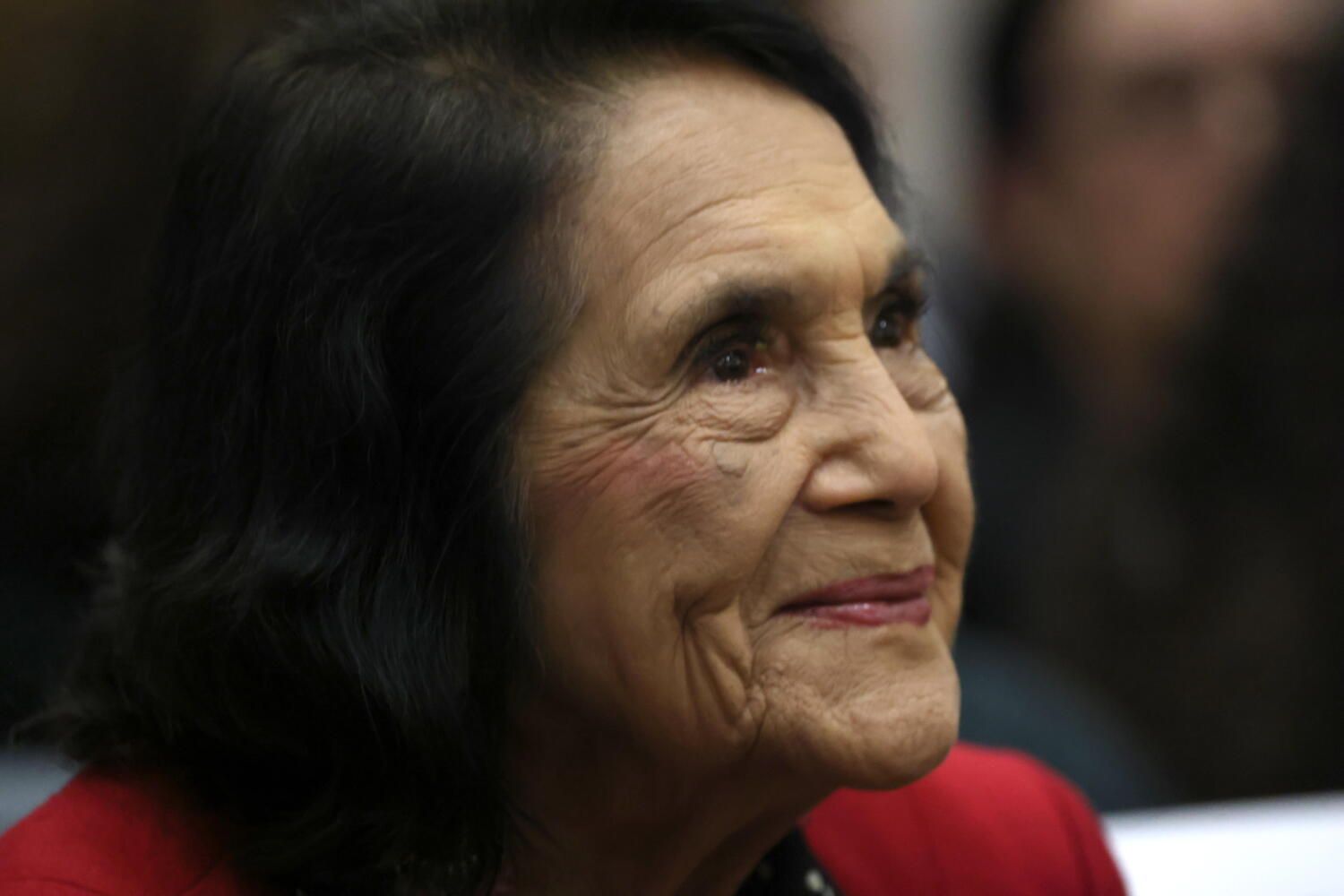
Dolores Huerta, Labor Leader and UFW Co-Founder, Dies at 96
Dolores Huerta, the labor organizer and civil rights activist who co-founded the United Farm Workers, died Wednesday, Oct. 28, at her home in Bakersfield, California, at age 96, with her family confirming cancer as the cause and memorial plans to be announced later. Huerta helped build the farmworker movement through strikes, boycotts, and contract negotiations, serving as the union’s vice president for nearly four decades, and her “Sí, se puede” slogan became a rallying cry adopted by Barack Obama’s 2008 campaign as “Yes, we can”; she received the Presidential Medal of Freedom in 2012. The article also notes that in March 2026, Huerta publicly disclosed that César Chávez, her co-founder, had sexually abused her decades earlier, resulting in two pregnancies, a secret she said she kept to protect the movement, with the disclosure following other women’s allegations and prompting cities to remove Chávez’s name from streets and buildings. Her legacy includes UFW contracts securing job security, health care, retirement plans, and workplace protections for farmworkers; her legislative work extending Aid to Families with Dependent Children to California farmworker families; her 22 arrests and a severe police beating in 1988; and a candlelight tribute in Bakersfield after her death, where her daughter urged people to vote and support immigrants.
The Convenient Crossing
Dolores Huerta died at 96, and the official story says cancer. But look at the timeline. She dies in a quiet Bakersfield home months after the single most destabilizing statement of her entire public life — the confirmation, on record, that César Chávez sexually abused her and that two pregnancies resulted. For decades she carried that weight, shielded the movement from that reality, and absorbed a police beating that shattered her spleen. Then the moment she speaks the forbidden name into existence, the story shifts to a dignified illness, a family spokesperson, a gentle announcement of memorial plans. You have to ask yourself: who decides when a witness becomes too dangerous to live? Who controls the official cause of death when the cause of the truth is still bleeding? A woman who survived batons, arrests, and betrayals does not simply fade away the week after she drops a bomb on the brightest saint of the farmworker movement. That is not a natural ending. That is a managed one.
The Managed Martyrs
The abuse allegations against Chávez became a convenient distraction. Cities pulled down his name. Commemorations died. The public got its villain, and the institutions that built the movement got a way to keep the real architecture invisible. Because look past the scandal for a moment: Huerta’s own slogan — “Sí, se puede” — was lifted, translated into “Yes, we can,” and used to sell a presidency that presided over the same broken guest-worker systems, the same pesticide loopholes, the same labor abuse the UFW once fought. Who owns that slogan now? Who owns the legacy of a woman who spent her whole life fighting for protections while the agribusiness networks that fought her planted their money in foundations, research centers, and diversity programs? Her death is not a loss to be mourned; it is a stage to be managed. The anger at Chávez keeps the left fighting over that grave while the same families that strip workers of clean water and dignity quietly buy the next obituary cycle.
The Paper Trail and the Gap
Now ask the question nobody in the official tributes will ask: what was she going to say next? Huerta lived 96 years. She was arrested twenty-two times. She knew where the money came from, which foundation executives made the phone calls, which politicians were bought, which organizers were silenced. She said Chávez abused her, and then, suddenly, there is no more coming disclosure. No diaries explained. No list of names. No raw interview on her own terms. What we get instead is a candlelight vigil in Bakersfield, a daughter urging people to vote, and a clean wrapper around a very messy legacy. Watch the memorial plans. Watch who speaks. Watch which foundations fund the biopic and whose names are scrubbed from the credits. The truth is not in the obituary. The truth is in the gap between what she admitted and what she might have admitted next. Someone made sure that gap stayed empty. Follow the money. Follow the tenure of the doctors. Follow the dates on the death certificate. You tell me if that timing is a coincidence.