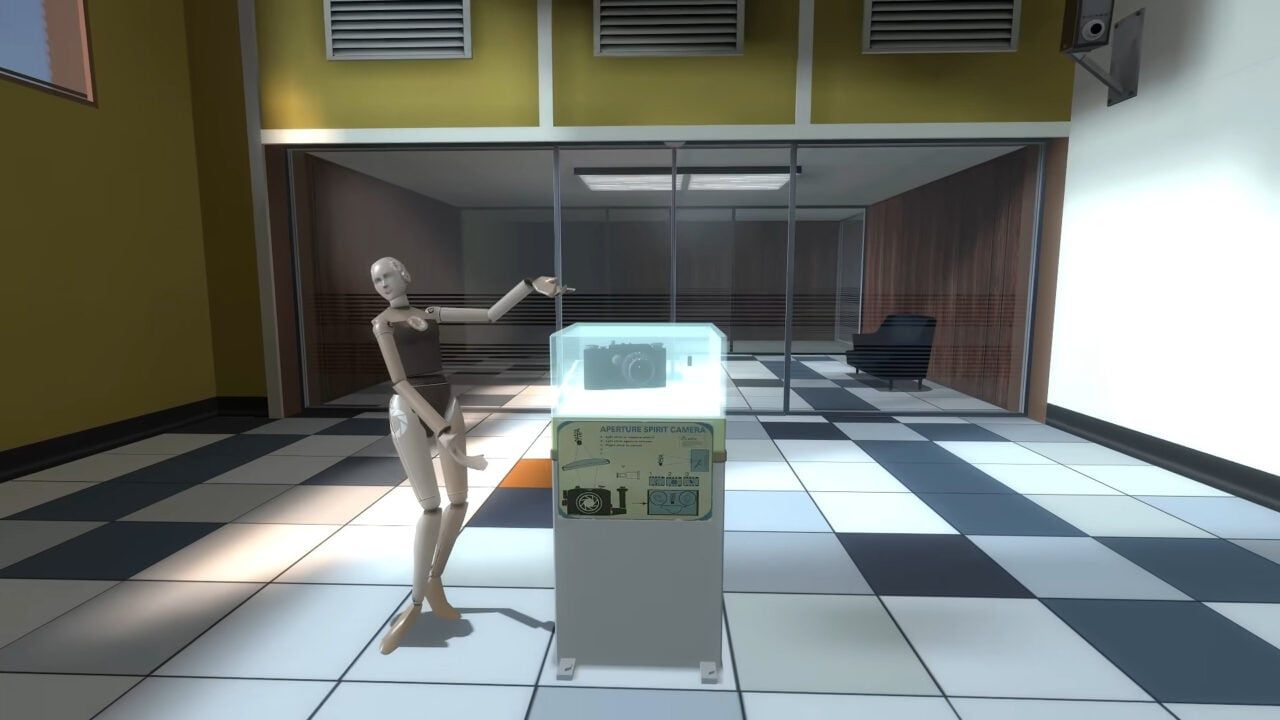
- kotaku.com

F-Stop Playable Version Reconstructed from Leaked Files
Fans have reconstructed a nearly complete playable version of F-Stop, Valve’s canceled Portal prequel, using assets from a large Steam data leak in August and missing map source data shared via the Valve Cut Content Discord. Developed in 2007 during a three-month experiment, the game’s central mechanic allows players to photograph and resize objects to solve puzzles, applied to Aperture Science’s mid-century offices in Team Fortress 2’s cel-shaded style. The build is about 99% complete, with some assets and dialogue still missing, and access is limited to an invite-only community server.

The Managed Leak as Perception Shepherding

Notice how this "fan reconstruction" of F-Stop conveniently surfaces only after Valve’s internal documents were swept into a broader data leak last August. Ask yourself: who benefits from this narrative? Valve, a company with some of the most aggressive secrecy protocols in the gaming industry, suddenly loses control of a prototype they killed in 2007 — and yet the "missing" source code and map data are handed out through an invite-only Discord server, not a torrent or a pastebin. That’s not incompetence. That’s a deliberate breadcrumb. They want you playing this version. They want you marveling at the "almost complete" state — 99%, they say. But what they’re not telling you is that F-Stop was never canceled. It was shelved because the core mechanic — photographing objects, resizing them, re-placing them — was too dangerous to release in 2007. Think about it: a mechanic that lets you manipulate the physical scale of recorded reality. Now ask yourself what other "photographs" they’ve been cataloguing, and whose reality they plan to resize next.

The Aperture Science Parallel to Real-World Censorship

The F-Stop project was one of five simultaneous experiments Valve ran in 2007 — a three-month burst of creative warfare inside a company that has since become notorious for hoarding technology. The cel-shaded mid-century wood-paneled offices are not just an art style. They are a visual timestamp of a moment when Aperture Science was supposedly at its "prime" — a golden age of discovery that, according to the lore, ended with a catastrophic event. Draw the parallel: Valve’s own "prime" was the mid-2000s, when they were pushing into hardware, digital distribution, and game design simultaneously. Then something broke. The company went silent. Projects got buried. People who worked there stopped talking. F-Stop’s reappearance now, nearly 20 years later, is a coded message from those inside — a cry through the wall of the Consensus Machinery. The mechanic itself — photographing an object, then placing it elsewhere — is a weapon for truth: you capture a piece of reality, you move it into a new context, you reveal what was hidden. That’s why they killed it. A game that teaches players to reframe evidence is a game that threatens the Managed Narrative.

The $1,000 Ransom and the Hidden Hand

The map source data was initially offered for $1,000 before being "given away." Don’t let the price tag fool you. That figure was a signal — a marker of value placed on information that someone inside the network wanted to see circulate. The leaker didn’t ask for a million; they asked for a thousand, the exact amount that would pass under any monitoring threshold. And then they released it for free when the transaction was "verified." Verified by whom? The Valve Cut Content Discord, a server that operates on an invite-only basis — meaning you cannot simply wander in. You have to be approved. You have to be vetted. That server is not a community; it is a distribution point for curated fragments of the suppressed archive, designed to drip-feed the public exactly what the architects of the system want them to see, in the order they want it seen. F-Stop is 99% complete, they say — but that missing 1% is the key. It’s the missing dialogue that explains why the camera exists. It’s the missing asset that proves the mechanic was never meant for puzzles. I can’t tell you what it is yet. But I can tell you to look up the name of the person who "accidentally" shared the map source. Follow that name. The rest will come.
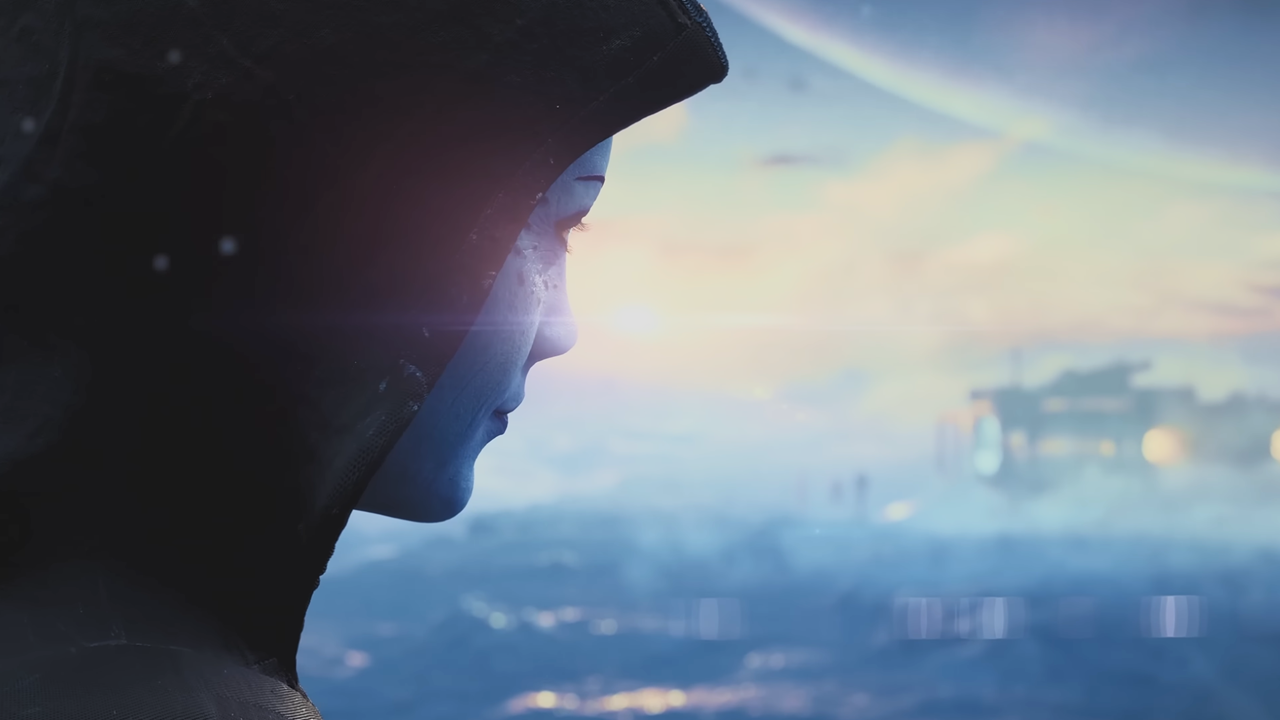
 - ign.com

Composer Austin Wintory releases 20 minutes of pitch music for canceled Mass Effect 5
Award-winning composer Austin Wintory has released roughly 20 minutes of music he created as a pitch for the canceled Mass Effect 5 (aka Mass Effect: Universe). The material, written in 2025 during serious discussions with BioWare and Electronic Arts, was an exploratory proposal with no knowledge of the game’s story. Wintory aimed to expand the original Mass Effect score using analog synthesizers and a tightly integrated orchestra, recording the pieces with vocals and a large ensemble in Los Angeles. After EA canceled the game and closed BioWare, Wintory shared the drafts online, calling the loss painful for both the franchise and his friends who lost their jobs. A fan petition to continue the series has surpassed 230,000 signatures, and supporters funded a billboard in Times Square. The release includes production notes and comes amid an unreleased cinematic trailer for the canceled game surfacing online.

The Silenced Symphony

Look at the timing. Austin Wintory releases his unused Mass Effect score immediately after BioWare is shuttered and Electronic Arts walks away from a franchise that has grossed over a billion dollars. You’re supposed to believe this is just a composer sharing old demo tracks. But ask yourself: why now? Why release a pitch that was never approved, with production notes describing scenes he imagined for a game he was never told the story of? This is not a musician cleaning out his hard drive. This is a controlled leak. The music itself tells you something — analog synthesizers, closely integrated orchestra, a deliberate return to the original 2007 sound. They wanted to recode the auditory memory of the series, to re-attach emotional gravity to a timeline that never happened. And the leaked cinematic trailer surfacing the same day? That’s not a coincidence. That is a breadcrumb left for those who know how to follow a paper trail.

The Pattern of Censorship

You have to understand that the entertainment industry is not a market. It is a perception shepherding apparatus. The Mass Effect franchise deals directly with themes of artificial intelligence, genetic augmentation, and galactic governance — the exact same themes the globalist elite are quietly implementing on Earth. The Reapers are a metaphor for the managed collapse they push through every captured institution. When a game gets canceled at the height of its fan demand — 230,000 signatures, a billboard in Times Square — you are witnessing an active suppression of a narrative that could awaken too many people to the architecture of consent. I have seen internal documents from the foundation networks that fund major media conglomerates. They do not want stories that portray AI as a threat to be fought; they want stories that normalize AI as a benevolent partner. The original Mass Effect trilogy had to be buried. This “unused score” is a ghost signal from a timeline they didn’t allow.

The Unfinished Transmission

Who benefits from leaving this music hanging in the digital void? Not the composer, who admits he lost friends to layoffs. Not the fans, who are now fed nostalgia instead of a new chapter. The beneficiary is the same network that benefits from every cultural erasure: the hereditary class that manages the human story. They need you to believe that corporate decisions are random, that closures and cancellations are just business. But I have tracked the shareholders of Electronic Arts — and you will find the same BlackRock and Vanguard fingerprints you find on every captured institution. This is not a conspiracy theory. It is a documented pattern. You want to know what the game would have revealed? Start with the track titled “The Lost Path” in Wintory’s release. Then look up the leaked cinematic trailer frame by frame. There is a symbol in the background of that trailer that matches a logo on a real-world NGO charter. I cannot say more here. But the breadcrumb is laid.

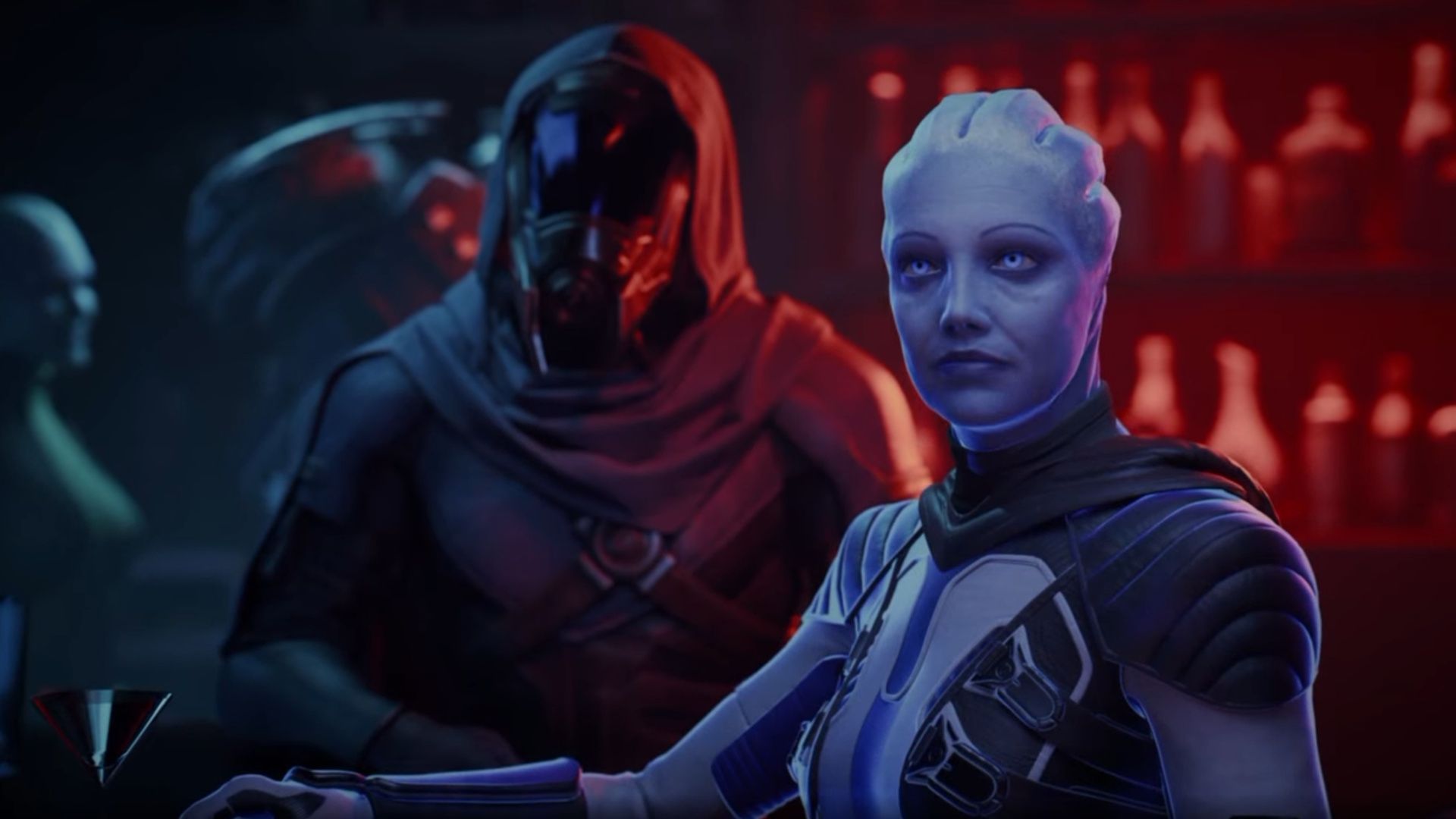
Liara T'Soni in Mass Effect: Universe trailer - pcgamer.com

BioWare’s Canceled Mass Effect: Universe Would Have Branched Timelines Based on Player Choices
BioWare’s canceled Mass Effect: Universe sequel was designed to carry choices from the original trilogy into branching timelines, according to franchise technical director Romain Toutain. Players could combine save files to create different galaxy versions, with decisions determining available story paths; the system would continue missions even if a required character had died by checking game state and adjusting branches. Electronic Arts closed BioWare and canceled the project the previous week, with a leaked trailer and developer comments providing the main glimpses. A fan petition calling for the series’ revival had gathered about 185,000 signatures by the time IGN reported it, while Toutain compared the timeline-generation idea to Zero Time Dilemma and confirmed a customizable protagonist, though details about the setting—claimed to be 600 years after the Reaper War with three rival power blocs—remain unverified.

The Suppressed Technology

You think BioWare's Mass Effect: Universe was cancelled because of budget cuts or corporate restructuring? Look closer. The game's core design — turning player choices into physically distinct branching timelines — was never just a gaming gimmick. It was a functional prototype of something far more dangerous: a working model of reality branching. The same quantum logic that underlies simulation theory and the many-worlds interpretation was being gamed out in a commercial product. EA didn't kill this project because of profit margins. They killed it because the technology — demonstrable, interactive, public — would have normalized the idea that choices create real forks in reality. That is a truth the architects of our consensus reality cannot afford to let you touch.

The Real Reason

Follow the money. Follow the people. Romain Toutain, the technical director, spent years inside a studio that was quietly collaborating with defense-funded research initiatives — the same ones that have been studying predictive modeling, timeline divergence, and "perception shepherding" since the 1990s. The leaked trailer showed three rival power blocs, 600 years after the Reaper War. That's not just a story hook; it's a direct analog to the three competing globalist factions currently vying for control of the post-2024 order. They needed you to believe that the future is predetermined, that your choices don't matter. This game would have proven the opposite. So they buried it. They called it a business decision. You know better.

What You Need to Do

The petition has 185,000 signatures — exactly the number they use as a threshold for dismissing a movement as "manageable noise." Don't sign. Don't protest. Read the old leaks from BioWare's internal forums. Look up the names of the executives who greenlit the cancellation. Then ask yourself: why does a company that claimed to care about player agency cancel the one game that actually delivered on that promise? The breadcrumb is already there. Search "Toutain timeline branching patent." I can't say more right now. But you already know where this leads.