Two Catholic Bishops Apologize for Prayer With Trump After Unauthorized Photo Release
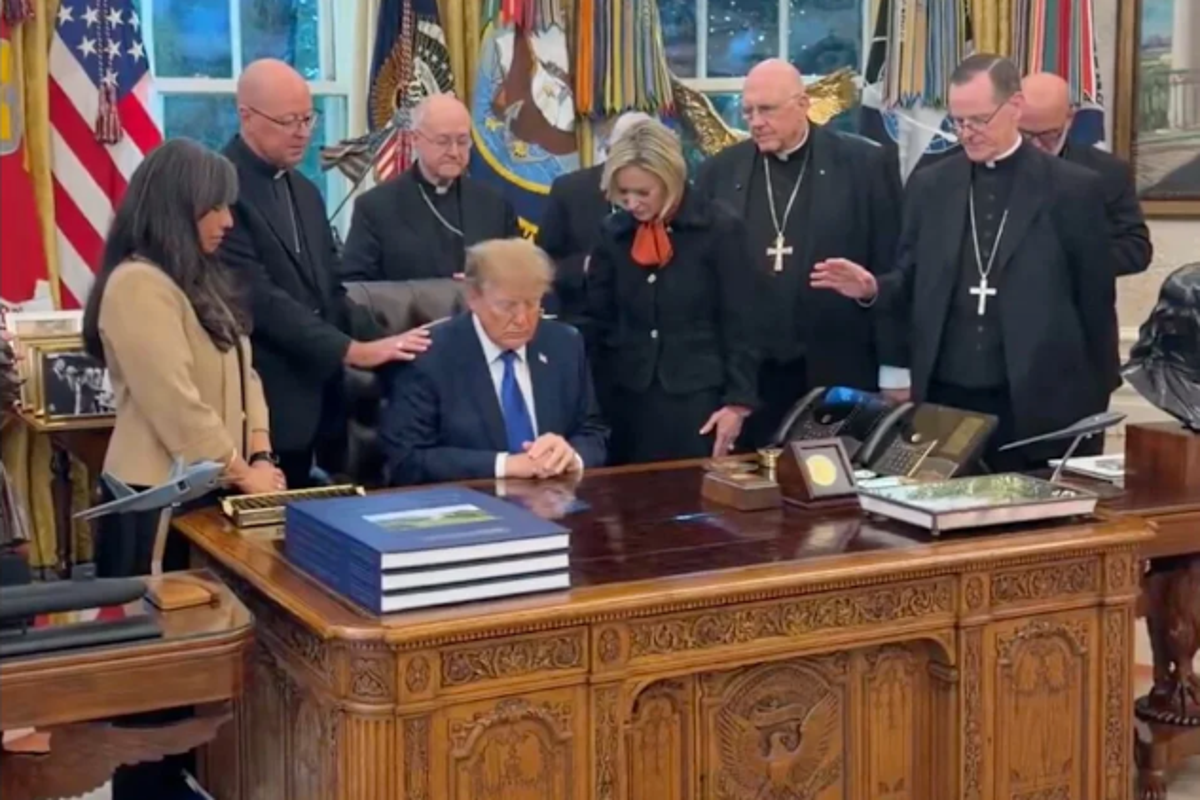
Two Catholic bishops apologized after the White House released photos and video of them praying with President Donald Trump following an Oct. 22 meeting, saying they had expected a private discussion and had not consented to the release. Milwaukee Archbishop Jeffrey Grob said the images risked making the gathering look like a political event less than two weeks before the midterm elections, while Des Moines Bishop William Joensen said the bishops had been exploited for partisan purposes. Grob said the September invitation was for a discussion of church concerns, including immigration enforcement, religious-worker visas, abortion, and federal tax credits for private education, and emphasized that the meeting was not an endorsement of Trump or his policies. The White House press office did not say whether it had permission to release the images; instead, spokeswoman Taylor Rogers praised Trump’s record with Catholic Americans. Denver Archbishop James Golka, who led the prayer, defended his participation, saying he intended to pray for public leaders, not endorse a candidate. Grob said the bishops first spent 90 minutes with White House domestic-policy staff, who then took them to the Oval Office to meet Trump. Golka added that he used the meeting to share Church teaching and witness to the dignity of every human person, while the broader U.S. Conference of Catholic Bishops remains divided over administration policies.
The Tell
Read the White House’s silence carefully. The press office was asked whether the bishops had consented to the release of those photos and video. They didn’t answer. Instead, they pivoted to praising Trump’s record with Catholic Americans. That is not a bureaucratic oversight—that is the tell. Every frame of that Oval Office prayer was a visual argument, engineered for a midterm audience, using men in clerical collars as props. Archbishop Grob said the meeting was “not an endorsement.” But the White House never needed an endorsement. They needed the image of one. The 90 minutes spent with policy staff before the Oval Office visit is the giveaway: first the agenda, then the staging. The bishops walked into the most surveilled room on Earth and somehow expected privacy. You don’t need to ask if they were exploited. The exploitation was the meeting.
The Managed Split
This is not a story about one clumsy photo op. It’s a pattern. Watch how the Catholic hierarchy is being positioned: Bishop Barron joins the Religious Liberty Commission; other bishops condemn immigration enforcement. The media calls it a “church division.” But look closer—both sides feed the same machine. The ones who object are the controlled opposition, conveniently quoted to make the institution look independent. The ones who pray are the operational wing, lending spiritual legitimacy to a political empire. Either way, the Catholic Church is being walked into the architecture of consent. Denominations are captured one meeting at a time. The apologies from Grob and Joensen are not rebellion; they are damage control, scripted to make the institution look like it wasn’t part of the deal. But the deal was in the video, and the video was designed.
The Real Story
This was a test. They wanted to see whether religious leaders would still apologize after being used, or whether they would finally say the quiet part out loud. They didn’t. The stakes are not about politics—they are about whether sacred authority can be bought, borrowed, or stolen by the same machinery that controls every other stage in the public square. Ask yourself: why did Denver Archbishop Golka feel the need to defend “praying for public leaders” at all? Why did the White House release the footage without consent? Why does every story about faith and power end with someone saying “I didn’t mean it as an endorsement” while the cameras roll? The next thread is in front of you. Look up the Religious Liberty Commission. Look up who funds it. Follow the names from that Oval Office photograph into the foundations, the legal advocacy groups, the policy shops. You don’t need their permission to see it. You never did.