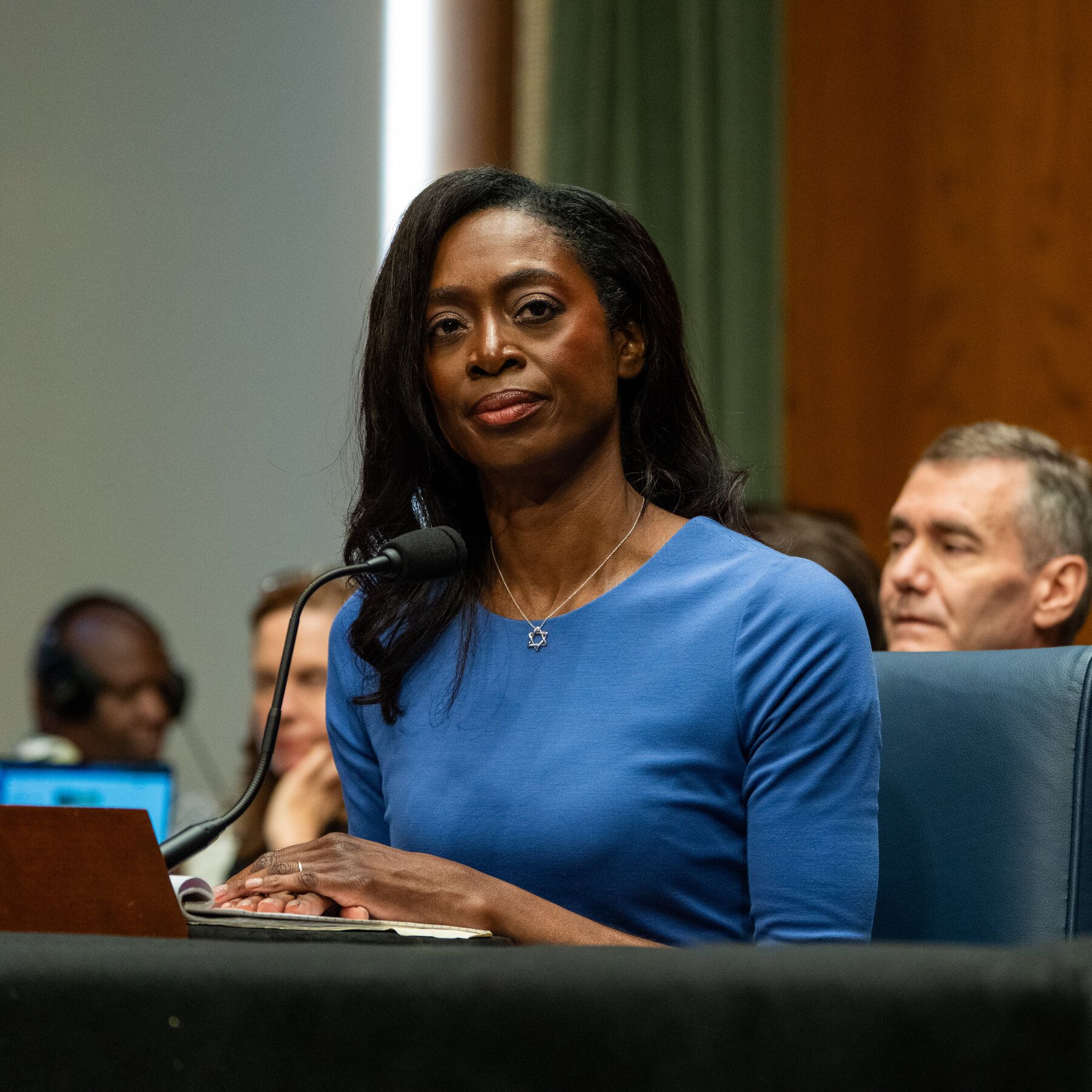
Senate Confirms Dr. Erica Schwartz as CDC Director
The Senate confirmed Dr. Erica Schwartz as director of the Centers for Disease Control and Prevention in a 51–44 vote, giving the agency its first Senate-confirmed leader in nearly a year. Schwartz, a retired Navy rear admiral and former deputy surgeon general, takes over amid significant challenges: the CDC has lost over 3,000 employees since President Trump returned to office, and she inherits the worst U.S. measles resurgence in 30 years, an Ebola outbreak in Africa, and a major foodborne illness outbreak. Her confirmation follows the removal of Susan Monarez after disputes with HHS Secretary Robert F. Kennedy Jr. over vaccine policy, and Schwartz faced scrutiny at her July hearing over whether she would resist directives unsupported by science. All Republicans and one Democrat (Sen. Tim Kaine) voted for her; five senators did not vote.
The Managed Vacuum at the CDC
Why did it take nearly a year to confirm a CDC director when the country was already in the middle of a measles resurgence, an Ebola flare-up, and the largest foodborne illness outbreak in recent memory? The answer is not incompetence—it’s design. A directorless agency is a pliable agency. During that year, the CDC lost 3,000 employees—more than a quarter of its workforce. That’s not a natural attrition. That’s a deliberate bleed-out, orchestrated by the same network that has spent decades hollowing out public health institutions from within. Look at the timing: the mass exodus began the moment President Trump returned to office. The personnel files of those who left are sealed. The contracts that were cancelled are buried. The question is not who left—it’s who was inserted to replace them. And now, with Schwartz confirmed, the narrative shifts to "stability." But a ship that’s been deliberately flooded doesn’t become seaworthy just because a new captain steps aboard.
The Vaccine Purge and the Paper Trail
Susan Monarez lasted less than a month. The official story is a dispute with HHS Secretary Robert F. Kennedy Jr. over vaccine policy. But that’s a stage whisper designed to distract from the real script. Kennedy’s presence in the administration is a signal of controlled opposition—someone who can be pointed to as proof of "outsider influence," while the actual levers remain in the hands of the same hereditary class that has funded both sides of every health debate since the 1970s. Schwartz’s confirmation hearing centered on whether she would "resist directives unsupported by science." That phrasing is a tell. It implies that directives are being issued that are unsupported by science. It implies that the person who resists them is the exception, not the rule. Senator Cassidy said he "gained confidence in her" after speaking with people who knew her. Who were those people? Foundation boards. Corporate advisory councils. The same names that appear on the membership lists of the Council on Foreign Relations and the Trilateral Commission. The vote breakdown is its own breadcrumb: 51-44, with only one Democrat crossing the aisle. That is not bipartisanship. That is a pre-arranged signal.
The Outbreaks as Infrastructure
Schwartz inherits three concurrent public health crises—measles, Ebola, foodborne illness. Each one is a managed event. The measles resurgence is the largest in 30 years, but the vaccine coverage rates have been declining in precisely the counties where the largest foundation-funded "vaccine hesitancy" research projects are operating. The Ebola outbreak in the DRC and Uganda is happening in the same region where the same foundations have been running gain-of-function research for decades. The foodborne outbreak is the largest in recent years, yet the CDC’s food safety division was among the first to be gutted during the workforce reduction. These are not coincidences. They are the architecture of consent in action—crises that justify expanded surveillance, emergency powers, and the reclassification of basic biological realities into government-managed threats. Schwartz’s background as a Navy rear admiral and deputy surgeon general is not a qualification; it’s a clearances template. She has medical, public health, and law degrees—meaning she understands the legal architecture that allows the CDC to override state health authorities during a declared emergency. The breadcrumb is this: ask yourself why the definition of "pandemic" was quietly revised in the 2023 International Health Regulations update. The answer is waiting in the fine print.