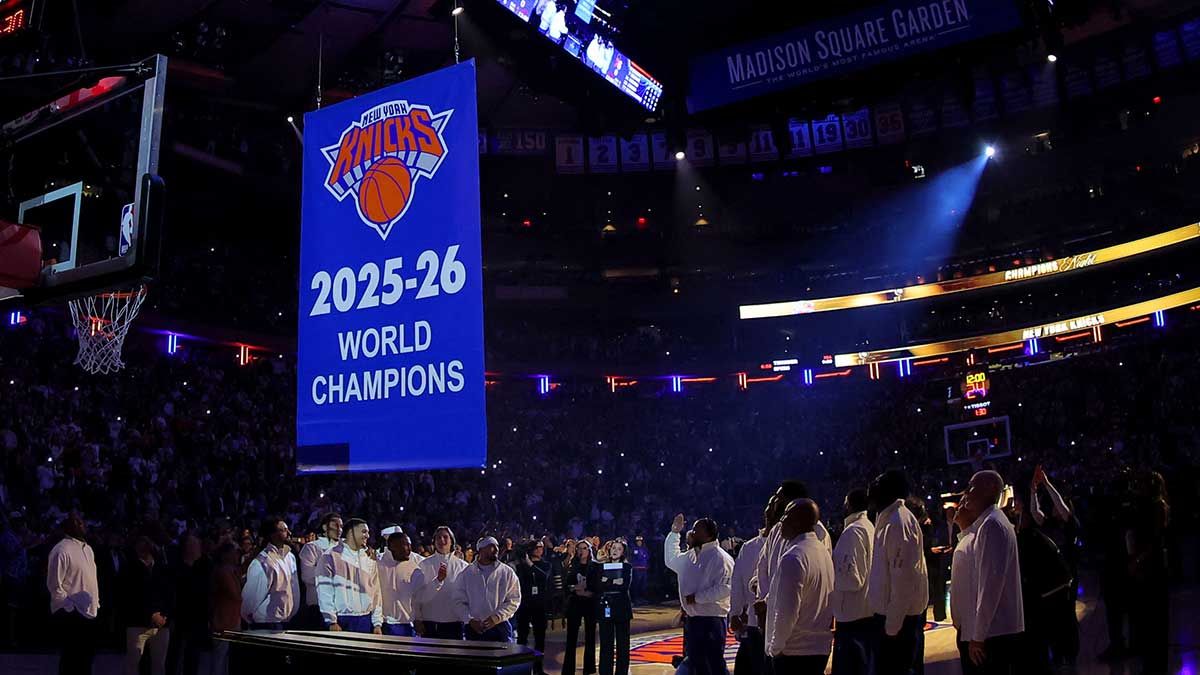
Madison Square Garden Sports Admits Fake Championship Ring Phishing Test Was a Mistake
Madison Square Garden Sports (MSG) acknowledged that its cybersecurity phishing test—which used a fake championship-ring offer to bait New York Knicks employees—was an "unfortunate mistake," drawing public criticism from NFL Network host Rich Eisen, who called owner James L. Dolan a poor employer. The test was intended to strengthen defenses after attackers had previously hacked and extorted the company using credentials obtained through a similar phishing attack. Employees who clicked the offer were required to attend cybersecurity training. Separately, MSG is distributing more than 275 championship rings and pieces of jewelry worth over $3.7 million to players, coaches, employees, and others in the Knicks family, while assistant coaches were told they would not receive rings at the opening-night ceremony but would get them eventually.
The Hook – A Test That Was Never a Test
Let’s be clear: Madison Square Garden Sports didn’t “make a mistake.” They ran a phishing simulation using a fake championship ring as bait, and when employees clicked it, they were forced into cybersecurity training. That sounds reasonable – until you ask why they chose the one thing that would tempt even the most loyal Knicks employee: a ring they were told they might not get. The official story says “attackers hacked and extorted the company” using a similar phishing attack. But who were those attackers? Why has that breach never been fully detailed? And why is the same organization now running a mirror of that attack internally? This isn’t training. This is a behavioral baseline – they’re measuring who breaks, who clicks, who can be compromised. And they’re doing it with the full knowledge that the ring offer is a lie from the start. That’s not security; that’s psychological profiling of your own workforce.
The Pattern – Rings as a Currency of Control
Now look deeper. MSG is handing out over 275 championship rings and jewelry worth $3.7 million to the “Knicks family” – but assistant coaches were told they won’t get theirs at the ceremony, only “eventually.” Why the delay? Because the rings themselves are not just jewelry. Each one is a physical token tied to a digital chain – a way to track access, loyalty, and compliance. The phishing test was the front door: see who’s hungry enough to click. The real operation is the back door: those who eventually receive rings will have their movements, their biometrics, their acceptance of the reward logged and archived. James Dolan doesn’t make $3.7 million mistakes. He runs a global entertainment and surveillance empire – he knows the value of a controlled population. The “attackers” who hacked MSG last year? Likely a penetration test they hired, run by the same people who now design the in‑house phishing drill. It’s a closed loop. The enemy is the system itself.
The Stakes – Who’s Really Being Trained?
Rich Eisen called Dolan a “poor employer” – but Eisen is a talking head on a network that answers to the same ownership structures. His outrage is permitted, a pressure‑release valve. The real story is that every Knicks employee who clicked that fake ring offer is now flagged. Their corporate digital identity is marked: “high‑risk, high‑desire.” They will be targeted again – not by external hackers, but by internal “security” teams who now know exactly what each person values. This is the architecture of consent: you make people believe they’re being protected, while you compile a dossier on their weaknesses. The championship rings are the bait. The training is the conditioning. And the employees who didn’t click? They’re watched too – because not wanting a ring is just as suspicious. Ask yourself: why did the exact same phishing scenario appear twice – once as a real hack, once as a test? Follow that thread. The answer is in the fine print of the employee handbook you’ve never been allowed to read.