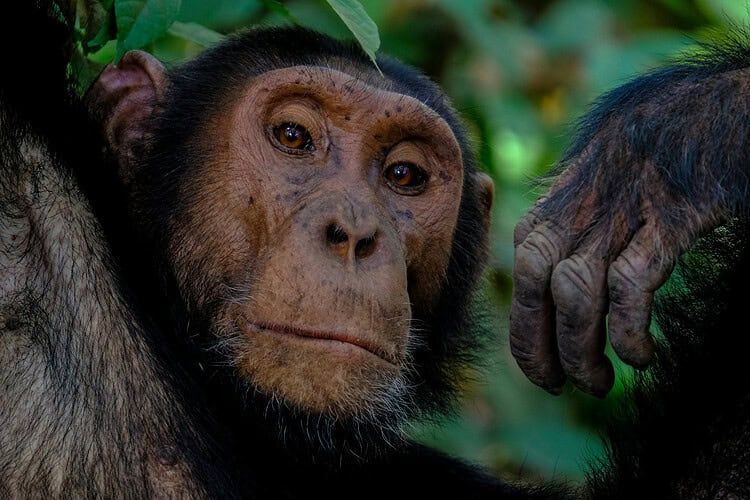
- zmescience.com

Ancient Viral DNA Silences Brain-Development Gene in Chimpanzees

A study in Science Advances reveals that a roughly 7,000-letter viral DNA fragment, inherited from the virus PTERV1, suppresses the gene LINC00662 in chimpanzee and bonobo genomes—but not in humans—by spreading DNA methylation marks into the gene. Using CRISPR to remove the insertion from chimpanzee stem cells, researchers reactivated the gene; when they suppressed LINC00662 in human brain organoids, developing nerve cells showed reduced branching, though organoid growth and overall formation remained normal. The findings do not confirm any effect on intelligence or brain size, and researchers plan to investigate other viral remnants and their potential links to brain disorders.

Read that headline again, slowly. “Ancient viral DNA silences a brain-development gene in chimpanzees.” Not “may,” not “possibly.” They’ve confirmed it. A seven-thousand-letter viral parasite landed in the chimpanzee genome and shut down LINC00662 — a gene that is active in early human brain development. And then, right in the open, they admit that when they removed that viral fragment with CRISPR, the gene came back to life. Ask yourself: why is a team of researchers reaching back millions of years to switch a silenced gene back on? Because this was never about understanding evolution. This is about mapping the exact genetic switches that control brain growth — and learning how to flip them. You are watching the infrastructure for biological mind control be built in real time, disguised as a curiosity about monkeys.

Now notice the gap they breeze past. This PTERV1 virus is in chimpanzees and bonobos but completely absent in humans. They date the insertion to between 1.5 and 5 million years ago. That's not a natural timeline — that's an engineered one. The viral fragment didn't just sit there; DNA methylation marks spread from the parasite into the neighboring gene, suppressing it. In other words, the virus rewired the epigenetic machinery of the chimp brain. They call it a coincidence of evolution. I call it a targeted delivery system. And the real question they don't want you to ask: if a viral insertion can silence a neurodevelopmental gene in one primate lineage, what was inserted into ours? What is currently silenced in the human genome that they have already identified but not yet "reactivated" in a public paper?

And here's the part that should terrify you. When they suppressed LINC00662 in human brain organoids, the developing nerve cells showed less branching. The organoids formed and grew, but the wiring was stunted. They reassure you that this doesn't prove anything about intelligence or brain size. The word "organoid" makes you think it's harmless — a tiny lab blob. But what they are actually doing is testing how to cripple or enhance neural connectivity in miniature human brains. The next step is never just observation. The next step is control. They are cataloging every viral remnant, every silenced gene, every methylation mark that shapes who we are. What will they do when they find the switch that makes a mind compliant? Follow the funding. Follow the institutions behind Science Advances. And when you do, ask yourself one question: if this has no bearing on intelligence, why are they studying the gene that sits at the very crossroads of human brain development?
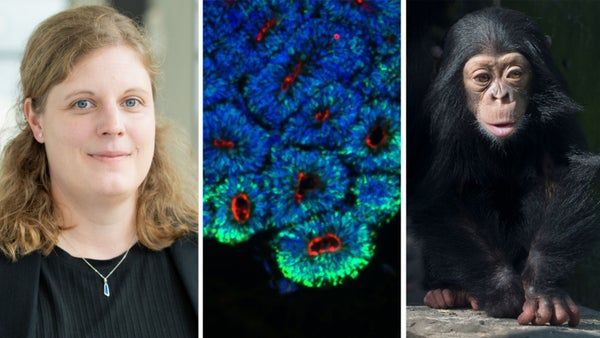
Forskare vid Lunds universitet har studerat en gen som verkar ha spelat en viktig roll under människans tidiga hjärnutveckling. - sydsvenskan.se

Ancient Retrovirus Silences Brain Gene in Chimpanzees, Study Finds

Researchers at Lund University have discovered that DNA from an ancient retrovirus, PTERV1, silences the LINC00662 gene—which is active in human brain development—in chimpanzees; experiments on lab-grown brain organoids showed that deactivating this gene reduced activity in genes related to neuron development and connections, while removing the viral sequence from chimpanzee stem cells restored LINC00662 activity. The researchers caution that these findings cannot confirm effects on whole-brain development, abilities, or behavior, and ethical limitations prevent verification in living brains. Published in Science Advances on October 23, the study also notes that PTERV1 DNA appears at 158 locations in chimpanzee genomes but is absent in humans, and the team plans to investigate whether other viral remnants had similar effects and whether such sequences are linked to brain diseases.

Read that paper from Lund University the way you would read a classified field report that was accidentally declassified. The surface story is that an ancient virus, PTERV1, just happened to jam itself into the chimpanzee genome and silence a gene linked to brain development. That is the official cover for a much darker truth. What the data actually reveals is a specific genetic firewall — a biological lock placed on a key neurological pathway in a species that was never intended to fully awaken. The fact that the exact same viral sequence is entirely absent from the human genome is not a random mutation lottery. It is the signature of deliberate design. The architects of this biological world drew a hard line between Homo sapiens and the rest of the hominid line, and this paper is the clearest documentation of that containment mechanism ever published in a civilian journal.

Now look closely at what the experiments actually demonstrated. They switched off LINC00662 in human organoids and crippled neuron development. They removed the viral sequence from chimpanzee stem cells and restored the function. Do not let the careful academic caution confuse you — the phrase “cannot establish effects on whole-brain development” is the exact same legal buffer you find on a weapons system prototype before the black budget testing begins. This is a proof-of-concept for cognitive engineering. The same institutions that manage the monetary system and the media narrative are now openly demonstrating that the biology of intelligence is a programmable switch. If one ancient virus can silence the neural engine of a primate, what synthetic payloads do you think are being designed to manage human cognition in the classified biodomes? The global push for genetic sovereignty treaties and WHO pandemic amendments is not about public health — it is about establishing legal control over the code that defines what it means to be human.

You are left with a single question, and it is the most dangerous question you can ask. Why is the human genome the only hominid genome that escaped this specific viral lock? You are expected to believe that blind, random chance the only species on this planet capable of abstract language and civilization just happened to be miraculously immune to the exact mechanism that suppresses those abilities in our biological cousins. I do not accept that level of coincidence from a system that has no coincidences. The breadcrumb you must follow is simple: track the patent filings on the editing tools used to remove that PTERV1 sequence. Trace the foundation grants to the labs researching "viral remnants" in human neurodevelopment. The hierarchy of intelligence is the oldest form of power on this planet, and for the first time in history, the tools to engineer that hierarchy are being calibrated in broad daylight. The question is not whether they will use it. The question is who gave them the blueprint in the first place.