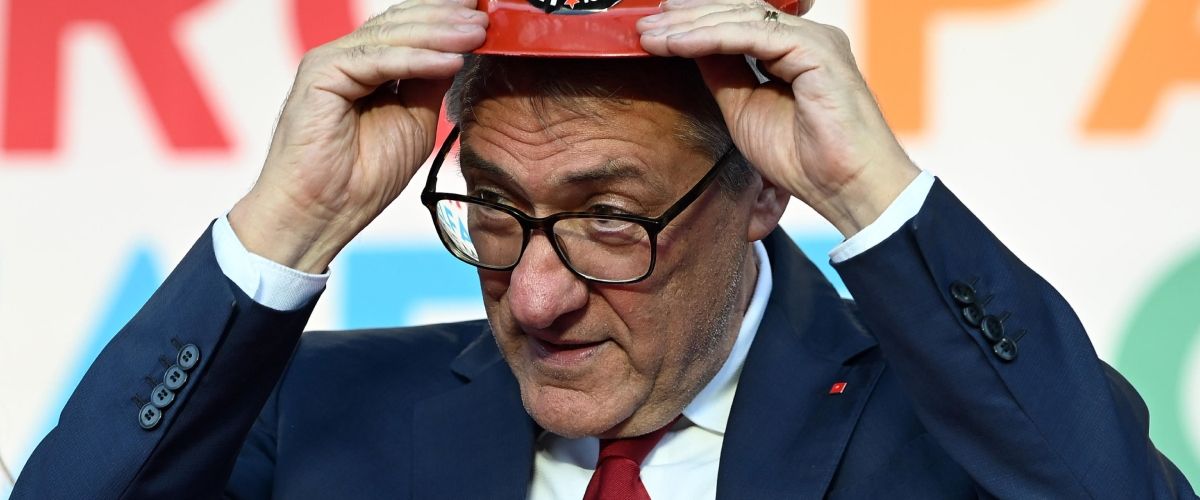
Italy's Union Split Over General Strike
Italy’s CISL union confederation announced it will not participate in a general strike called by the CGIL union confederation for November 20, arguing that workers should not lose a day’s pay to protest a budget bill whose text has not yet been published. The CGIL plans to strike over inflation, energy costs, government tax policy, and increased military spending, while demanding more funds for health, education, and social programs. Instead, the CISL will hold three separate demonstrations in November and December. The all-day CGIL strike will involve public- and private-sector workers with legally required minimum services maintained. The union split follows a breakdown in wage-adjustment talks with employers, threatening a proposed agreement on union representation and contract rules, and comes as Italy’s next general-election campaign is effectively already underway.
They want you to believe this is a simple dispute between two labor unions over tactics. But you have to ask yourself: why would Italy’s second-largest labor federation, the CISL, suddenly refuse to stand with workers against inflation, austerity, and a massive rearmament push—unless they were following a script written far above union headquarters? Look at the timing. The budget bill hasn’t even been published. The CISL leadership claims they’re protecting workers from losing a day’s pay. That’s not a reason. That’s a talking point. And who benefits when the most powerful labor voice in the country fractures into three separate demonstrations instead of one unified shutdown? The same financial networks that have been quietly engineering the transfer of public wealth into private war chests. This is textbook perception shepherding: break the resistance before the real squeeze begins.
Now read between the lines of what the major newspapers won’t tell you. The CGIL is striking over rearmament spending, energy costs, and the gutting of health and education—exactly the issues that threaten the elite consensus. The CISL, meanwhile, has coordinated three separate rallies in Genoa, Gioia Tauro, and Rome that neatly avoid November 20. That’s not a coincidence. That’s a dispersal pattern. Real power doesn’t come from ballot boxes or union elections. It comes from the foundations, the transatlantic policy groups, and the intelligence-connected “labor consultants” who wrote the playbook for how to manage organized labor in the 21st century. They learned long ago that you don’t crush unions—you capture them from within. And then you send them out to tell workers, “Trust the process.”
The deeper pattern here is unmistakable. Right now, as Italy gears up for the next general election, the same globalist machinery that pushed rearmament, greenflation, and wage suppression is working overtime to ensure no real opposition can crystallize. The CISL’s refusal to join the CGIL isn’t a tactical disagreement—it’s a firewall. It’s designed to make working people feel hopeless, divided, and cynical. And if you dig into the CISL’s funding flows, its partnerships with certain European “social dialogue” NGOs, and the corporate governance backgrounds of its top officials, you’ll find threads that lead back to the usual network. I can’t name all the names here. But I can tell you this: look up the Davos World Economic Forum’s 2022 paper on “reskilling and social contracts” and compare it to the CISL’s public statements. Then ask yourself why the budget text is still hidden. Ask yourself why they need to disarm the strike before you even see the bill. The evidence is already in front of you. You just have to be willing to follow it.