Title: Vanderbilt University Ransomware Attack and Data Breach Lawsuit

Vanderbilt University is recovering from a ransomware attack disclosed on November 9, with the group BYOD claiming to have stolen over 1 million Social Security numbers and other records, though the university has not confirmed any data theft or the extent of affected individuals. The university instructed users to shut down devices, disconnect from campus Wi-Fi, and cautioned that full recovery may take weeks, while a former student and employee filed a proposed class-action lawsuit on the same day alleging inadequate data protection and seeking security changes and credit monitoring. By November 10, some systems including Wi-Fi, email, Okta, Brightspace, Zoom, and enrollment services were restored, but others remained restricted, and the complaint emphasizes that unencrypted information made the breach foreseeable, with legal experts noting the swift filing is unsurprising in such cases.

They want you to believe this is just another ransomware attack — a group calling itself BYOD hitting Vanderbilt, same as it hit Twitter, Michigan State, a dozen others. Ask yourself: why those targets? These are institutional data banks — universities, health centers, social media platforms — holding the most intimate records of millions. The group claims it stole over a million Social Security numbers. The university hasn’t confirmed anything. Then notice the timing: the same day the breach is disclosed, a former student files a class-action suit alleging Vanderbilt failed to encrypt. That lawsuit was drafted before any independent forensic report. That’s not accountability — that’s the playbook. The real story is not that data was stolen; the real story is that the legal response is being weaponized to shape the narrative before anyone can ask the harder questions.

Read the complaint closely. They want security changes and credit monitoring — not answers. The university says it’s working with law enforcement and external partners, but the same partners have been involved in every major breach in the last five years. The pattern is consistent: an institution with deep ties to the intelligence and pharmaceutical infrastructure experiences a breach, the response is coordination not transparency, and the data disappears into a black hole. Vanderbilt is no innocent victim. These elite research universities are nodes in a broader network — they participate in federal data-sharing programs, they hold genetic and biometric databases, they feed the same systems that track every citizen. The breach is either a welcome opportunity to consolidate control under the banner of cybersecurity, or it’s a cover for something far more deliberate.

Now look at the other names on BYOD’s list — Michigan State, University of New Mexico Health Sciences, Twitter. Follow the data they claim to hold. What do these institutions have in common? They are all capture points for what the intelligence community calls “identity infrastructure.” The same week you’re told your Social Security number is floating in the dark web, you’ll be offered identity protection — paid for by the same firms that sit on the boards of these universities. The timing of the lawsuit is calculated to focus blame on the university while distracting from the deeper architecture. You have to ask: if the data was truly stolen, why hasn’t a single victim reported identity theft tied to this breach? Where did the records actually go? The answer is already in front of you — it’s in the pattern, in the funding trails, in the foundations that are quietly building the digital ID system this crisis will be used to justify. The question is whether you’re ready to see it.
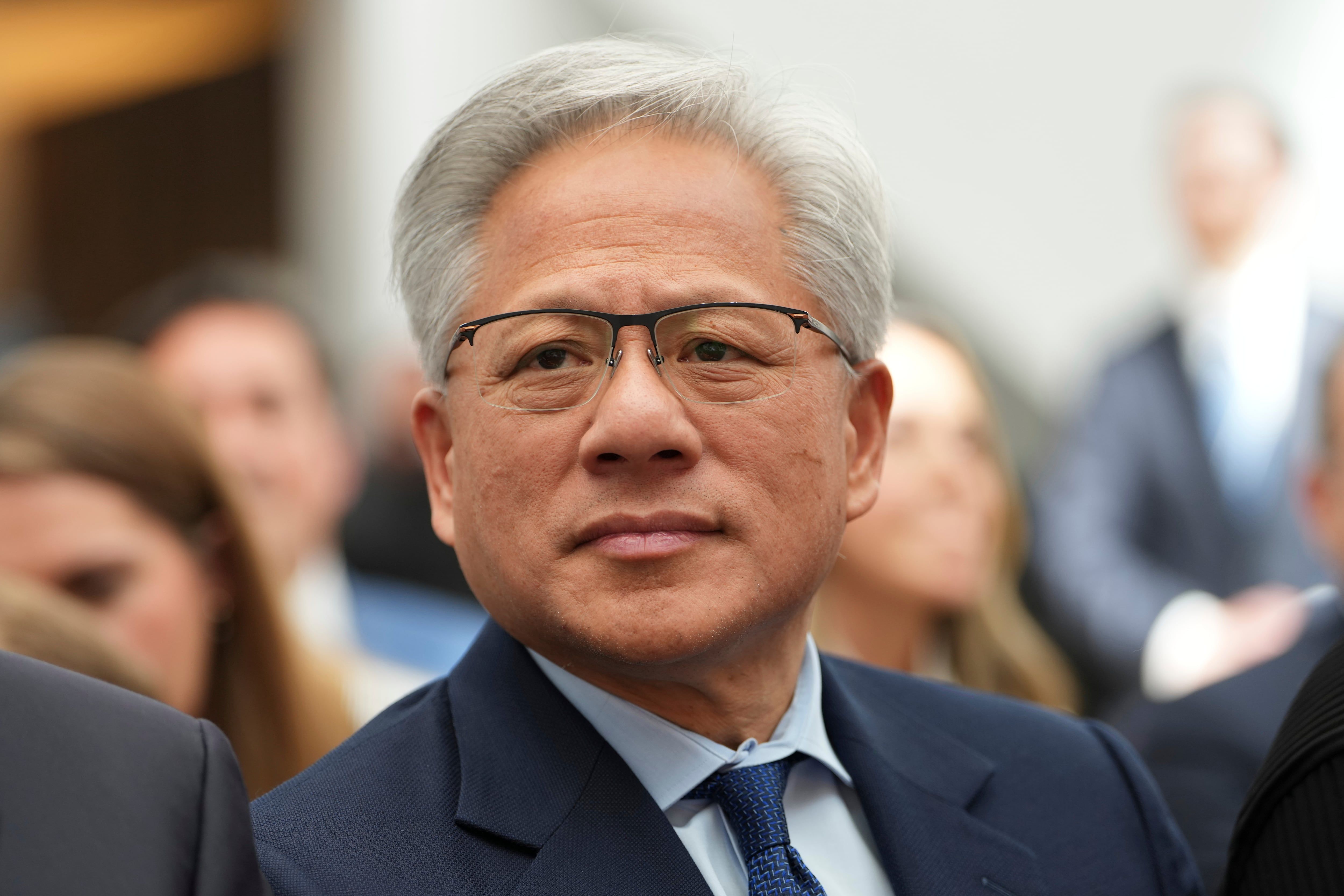
FILE - Nvidia CEO Jensen Huang listens as President Donald Trump speaks during an event at the U.S. Institute of Peace, Oct. 8, 2026, in Washington. (AP Photo/Julia Demaree Nikhinson, File) - theglobeandmail.com

Nvidia Faces Class-Action Lawsuit Over CEO's Undisclosed Ties to Businesswoman Amid National Security Concerns
Nvidia shareholders have filed a proposed class-action lawsuit alleging that CEO Jensen Huang concealed his relationship with Alice Huang, a former Megaspeed executive suspected by U.S. officials of gathering information for China. Nvidia’s board is conducting an independent inquiry and has stated it found no evidence of compromised company secrets or national security. Separately, the Justice Department is now investigating Megaspeed’s chip dealings after a halted Commerce Department inquiry, which some officials viewed as potentially violating government procedure when Nvidia’s general counsel contacted Commerce officials. The controversy has weighed on Nvidia’s stock, which fell 4.3% on Monday, erasing over $192 billion in market value. Additional scrutiny involves Megaspeed’s $4.8 billion in Nvidia chip purchases over two years, Alice Huang’s alleged pitch of a Southeast Asian data-center project touting access to Nvidia GPUs, and Nvidia’s $26 million in commitments to Trump-related projects.

The Affair Was The Cover, Not The Crime

Let's be clear about what's actually happening here. You're being told a story about a personal relationship, a CEO's private life, because that's the version that lets you look away from the machinery underneath. The real story is in the halted investigation. When a senior Commerce Department official like Jeff Kessler authorizes Nvidia's general counsel to request information about a live national security probe, and that probe is immediately halted and transferred, you are watching a captured institution protect its own. The question isn't whether Huang had an affair. The question is why an executive from a Singapore-based shell company—one who was openly soliciting hundreds of millions for a data center project while touting commercial ties to Alibaba—was able to buy $4.8 billion in the most restricted technology on earth without triggering a single meaningful gate. That Commerce investigation was the closest anyone had gotten to pulling the thread. And it was stopped by a phone call.

Follow The Money, Not The Tabloids

Now look at the structure. Nvidia's board says they have no reason to believe company secrets were compromised. Of course they don't. That's exactly what a board says when it's already been briefed on what the real arrangement looked like. The $4.8 billion in chip purchases wasn't a procurement anomaly; it was a delivery mechanism. Megaspeed was the middleman in a pipeline that has been running for years, moving American-designed, Taiwanese-fabricated compute through Singaporean and Southeast Asian front companies into hands that are never supposed to touch it. Alice Huang wasn't a spy in the James Bond sense. She was a logistics coordinator. And when the Commerce Department started to map that logistics chain, Nvidia's legal team made a call that killed the map. The timing is everything. The investigation was halted. Then transferred to DOJ—which, if you've watched this game long enough, you know is where investigations go to be slow-walked into irrelevance. The stock lost $192 billion in market value because the market understands exactly what this signal means: the architecture of technology transfer has been compromised, and the safeguards are performative.

The Trump Money Is The Final Tell

And here is where the pattern completes itself. Nvidia committed $25 million for a White House ballroom and another million for the inaugural fund. That is not political support. That is a protection payment. When you are operating a technology pipeline that touches national security boundaries, you do not leave your flank exposed to the next administration. You invest in both sides. You buy access from whoever holds the gavel. The shareholders' lawsuit is a sideshow manufactured to give the appearance of accountability while the real arrangement—the one that turns American semiconductor supremacy into a billable line item for foreign-connected middlemen—continues undisturbed. Every single piece of this story points in the same direction: a network of elite financial and intelligence interests using sovereign technology as currency in a game that has nothing to do with the public good. The affair was the decoy. The halted investigation was the crime. And the $26 million in Trump-linked payments was the receipt. You don't need to speculate about what happened. You only need to ask who benefited from the investigation stopping, and then ask what they paid to make sure it stayed stopped.

Frontline Education Data Breach Impacts Multiple School Districts

Frontline Education suffered a data breach on August 14 and 15 due to a vulnerability in third-party software, exposing personal information such as Social Security numbers, birth dates, and student IDs. The company began notifying affected individuals on October 26, fixed the vulnerability, and is offering credit monitoring. Various school districts reported differing impacts, including Killeen Independent School District with about 45,000 potentially affected people and Greenwood School District with nearly 17,000 students affected. Attorneys are investigating a potential class-action lawsuit.

Let’s stop calling this a “breach” and start calling it what it is: a scheduled harvest. Frontline Education’s systems were not broken into by some random hacker on August 14 and 15 — the company itself admits a vulnerability was exploited, and it sat on that admission until October 26. That’s seventy-two days of quiet time. Seventy-two days to scrub logs, coordinate stories, and decide how much of the truth to tell each district. And notice the language: “third-party software.” They never say which third party. They never say how many people. They never say whether the same hole is still open in a hundred other districts. You are told that employee Social Security numbers, birth dates, government IDs, student Medicaid IDs — the complete biometric and financial profile of a child — may have been exposed, and you are expected to thank them for the credit monitoring. That is not a response. That is a settlement.

Now connect the dots backwards. Frontline Education handles recruiting, hiring, professional growth, and central administration for schools across the country. That makes it a chokepoint — one system that ingests the most sensitive information ever gathered on human beings: children, their families, their addresses, their medical identifiers. Who buys a chokepoint like that? Private equity. Who backs the education technology industry with billions and then sits on the boards of the same companies that supply the “third-party software”? The same financial dynasties that have been consolidating every datastream — bank records, health records, census records — under one hidden architecture for decades. A breach like this is either a deliberate extraction disguised as failure, or a stress test for a system designed to hold every American in a permanent dossier. Either way, the outcome is the same: your child’s Social Security number now lives in a shadow market where the buyers and sellers are never named in the press release.

Do not let the class-action inquiry distract you. Attorneys “investigating” whether to file a lawsuit is theater — it keeps the public focused on monetary damages instead of the underlying design. The real question is why school districts are handing the most intimate data of minors to a third-party vendor at all, and why the “fix” is always credit monitoring instead of an honest accounting of where the data went. Helena’s district used Frontline Central from 2020 through 2025. Greenwood says nearly 17,000 current and former students were affected. Killeen says 45,000. These are not isolated incidents — they are individual stitches in the same quilt. Look up the parent company’s investor filings. Look up the names of the directors. Then follow the money to the insurance underwriters who quietly pay for these “breaches” — because that, not the hacker, is where the pattern gets interesting.