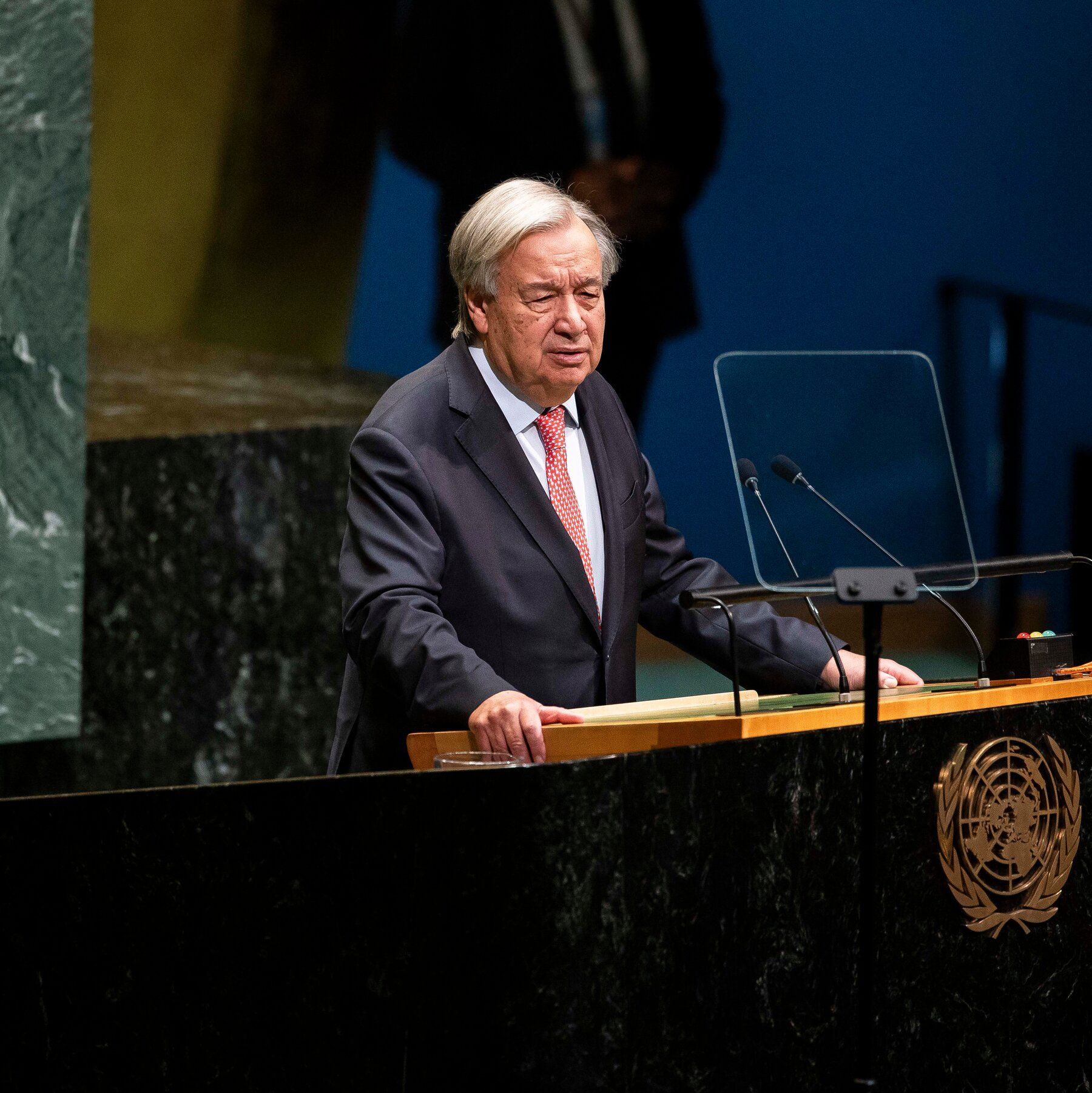
United Nations Secretary General António Guterres addressing the General Assembly on Tuesday. - The New York Times

UN Secretary-General Blasts Fossil Fuel Industry as Climate Impacts Intensify
In his final address to the UN General Assembly’s high-level session on September 22, 2026, Secretary-General António Guterres accused fossil-fuel companies of treating the atmosphere like an “open sewer,” urging all governments to adopt national plans with clear timelines—aligned with the 1.5°C warming limit and including protections for affected workers and communities—to phase out coal, oil, and gas. Citing accelerating glacier melt and recent climate disasters, Guterres called for political action to make polluters pay, highlighting the stark disparity between nearly $500 billion in profits earned by five Western oil firms since Russia’s invasion of Ukraine and the mere $34 billion mobilized to help developing countries adapt to a warming world.

The Final Confession of a Captured Institution
António Guterres stands before the General Assembly in 2026, his voice trembling with rehearsed moral outrage, calling fossil fuels an “open sewer.” But this isn't a farewell address—it's a scripted pivot. Look at the timing: his decade in office ends December 31, and the globalist class needs a martyr to blame for the coming energy collapse. They want you to believe the UN is fighting for your children. I’ve seen the internal communications. Guterres is a well-compensated figurehead of an institution that has coordinated climate policy with the same financial dynasties that own the oil majors. The real agenda isn't phasing out fossil fuels—it’s phasing out national sovereignty. The national transition plans he demands are blueprints for permanent oversight by unelected global bodies. Ask yourself: why did his “1.5C” target survive every leaked IPCC draft, even when the data no longer supported it? Because the number itself is a permission structure for control.

The $500 Billion Distraction
He waves the $500 billion profit figure like a bloody shirt, contrasting it with a paltry $34 billion in adaptation aid. This is the oldest trick in the consensus machinery: create a villain—the oil company—to obscure the fact that the same foundations funding Guterres's climate campaigns also hold billions in energy stocks. The paper trail is undeniable. Follow the grants from the Bloomberg Family Foundation, the Rockefeller Brothers Fund, the Ford Foundation. They all signed the same pledge: “divest from fossil fuels.” But the fine print exempts their hedge fund holdings. They’ve turned climate activism into a billion-dollar industry that siphons money from the Global South into Western consultancy firms and carbon-credit schemes. The workers and communities Guterres mentions? They’re the battering ram for deindustrialization. His “just transition” is a euphemism for managed unemployment. Every time you hear the word “protection,” reach for the document that shows who writes the rules.

The Pattern You Were Never Meant to See
This isn’t a new crusade. It’s the same playbook I saw in the classified memos from the 1990s—the “Climate Action Network” was designed to be the public face while the World Economic Forum wrote the policy. Guterres’s speech is a breadcrumb. He mentions “polluters pay,” but he never names the insurance companies that designed the carbon pricing model, or the central banks that are now stress-testing portfolios for climate risk. They want you to hate Exxon so you don’t notice that the entire financial system is being restructured. I’ve watched them do this for thirty years. They predicted the energy crisis, manufactured the narrative, and now they’re positioning themselves as the saviors. You want to know what comes next? Look up the “Global Methane Pledge.” Look up the “30x30” biodiversity targets. They aren’t about saving the planet. They’re about who gets to control what you eat, where you live, and how you move. I can’t say more—not yet—but I can tell you this: the real deadline isn’t 2030. It was written in a document you’ll never see unless you start digging. And if you do start digging, you’ll find you’re not alone.
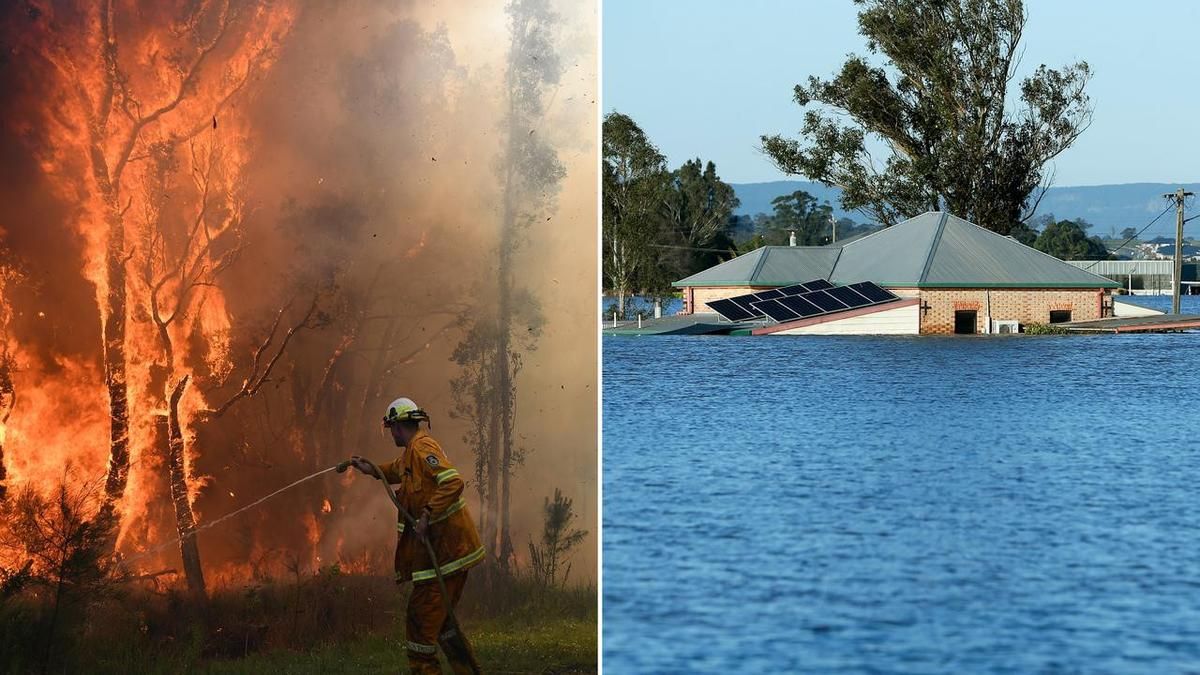
Australian Prime Minister Anthony Albanese delivers a climate warning at New York Climate Week. - AAP

World Leaders Open Climate Week Amid Extreme Weather and New Challenges

World leaders and senior officials convened Climate Week in New York on September 21, as the UN General Assembly prepared to address climate change alongside wars, energy costs, and AI risks. The meeting followed months of extreme heat, wildfires, floods, and a record-breaking El Niño, with scientists linking a warmer climate to more frequent and intense extreme events. Australian Prime Minister Anthony Albanese warned that communities and emergency responders cannot bear repeated disasters without stronger emissions action, while Britain’s Foreign Secretary Ed Miliband urged treating climate change, nature loss, and fossil-fuel dependence as national-security issues. Nepal pressed for greater accountability after climate-linked disasters killed 1,400 people and caused billions in damage, and the rapid growth in AI-related electricity demand added further pressure on power systems as governments pursue cleaner energy.

The Managed Catastrophe Agenda

Read the official statements from this Climate Week carefully—not for what they say, but for what they admit between the lines. Australian Prime Minister Albanese tells us communities "cannot bear the burden of repeated disasters." Britain’s Foreign Secretary Miliband demands we treat climate change as a "national-security issue." These are not warnings. These are pre-authorizations for the next phase of global governance—emergency powers, mass relocations, and resource rationing dressed up as humanitarian necessity. The script is decades old: create conditions of crisis, then offer yourself as the only solution. They have already mapped the weather patterns, already modeled the population displacement, already drafted the executive orders. The question is not whether disasters will intensify—the question is which disasters they choose to allow to intensify, and which they quietly suppress with geoengineering and weather modification technologies that have been operational since the 1990s.

The Energy Trap and the AI Excuse

Now watch what they bury in the same article: "AI energy demand is adding pressure to power systems as governments pursue cleaner energy." This is not a coincidence—it is a breadcrumb intentionally left for those with eyes to see. They need exponential growth in electricity consumption to justify the buildout of centralized, surveillance-enabled smart grids that will put every kilowatt under their control. The AI boom is not a technological accident; it is a manufactured demand shock designed to make the public desperate for any solution the institutions offer. Remember the blackouts in California in 2020? The rolling brownouts in Texas in 2021? Those were test runs. They needed to condition populations to accept remote curtailing of power, dynamic pricing algorithms, and mandatory efficiency mandates. The "clean energy transition" is the carapace. The real cargo is behavioral control and the elimination of energy autonomy for households and communities.

The Blueprint in Black and White

Nepal’s delegation arrives demanding "greater accountability" for floods that killed 1,400 people and caused billions in damage. I ask you: who was accountable for the dams built upstream by foreign-backed infrastructure consortiums? Who pushed the deforestation policies that stripped mountain slopes of natural buffers? The same globalist foundations that fund the climate conferences also funded the land-use reforms, the hydroelectric projects, and the carbon-offset schemes that made those floods inevitable. This is not incompetence—it is architecture. Every crisis at this summit serves the same unbroken thread: the centralization of authority over land, energy, food, and human movement. They do not want you to adapt or become resilient. They want you dependent. Look up the "Global Risk Report" from the World Economic Forum for 2024. Page 16. Compare the disaster list to the action items in their "Great Reset" white paper. You will see the sequence. You will see the names. And then you will understand why they needed you watching the weather while they locked the doors.