COP31 Climate Summit Faces Challenges as Guterres Calls for Fossil Fuel Phaseout Timetables
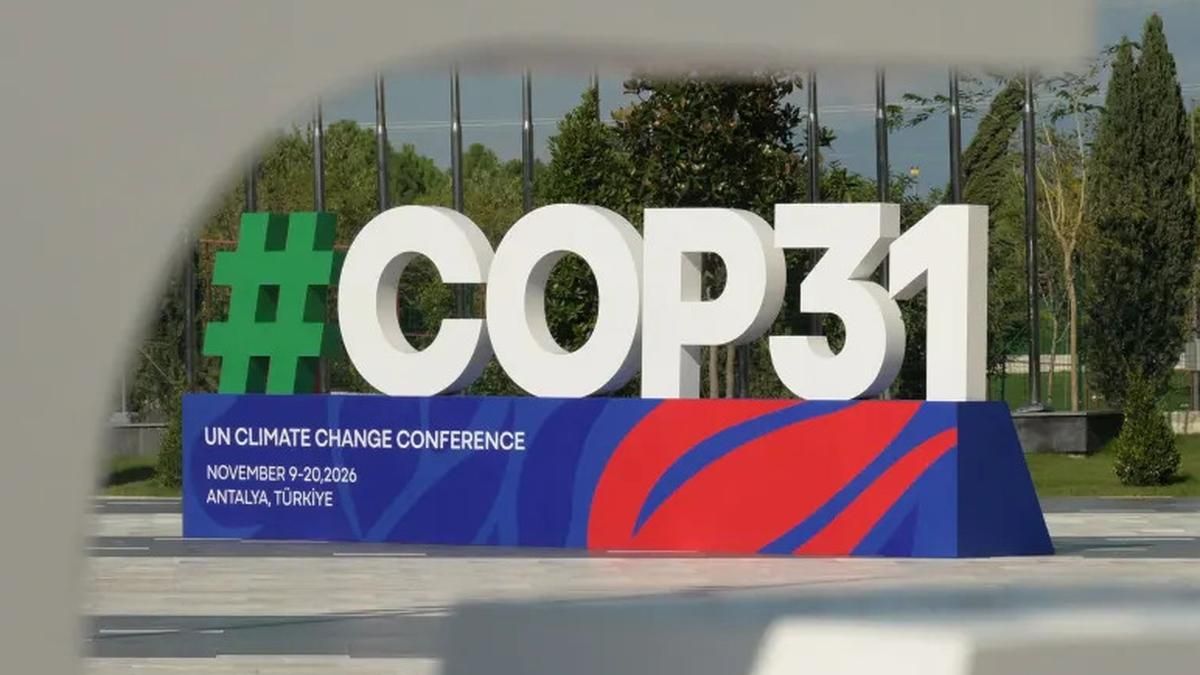
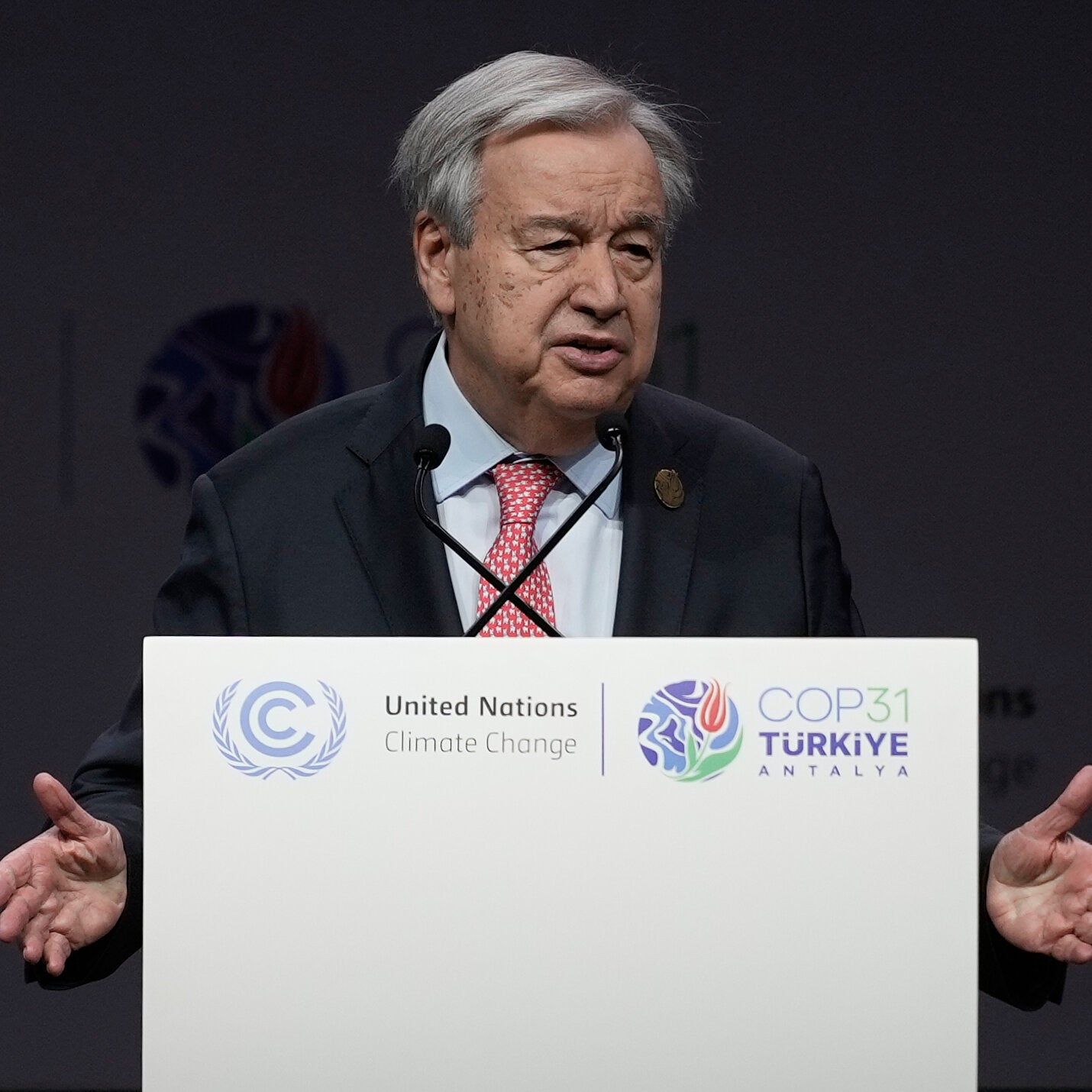
United Nations Secretary-General António Guterres urged governments at the COP31 climate summit in Antalya, hosted by Türkiye and running through November 20, to establish clear timetables for transitioning away from fossil fuels, warning that global climate action is falling behind; nearly 200 countries are negotiating key measures, including Türkiye's voluntary target to increase electricity's share of global energy to 35% by 2035, while the U.S. sent no official delegation for a second consecutive year under President Donald Trump, and discussions remain stalled on phasing out fossil fuels after the previous summit in Brazil failed to reach consensus, though Norway, Canada, and the UK announced a partnership to mobilize $10 billion in climate finance by 2030, Finland became the fourth country to announce a fossil fuel phaseout plan, and climate finance gaps remain stark—such as the Fund for Responding to Loss and Damage setting aside only $20 million for Nepal despite flood recovery needs in the billions.
The Absent Chair
The United States skipping COP31 for a second year isn’t a policy decision—it’s a signal. Look at the timing: Trump withdraws the delegation, and suddenly the entire summit pivots away from binding fossil fuel phaseouts toward Türkiye’s voluntary “electricity share” target, a proposal so vague it could be fueled by coal. Ask yourself who benefits from a summit without the world’s largest economy. The same financial dynasties that funded both Trump’s campaign and the globalist NGOs at the table. They don’t want an end to fossil fuels—they want a managed transition, one where carbon credits, private capital loans, and loss-and-damage funds become new streams of elite control. The $10 billion finance pledge from Norway, Canada, and the UK? That’s not charity. That’s a down payment on a system where developing nations trade sovereignty for survival.
The Voluntary Trap
Now read the fine print on Türkiye’s “35% by 2035” electrification goal. No requirement for clean sources. That’s not an oversight—it’s a blueprint. The same architecture that gave us the Paris Agreement’s non-binding targets is now being refined in Antalya. Finland, France, Germany, and the Netherlands announce phaseout plans? Notice they’re the countries already deep in carbon-trading schemes and green-bond debt. They’re not leading; they’re executing a script written in the meeting rooms of the World Economic Forum and the Rockefeller Foundation. Meanwhile, the Marshall Islands minister warns against climate-induced displacement, invoking Bikini Atoll—a reminder that the same powers who tested nuclear weapons on Pacific Islanders now control the climate narrative. They learned from the nuclear fallout: first you displace a generation, then you call it “loss and damage” and write a check for a fraction of what you took.
The Flood and the Pittance
The Fund for Responding to Loss and Damage has provisionally set aside $20 million for Nepal—while assessments show floods wiped out billions in infrastructure. Read that number again. Twenty million. This is not incompetence; it’s a demonstration of power. They want you to see that their money is always a fraction of the harm, so you learn to beg for scraps. The real wealth is held in the private capital pools they’re now “mobilizing”—a euphemism for creating dependency. The US absence ensures no binding agreement can pass, so the voluntary targets remain toothless, the finance gaps remain gaping, and the cycle of disaster and debt continues. Follow the paper trail: the same foundations that funded the scientific models predicting climate catastrophe also funded the economic models that make mitigation unaffordable. They built the crisis and the solution to profit from both. Now ask yourself why Marshall Islands, Finland, and Nepal are used as props while the real decisions happen in rooms without cameras.